The War of 1812 & Communication

Today in History, June 18, 1812:

Ironies of 19th century communication, or the lack thereof in the War of 1812. 

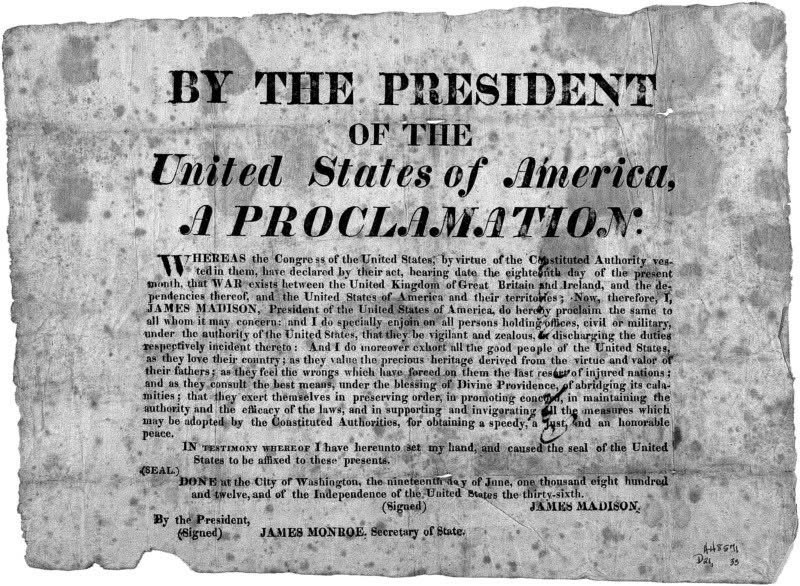
On June 1, 1812, President Madison asked to declare war on Great Britain because Britain would not stop boarding US ships and impressing US sailors into the Royal Navy. By the 18th Congress had acted and President Madison signed the declaration of war.

The irony? Five days later on June 23, 1812, a new British government repealed the Orders in Council, deciding impressing US sailors was not in Britain’s interest, and created bad relations with America.

Neither nation knew what the other was doing.

The ships carrying the messages to the opposing governments likely passed each other on the Atlantic. 

But the war was on. 

Likewise, when the war ended with the Treaty of Ghent on December 24, 1814, it took weeks for the message to reach the Americas. So on January 8, 1815, British General Packenham, hero of the war with France, attempted to take New Orleans with a large army.

American General Andrew Jackson defended New Orleans with an army of US soldiers, Indian allies, and pirate Jean Lafitte’s roughians. With tactics, artillery and folks that knew how to shoot, they decimated the British. 2,042 casualties for the British, including Packenham killed, to only 71 casualties for the Americans.

Weeks after the war had ended.
The Battle of New Orleans

Today in History, January 8, 1815:

The Battle of New Orleans.

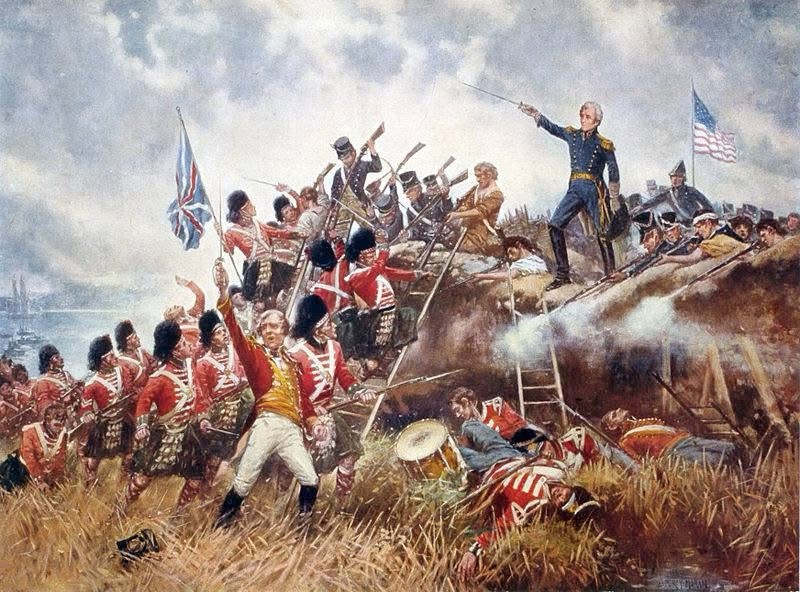
American Major General Andrew Jackson’s forces (approximately 4,700) defeat British Major General Edward Pakenham’s forces (8,000).

The British were attempting to fight their way into New Orleans but first had to defeat the “Jackson Line” of defensive works lined with artillery, US Army regulars, Kentucky and Tennessee Militia, Freedmen, Native Americans and even the pirate Jean Lafitte and his men.

The British were confident of a quick victory, attacking in the morning under the cover of fog. But the fog cleared and Pakenham’s men were cut to pieces by grapeshot (anti-personnel artillery) and the marksmanship of the Americans.

Pakenham, a veteran of numerous campaigns, was knocked by his horse by grapeshot which struck him in the leg, then hit in the arm, and finally, as he climbed on his aide-de-camp’s horse was struck in the spine, wounding him mortally.

Most of the British officers were killed and their troops, not knowing whether to charge or retreat, were being decimated in the open field until another general arrived and ordered a retreat.

The battle was fought approximately 2 weeks after the Treaty of Ghent was signed, initiating the end of the War of 1812, but of course none of the parties in Louisiana knew that.

Jackson would ride the fame of the victory into the Executive Mansion.

A Senseless End for a Pioneering American Naval Hero

Today in History, March 22, 1820:

Stephen Decatur, Naval hero of the first and second Barbary Pirate wars, and of the War of 1812, hero and example to many of the U.S. Navy, is killed in a senseless duel.

In 1807 Commodore James Barron refused to defend his ship, Chesapeake, against British attack and was court-marshaled; Decatur sat on the court-marshal board.

Suspended from the Navy for 5 years, Barron chose to wait until after the War of 1812 to be recommissioned.

His cowardice was called, and he challenged Decatur, a former comrade, to a duel. Decatur, U. S. Navy hero, was mortally wounded. Such a shame. Decatur was a swashbuckler, a fierce fighter for his country.

Defending Her Honor…

Today in History, May 30: 1806:

Andrew Jackson engages in a duel to defend the honor of his wife.

He had married her with the understanding that her divorce was final, which it was not.

Challenged by a reporter, he fought a duel to defend her and killed Charles Dickinson to defend her.

Oddly enough, on May 29th, 1780, only a day before this event in history, Jackson had been one of the few to evade “Tarleton’s Quarter” as British Lt. Col. Banastre Tarleton had butchered those that surrendered at Waxhaws during the Revolutionary War.

The experience added to the brutality in which future General and President Jackson acted during the War of 1812 and during his Presidency in regards to the British, which he despised. During the Revolutionary War he lost his parents and his brother, which led him to despise the British.

Six Frigates…The US Navy Makes a Name for Itself

Today in History, March 27: 1794:

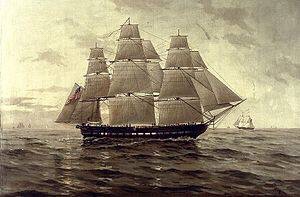
President Washington signs the Naval Act of 1794, ordering the construction of 6 Frigates capable of high speed and of holding their own against “ships of the line.”

After the Revolutionary War, America didn’t feel it needed a navy; after having several ships seized by Barbary pirates, and after abuses by the Royal Navy, the administration and Congress came to the realization that America needed a navy to protect it’s shipping.

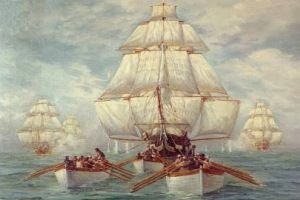
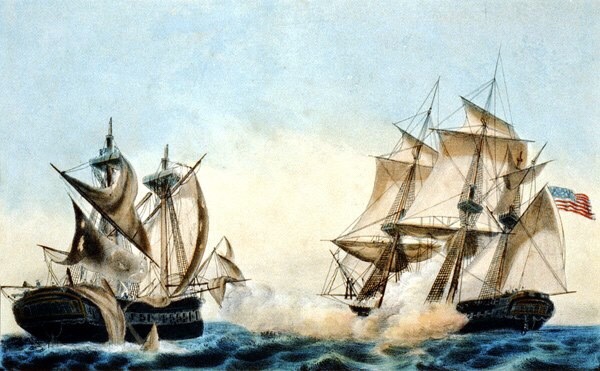
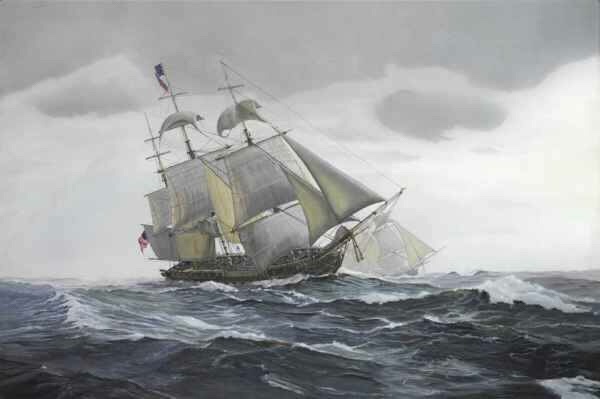
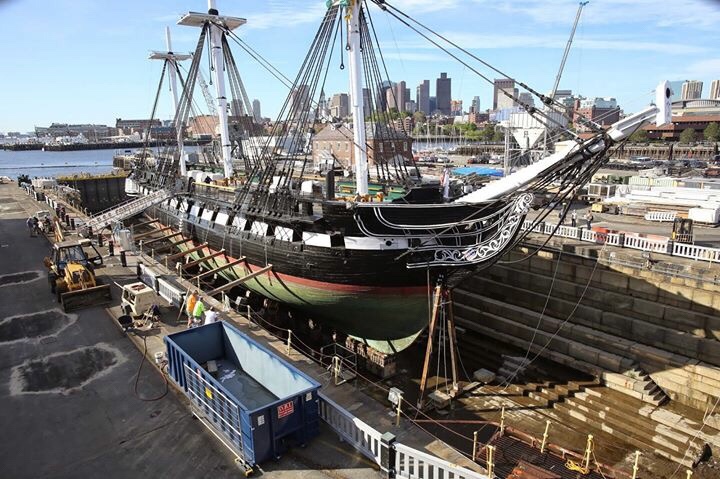
Thus the USS Constitution (Old Ironsides, oldest commissioned US Navy vessel), USS Constellation, USS President, USS Congress, USS United States and the USS Chesapeake began their illustrious Naval careers.

Madison Declares War


Today in History, June 18: 1812 – President James Madison signs the Declaration of War against Britain that would lead to The War of 1812. The Brits, accepting the sovereignty of the U.S. in name only after losing the American war for Independence, had been raiding American shipping on the high seas and forcing American sailors into service in the Royal Navy. They had also been supporting Native American tribes for the sole purpose of inhibiting American western expansion. Finally Congress had enough and sent a bill to the President declaring war on the British Empire, which President Madison signed.