Luftwaffe Reborn

Today in History, February 26: 1935:

Adolph Hitler secretly signed a decree creating the Luftwaffe, the German Air Force, and names Hermann Goering it’s commander. At the end of WWI the Treaty of Versailles signed between the combatants, including Germany, declared that Germany could have no military air service.

Hitler quietly built up what would become a larger, and more modern, air force while the rest of Europe and America let their forces languish.

Lufthansa, the civilian airline that was permitted, was used to provide flight training to the men that would become Luftwaffe pilots.

By September 1939 when the German Blitzkrieg swept across Poland, Denmark, Norway, Holland, Belgium and France, the Luftwaffe consisted of 1,000 modern fighter planes and 1,050 modern bombers.

This build up, and the build up of the Wehrmacht, all took place while the future allies practiced appeasement and protested verbally (the British had built up the Royal Air Force, but it was still much smaller than the Luftwaffe).

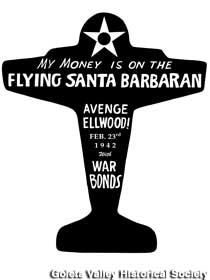
Remember The Alamo! Remember The Maine! Remember Pearl Harbor! REMEMBER SANTA BARBARA!!

Today in History, February 23, 1942:

A little over two months after the attack on Pearl Harbor, Japanese Imperial Navy submarine I-17 surfaces 1500 yards off the California coast, near Santa Barbara. Five crewmen scrambled out onto the deck and manned the boat’s deck gun.

Workers and residents on shore were confused and surprised when they figured out the booms and explosions they were hearing at an oil field in Ellwood were tied to the flashes they were seeing out at sea.

After 20 minutes the Captain ordered a hault to the assault, having missed the oil tanks and damaged a catwalk.

The relatively minor attack was the first time the Continental US had been bombarded since the War of 1812.

It dis have an effect on a populace already on edge. On the 25th, “enemy aircraft” would be sighted near LA, resulting in lengthy anti-aircraft fire which would be dubbed the “Battle of Los Angeles”.

It would also help speed the incarceration of Japanese-Americans, since many believed the assault had been assisted from shore by Japanese operatives.

It also would not be the last time the mainland was bombarded by the Japanese..more submarine attacks, an aircraft launched from a submarine and “balloon bombs” would be in the offing…all relatively unsuccessful.

“Butch” O’Hare Saved His Ship and Her Crew…Did “Easy Eddie” Help?

Today in History, February 20, 1942:

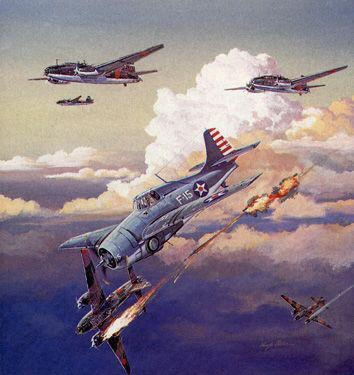
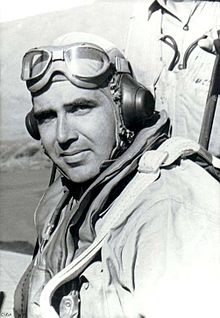
Lt. Edward “Butch” O’Hare saves his ship. The USS Lexington was initiating a raid on Rabaul, a Japanese stronghold. However the Task Force was spotted, and many Japanese aircraft were sent to destroy the valuable aircraft carrier.

Lt. O’Hare was part of the “CAP”, or Combat Air Patrol for the Lexington (CV-2).

O’Hare singe-handedly shot down five of the attacking “Betty” bombers, effectively saving his ship, one of the few aircraft carriers the United States had available at the time.

This also made him the US Navy’s first ace of WWII.

About a year later, O’Hare, ever the hero, would be lost in unknown circumstances in one of the first night time fighter operations.

O’Hare Airport in Chicago is named for Butch.

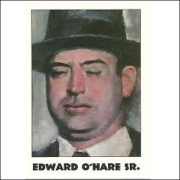
What many people don’t know is that this American hero, who gave the “last full measure of devotion” for his country, was the son of a gangster. His father had been Al Capone’s lawyer.

The senior O’Hare (Easy Eddie), according to the story, had exchanged his testimony against Capone for a chance for his son to enter the Naval Academy. He paid with his life, gunned down by Capone’s thugs. As a result, thousands of American sailors aboard the Lexington were saved due to Butch’s heroism.

Honorable Brothers and Enemies at the Same Time…

Today in History, February 18, 1862:

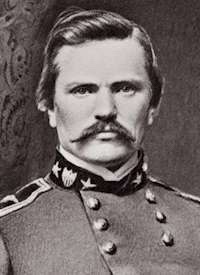
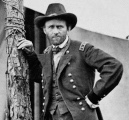
“I know you are separated from your people, and perhaps you need funds.  My purse is at your disposal.”  Union General Ulysses Grant to Confederate General Simon Bolivar Buckner as Buckner prepared to board a river boat taking him north to a Yankee prison.

On February 16, 1862 after a hard-fought battle and investment, Confederate Fort Donelson in Tennessee had surrendered to Union forces.

Tennessee was a strategic area in the Civil War, providing resources, people and a launching point to move against the rest of the South.

General U.S. Grant had been little known to the public before this battle, but the victory would change all that.  He coordinated with the US Navy to bombard Ft. Donelson and surround the 12,000 men there.  After assaults and counter assaults, the Confederate commanders came to the realization loss of the fort was a foregone conclusion, a tragedy for the South.

Gen. Simon Bolivar Buckner was actually third in command.  His superiors resigned their positions so they could sneak out and escape.  Col. Nathan Bedford Forrest took some of his Cavalry and fled also, leaving Buckner to stay with his men and surrender.

Buckner sent a note through the lines asking Grant for terms.  And here is where Grant became famous.  He wrote out his response for delivery to Buckner,

No terms except unconditional and imme­diate surrender can be accepted. I propose to move immediately upon your works.

In a time when furloughs and prisoner exchanges were common in battle, Buckner found the response to be “ungenerous and unchivalrous.”  Yet he had no choice, his only option was surrender.  Having had little but bad news for some time, the Northern papers seized upon the victory.

They used Grant’s initials to rename him “Unconditional Surrender Grant.”  Turns out it wasn’t the first time others had changed his name for him, but that’s another story.

The public was finding out something those serving with Grant had learned…he was unpretentious, unceremonious and tenacious.  He got results.  President Lincoln would eventually say of him, “I can’t spare this man; he fights” in defense of Grant’s reported drinking problem.

If you want History to be more than dates on a page, watch out for the back stories…the facts that bring out the humanity in what you’re reading.

The story reads good already.  But lets dig further.

When Grant was younger, he wanted an education.  His father worked hard and secured him an appointment to West Point.  Initially, Grant didn’t want to go.  But once in, he liked it.  His uncanny horsemanship impressed fellow cadets and instructors.  And he made friends among the other cadets, including Simon Bolivar Buckner, who was attending at the same time.

Grant and Buckner, among many other officers in the US Army, served together and performed heroics in the Mexican-American War of 1846-1848.

After that conflict Grant found himself assigned to the frontier in California, where he missed his family grievously and took to drink.  In July of 1854 he suddenly resigned his commission from the Army and sought transport home.

Grant found himself in New York without even enough money to get a meal or pay for a room.  And then he happened upon an old classmate and friend, Simon Bolivar Buckner.

The two enjoyed a visit, talked old times and Buckner, who was doing much better financially, paid for his friend’s room and board.

In the intervening years until 1861 and the beginning of the Civil War, Grant was somewhat of a hard luck case.  He tried farming, he tried real estate, nothing worked.  When the war began he was working for his brothers and his father in a store as a clerk.

When Southern states began seceding many in the US Army that were from those states, resigned their commissions and joined the Confederate Army, including Buckner.  Thus the old friends found themselves on opposite sides.

Thus, after the Battle at Fort Dolelson, Grant sought out Buckner before Buckner boarded the boat taking him off to prison in an attempt to return an old favor. Buckner, ever the gentleman, politely refused the return of the kindness.

Grant, of course, would become commander of all Union Armies and eventually President.

Buckner would eventually be exchanged for a Union general officer and continue to serve in the Confederate Army.

He surrendered in New Orleans in 1865 for a second time.  He would become Governor of Kentucky among other political successes.

In 1904 he visited the White House and asked President Theodore Roosevelt to appoint his son to West Point.  TR quickly agreed.

His son, Gen. Simon Bolivar Buckner Jr would be killed at Okinawa in WWII, the highest ranking officer killed by enemy fire in WWII.

Strategic Bombing – Dresden to Rolling Thunder

Today in History, February 13: 1945:

British bombers stage a night attack on Dresden, Germany. Later American bombers would stage a daytime attack. Most recent studies indicate 25,000 civilians died, not 500,000 as the Nazis claim.

What is a fact is that the incendiary bombs caused a firestorm that destroyed most of the city.

1965: President Johnson authorized “Operation Rolling Thunder”, the strategic bombing of targets in North Vietnam in an attempt to stem the tide of enemy troops and supplies streaming into the combat zone. More tonnage of bombs would dropped than in WWII before the operation was called off in 1968.

Submarine on Submarine…The USS Batfish

Today in History, February 12, 1945:

The USS Batfish, an American Balao class fleet submarine, sinks it’s second Japanese submarine within three days. She would sink three Japanese submarines during her WWII career.

Sinking another submarine is quite an accomplishment, accounting for range, depth and speed with the technology of the time.

The Batfish had an active Naval career. If you’d like to see her, she lives on as a war memorial in Muskogee, Oklahoma. We’re pretty proud of her.

http://www.history.navy.mil/danfs/b3/batfish-i.htm

“The Way to Disarm is to Disarm” -US Sec of State Charles Evans Hughes

Today in History, February 6, 1922:

The Washington Naval Treaty of 1922 is agreed to by the remaining Navy powers from WWI. It would be a year until all the signatories had done so, but their representatives in DC made the agreement today.

It should have been perfect, as it had that one thing necessary for a successful negotiation: Everyone agreed, nobody was happy.

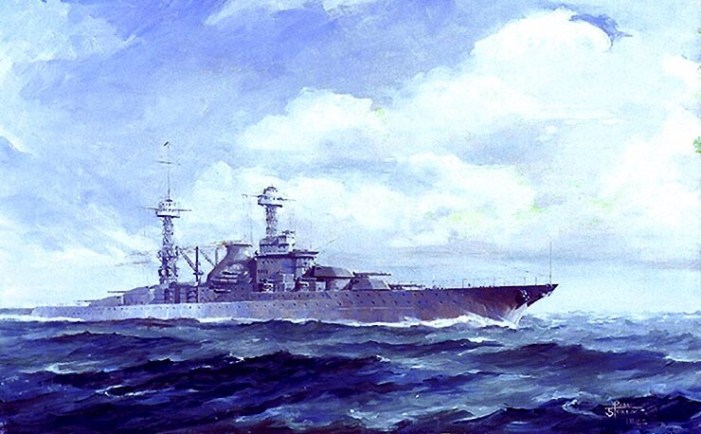
It agreed that certain capital ships would be limited by number and tonnage. Battleships and Battlecruisers would be limited.

The ratio of Navy size would be 5-5-3-1.75-1.75…England-US-Japan-France-Italy. So you can see why nobody was happy.

This was the nuclear limitations treaty of the 20’s.

Here are the many consequences of the treaty:

New Battleships could only be of a certain tonnage with guns no more than 16 in. In the mid 30’s Japan began ignoring the limitations, so for the beginning of WWII, American BB’s were seriously undersized compared to the monsters Yamato and Musashi. But that wouldn’t last long.

After WWI several of the nations had battlecruisers under construction…they could either scrap them or convert them to “less valuable” warships…Aircraft Carriers. This were born Akagi, Kaga, Lexington and Saratoga. More carriers of limited tonnage could be buit…this were born the Ranger, Yorktown, Enterprise and Hornet; Shokaku, Zuikaku and others.

After nearly two decades of intrigue, cheating, etc, as a result of the Washington Naval Treaty, Japanese flyers sank obsolete Battleships at Pearl Harbor, with planes from carriers.

The American carriers who amswered back, and unfortunately the USN and IJN traded losses fairly evenly…until only one US Carrier was left to counter the Japanese fleet in the Pacific.

But as the Japanese sailors in DC in 1922 had predicted, due to massive American industrial might, within a year of that carrier finding herself alone, the Enterprise was joined bu over a dozen modern, huge carriers of the Essex class and fast new Battleships.

The Importance of Being Thorough…

Today in History, February 1, 1942:

Less than two months after the bombing of Pearl Harbor, the US Navy strikes back.

Task Forces built around the USS Yorktown (CV-5) and USS Enterprise (CV-6) sped in quickly in cover of darkness, then struck at Japanese air bases and shipping in the Marshall Islands. The US aircrews made repeated sorties against the islands throughout the day, until Admiral William Halsey decided they had pressed their luck enough and ordered a withdrawal…the carriers and their support ships were valuable and in short supply.

The air raid did little damage…however it was a tremendous morale booster for the military and the folks at home, and brought home the realization to the Japanese that they could be “touched.”

Now for a History link…I love those. While the US had significant facilities in parts of the Pacific, they had spent little in Japanese held areas before the war.

The command staff and they flyers involved were using the very latest charts and maps they had of Kwajalein Atoll and the Marshall Islands…they were at least 100 years old in 1942.

In 1838, wanting to join the scientific communities of the European nations, the United States authorized and supplied six ships commanded by Lt. Charles Wilkes to explore the Antarctic region, the Northwest and Western coastal regions of the US and the Pacific.

During a more than 3 year circumnavigation of the world, the “US Ex Ex”, or US Exploring Expedition collected more than 4,000 scientific samples, documented their contacts with peoples along their route, and meticulously charted the many islands, bays, inlets, etc they found. Wilkes was very dedicated to this portion of the Expedition, much to the annoyance of the scientists aboard.

Wilkes lengthy US Navy career would bring him to fame again during the Civil War with the Trent Affair…but that’s another story.

As he was charting the Marshalls, his intent was for whalers and other ships to make use of his efforts…he almost certainly couldn’t imagine massive ships carrying aircraft which would drop explosives on the Pacific paradise 100 years hence.

USS Nautilus Launched

Today in History, January 21: 1954 – The USS Nautilus (not the first), in this incarnation the first nuclear powered submarine, SSN 571, is launched at Groton, Connecticut, christened by First Lady Mamie Eisenhower.

She would also be the first submarine to sail beneath the Arctic. Her WWII ancestor had a storied career also, conducting numerous war patrols in the Pacific. Jules Verne had used the name for his stories; but the results of Admiral Hyman Rickover’s hard work made the name.

Aerial Bombing Begins in Britain

Today in History, January 19, 1915:

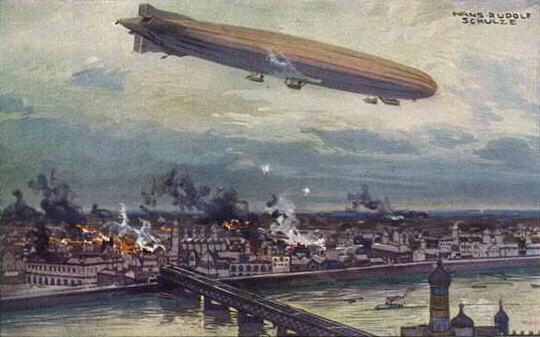
Germany begins aerial bombing of Britain using dirigibles, mostly Zeppelins during WWI.

The attacks would cause many deaths, but would be mostly ineffective and inaccurate.

The Zeppelins would eventually be replaced with aircraft. The bombings would lead to an early warning system and tactics by the Royal Air Force which would carry into the Battle of Britain during WWII.

Many civilians would die in the Zeppelin raids, leading to them being labeled “baby killers”, raising anger rather than the intended demoralization.