“the greatest battle implement ever devised.”

Today in History, January 9, 1936:

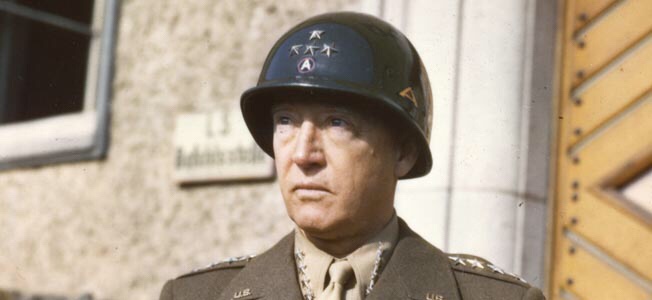
“the greatest battle implement ever devised” – Gen. George S. Patton

1936 – The first semi-automatic rifle is issued to the US Army in the form of the M-1 Garand Rifle. Semi-automatic, meaning that a round would be fired each time the trigger was pulled.

The rugged rifle would be used by American fighting men to help win WWII.

Death had to take Roosevelt sleeping, for if he had been awake, there would have been a fight.” -Vice President Thomas Marshall

Today in History, January 6: 1919 –

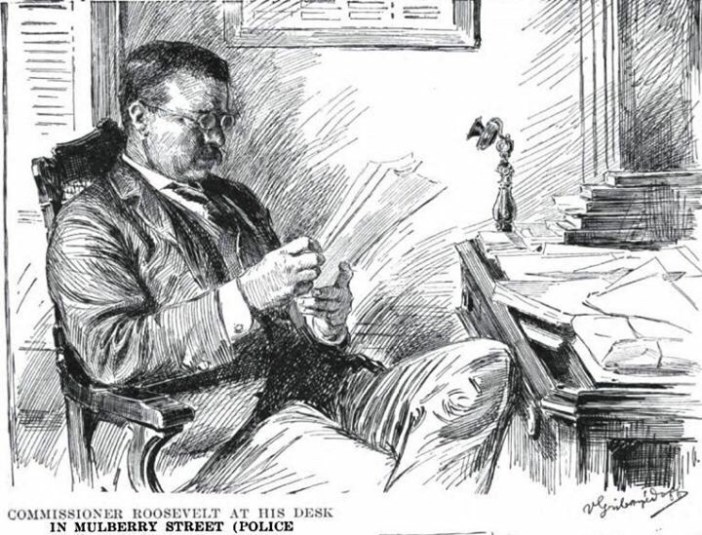
“Death had to take Roosevelt sleeping, for if he had been awake, there would have been a fight.” -Vice President Thomas Marshall. President Theodore Roosevelt dies at Sagamore Hill, Oyster Bay, New York in his sleep of a heart attack. “Teddy” had taken every last drop of adventure and worthiness that he could squeeze out of life in the preceding 60 years.

Roosevelt had been a sickly child; constantly plagued by breathing problems, he could rarely play with the other children. His father, Theodore Sr., a remarkable man himself, told “Teedie” that if he wanted to have a successful life, he would have to take charge and force his body into the form he needed to match his intellect. Roosevelt did just that. He took exercise as his “raison detre” until he was barrel chested and of vigorous health. Each time he became sick during his life, he would simply work through it.

As a young man, while serving in the New York Assembly, Roosevelt’s wife and mother died on the same day…February 14, 1884. Roosevelt fled into the west, becoming a rancher and for a time a lawman in the Dakota Territory. The experience would strengthen him and give him a background people respected.

During his life he was a state rep from New York, the Police Commissioner for New York City, Governor of New York, the Assistant Secretary of the Navy (he oversaw the building of a modern US Navy while his boss was not paying attention), he led the “Rough Riders” (1st Volunteer US Cavalry) up San Juan Hill in the Spanish-American War, became Vice President, and the President after President McKinley was assassinated.

As President he defined the modern presidency, breaking up monopolies, seeing that mistreated workers got a fair shake, sent the “Great White Fleet” around the world establishing American as a world influence, saw the Panama Canal built, saw the establishment of the National Parks Service, and countless other accomplishments.

He worked tirelessly for the American people. After the Presidency he traveled extensively, going on an African Safari, and exploring an unknown region of South America, “The River of Doubt”; a region so treacherous that it was considered a no-man’s land. He nearly died in the mapping of the river, now called “Rio Roosevelt” in his honor.

All of his male children fought in WWI, and the only reason Teddy didn’t was because the Democrat President (Wilson) refused to let him, afraid Roosevelt would run against him in the next election and win. One of his sons, Quentin, would be shot down over France and be killed. That was the last straw for the “Old Lion”. He mourned dreadfully until his death.

One of his other children, Theodore Roosevelt, Jr., would be the only General to go ashore with the troops at D-Day in WWII; Teddy Jr would die of a heart attack himself several weeks after the Normandy invasion. The entire world would mourn President Roosevelt’s passing; he had become larger that life, a hero to people the world over. The quintessential American. And in case you couldn’t tell, my favorite Hero.

“Show Me a Hero…”

Today in History, January 3, 1944:

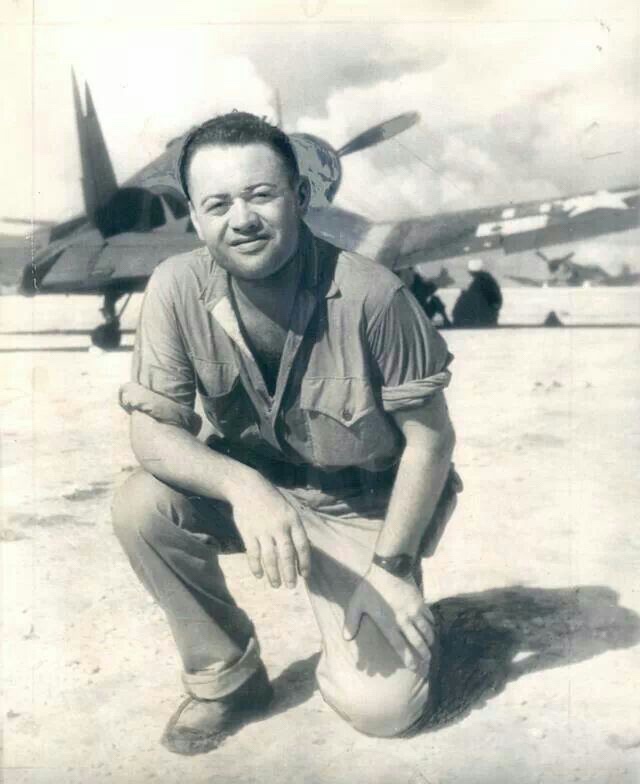
Moments after he became the top fighter ace in the Pacific Theater by shooting down his 26th enemy plane, USMC Major Gregory “Pappy” Boyington was himself shot down over the Japanese base of Rabaul.

He would be captured by the Japanese and held prisoner, brutally treated until rescued from a Japanese prisoner of war camp.

Boyington had been one of the American servicemen to resign their commissions to serve in the AVG, the American Volunteer Group, or “Flying Tigers” in China prior to America’s entry into the war. After Pearl Harbor he rejoined the Marines and fought in the Pacific. Boyington was a Medal of Honor recipient. A warrior. And a drunk. In his good will tours after the war, he stated bluntly, “Show me a hero, and I’ll show you a bum.”

Air Victories from WWII to Vietnam

Today in History, January 2, 1967:

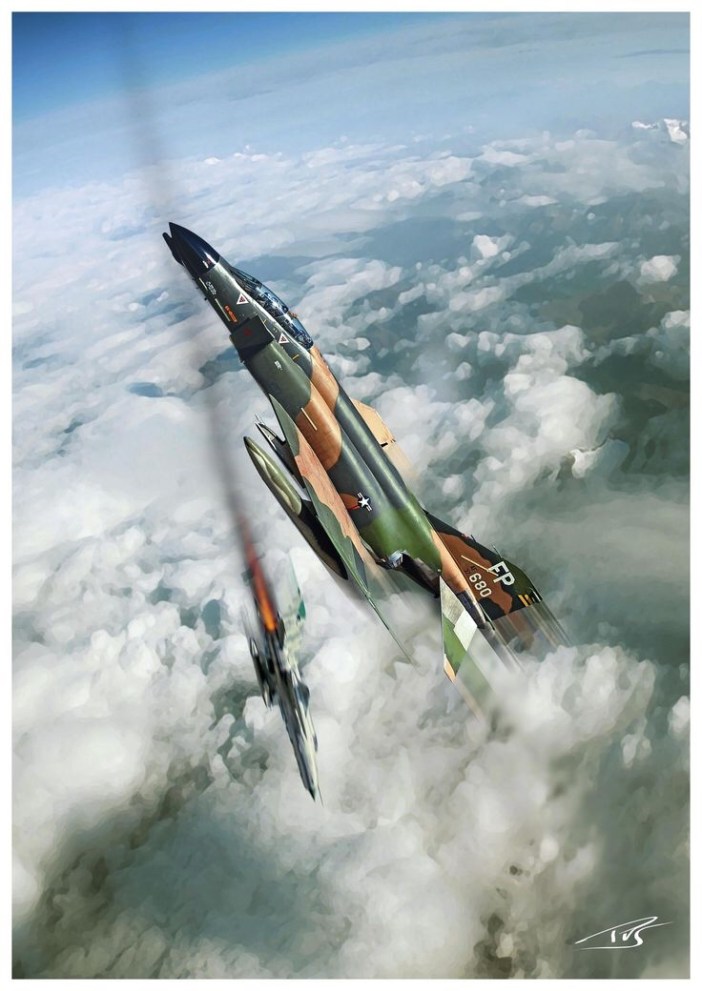
USAF Colonel Robin Olds shoots down his first MIG 21 in the Vietnam War.

This made him the first and only US airman to score aerial victories in both WWII and Vietnam.

In WWII he flew the twin engine P-38 Lightning and the P51 Mustang; in Vietnam the F4 Phantom.

He would shoot down 16 aircraft, making him a triple Ace.

Today in History, December 28: 1867 –

The United States annexes it’s first territory outside of the continental US, two tiny specs of coral land halfway to Asia in the Pacific, first known as the Brook Islands for the man who discovered them, later renamed Midway Atoll.

The Navy attempted unsuccessfully to build a coaling station on the island, and later the Commercial Pacific Cable Company used the island as a link for telegraph lines across the world’s largest ocean.

In 1903 President T. Roosevelt stationed 21 US Marines there to ward off poachers. In the 1930’s Pan American Airways began using Midway as one of the stations for its now romantically famous island hopping China Clipper. And of course the “Goony Bird” filled islands became known to most of us for it’s part during the Battle of Midway during WWII.

Knowing When to Say No Secured Nimitz’ Fate…and Kimmel’s

Today in History, December 25, 1941:

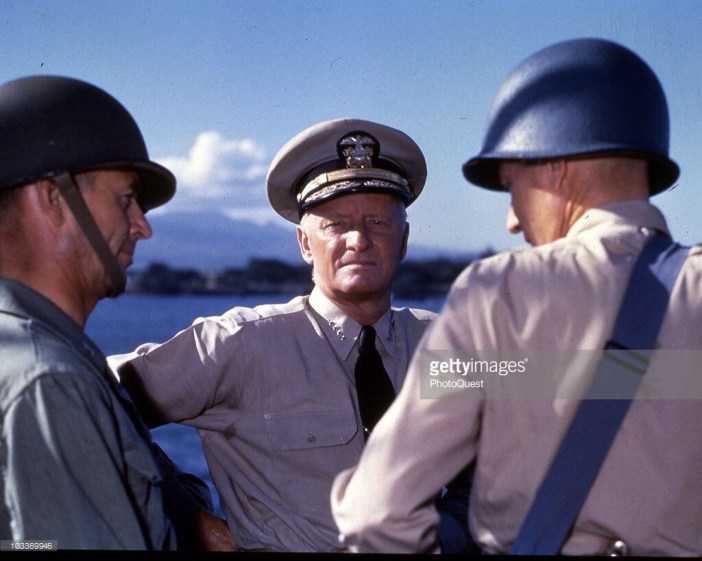
Admiral Chester W. Nimitz arrived in Pearl Harbor aboard a PB2Y Coronado flying boat after a flight from the west coast. Before the flight he had taken a six day train ride from Washington DC across the country.

On December 17th Nimitz, who at the time was the Commander of the Bureau of Navigation (the Navy’s personnel dept) was ordered to take command of the US Pacific Fleet, much of which was either sunk or damaged at Pearl Harbor. FDR had told him to get out there until “the war was won.” He did.

When the Japanese attacked Oahu on December 7, the current commander of the Pacific Fleet, Admiral Husband E. Kimmel, quickly became the scapegoat for all that had been done wrong. He would spend years defending himself while Nimitz led the US Navy to victory.

But Nimitz very nearly assumed Kimmel’s fate. Nimitz had been an innovator in the Navy for years…as a result he had been offered CINCPAC earlier in the year, but turned it down…he wanted the Bureau instead.

So did Nimitz’ instincts tell him not to take the offer? Either way his choice kept him from being in Kimmel’s shoes, which allowed him to be the historic leader he became.

After his arrival in Pearl Nimitz spent a lot of time with Kimmel, and then kept Kimmel’s staff in place.

Nimitz told Kimmel and others that, “The same thing could have happened to anyone.”

All Glory is Redeemed…

Today in History, December 21: 1945 –

“For over a thousand years, Roman conquerors returning from the wars enjoyed the honor of a triumph – a tumultuous parade. In the procession came trumpeters and musicians and strange animals from the conquered territories, together with carts laden with treasure and captured armaments. The conqueror rode in a triumphal chariot, the dazed prisoners walking in chains before him. Sometimes his children, robed in white, stood with him in the chariot, or rode the trace horses. A SLAVE STOOD BEHIND THE CONQUEROR, HOLDING A GOLDEN CROWN, AND WHISPERING IN HIS EAR A WARNING: THAT ALL GLORY IS REDEEMED.” Closing lines of the movie “Patton”.

On this day in 1945 Gen. George S. Patton dies of injuries sustained in an automobile accident in Germany. Patton was a brilliant tactician and leader, but often a contentious figure. It probably WAS just an accident, but speculation continues about whether it really was an accident, or whether Patton’s comments about America’s response, or lack thereof, to Communist aggression after WWII led to his demise.

I would like to think the consummate warrior had served his purpose was called home.

Flying Tigers Enter Combat

BG-home

Today in History, December 20: 1941 –

Nearly two weeks after the surprise attack by the Japanese Navy on Pearl Harbor, Hawaii, the First American Volunteer Group (AVG) enters combat for the first time in defense of Kunming from Japanese Air Force bombers.

The AVG was made up of pilots and air crews who were allowed to resign their positions in the USAAF, US Navy and US Marines before the US entered World War II in order to fly for the Nationalist Chinese Air Force defending the Burma Road…China’s primary access to military supplies.  The AVG members had been recruited by a retired USAAF officer, Claire Chennault, who had been training and supervising Chinese flyers for Chinese leader Chiang Kai-Shek since the 1930’s.  The covert program had begun in April 1941, and by the time the AVG’s pilots, crews and their Curtiss P-40 Tomahawk fighter aircraft had arrived in Asia and trained, the US had entered the war.

In their first combat the Flying Tigers destroyed 5 of the attacking bombers.  In the coming months they destroyed nearly 300 Japanese aircraft with a loss of 14 of their own aircraft.  In the dark months after Pearl Harbor the Japanese were “sweeping the table” across the Pacific, and the victories of the small Flying Tigers units provided much needed morale boosters for the Allied powers.  In July of 1942, after little more than six months, the unit would be absorbed into USAAF units in the Asian theater of operations.  Most of the pilots returned to US service, including “Tex” Hill and Gregory “Pappy” Boyington.

Sea Warfare Changes Before the World’s View

Today in History, December 10: 1941 –

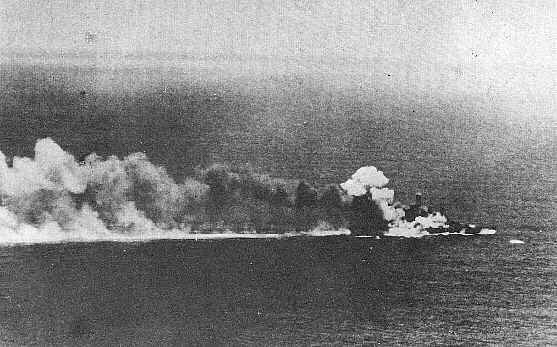
4,000 Japanese troops land in the Philippines, 700 land on the island of Guam and seize it. To top of a disastrous day, Japanese torpedo bombers swarmed over the British Battleships Prince of Wales and Repulse, sending them both to the bottom of the South China Sea. Since December 7th, Japanese air raids had destroyed fully half of the Allied aircraft in the Pacific theater. Some battleship sailors had consoled themselves with the thought that the ships lost at Pearl Harbor due to the air raid were unable to protect themselves only because they were caught at their moorings. It was believed that ships at sea, with room to maneuver could avoid aircraft. The loss of the powerful Prince of Wales and Repulse quickly put these thoughts to rest.

“Before We’re Through With ‘em, the Japanese Language Will be Spoken Only in Hell!” -Adm. William F. Halsey

Today in History, December 8: 1941 –

The US Navy Task Force focused around the USS Enterprise (CV-6) aircraft carrier, short on supplies and fuel, enters Pearl Harbor in the dark of night to re-provision as quickly as possible. Uncertainty reigns; nobody knows if the surprise attack by Japanese aircraft was the precursor to an invasion…

The men of the Task Force are horrified by the destruction they are witnessing; mighty ships they had seen just days before lay smoldering and efforts to rescue untold numbers of their friends trapped in the ships were ongoing. The stench of burning oil and bodies permeates the night air.

The commander of the Task Force, Vice Admiral William Halsey observes the carnage from the bridge of the Enterprise and angrily utters one of what will be many memorable quotes from him during the war, “Before we’re through with ’em, the Japanese language will be spoken only in hell!”

Today, of course, Japan is one of our closest and most faithful allies. But on December 8, 1941, and for years to come, the surprise attack on Pearl Harbor and other allied basis left no room for anything but battle.