“It was so magnificent I could stay forever.”

Today in History, March 14, 1967:

“It was so magnificent I could stay forever”.

The Spring before his assassination, President John Fitzgerald Kennedy toured Arlington National Cemetery. He made the above comment while standing at the Custis-Lee Mansion, where Gen. Robert E. Lee had lived prior to the Civil War. I’ve been there, and can understand his feelings…it is a beautiful view. Unfortunately he would “stay forever” there far too soon. This is the site of his final resting place, marked by an eternal flame, where he was moved to on this date in 1967.

America’s Dogs Go to War

Today in History, March 13, 1942:

For my K-9 Officer friends and their partners.

The US Army Quarter Master Corps begins training dogs for service in the Army, Navy, Marines and Coast Guard as well.

German Shepherds, Belgian sheep dogs, Doberman Pinschers, Collies, Siberian Huskies, Malumutes and Eskimos were used for Patrol, Scout, Sentry, Messenger and Mine-detection duties.

The dogs were very valuable in alerting servicemen to approaching enemies.

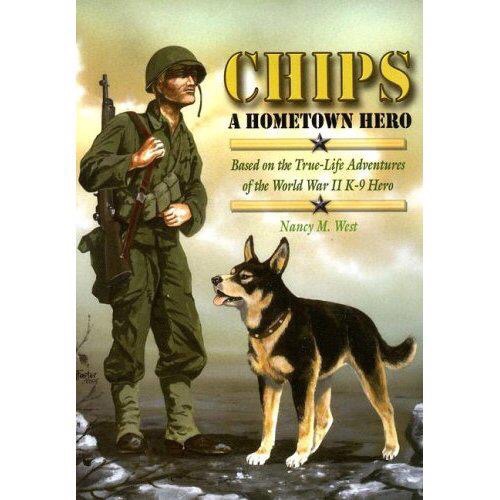
During the Italian campaign a German Shepherd named “Chips”, serving as a Scout with the 3rd Infantry Division, broke away from his handlers and by himself attacked a German machine gun nest, forcing the entire German unit to surrender.

How to Destroy Your Career in 10 Seconds…

Today in History, March 12, 2003:

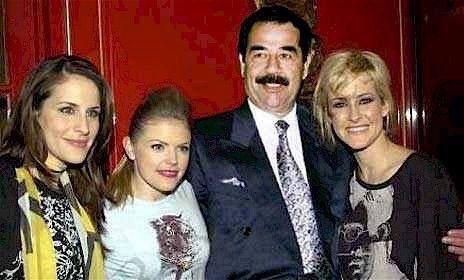
The British tabloid “The Guardian” publishes comments made by American Country star natalie maines of the dixie chicks group to a London audience,

“‘Just so you know, we’re ashamed the President of the United States is from Texas.”

Much to their chagrin, these three soon found that loyal Americans didn’t appreciate “Americans” who spoke poorly of their own overseas. Especially when their customer base were conservative Country music listeners.

They were boycotted and chastised by those that were supposed to be their supporters…because you don’t bad mouth your family to others. Of course Hollywood has since embraced them, the same as “Hanoi Jane.”

Unlike popular Henry Fonda’s daughter, the Dixie Chicks never saw a resurgence in their careers.

Hoover Saves the World…Again

Today in History, March 11, 1947:

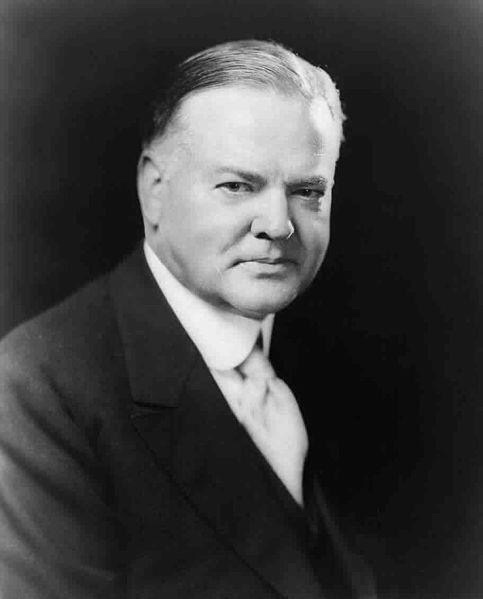
Democrat President Truman writes a letter to former Republican President Herbert Hoover, thanking him for his efforts in helping to save Europe…for the second time.

It is so interesting looking at history absent the biased perspective we’ve grown accustomed to.

Most of us know Hoover…you know, “Hooverville’s” full of starving people, the man who was asleep at the switch and helped caused the great depression.

The story is never as simple as we are told.

Hoover made it to the Presidency because after WWI, he organized the assistance of a starving war-torn Europe, demonstrating his abilities.

As WWII ended, the same disastrous conditions, magnified, existed.

Truman, who had been a young artillery officer as Hoover was doing is good deeds in 1917, called upon his 71-year-old friend to repeat his actions.

Hoover worked tirelessly to create the conditions to feed a starving Europe and end their dependence upon America.

Truman then assigned the former chief executive to head the “Hoover Commission” to organize an objective Truman (D) and Hoover (R) shared…to limit the power of the Executive Branch and streamline the government.

Thus we find that a decent man, Truman, called upon another decent man, Hoover, to aid in helping the world and America.

And Hoover’s legacy should be different than what he has been given. I wonder what GW’s legacy will be in half a century, once the political expedience of demonizing him has passed.

Connections The Nation Grows Honest Men Secure Their Future For Us An Amazing Day

Today in History, March 10:

I was researching for today and found amazing connections – I love connections in History! This will be a long post, but in summary:

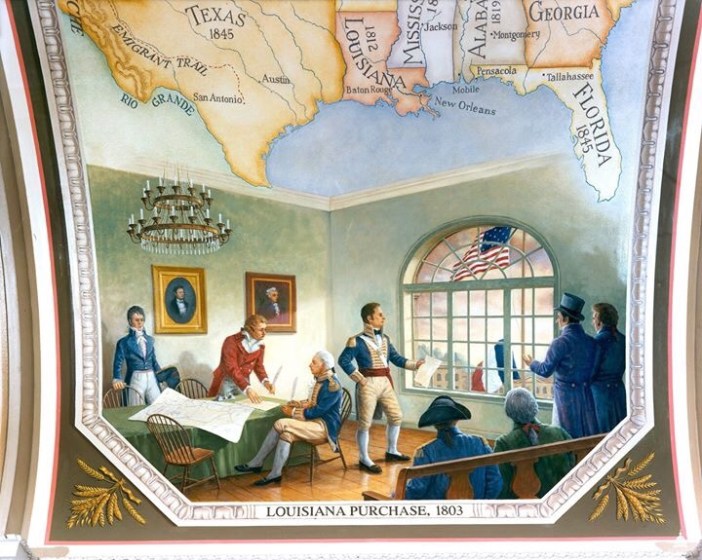
In 1804 a ceremony was held in St. Louis commemorating the Louisiana Purchase, which doubled the size of our young nation overnight.

In 1848 the US Senate ratifies the Treaty of Guadalupe Hidalgo, officially ending the Mexican-American War and again doubling the size of our nation.

Many believed the Mexican-American War was an unjust, fabricated conflict, much as many of us argue today about the Iraq War and its costs (not saying what my beliefs are…but I always stand with my beloved country).

Two of the men who felt the Mexican-American War was unjust spoke out vocally about their beliefs. One was a Congressman who disagreed with men he respected on the issue. The other who spoke out was a young Army officer who, in spite of his beliefs, fought courageously during the war.

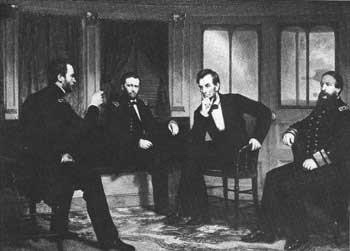
In 1864 the Congressman, now President, signed documents promoting the young officer to Lt. General of the US Army (a rank only George Washington had previously held as permanent) so no other officer would be his equal. Abraham Lincoln and Ulysses S. Grant believed wholeheartedly in their cause during the Civil War.

Today in History, March 10, 1804:

In St. Louis (not yet Missouri), an official ceremony is conducted, transferring possession of the “Louisiana Purchase” from Spain to the United States, virtually doubling the size of the American landscape overnight.

Today in History, March 10, 1848:

Treaty of Peace, Friendship, Limits and Settlement between the United States of America and the Mexican Republic, or the Treaty of Guadalupe Hidalgo ending the Mexican-American War is ratified by the US Senate after several amendments were made by that Congressional body.

The treaty had been negotiated in Mexico, documenting monies to be paid by the United States to Mexico and territories including modern day California, New Mexico, Arizona, and parts of Nevada, Colorado, Wyoming and Utah to be ceded to the US.

Senators to include Thomas Hart Benton, Jefferson Davis, Sam Houston, Stephen A. Douglas, and John C. Calhoun fought over the final draft.

Today in History, March 10, 1864:

President Lincoln signs documents promoting Ulysses S. Grant to the rank of Lieutenant General.

Grant was only the second person to hold the rank, the first having been George Washington. Winfield Scott had held the rank in the interim, but only as a “brevet” or temporary rank.

Lincoln wanted his commanding general to have a rank above his other generals for leadership purposes. Grant would answer only to the President. I didn’t find anything to document it, but have to wonder if this was partially because Grant had been promoted over several more senior officers to command the army due to his runaway successes in the west.

The End of an Era – The Age of Sail was Over

Today in History, March 9, 1862:

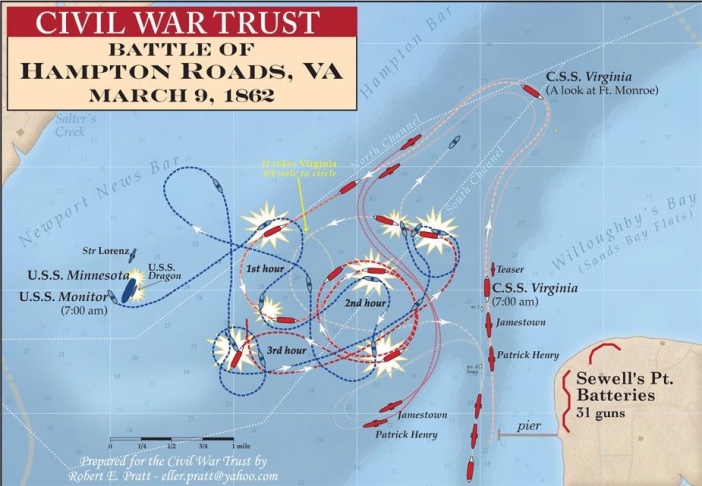
The Battle of Hampton Roads.

Few are able to be part of a truly history changing event.

When the Civil War began, the Union abandoned the Naval Base at Norfolk, Virginia, burning everything they could in retreat.

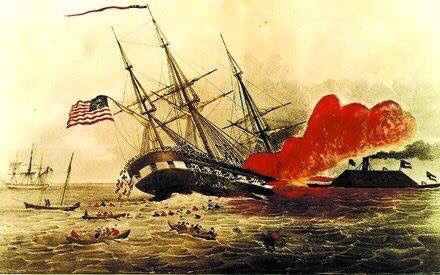
The Confederacy took the base, and raised the sunken Union USS Merrimack. They then rebuilt her into the ironclad CSS Virginia.

The Union Navy placed an embargo on all Southern ports, including the entrance to the Southern capitol of Richmond. The South attempted to break this embargo with their new ironclad ship, sinking two Union wooden “ships of the line” in the process.

The Virginia returned to base for the night, then returned to finish off the last major embargo ship on 9 March, 1862.

She was confronted by the Union version of the ironclad…the USS Monitor. The two new iron ships battered away at each other for over three hours without seriously damaging each other, and then withdrew.

The Virginia would be scuttled at her base as the Union advanced…the Monitor would be lost at sea.

But more importantly….navies worldwide…Britain, France, Spain, the Far East, watched and realized that their wooden navies had suddenly become obsolete.

Fire Bombing of Tokyo

Today in History, March 9, 1945:

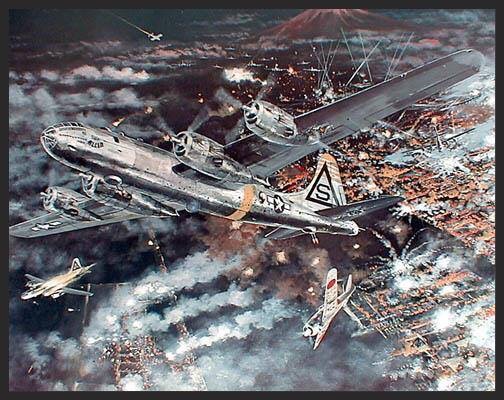
US B-29 Superfortress bombers drop over 200,000 lbs of incendiary bombs on Tokyo, igniting a firestorm much more damaging than the atomic bombs dropped on Hiroshima and Nagasaki, causing as many as 130,000 deaths as the mostly paper houses of Tokyo went up in flames.

Many of the houses had been used as independent manufacturing facilities to support the Japanese war effort.

16 square miles went up in flames (about the size of Tulsa now). In retrospect we could deem this as a war crime; however, if we look at it in the perspective of the times involved, as horrific as it was, it likely saved lives. Without the graphic wake-up call, the Japanese would have fought on…and millions would have perished.

The Last Bridge

Today in History, March 7, 1945:

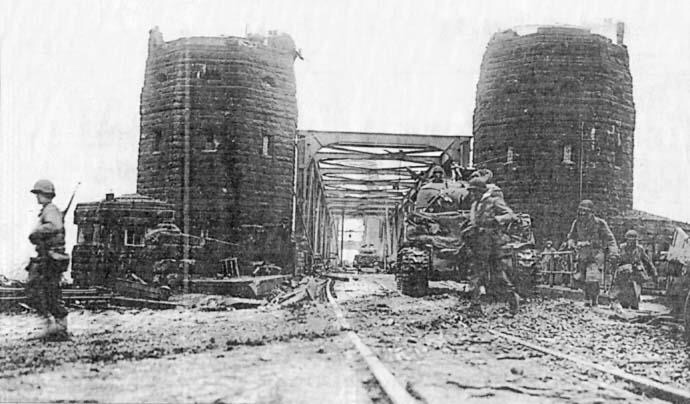
The Bridge at Remagen, or the Ludendorff Bridge Battle.

The American 1st Army arrived in Remagen to a surprise…that the last remaining bridge leading into Germany stood undamaged.

They quickly took the railroad bridge, which was strong enough for American tanks, trucks and artillery to move quickly into the German heartland. Once the bridge was taken, as always, it had to be kept.

And this bridgehead was important…and that is an understatement. The American forces had to fight against air attack, artillery, and sabotage. They moved quickly to take enough territory so that German artillery was out of range, set up sentries with powerful searchlights to catch enemy commandos, set up anti-aircraft batteries, and the bridge had it’s own Combat Air Patrol from the Army Air Corps. Engineers worked around the clock to repair any damage done to the bridge.

Dred Scott & The Supreme Court

Today in History, March 6, 1857:

The Dredd Scott Decision.

Dredd Scott was a slave whose owner had traveled and lived in “free states” and had promised him his freedom. When his owner died, Scott sued for his freedom, because he had lived in “free” states.

The case worked it’s way up the chain to the Supreme Court, which at that time was loaded with Southerners.

Chief Justice Roger Taney wrote the majority opinion that declared that no slave could possibly be a citizen, therefore they had no standing to sue. Also that the Federal Government had no right to regulate slavery in the states and territories.

Obviously a biased, politically motivated opinion, the decision, in part, led to the horrific, devastating American Civil War.

So our lesson is complex. The Supreme Court, while our highest court, is not infallible. It’s bad decisions lead to horrific consequences for the nation. It DOES make political decisions. And this theory does not end with Dredd Scott.

The Cabots & North America

Today in History, March 5, 1496:

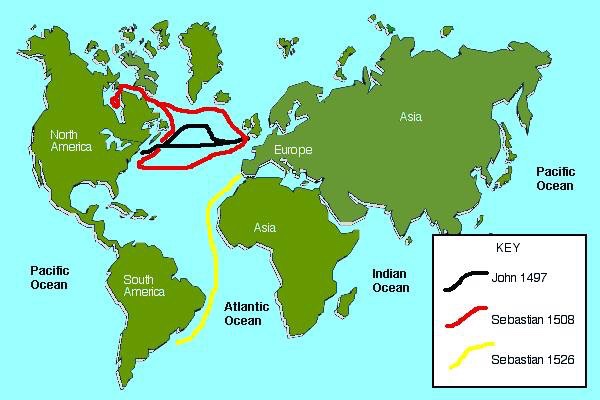
English King Henry VII issues letters patent to Italian navigators John Cabot (Giovanni Caboto) and his son Sebastian, sponsoring them for explorations.

“…free authority, faculty and power to sail to all parts, regions and coasts of the eastern, western and northern sea, under our banners, flags and ensigns, with five ships or vessels of whatsoever burden and quality they may be, and with so many and with such mariners and men as they may wish to take with them in the said ships, at their own proper costs and charges, to find, discover and investigate whatsoever islands, countries, regions or provinces of heathens and infidels, in whatsoever part of the world placed, which before this time were unknown to all Christians.”

John would find Newfoundland in North America, initiating future settlements in North America. The Vikings and Columbus came before the Cabots, but their explorations bore fruit for England.