 Today in History, July 7, 1900:Warren Earp is killed in a bar fight in Willcox, Arizona. This is interesting for the “here’s something I didn’t know” and the “we aren’t told everything” categories. Most of us know of the exploits of Wyatt, Morgan and Virgil Earp. But how many know of Warren, the youngest brother? After Morgan was murdered and Virgil was injured in the aftermath of the “Gunfight at the O.K. Corral”, Warren, who had been visiting his parents in California, returned to Tombstone and helped Wyatt hunt down the “Cowboys” that had victimized their brothers. But, as Virgil said, “‘If Warren ever dies he will be shot. He is too hasty, quick-tempered and too ready to pick a quarrel. Besides he will not let bygones be bygones, and on that account, I expect that he will meet a violent death.” Virgil was right. On this date in 1900 Warren was bullying a local range boss, Johnny Boyett in a local bar, advancing on him and threatening him, when Boyett fired 5 rounds into him. Boyett hid out for some time, afraid of revenge from the Earp brothers. While Virgil did conduct his own investigation and decided that it was murder, Wyatt never became involved. Boyett died of natural causes in Texas, never harassed by Wyatt or Virgil.
Category: History
Rabies Vaccine

 Today in History, July 6, 1885:9-year-old Joseph Meister had been badly mauled by a rabid dog, which meant he would almost certainly contract the horrible disease. Louis Pasteur had been experimenting on a vaccine for rabies using rabbits, and had tested the vaccine successfully on several dogs. Treating the boy put Pasteur at risk of prosecution should the treatment fail, as he was not a licensed physician. He chose to attempt to save Joseph. His vaccine was successful, saving the boy and countless others in the future. Meister would live to be 64 years old, taking his own life when the Nazis captured Paris in 1940, where he served as caretaker for the Pasteur estate.
“The Luckiest Man on the Face of the Earth”
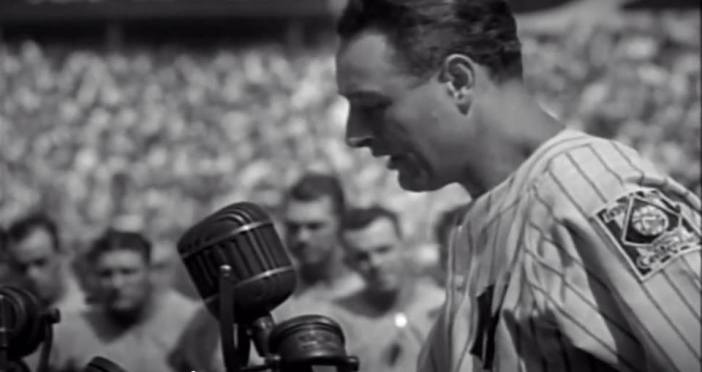
Today in History, July 4, 1939:
“I consider myself the luckiest man on the face of the Earth”. After 17 years as a beloved member of major league baseball, New York Yankee Lou Gehrig stands in Yankee Stadium and says goodbye to his fans, having been diagnosed with a terminal disease that now bears his name. I doubt there was a dry eye in the house.
The Great Reunion

Today in History, July 4, 1913:
President Woodrow Wilson addresses the Great 50 Year Reunion of Gettysburg, attended by thousands of Veterans from both sides of the Civil War, who swapped stories, dined together…and it would seem, forgave for a time.
Gettysburg
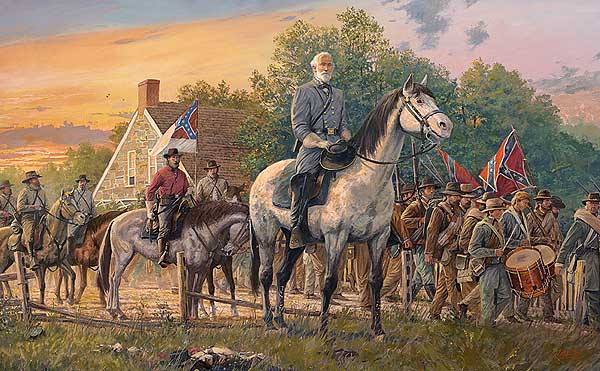
Today in History, July 4, 1863:
On the same day, half a continent away, Confederate General Robert E. Lee leads his defeated Army of Northern Virginia south away from the Battle of Gettysburg, Pennsylvania. No official surrender here…Lee’s army would survive to fight another day. While both battles were turning points, they did not spell the end of the South as many believe. There were years of hard, bitter fighting still to come with ghastly losses in life and injury. Gettysburg was, however, the last serious attempt by the South to invade the North.
Vicksburg
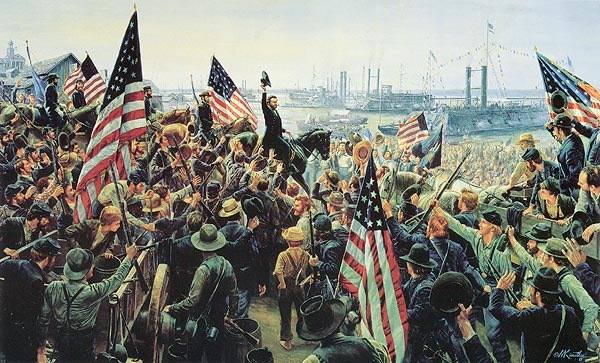
Today in History, July 4, 1863:
Confederate General John C. Pemberton surrenders Vicksburg, Mississippi to Union General Ulysses S. Grant. Pemberton had sent a note asking for terms on the 3rd, and initially Grant gave is usual “unconditional surrender” response. He then thought about what he would do with 30,000 starving Southern troops, who he had lay siege to since May 18th, and granted them parole, accepting the surrender on the 4th.
The capture of Vicksburg effectively cut off of the Confederate states west of the Mississippi (and their supplies) from the South. Grant’s parole of the rebels would come back to bite him, as the Confederacy did not recognize it’s terms and many of them fought again…which came back to bite the Confederacy because as a result the Union stopped trading prisoners.
The South knew the consequences of the loss of Vicksburg. It would be many, many years before Independence Day was celebrated in Vicksburg again.
Founding Brothers


Today in History, July 4, 1826:
Fifty years after the adoption of the Declaration of Independence, two of it’s signers, second President John Adams and third President Thomas Jefferson, die on the same day.
The two had become bitter political enemies for years (Adams a devout Federalist, Jefferson an equally devout state’s rights man). But in 1812 they made amends and began a years’ long correspondence, making them good friends again.
It is said that Adams’ last words were, “Jefferson survives”. He was wrong, Jefferson had died five hours before. Many Americans at the time saw their death on the same day 50 years after the Nation’s birth as a divine sign.
Louisiana Purchase

Today in History, July 4, 1803:
President Thomas Jefferson announces the signing of a treaty in Paris formalizing the Louisiana Purchase, effectively doubling the size of the United States in one day for $15M.
Happy Birthday, America!
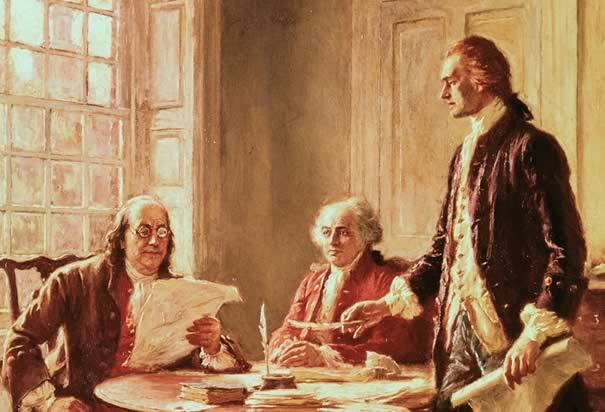
Today in History, July 4, 1776:
“We hold these truths to be self-evident, that all men are created equal, that they are endowed by their Creator with certain unalienable Rights, that among these are Life, Liberty and the pursuit of Happiness.”
The second Continental Congress adopts the Declaration of Independence from England after years of conflict as colonists.
Fort Necessity


Today in History, July 4, 1754:
During the French and Indian Wars, a young colonial member of the British Army abandons “Fort Necessity” after surrendering it to the French the day before.
The officer, 22-year-old Lt. George Washington had also commanded British forces in the first battle of the war on the American continent weeks before. The French and Indian Wars were only part of a global conflict between England and France, the Seven Years War.
His experience here would serve Washington well in our War for Independence. The conflict would also contribute to the American Revolution. The war was very expensive for the Crown, and had to be paid for to save the English economy. The colonialists considered themselves as English subjects; they fought alongside the regulars fighting the French and the Indians, many paying with their lives. After the war the government felt the colonists owed them for their “rescue.” The colonists however, felt the Crown owed them for saving British territory.
The ill feelings between the “homeland” and the colonies would only continue to multiply.
 Mark Loves History!