The Grand Army of the Republic

Today in History, April 6, 1866:

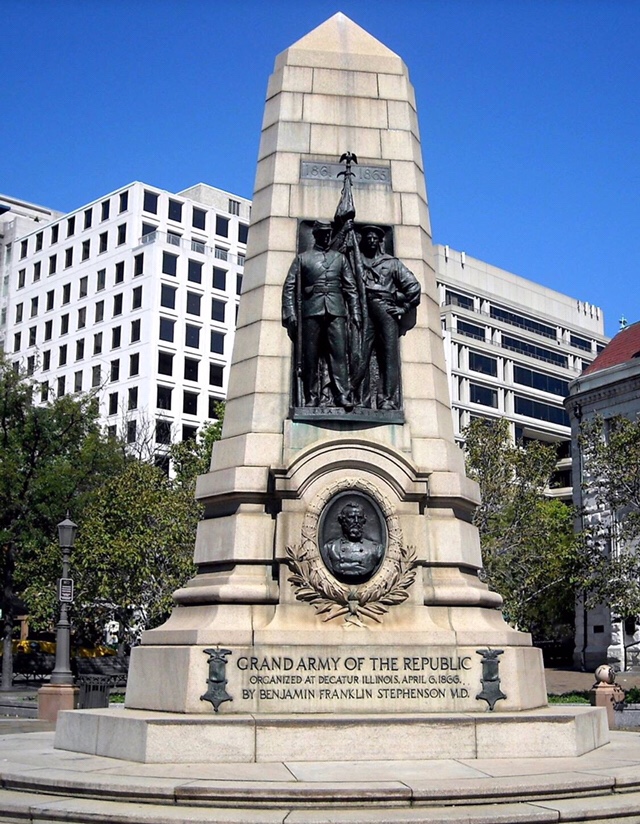
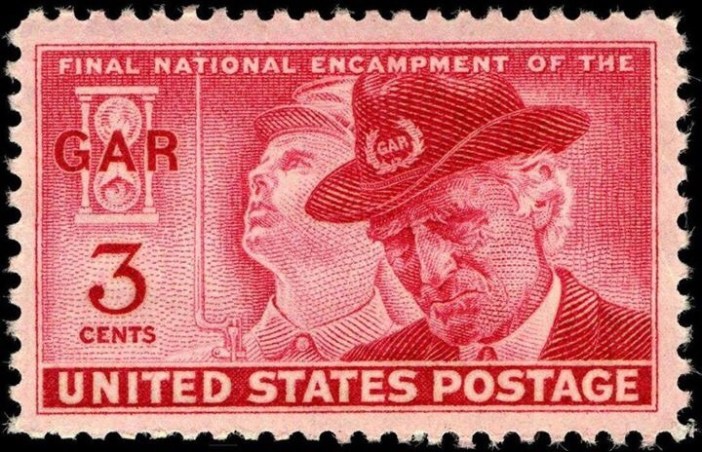
Fraternity, Charity and Loyalty.” The Grand Army of the Republic is formed in Decatur, Illinois, bringing together a Fraternal organization of veterans of the Union (US) Army, Navy, Marines, and “Revenue Cutter Service” (Coast Guard) from the Civil War.

Admittedly an arm of the Republican Party, the GAR was one of the first bi-racial fraternal organizations in the US…white and black veterans worked together to gain veteran’s pensions, elect Republican Presidents Grant, Hayes, Garfield, Harrison and McKinley, all Civil War veterans.

At it’s high point, the organization had 490,000 members; it passed with it’s last member’s death in 1956, to be replaced by the “Sons of Union Veterans of the Civil War.
Victory and Assassination

Today in History, April 4: 1865:

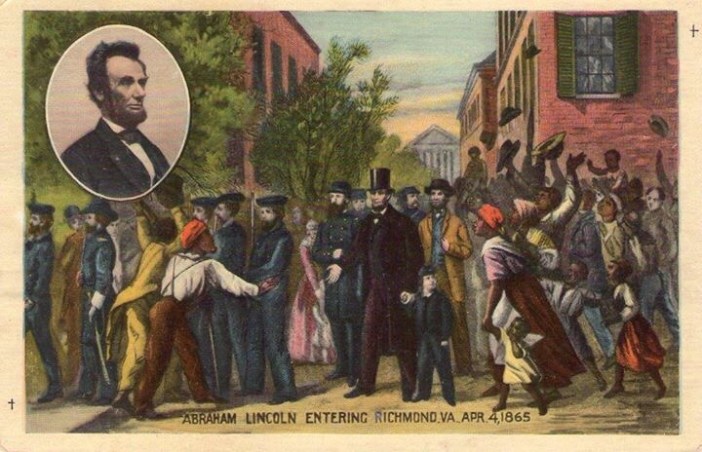
150 years ago today. President Lincoln enters Richmond, the Confederate Capitol. Lincoln had been at City Point when informed that Richmond had been taken the day before by Union Army forces.

He immediately sailed on the USS Malvern, Flag Officer David Dixon Porter’s flagship for Richmond. After he disembarked, he was initially escorted through crowds by a contingent of sailors, who were very relieved when they were met by a group of Union Cavalry to assist in escorting the President to the home of Confederate President Jefferson Davis.

Many former slaves attempted to pay homage to Lincoln, who would not allow it. Onlookers watched from the windows and street corners.

At Davis’ house, Lincoln sat in Davis’ chair, then toured the house.

When later asked by Union Gen. Weitzel how the conquered rebels should be treated, Lincoln indicated that he would not give an order in that regard, but that his advice would be to, “Let them up easy….let them up easy”.

As for the nervous sailors and cavalrymen that escorted him? As it turns out, Lincoln was safer in the Confederate capitol that his own. He had only ten days until he would be assassinated.

103 years later to the day, another man dedicated to civil rights and the advancement of justice, Dr. Martin Luther King, Jr. would be assassinated in Memphis, Tennessee.

April is a Historic month with many stories to tell.

“We, As a People, Will Get to the Promised Land…

Today in History, April 3, 1968:

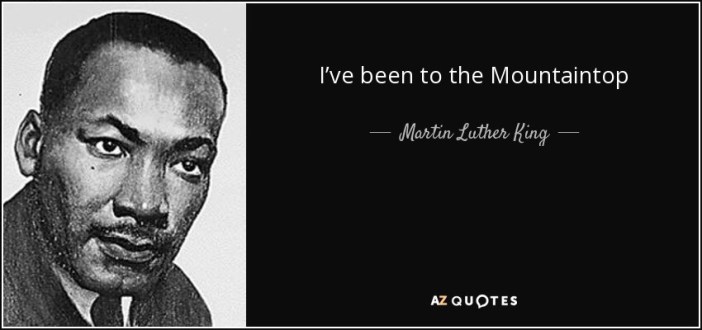
Dr. Martin Luther King, Jr. gives his “I have been to the mountaintop” speech at Memphis, Tennessee. The speech supported striking workers, civil rights, the Constitution, and, comments that if his death were to come he would be at peace. Because he had been “to the mountaintop” as Moses had, and had seen the future success of his works.

The next day an assassin would end Doctor King’s life.

But not his dream.

“Well, I don’t know what will happen now. We’ve got some difficult days ahead. But it really doesn’t matter with me now, because I’ve been to the mountaintop. And I don’t mind. Like anybody, I would like to live – a long life; longevity has its place. But I’m not concerned about that now. I just want to do God’s will. And He’s allowed me to go up to the mountain. And I’ve looked over. And I’ve seen the Promised Land. I may not get there with you. But I want you to know tonight, that we, as a people, will get to the Promised Land. So I’m happy, tonight. I’m not worried about anything. I’m not fearing any man. Mine eyes have seen the glory of the coming of the Lord.”

American Patrol & The Girl I Left Behind Me

gm-american-e1428418484501


Today in History, April 2, 1942:

In Hollywood, California, Glenn Miller and his Orchestra record their version of “American Patrol.”  The tune was originally written in 1885 by F. W. Meacham, but Miller’s orchestra would add swing and jazz to the already inspiring instrumental.

This would make it representative and nearly synonymous with the jaunty, cock-sure attitude of American servicemen fighting World War II in multiple theaters.  Miller and his band would entertain the troops with this and other hits in live shows until his death on December 15, 1944, when he would be lost while flying to France for a performance.  Think of the most popular entertainer you can, and they would pale in comparison to Glenn Miller in the late thirties and early forties.  Major Miller’s loss was felt.

It is important to remember what was occurring in April of 1942.  The attack on Pearl Harbor was only five months in the past, American troops at Bataan were about to surrender, the US Navy was conducting hit and run raids on Japanese strongholds, the Doolittle Raid on Tokyo was in this month, and Americans were training up for the war in Europe while U-Boats lurked off of American shores.

“The Girl I Left Behind Me.”  If you listen, and know what you are listening for, at about the 1:40 mark you pick up on the overlay Miller’s crew added to “American Patrol” of “The Girl I Left Behind Me.”  While versions of this tune were popular in Dublin and the British service long before, it became popular in the US Army during the Civil War and in the Cavalry as a marching tune.  So popular in fact, you’ve likely heard it in movies about the US Cavalry.


Knute Rockne Makes An Impact, Even in Death

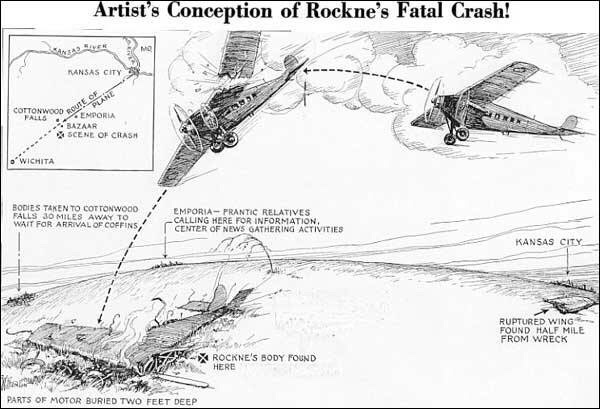
Today in History, March 31: 1931 – As TWA Flight 599, a Fokker F.10 Tri-Motor wings it’s way over Kansas between Kansas City and Wichita, the structure of one of those wings fails, and shears off. The aircraft immediately crashed into the prairie, taking the lives of all eight passengers and crew. Included in the Reaper’s tally that day was a celebrated American hero. The famous player and most winning coach of Notre Dame’s football team, who led his team to morality as well as victory, Knute Rockne. The entire nation mourned as if a President had died; and the President paid tribute as Knute’s home nation of Norway knighted him. The airline industry was forever changed; TWA nearly went under and aircraft safety became a priority.

Rawhide Down!!

Today in History, March 30, 1981:

“I hope you’re all Republicans”. President Ronald Reagan quipped to the medical team preparing to operate on him at George Washington University Hospital after he had been shot. “Today, sir, we all are.” ”

“Ronny” was leaving the D.C. Hilton where he had given a speech to Union members when he, a Secret Service agent, a D.C. Police Officer, and Press Secretary James Brady were shot by a man attempting to impress Jodie Foster.

Reagan showed his usual good form and humor in the hospital. When he awoke, a nurse was holding his hand; he looked up and asked, “Does Nancy know about us?” When Nancy arrived, he commented, “Honey, I forgot to duck” (quoting Jack Dempsey). While waiting for surgery, he stated, “All in all, I’d rather be in Philadelphia” (W.C. Fields quote). Within two weeks the President was back at work.

I’m glad we were allowed to have his honor, humor, positive attitude and leadership as long as we did.

Before They Became Enemies, They Were Brothers

Today in History, March 29, 1847:

The siege of Veracruz, Mexico, led by American General Winfield Scott, is completed successfully with the capture of Veracruz by American forces after the first amphibious landing by American troops.

This was important by itself…but it added to the historical record, because many of the comrades in arms at Veracruz would, within 13 years, despite their loyalty to each other, become devout enemies.

Fighting together at Veracruz were Robert E. Lee, George Meade, Ulysses S. Grant, James Longstreet, and Thomas “Stonewall” Jackson. Some would be Unionists, some Confederates…but before the Civil War, they are comrades.

Congress Censures Jackson

Today in History, March 28, 1834:

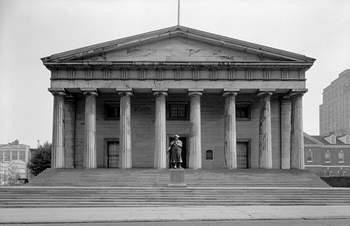
For the first time, Congress censures an American President, Andrew Jackson.

Jackson wanted to dismantle the 2nd “Bank of the United States”. With nearly all of the country’s finances controlled by a central bank, the ultra wealthy that controlled the bank had an inordinate amount of power. With this power they controlled economic and political events, more so than the government or the people.

Jackson (man of the people), angered by many of their actions, vetoed a Congressional act to renew the bank’s charter. He then had the treasury divide the funds formerly controlled by the Bank of the United States amongst numerous state banks, who were more willing to give loans to common citizens and to invest in western interests.

History.com’s report indicates that Democrat Jackson had more personal reasons, and that the dispute was to a large extent between him and Senator Henry Clay, who History.com identifies as a Whig, then in parenthesis indicates a Whig is the same as a Republican.

After listening to a biography of Jackson, I found that Jackson’s motives were more pure…he was the first President to come up from a hardscrabble life and resented the bank’s refusal to help lower income Americans.

Some of my other reading has taught me that Whig does not equal Republican. In 1854 (20 years after these events) several Whig politicians (including Abraham Lincoln) broke away from the Whig party and created the Republican party because they were abolitionists and felt the Whig party was not living up to their ideals. I don’t know whether the History Channel misreported these subjects intentionally, or out of simple error. Either way, don’t assume something is accurate simply because it made it into print. Study it for yourself, whether its history or politics. Which often are intertwined.

Cherry Blossoms

Today in History, March 27, 1912:

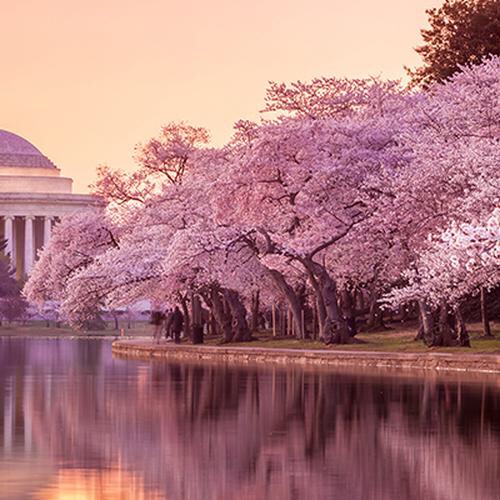
First Lady Helen Taft and the wife of the Japanese Ambassador, Viscountess Chinda, plant two Cherry Blossom trees along the Potomac near the Jefferson Memorial.

They were part of 3,020 Cherry Blossom trees given to the US by the Japanese to be planted in DC. The city of Tokyo had actually given 2,000 trees in 1910, but they were diseased by the time they reached the US and could not be used.

A private Japanese citizen then paid to have the 3,020 trees sent in their place. The beautiful trees bloom each Spring, and are the subject of festivals.

The trees came from a famous collection in Tokyo, which was mostly destroyed during bombing in WWII. After the war, the US sent cuttings from DC’s trees to replenish the Tokyo collection from whence they came.

Six Frigates…The US Navy Makes a Name for Itself

Today in History, March 27: 1794:

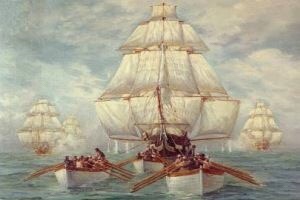
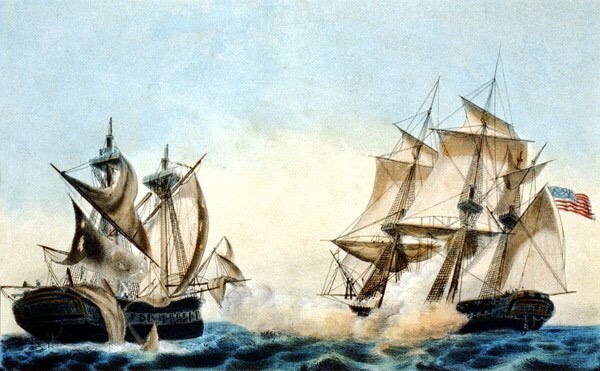
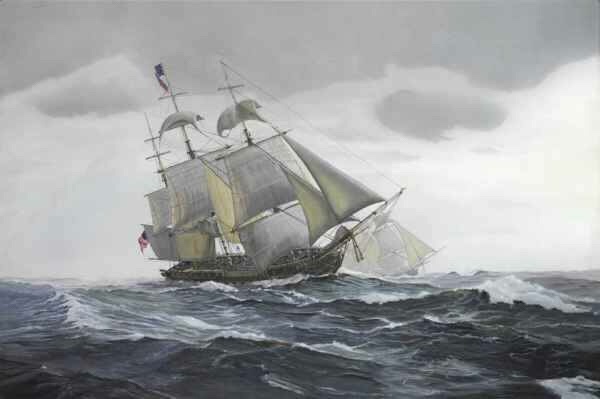
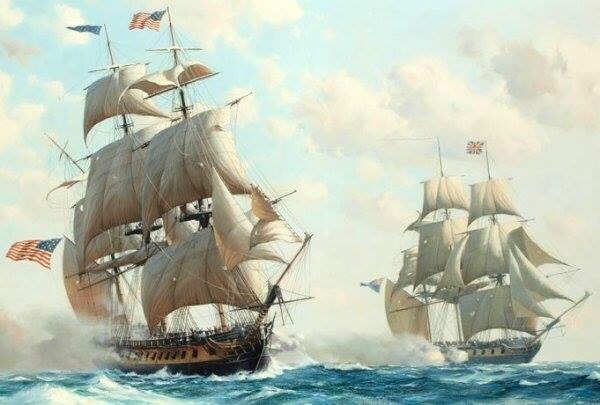
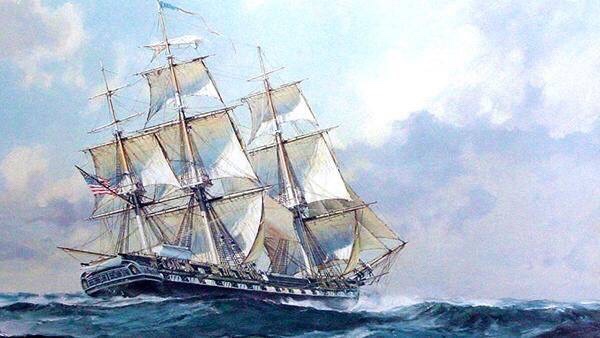
President Washington signs the Naval Act of 1794, ordering the construction of 6 Frigates capable of high speed and of holding their own against “ships of the line.”

After the Revolutionary War, America didn’t feel it needed a navy; after having several ships seized by Barbary pirates, and after abuses by the Royal Navy, the administration and Congress came to the realization that America needed a navy to protect it’s shipping.

Thus the USS Constitution (Old Ironsides, oldest commissioned US Navy vessel), USS Constellation, USS President, USS Congress, USS United States and the USS Chesapeake began their illustrious Naval careers.