The Real “First” World War?

Today in History, February 10: 1763 –

“The Seven Years War”, or as it was known in the colonies, “The French and Indian War” ends with the Treaty of Paris. Britain and France had been battling for years in America, Europe, India and on the high seas over their competing imperial interests. Spain had taken sides with France. Both Britain and France had their allies in what could be considered a World War.

After several British victories on land and at sea, and after several of France’s allies had signed separate peace treaties, France and Spain finally came to the table. France gave up several of her holdings including in Canada, America and India.

The Spanish received the Louisiana Territory, the British received Spanish Florida.

Probably the most important issues for the American colonies however, are these: Many Americans, such as George Washington, gained extensive military experience fighting the French and their Indian allies during the war. And when Americans decided less than two decades later to fight for their independence from the British Crown, the French had a grudge to settle; it wasn’t that difficult for Ben Franklin to convince France to come in on the side of the Colonials. French Naval might was pivotal to the American victory.

US Weather Service

Today in History, February 9: 1870 –

President US Grant signs a joint resolution of Congress creating The US Weather Bureau. The Bureau was initially placed under the Secretary of War, in the belief that weather watch stations placed on military bases across the interior would give warning to the east coast of approaching weather fronts. The Bureau had several incarnations as it grew with technology. Today it is part NOAA, the National Oceanic and Atmospheric Administration…the Bureau has saved countless lives with it’s continued advancements in warning capabilities.

A Happy Home

Today in History, February 7: 1867 –

“Pa and Ma always managed to create a happy, secure home wherever they lived–whether in the little log cabin in the woods near Lake Pepin, Wisconsin, on the prairie near the Verdigris River in Indian Territory, the sod dugout by Plum Creek in Minnesota, the surveyor’s house on Silver Lake, the homestead shanty on the claim, or in Pa’s house in the brand-new town of De Smet in Dakota Territory.”

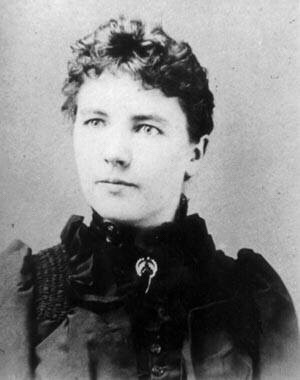
Laura Ingalls-Wilder is born in Wisconsin. Her children’s books would bring the frontier prairie home to millions.

http://memory.loc.gov/ammem/today/today.html

“The Way to Disarm is to Disarm” -US Sec of State Charles Evans Hughes

Today in History, February 6, 1922:

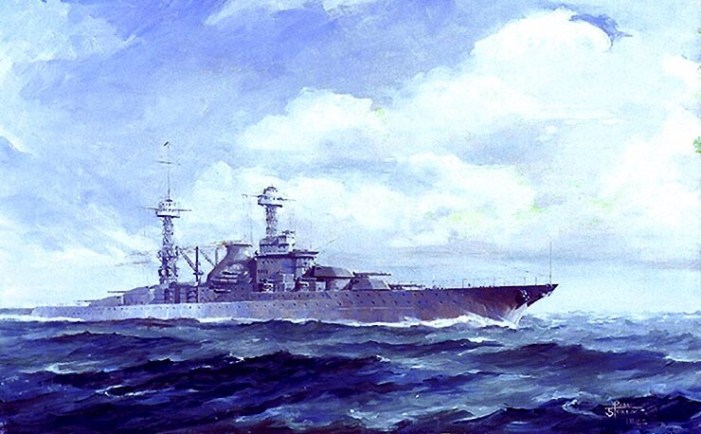
The Washington Naval Treaty of 1922 is agreed to by the remaining Navy powers from WWI. It would be a year until all the signatories had done so, but their representatives in DC made the agreement today.

It should have been perfect, as it had that one thing necessary for a successful negotiation: Everyone agreed, nobody was happy.

It agreed that certain capital ships would be limited by number and tonnage. Battleships and Battlecruisers would be limited.

The ratio of Navy size would be 5-5-3-1.75-1.75…England-US-Japan-France-Italy. So you can see why nobody was happy.

This was the nuclear limitations treaty of the 20’s.

Here are the many consequences of the treaty:

New Battleships could only be of a certain tonnage with guns no more than 16 in. In the mid 30’s Japan began ignoring the limitations, so for the beginning of WWII, American BB’s were seriously undersized compared to the monsters Yamato and Musashi. But that wouldn’t last long.

After WWI several of the nations had battlecruisers under construction…they could either scrap them or convert them to “less valuable” warships…Aircraft Carriers. This were born Akagi, Kaga, Lexington and Saratoga. More carriers of limited tonnage could be buit…this were born the Ranger, Yorktown, Enterprise and Hornet; Shokaku, Zuikaku and others.

After nearly two decades of intrigue, cheating, etc, as a result of the Washington Naval Treaty, Japanese flyers sank obsolete Battleships at Pearl Harbor, with planes from carriers.

The American carriers who amswered back, and unfortunately the USN and IJN traded losses fairly evenly…until only one US Carrier was left to counter the Japanese fleet in the Pacific.

But as the Japanese sailors in DC in 1922 had predicted, due to massive American industrial might, within a year of that carrier finding herself alone, the Enterprise was joined bu over a dozen modern, huge carriers of the Essex class and fast new Battleships.

Heroism and Sacrifice

The date is off for today’s post. My extended family is mourning the loss of yet another first responder in Colorado. So my mind went back to some other Colorado heroes who affected me and so many others years ago. I had to share it in their memory and in the honor of my Colorado LE family.

Today in History, July 31: 1976 –

The Big Thompson Canyon Flood. While Colorado was celebrating its Centennial, a highly unusual thunderstorm broke out high in the mountains, near the source of the Big Thompson Canyon in northern Colorado.

The storm deluged the canyon with the equivalent of 3/4’s of the areas annual rainfall in a matter of hours. It sent a wall of water 20 feet high racing down the canyon; residents and tourists miles away from the storm near the mouth of the canyon had no idea there was a storm higher up, much less a torrent of flood water headed their way. 144 died.

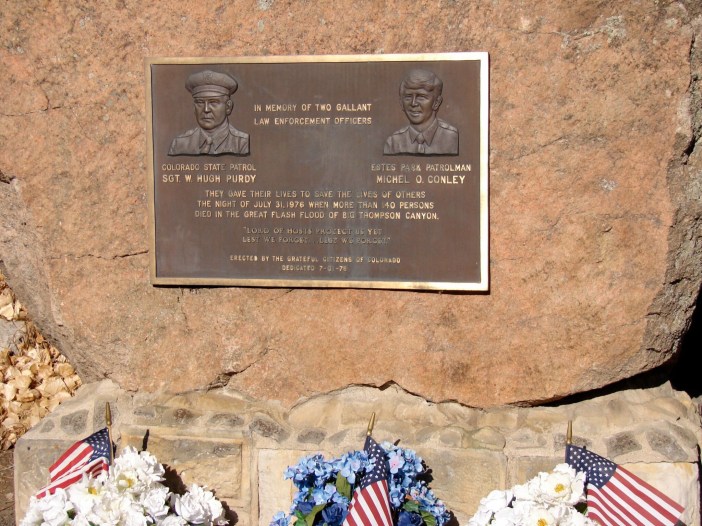
Colorado State Trooper Sgt. W. Hugh Purdy and Estes Park Officer Michel O. Conley were advised of the approaching flood. Remember that this before cel phones and other mass media, most of which wouldn’t have worked in the canyon anyway.

These men drove their patrol cars up the canyon, telling people to flee using their public address systems, with full knowledge of what they were doing….until they met the water and were killed.

I saw this memorial while visiting relatives in Greeley, CO as a teen. These men are part of the reason I’m a cop. God bless them and their families.

The Philippine – American War

Today in History, February 4: 1899 –

The beginning of the Philippine-American War. The Americans had won the Spanish-American War, obtaining several Spanish colonies in the process.

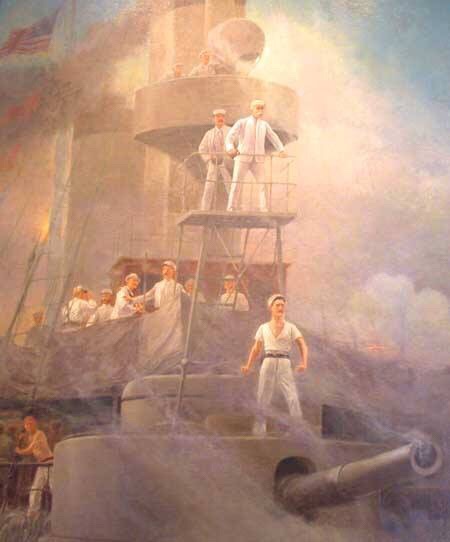
The Americans knew the value of Cuba, but even President McKinley had to have the Philippines, where Admiral Dewey had won a tremendous naval victory, pointed out to him on the map.

McKinley commented that he wished Dewey had just sailed away after the victory…what was America to do with the Pacific Island nation??

But after further research, it was discovered that Germany would love to obtain the opportunities for a coaling station and empire. America and their British allies couldn’t have that. So the US annexed the Philippines…for the time being.

The Philippinos, who some in the US saw as “Indians” of the west…thinking the US was a liberator, turned to war for their independence. Oddly enough, the Americans did see themselves as liberators, having no desire for traditional imperialism. After 4 years of war, a compromise was reached. The Philippines would eventually be an independent nation.

The Fifteenth Amendment

Today in History, February 3: 1870 –

“Section 1. The right of citizens of the United States to vote shall not be denied or abridged by the United States or by any State on account of race, color, or previous condition of servitude.

Section 2. The Congress shall have power to enforce this article by appropriate legislation.”

The Fifteenth Amendment to the US Constitution is ratified, solidifying the rights of African-Americans to vote. This and several other legislative actions were passed by the Republican majority after the Civil War in the advancement of civil rights in America.

They Found What on The Land We Sold??

Today in History, February 2: 1812 –

The Russian government establishes Fort Ross…just north of San Francisco on the California coast. The Russians had been in western America since 1741 (Alaska) and needed Ft. Ross as a base and farming area to supply their sea otter operations farther north.

The farming in the area proved poor, the competition with Mexican nationals and Americans moving west proved too much. In 1841 Russia sold the fort to American John Sutter for $30,000 which he reportedly never paid. He used the supplies at the fort for his Sacremento Valley settlement where gold would be discovered 7 years later.

The Thirteenth Amendment

Today in History, February 1: 1865 –

“Section 1. Neither slavery nor involuntary servitude, except as a punishment for crime whereof the party shall have been duly convicted, shall exist within the United States, or any place subject to their jurisdiction.

Section 2. Congress shall have power to enforce this article by appropriate legislation.”

One day after Congress passed the Thirteenth Amendment to the US Constitution, President Abraham lincoln signs the act outlawing slavery.

It would take until December of the same year for enough states to ratify the amendment so that Secretary of State William Seward could proclaim it the law of the land. Of course Lincoln would give his life the cause of Union and freedom before then.