“the greatest battle implement ever devised.”

Today in History, January 9, 1936:

“the greatest battle implement ever devised” – Gen. George S. Patton

1936 – The first semi-automatic rifle is issued to the US Army in the form of the M-1 Garand Rifle. Semi-automatic, meaning that a round would be fired each time the trigger was pulled.

The rugged rifle would be used by American fighting men to help win WWII.

And For Your Trouble…

Today in History, January 8: 1642 – Italian astronomer Galileo Galilei dies in Italy at age 77. Considered the father of astronomy, Galileo was the first to use a telescope, enabling him to makes several stellar discoveries. This included the ability to confirm that the earth rotated around the sun, rather than the other way around. He published his findings and for his trouble, in 1633 (Inquisition) he was convicted of heresy, sentencing him to house arrest (due to his advanced age) until his death.

Electoral College

Today in History, January 7, 1789 –

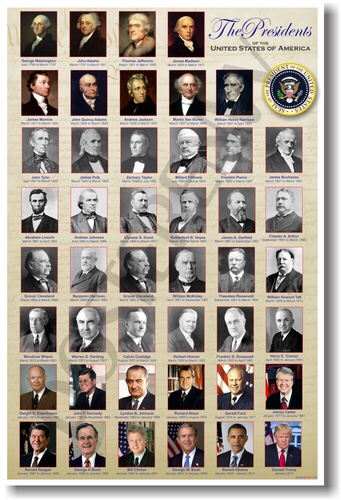
The states first elected their Electoral College electors, who would elect George Washington as the first President. The Electoral College was established so that less populated states would not be left without a say in the choice of the Chief Executive.

If the President was elected by popular vote, the states with the highest population would always made the decision. This was of great concern to the more rural, less populated states.

The system has been tested several times throughout our history, and surely will be again.

Death had to take Roosevelt sleeping, for if he had been awake, there would have been a fight.” -Vice President Thomas Marshall

Today in History, January 6: 1919 –

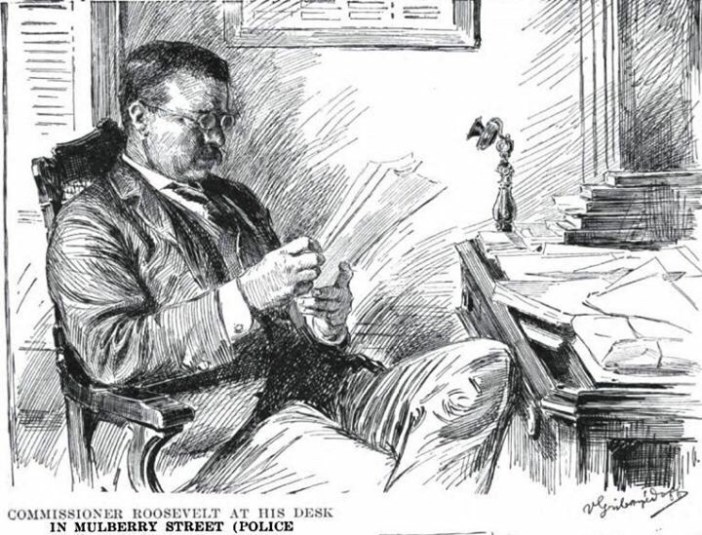
“Death had to take Roosevelt sleeping, for if he had been awake, there would have been a fight.” -Vice President Thomas Marshall. President Theodore Roosevelt dies at Sagamore Hill, Oyster Bay, New York in his sleep of a heart attack. “Teddy” had taken every last drop of adventure and worthiness that he could squeeze out of life in the preceding 60 years.

Roosevelt had been a sickly child; constantly plagued by breathing problems, he could rarely play with the other children. His father, Theodore Sr., a remarkable man himself, told “Teedie” that if he wanted to have a successful life, he would have to take charge and force his body into the form he needed to match his intellect. Roosevelt did just that. He took exercise as his “raison detre” until he was barrel chested and of vigorous health. Each time he became sick during his life, he would simply work through it.

As a young man, while serving in the New York Assembly, Roosevelt’s wife and mother died on the same day…February 14, 1884. Roosevelt fled into the west, becoming a rancher and for a time a lawman in the Dakota Territory. The experience would strengthen him and give him a background people respected.

During his life he was a state rep from New York, the Police Commissioner for New York City, Governor of New York, the Assistant Secretary of the Navy (he oversaw the building of a modern US Navy while his boss was not paying attention), he led the “Rough Riders” (1st Volunteer US Cavalry) up San Juan Hill in the Spanish-American War, became Vice President, and the President after President McKinley was assassinated.

As President he defined the modern presidency, breaking up monopolies, seeing that mistreated workers got a fair shake, sent the “Great White Fleet” around the world establishing American as a world influence, saw the Panama Canal built, saw the establishment of the National Parks Service, and countless other accomplishments.

He worked tirelessly for the American people. After the Presidency he traveled extensively, going on an African Safari, and exploring an unknown region of South America, “The River of Doubt”; a region so treacherous that it was considered a no-man’s land. He nearly died in the mapping of the river, now called “Rio Roosevelt” in his honor.

All of his male children fought in WWI, and the only reason Teddy didn’t was because the Democrat President (Wilson) refused to let him, afraid Roosevelt would run against him in the next election and win. One of his sons, Quentin, would be shot down over France and be killed. That was the last straw for the “Old Lion”. He mourned dreadfully until his death.

One of his other children, Theodore Roosevelt, Jr., would be the only General to go ashore with the troops at D-Day in WWII; Teddy Jr would die of a heart attack himself several weeks after the Normandy invasion. The entire world would mourn President Roosevelt’s passing; he had become larger that life, a hero to people the world over. The quintessential American. And in case you couldn’t tell, my favorite Hero.

Ground Breaking Labor Decision

Today in History, January 5: 1914 –

The Ford Motor Company makes the radical decision to double it’s employee’s pay to $5 per day, and to reduce their hours to 8 hours per day.

Ford’s competitors were unhappy, but followed suit once the company’s productivity and profits doubled.

It may not seem like much now, but it was ground breaking in 1914, much like Ford’s use of the assembly line had been.

Colt Walker

Today in History, January 4: 1847 –

Samuel Colt sells 1,000 revolvers to the Texas Rangers. Capt. Samuel Walker of the Rangers had used one of Colt’s revolvers in the Seminole wars and was so impressed that he traveled to New York City to find Colt. He ordered the revolvers, insisting that the order include 6 shots rather than 5, and have enough caliber to kill man or horse. The finished product was named the “Colt Walker”, and was followed by another thousand, which allowed Colt to build his own factory.

Colt was not the first to make a “revolving gun”, but he did perfect interchangeable parts and an assembly line to make his reliable pistols.

“Show Me a Hero…”

Today in History, January 3, 1944:

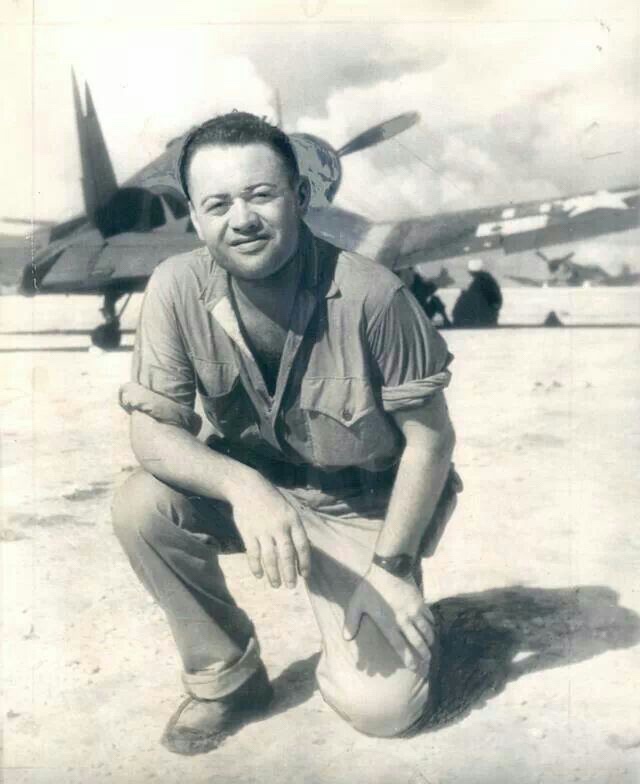
Moments after he became the top fighter ace in the Pacific Theater by shooting down his 26th enemy plane, USMC Major Gregory “Pappy” Boyington was himself shot down over the Japanese base of Rabaul.

He would be captured by the Japanese and held prisoner, brutally treated until rescued from a Japanese prisoner of war camp.

Boyington had been one of the American servicemen to resign their commissions to serve in the AVG, the American Volunteer Group, or “Flying Tigers” in China prior to America’s entry into the war. After Pearl Harbor he rejoined the Marines and fought in the Pacific. Boyington was a Medal of Honor recipient. A warrior. And a drunk. In his good will tours after the war, he stated bluntly, “Show me a hero, and I’ll show you a bum.”

Air Victories from WWII to Vietnam

Today in History, January 2, 1967:

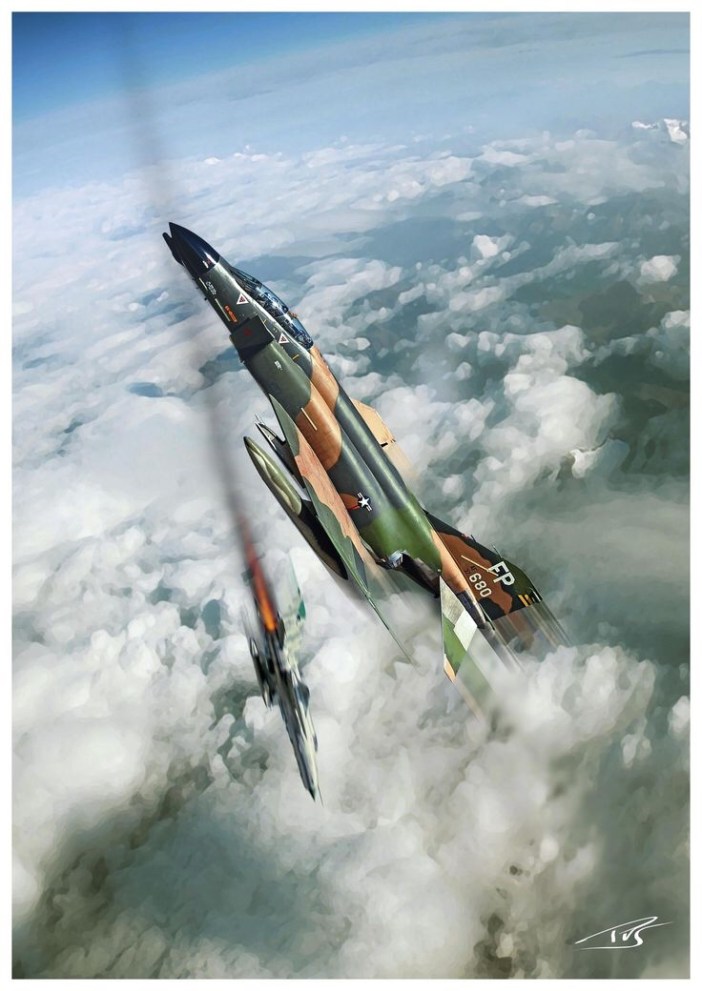
USAF Colonel Robin Olds shoots down his first MIG 21 in the Vietnam War.

This made him the first and only US airman to score aerial victories in both WWII and Vietnam.

In WWII he flew the twin engine P-38 Lightning and the P51 Mustang; in Vietnam the F4 Phantom.

He would shoot down 16 aircraft, making him a triple Ace.

Amazing Grace

Today in History, January 1: 1773 – Minister John Newton of Olny, Buckinghamshire, England first uses a hymn that he wrote with William Cowper that would later become known as Amazing Grace. He was inspired to write the hymn about renewal and redemption by his own life. Before finding God and being ordained, he had been an insubordinate sailor (impressed into the Royal Navy) and then becoming a slave trader. The hymn would not be matched the tune “New Britain” in America until 1835.

The Gadsden Purchase Drama

Today in History, December 30: 1853 –

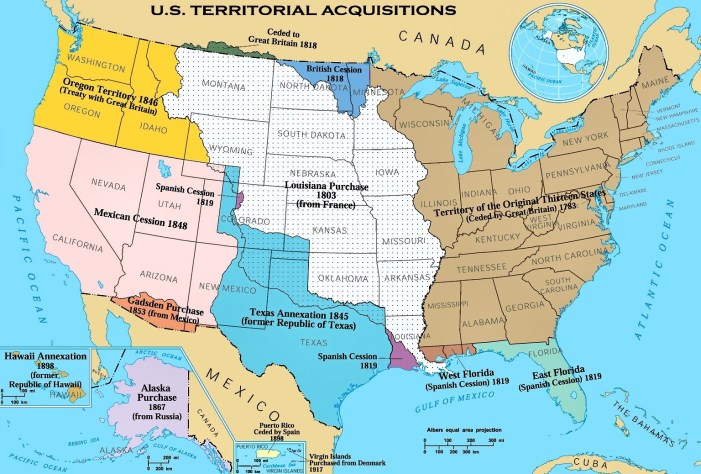
The Gadsden Purchase. The last major expansion of continental US territory takes place when US Ambassador to Mexico James Gadsden and Mexican President General Antonio Lopez de Santa Anna sign a treaty giving over a large segment of what is now New Mexico and Arizona from Mexico to the US for 15 million dollars to facilitate a southern US railroad, because a more northern route was too mountainous. The story seems pretty plain. But as I researched it, I found more and more intrigue and drama to be involved.

Gadsden was an ardent slavery proponent, sent on this mission by then US Secretary of War Jefferson Davis to negotiate the agreement on behalf of President Pierce. Gadsden and Davis, of course, shared views that more slave holding states should be added to the Union.

This was a point of major contention in the Congress, which debated the treaty extensively for those very reasons. Santa Anna, having lost badly in the war for the independence of Texas (Tejas) and the Mexican-American War, had been in and out of office repeatedly. Ironically, he was willing to sell additional Mexican territory to the United States so that he could afford to fund a Mexican army to defend against…the United States.

This last purchase established the current continental boundaries of our nation. Primarily because southern business interests didn’t want to depend upon a northern railroad route to ship their goods to California, not trusting the Yankees in this pre-Civil War era.