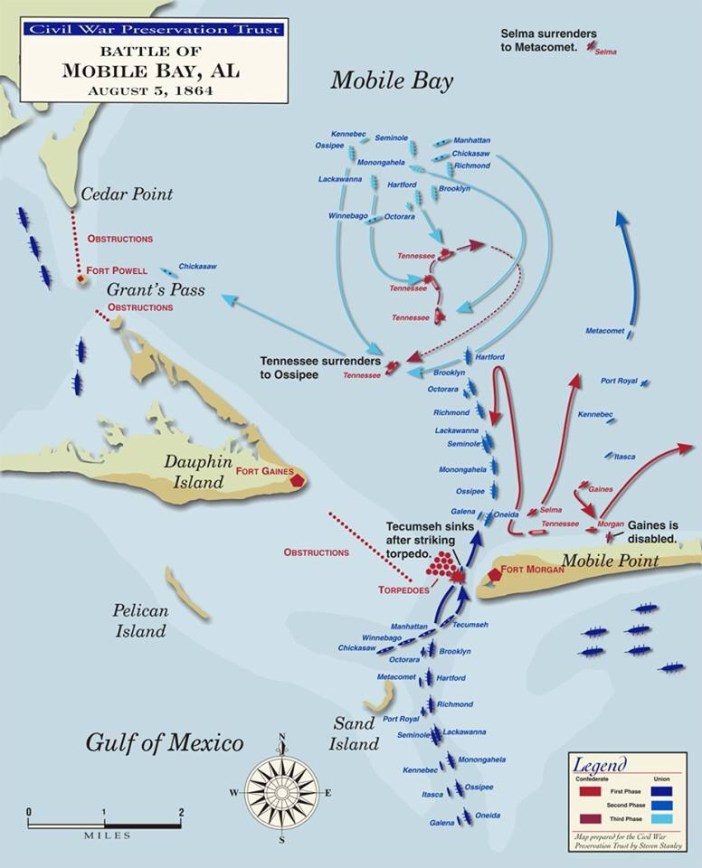
The Battle of Mobile Bay. During the Civil War, Confederate “blockade runners” (Rhett Butler types) kept the South in vital supplies by running past the Union Navy blockade from Cuba to ports like Mobile Bay, Alabama.
US Navy Admiral David Glasgow Farragut was tasked with closing this last Confederate source of supplies. His fleet had to fight past the Confederate fleet of ironclads and two forts that guarded the bay. As the battle progressed, the Union fleet began to fragment, until Farragut rallied his sailors with famous admonition, winning the battle.
Mobile would remain in Confederate hands, but access to it was cut off for the duration. Farragut was the adopted son of US Naval Officer David Porter, who also raised his biological sons, famous Naval officers David Dixon Porter, and William Porter. One family played such a vital role in the glory of the US Navy. Can you imagine being a part of it?
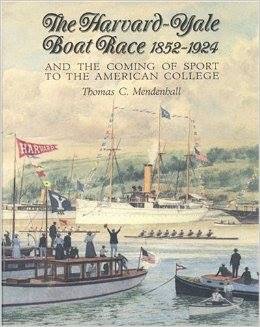
In the very first inter-collegiate sports competition in America, Harvard University wins the Harvard-Yale Regatta, a row boat race held on Lake Winnipesaukee in New Hampshire. Except during war, the race has continued since, albeit in difference locations.
While Colorado was celebrating its Centennial, a highly unusual thunderstorm broke out high in the mountains, near the source of the Big
Thompson Canyon in northern Colorado.
The storm deluged the canyon with the equivalent of 3/4’s of the area’s annual rainfall in a matter of hours. It sent a wall of water 20 feet high racing down the canyon; residents and tourists miles away from the storm near the mouth of the canyon had no idea there was a storm higher up, much less a torrent of flood water headed their way.
144 died.
Colorado State Trooper Sgt. W. Hugh Purdy and Estes Park Officer Michel O. Conley were advised of the approaching flood. Remember that this was before cell phones and other mass media, most of which would not have worked in the canyon anyway.
These men drove their patrol cars up the canyon, telling people to flee using their public address systems, with full knowledge of what they were doing….until they met the water and were killed.
I saw this memorial while visiting relatives in Greeley, CO as a teen. These men are part of the reason I’m a cop. God bless them and their families.
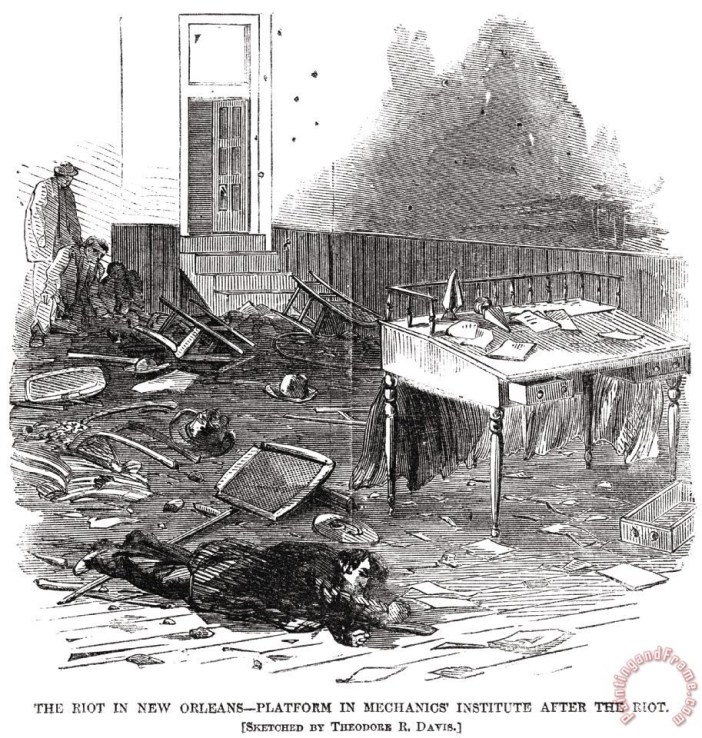
The New Orleans Riot. NOLA had been under Union control for most of the Civil War, although deep South in geography and sentiments. In 1864, a state convention of mostly Confederate sympathies had tried to enforce “Black Codes” to limit the rights of Freedmen.
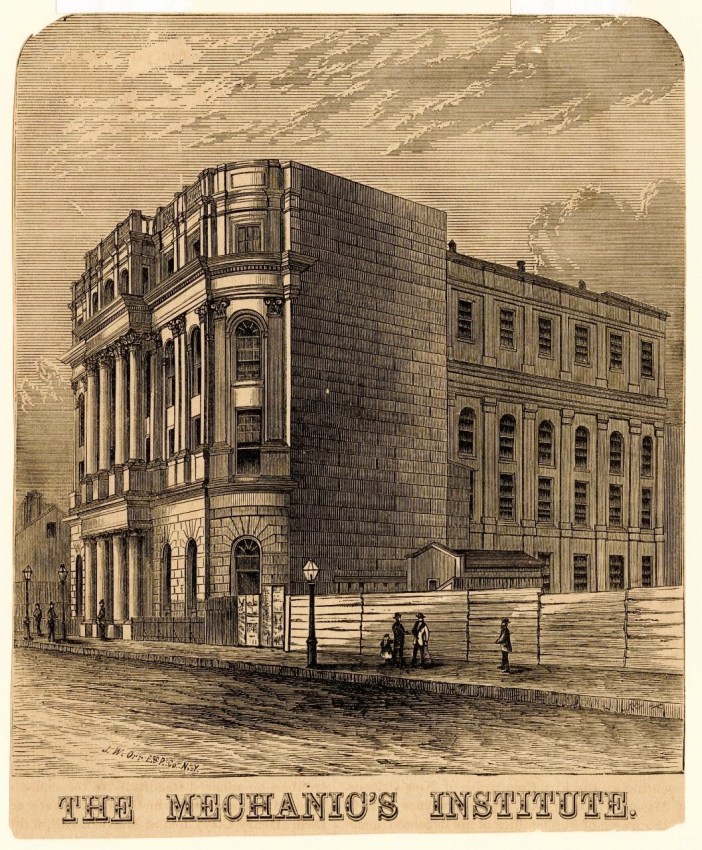
Now that the war was over, “Radical” Republicans were holding a state convention in The Mechanic’s Institute in New Orleans in hopes of gaining control of the legislature.
A group of black Union veterans formed and marched to the Institute in support of the Republicans, where they were attacked by an armed group of former Confederates, including some authorities (the Mayor and others were Democrat former Confederates). 34-35 black and 3 white Republicans were killed.
Other similar riots in the South occurred, convincing enough voters that more stringent Reconstruction policies were needed.
In November Republicans would sweep into both houses of Congress by 77%. The next year they would force through the Fourteenth Amendment protecting citizenship rights and equal protections over the protests of Democrats in Congress. Before it could be ratified, the Reconstruction Acts were passed…requiring former states to ratify if before they could be represented in Congress.
The Confederates had caught the Union soldiers mostly unaware and the first battle at Shiloh Meeting House had been a rout. The losses on both sides had been horrendous.
Union General Grant had been calm through it all. Despite the allegations he’d been drunk…again…he looked at the big picture and planned for the second day.
That night, amidst the cries of the wounded, General Sherman found Grant alone.
Sherman: “Well. We’ve had the devil’s own day of it, haven’t we?”
Grant, calmly and matter of factly, “Yes. Lick ‘em tomorrow though.”
That was all. No ostentatious oratory. He had it planned out in his head and now that he was back on his element, his confidence was back.
An example of how to live our lives when you’ve had a devil’s day of it.
Today in History, July 16, 1885: Sam finishes his book.
Sam had led a bit of a rough life. He saw great success, no doubt, but he was also an alcoholic. His father struggled with the demon for a time, and his grandfather had succumbed to it. In those days they didn’t realize it was often a family trait or a disease…it was simply a weakness. Sam had fought the demon his entire adult life. He was brilliant at is chosen profession. He quit it for a time because of his drinking and tried other jobs…farmer, realtor, shopkeeper…none worked out. As brilliant as he was, he had another weakness; he had a big heart and was much to quick to trust people with his money. So Sam spent most of his life broke.
Even with this, events in his life led him in a round about way to the pinnacle of success. He succeeded where others failed miserably due to his tenacity, his organizational skills and his ability to see the big picture. Yet through it all, no matter how much he achieved, his detractors never forgot, and certainly never let him forget, his demons.
Sam had made his fortune at last…but then, in his older years when there was little to no chance of building success anew, his other failure reared its ugly head again. The people he trusted with his money were scoundrels, and he found himself…and more importantly to him, his family, destitute once again.
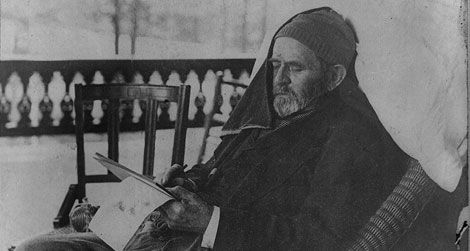
Living on borrowed money, things got worse. One day while eating a peach his wife had given him, he felt as if he had been stung by something within it. He had no time for doctors and stubbornly toiled for months until the pain was unbearable to relent to his wife’s demands to see his physician. By then, it was too late. The mouth and throat cancer was advanced, and all that could be done was to provide him with pain killers until the end would come.
Sam’s father had been an inveterate braggart, a schemer and an incessant talker. It embarrassed Sam so that he became the exact opposite. Quiet and humble to a fault, it took everything he had to do what he had refused for years…to blow his own horn and tell his own story. But now it was the only way he could leave his wife and children with a means of support. So he threw himself into the task.
For over a year he wrote. He wore a muffler to cover the baseball sized tumor at his throat. Typical of his demeanor, he never complained of the excruciating pain that wracked him day and night…his family only saw him grimace from the pain when he was asleep and unable to hide it.
Sam worked with a purpose…he amazed his publisher by finishing 10,000 words in a day, written out. Mark couldn’t believe it…Mark was one of the most prolific story-telling authors of his time, and could never match Sam, who disliked the task of telling his own story. But now he had to…for his family…for his legacy because his old detractors were only too happy to repeat their own refrain, “See, we told you so.”
Fighting past the pain and past the fog of his medications, he toiled even when he could no longer write, and tortured himself to dictate his story to others.
Finally on July 16, 1885, Sam completed his autobiography. Mark had promised to publish it for a handsome price which would see to it that Sam’s family did not want for anything. It was suspected that Mark had ghostwritten the work…which he adamantly and angrily denied. His friend Sam had written the work…brilliant and surprising as usual.
Having won his last battle, he could let go now. Seven days later on July 23, 1885, Hiram Ulysses Grant, “U.S. Grant” due to an Army administrator’s error in his youth, Sam to his friends, a drunk to his detractors, an amazing horseman and hero of the Mexican-American War, General of the Army and President of the United States, passed from this earth.
Mark Twain saw that “The Personal Memoirs of U.S. Grant” was published and the family was treated fairly and well. Sam had found someone trustworthy this time. I’ve read General Grant’s memoirs, and they would be impressive if written by someone in perfect health. They are nothing less that heroic considering the suffering he endured during his final work.
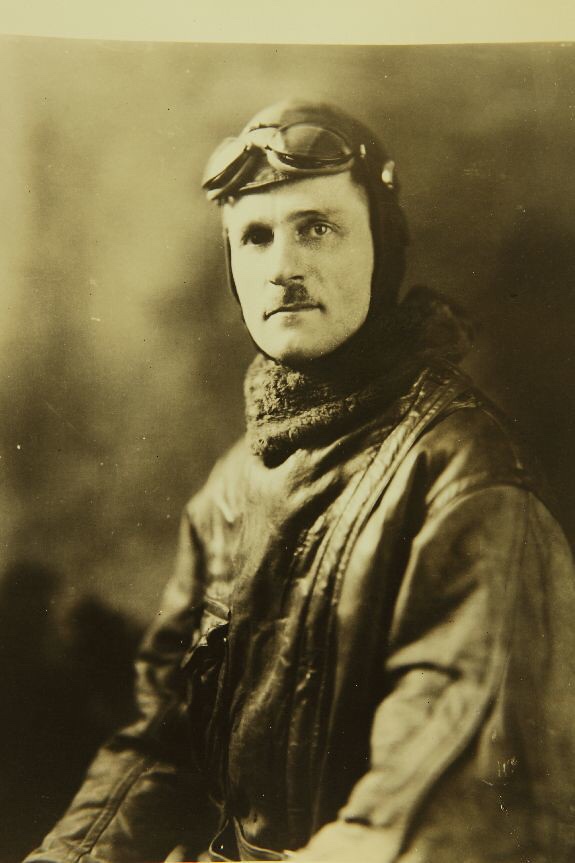
Spaatz was a fighter pilot in his youth during WW1. He remained in the Army Air Corps, and when WW2 began went to England.
As German bombs fell on London during the Blitz and everyone else ran for the shelters, Spaatz sat on rooftops to gain knowledge of German tactics by watching their bombers and fighters in action.
When America entered the war, he became the commander of the Eighth Air Force as it began daylight bombing raids over Germany.
After the war, the Army Air Corps was separated from the US Army and became its own military branch, the US Air Force in 1947. Spaatz was it’s first Chief of Staff.
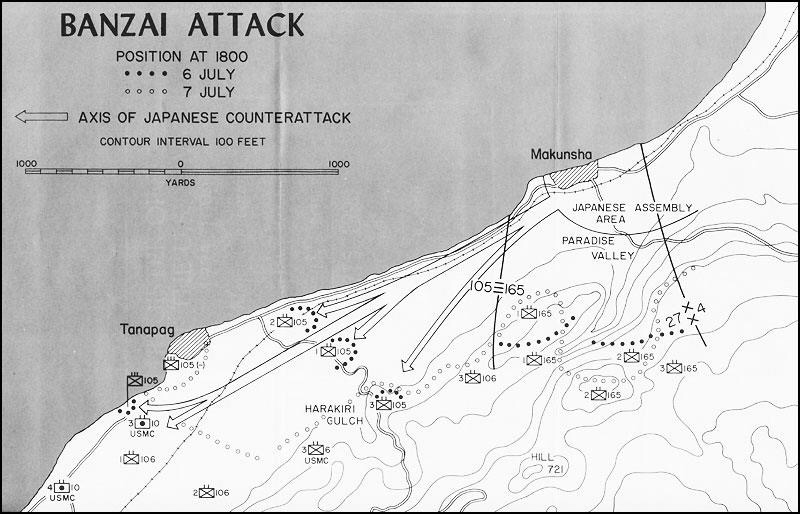
The largest Japanese Banzai charge (suicidal attack) of World War II is conducted during the Battle of Saipan, when the Japanese military is finally cornered on the island.
3,400 Japanese soldiers, including the wounded and civilians were killed as they charged the US Army and Marines. 650 Americans would die in the massive attack, but they held firm, and within two days the island was declared secure.
I won’t post the photos and videos I found, as they are gruesome. Look them up if you’d like.
3 posthumous medals of honor would be awarded out of this horrific battle.
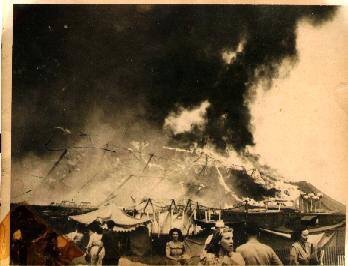
During a performance by Barnum & Bailey Ringling Brother’s Circus, held in a massive tent, the tent suddenly caught fire. The tent had been treated with a mixture to make it waterproof that was also flammable, and the fire spread very quickly and within seconds large flaming sections were falling on the spectators below.
Many managed to escape by cutting holes in the sides of the tent, but when the supporting ropes burned through, the tent poles gave way and the entire structure came down. Between 167 and 169 people were killed and 700 injured, mostly children.
Today in History, July 4: This is my favorite day of the year to post, not only because it is America’s birthday, but because the date is so rich in American History.
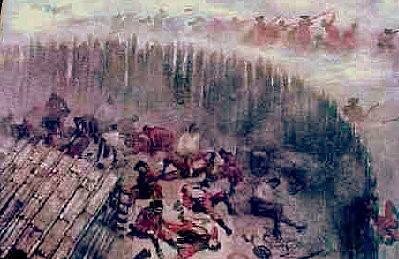
1754 – During the French and Indian Wars, a young colonial member of the British Army abandons “Fort Necessity” after surrendering it to the French the day before. The officer, 22-year-old Lt. George Washington had also commanded British forces in the first battle of the war on the American continent weeks before. The French and Indian Wars were only part of a global conflict between England and France, the Seven Years War. His experience here would serve Washington well in our War for Independence.
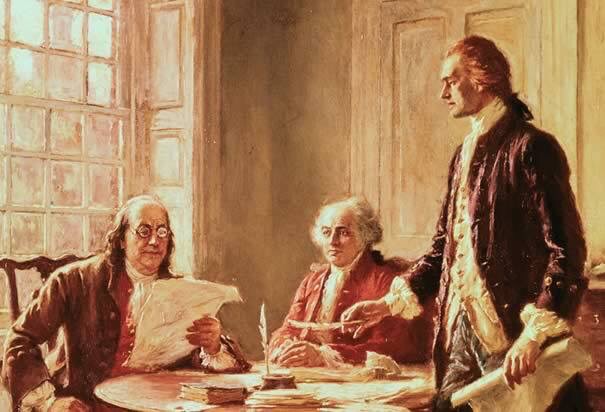
1776 – The second Continental Congress adopts the Declaration of Independence from England after years of conflict as colonists, “We hold these truths to be self-evident, that all men are created equal, that they are endowed by their Creator with certain unalienable Rights, that among these are Life, Liberty and the pursuit of Happiness.”
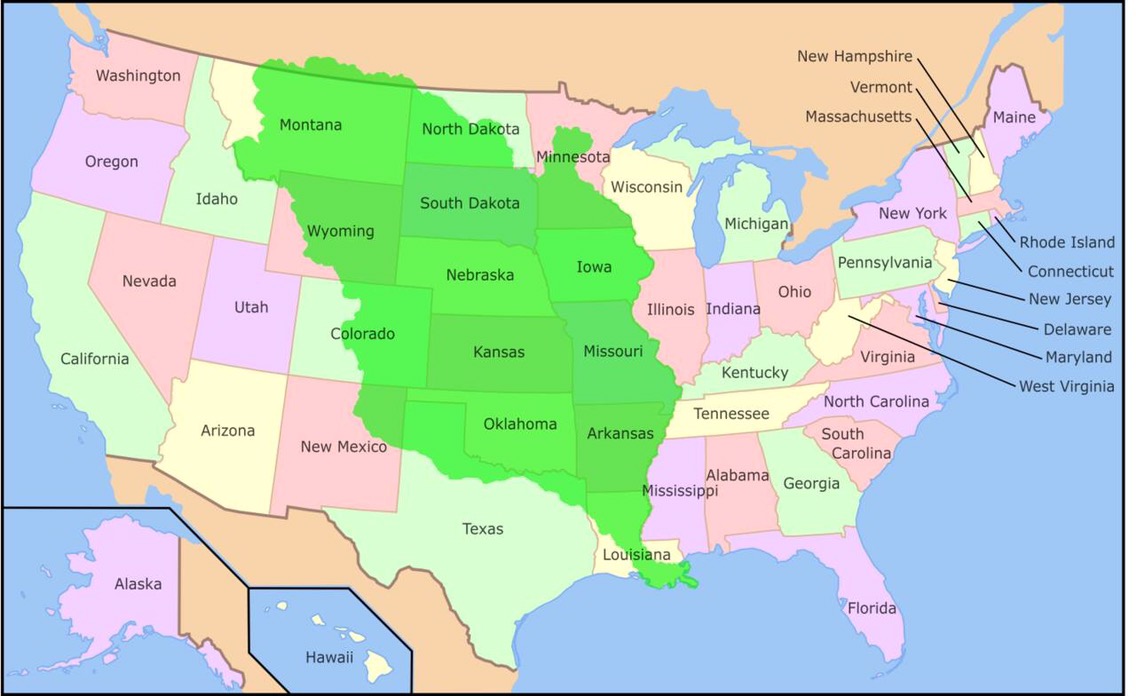
1803 – President Thomas Jefferson announces the signing of a treaty in Paris formalizing the Louisiana Purchase, effectively doubling the size of the United States in one day for $15M.
1826 – 50 years after the adoption of the Declaration of Independence, two of it’s signers, second President John Adams and third President Thomas Jefferson, die on the same day. The two had become bitter political enemies for years (Adams a devout Federalist, Jefferson an equally devout state’s rights man, in addition to vicious political vitriol the two had exchanged). But in 1812 they made amends and began a years’ long correspondence, making them good friends again. It is said that Adams’ last words were, “Jefferson survives”. He was wrong, Jefferson had died five hours before. Many Americans at the time saw their death on the same day 50 years after the Nation’s birth as a divine sign.
1863 – Confederate General John C. Pemberton surrenders Vicksburg, Mississippi to Union General Ulysses S. Grant. Pemberton had sent a note asking for terms on the 3rd, and initially Grant gave his usual “unconditional surrender” response. He then thought about what he would do with 30,000 starving Southern troops, who he had lay siege to since May 18th, and granted them parole, accepting the surrender on the 4th. The capture of Vicksburg effectively secured the main artery of commerce for the Union and cut off of the Confederate states west of the Mississippi (and their supplies) from the South. Grant’s parole of the rebels would come back to haunt him, as the Confederacy did not recognize it’s terms and many of the parolees fought again…which came back to haunt the Confederacy because as a result the Union stopped trading prisoners. Celebrated as a great victory by the North, but by Vicksburg not so much. The Citizens of the Southern city had to take to living in caves during the siege as US Navy and Army continuously bombarded their homes. Starving and desperate, they saw Grant’s waiting a day to accept surrender as malicious. Independence Day would not be officially celebrated in Vicksburg for a generation.
1863 – On the same day, half a continent away, Confederate General Robert E. Lee led his defeated Army of Northern Virginia south away from the Battle of Gettysburg, Pennsylvania. This was no small matter…”Bobby Lee” had been out-foxing and out-maneuvering multiple Union Generals practically since the war began. No official surrender here…Lee’s army would survive to fight another day. While both battles were turning points, they did not spell the end of the South as many believe. There were years of hard, bitter fighting still to come with ghastly losses in life and injury. Gettysburg was, however, the last serious attempt by the South to invade the North.
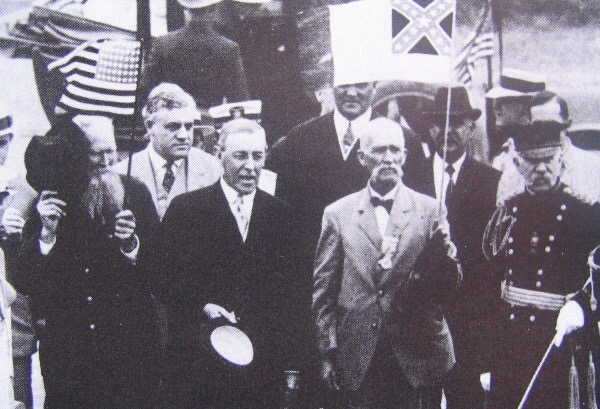
1913 – President Woodrow Wilson addresses the Great 50 Year Reunion of Gettysburg, attended by thousands of Veterans from both sides, who swapped stories, dined together…and it would seem, forgave for a time.
1939 – “I consider myself the luckiest man on the face of the Earth”. After 17 years as a beloved member of Major League Baseball, New York Yankee Lou Gehrig stands in Yankee Stadium and says goodbye to his fans, having been diagnosed with a terminal disease that now bears his name. I doubt there was a dry eye in the house. I’ve posted the video below.
God Bless America! And thank you to our service men and women that continue to make our freedoms possible.


 Today in History, August 3, 1852:










 Mark Loves History!