Knowing When to Say No Secured Nimitz’ Fate…and Kimmel’s

Today in History, December 25, 1941:

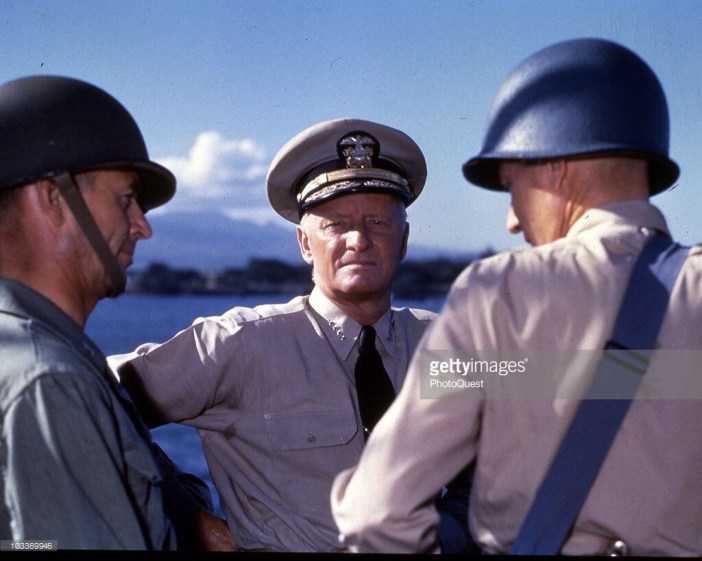
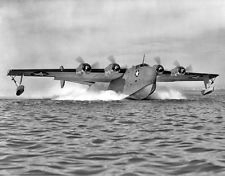
Admiral Chester W. Nimitz arrived in Pearl Harbor aboard a PB2Y Coronado flying boat after a flight from the west coast. Before the flight he had taken a six day train ride from Washington DC across the country.

On December 17th Nimitz, who at the time was the Commander of the Bureau of Navigation (the Navy’s personnel dept) was ordered to take command of the US Pacific Fleet, much of which was either sunk or damaged at Pearl Harbor. FDR had told him to get out there until “the war was won.” He did.

When the Japanese attacked Oahu on December 7, the current commander of the Pacific Fleet, Admiral Husband E. Kimmel, quickly became the scapegoat for all that had been done wrong. He would spend years defending himself while Nimitz led the US Navy to victory.

But Nimitz very nearly assumed Kimmel’s fate. Nimitz had been an innovator in the Navy for years…as a result he had been offered CINCPAC earlier in the year, but turned it down…he wanted the Bureau instead.

So did Nimitz’ instincts tell him not to take the offer? Either way his choice kept him from being in Kimmel’s shoes, which allowed him to be the historic leader he became.

After his arrival in Pearl Nimitz spent a lot of time with Kimmel, and then kept Kimmel’s staff in place.

Nimitz told Kimmel and others that, “The same thing could have happened to anyone.”

George Washington Setting Standards

10300976_10202008870182100_5882756852648273895_n

Today in History, December 23: 1783 – “The Greatest character of the age” – King George III of England describing George Washington. American General of the Armies and Commander in Chief George Washington, resigns his commission at the Maryland Statehouse in Annapolis. He had waited until the English armies that he had helped vanquish had, at length, removed themselves from New York. He was in a position to rule the youthful nation. The move giving up so much power shocked Europeans. Washington went home to Mt. Vernon, but of course was not done. In 1787 he accepted the Presidency of the Constitutional Convention, and in ’89 the Presidency of the United States. He set the standard for future generations by relinquishing the power he held, and then later by limiting himself to only two terms as President.

A Christmas Gift

Today in History, December 22: 1864 – “I beg to present you, as a Christmas gift, the city of Savannah, with 150 heavy guns and plenty of ammunition, and also about 25,000 bales of cotton.”. General William Tecumseh Sherman wired this message to President Lincoln after his army siezed one of the few remaining port cities in the South.

The message was not merely well received. It ended a six week cliff hanger for the President and the people of the North. That was when Gen. Sherman had taken the daring move of leaving the conquered city of Atlanta, thus cutting his army off from it’s supply lines. The large army would be solely dependent upon the supplies it could obtain from the land. Everything that was not needed to feed or provision the Union Army in a huge swath between the two cities was destroyed to prevent it’s use by the South.

Sherman had several objectives: Take Savannah to prevent supplies reaching the Confederacy from overseas, join up with the Navy, and bring the horrors of war to the Southern populace in an effort to demoralize them and shorten the war.

All Glory is Redeemed…

Today in History, December 21: 1945 –

“For over a thousand years, Roman conquerors returning from the wars enjoyed the honor of a triumph – a tumultuous parade. In the procession came trumpeters and musicians and strange animals from the conquered territories, together with carts laden with treasure and captured armaments. The conqueror rode in a triumphal chariot, the dazed prisoners walking in chains before him. Sometimes his children, robed in white, stood with him in the chariot, or rode the trace horses. A SLAVE STOOD BEHIND THE CONQUEROR, HOLDING A GOLDEN CROWN, AND WHISPERING IN HIS EAR A WARNING: THAT ALL GLORY IS REDEEMED.” Closing lines of the movie “Patton”.

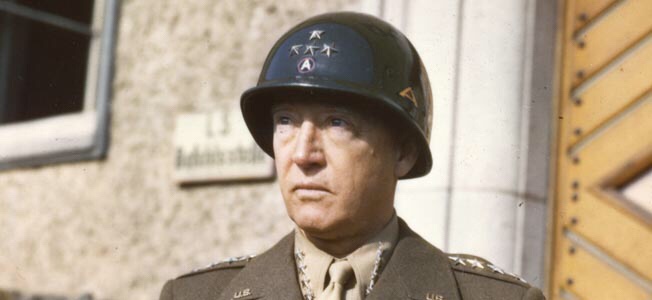
On this day in 1945 Gen. George S. Patton dies of injuries sustained in an automobile accident in Germany. Patton was a brilliant tactician and leader, but often a contentious figure. It probably WAS just an accident, but speculation continues about whether it really was an accident, or whether Patton’s comments about America’s response, or lack thereof, to Communist aggression after WWII led to his demise.

I would like to think the consummate warrior had served his purpose was called home.

Flying Tigers Enter Combat

BG-home

Today in History, December 20: 1941 –

Nearly two weeks after the surprise attack by the Japanese Navy on Pearl Harbor, Hawaii, the First American Volunteer Group (AVG) enters combat for the first time in defense of Kunming from Japanese Air Force bombers.

The AVG was made up of pilots and air crews who were allowed to resign their positions in the USAAF, US Navy and US Marines before the US entered World War II in order to fly for the Nationalist Chinese Air Force defending the Burma Road…China’s primary access to military supplies.  The AVG members had been recruited by a retired USAAF officer, Claire Chennault, who had been training and supervising Chinese flyers for Chinese leader Chiang Kai-Shek since the 1930’s.  The covert program had begun in April 1941, and by the time the AVG’s pilots, crews and their Curtiss P-40 Tomahawk fighter aircraft had arrived in Asia and trained, the US had entered the war.

In their first combat the Flying Tigers destroyed 5 of the attacking bombers.  In the coming months they destroyed nearly 300 Japanese aircraft with a loss of 14 of their own aircraft.  In the dark months after Pearl Harbor the Japanese were “sweeping the table” across the Pacific, and the victories of the small Flying Tigers units provided much needed morale boosters for the Allied powers.  In July of 1942, after little more than six months, the unit would be absorbed into USAAF units in the Asian theater of operations.  Most of the pilots returned to US service, including “Tex” Hill and Gregory “Pappy” Boyington.

Mesa Verde Cliff Dwellings – The Antiquities Act


Today in History, December 18: 1888 –

Rancher Richard Wetherill and his brother-in-law Charles Mason, with the help of Ute guide Acowitz “discover” some of the Cliff Dwellings in the canyons of the Mesa Verde area of Southwest Colorado.  The Wetherills were certainly not the first to discover the hundreds of amazing ancient homes built into the protection of the cliffs centuries earlier.  However they did persist in a campaign to institute Federal protection of the sites.  The Wetherills were fearful that tourists and vandals would loot and destroy the sites.

Archaeologists tell us ancient Native Americans made the Cliff Dwellings their home for over seven hundred years before moving away within a two generations in the thirteenth century.  As a reference, elsewhere in the world the Mongols were conquering Asia and the seventh Crusades were occurring.

The Wetherill family spent years exploring the canyon dwellings, collecting hundreds of artifacts which now reside in museums.  Unfortunately much of the vandalism did occur and Swedish scientist  Baron Gustaf E. A. Nordenskiöld mapped and collected many artifacts, taking them back to Sweden before the American government acted to protect the site.

After years of pressure from the Wetherill family and many others, and four unsuccessful attempts, Congress finally passed a bill creating the Mesa Verde National Park, which President Theodore Roosevelt signed into law.

In the same month in 1906, Congress passed and President Roosevelt signed into law “An Act for the Preservation of American Antiquities”, or “The Antiquities Act”, inspired to protect sites such as Mesa Verde and others for generations to come.  TR made great use of the Antiquities Act to set aside Historic sites for preservation.

The law has been in the news lately as President Trump dialed back the extent of land set aside by Presidents Clinton and Obama at Bears Ears and Grand Staircase National Monuments.

According to the National Parks Conservation Association, the have been 157 National Monuments designated by 16 Presidents since President Theodore Roosevelt enthusiastically named 18 sites during his terms as Chief Executive.

Bad Choices, Bigger Picture

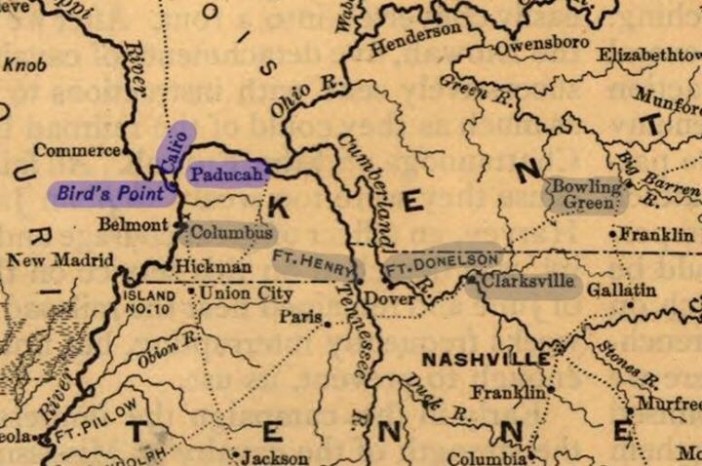
Today in History, December 17: 1862 – Even our heroes make misguided decisions. Gen. Ulysses S. Grant issues General Order 11, expelling all Jewish people from the area he commands, Tennessee, Mississippi and Kentucky. During the war, trade in the South’s staple, Cotton, was severely restrained, which of course led to a black market trade. It became a real problem for the Union Army in the west. Grant felt it was being driven by Jewish profiteers and ordered them expelled. After complaints from the Jewish community and Congress, President Lincoln quickly rescinded the order. Grant would go on to gain Lincoln’s…and the nation’s trust. But this was not his finest moment.

The Great White Fleet

Today in History, December 16: 1907 –

The Great White Fleet, a task group of 16 American battleships and their support ships, sets sail from Hampton Roads, Virginia beginning a world good will tour, circumnavigating the Earth. President Theodore Roosevelt had long been a proponent of sea power in line with the teachings of Admiral Alfred Thayer Mahan, that a strong Navy could project authority world wide. The fleet of white warships were to provide cordial visits to ports in nations that were potential adversaries, most prominently, Japan. There were many other purposes, such as improving morale and patriotism during a depression at home, and research to improve the seagoing capabilities of the US Navy. The Great White Fleet displayed to the world something that still stands today, although greatly enhanced. That the US Navy could project American influence anywhere in the world. The journey would take 14 months until February of 1909, and would take the fleet through the dangerous Straits of Magellan and across the Pacific. The event was a sensation the world over, as moving so many coal powered ships so far was a remarkable achievement.

Bartolomeu Dias

Today in History, December 16: 1497 – Bartolomeu Dias! Remember his name from history class? Probably not. In 1488 Dias, a Portuguese explorer, discovered the Cape of Good Hope and sailed around the Horn of Africa…he named it the Cape of Storms…and after his crew bucked up, turned back for home. In 1497 Vasco da Gama, another Portuguese explorer, and whose name you probably remember, made the same trip, but kept going…opening up India and the Orient to European trade by sail. Portugal (and it’s economy) would rule Asian trade for a century as a result.