“Sleep in Peace, Comrades Dear…”


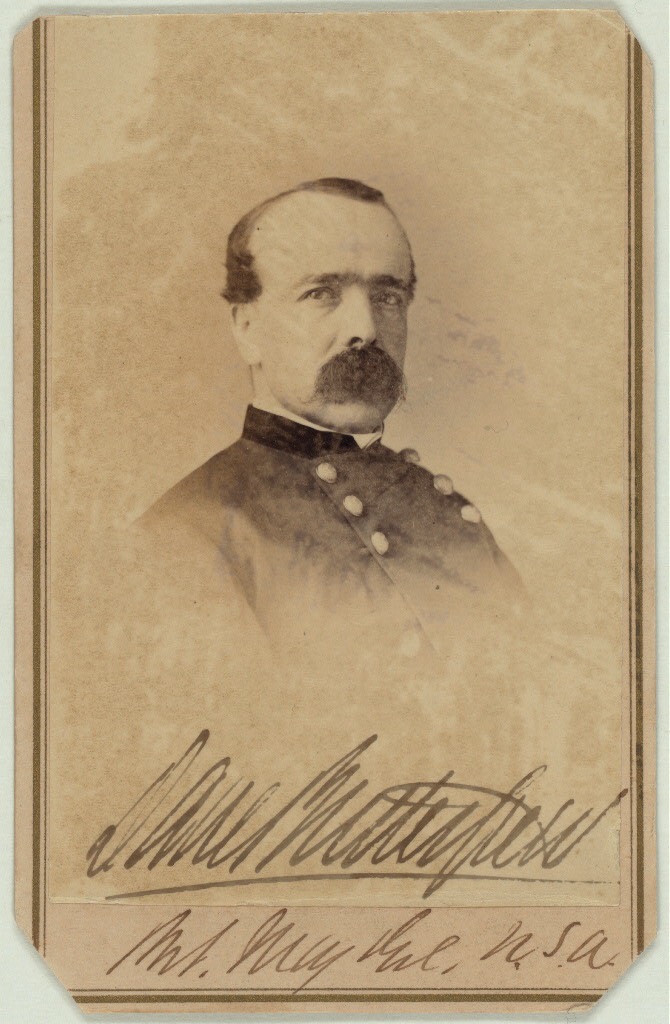
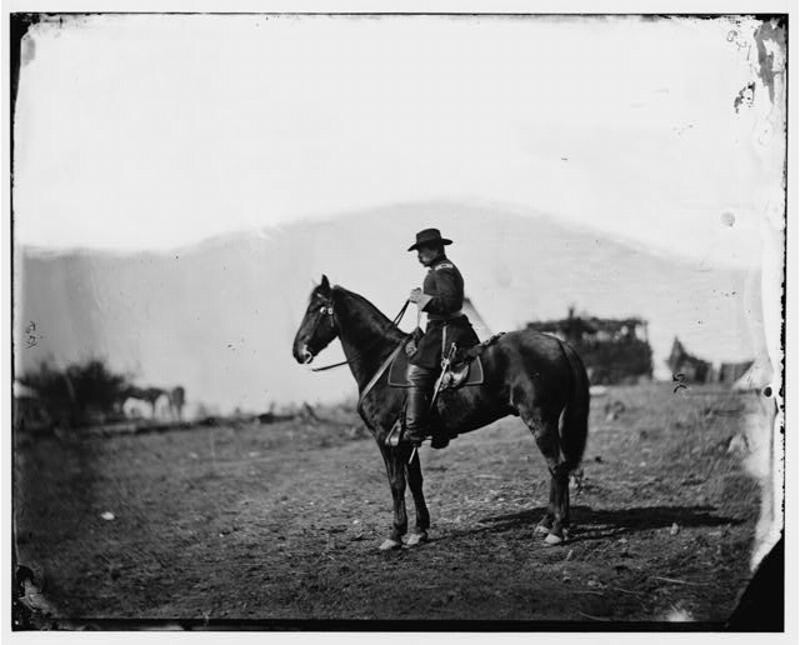
Today in History, July 2: 1862 – Union Colonel Daniel Butterfield (breveted to Brigadier General), unhappy with the signal being given for “Lights Out” for his brigade, pens a new one which he gave to the brigade bugler. Sounded for the first time that night in its new form, what would be known as “Taps” was quickly taken up by other brigades, North and South because of its haunting 24 notes. 

There are many versions of wording for Taps, but these are the most meaningful to me:

  • Fading light, 
  • Falling night,
  • Trumpet calls as the sun sinks from sight,
  • Sleep in peace, comrades dear, 
  • God is near…

The tune now is much more than “Lights Out”, serving as a final honor at the services for servicemen and servicewomen, and police officers. 

A Day of Battles


Today in History, July 1: A day for important battles. 

 1863 – The Union and the Confederates first clash at The Battle of Gettysburg, and both send reinforcements. The first day went badly for the Union, but the largest battle in North America had three more days to go, and would become a major turning point in the Civil War. 

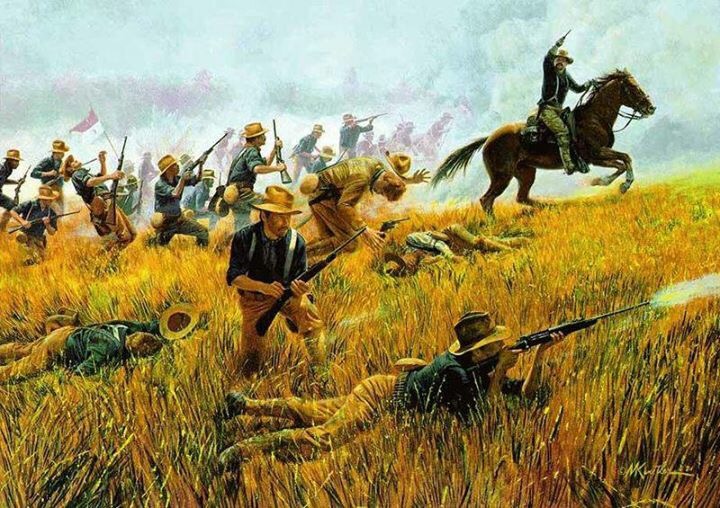
 1898 – The Battle of San Juan Hill becomes a major victory for the US in the Spanish-American War as the US Army’s Fifth Corps takes the heights over Santiago de Cuba. It also set the stage for Colonel Theodore Roosevelt to become President as he became famous for leading his Rough Riders up Kettle Hill (not San Juan). 

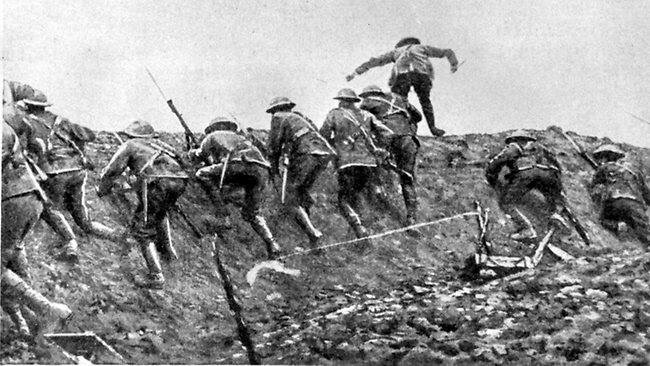
 1916 – The Battle of the Somme in France; after a week’s bombardment with over 250,000 shells, the British launch an attack into no-man’s land. The Germans had retained many machine guns despite the bombardment, and the British soldiers were slaughtered. With 20,000 dead and 40,000 wounded in one day, it was one of the worst defeats for the British military’s history. 

 1942 – The Battle of El Alamein; In North Africa Erwin Rommel’s army had routed the British and their allies, driving them back so quickly that they had to leave much of their equipment behind. But on today’s date the British Army, resupplied by Americans and reorganized, turned the tide back on Rommel at El Alamein.

President & Chief Justice


Today in History, June 30: 1921 – President Warren G. Harding nominated former President William Howard Taft as Chief Justice of the Supreme Court of the United States after the death of the previous Chief Justice, Edward Douglass White…who Taft had nominated when he was President. The irony is that Taft never wanted to be President…he became such as the result of the efforts of President Theodore Roosevelt…one of his closest friends. TR then turned on him vociferously when Taft didn’t carry out TR’s policies to his liking. Taft was crushed by the attacks by his friend…but in the end, he obtained the job he had wanted since he was a child…Chief Justice of the Supreme Court of the United States…years after being President.

Linking the Coasts – 20 Century Style


Today in History, June 29: 1956 – President Dwight Eisenhower signs the Federal Aid Highway Act, aka the National Interstate and Defense Highways Act into law. Our interstate highway system was initially justified as an assurance that the military would be able to move quickly across the country in the event our nation was invaded by a foreign power; the initial layout ensured air force bases were linked. Eisenhower had been involved, as a young US Army Lieutenant, in the Transcontinental Motor Convoy of 1919, which was designed to draw attention to the need for better roadways, again for military purposes. The trip in 1919 took approximately two months during which broken bridges had to be rebuilt, trucks pulled out of the mud by the soldiers on the “Lincoln Highway”. Later, when he commanded the US forces in Europe during WWII, Eisenhower was impressed by the German Autobahn. So when he was elected, getting our interstate highway system was his pet project.

A Navigational Landmark


Today in History, June 29: 1927 – Five weeks after Charles Lindbergh’s much more famous flight, Army Air Corps Lieutenants Lester Maitland and Albert Hegenberger completed the first trans-Pacific flight from San Francisco to Hawaii. They traveled over 2400 miles over ocean, using instruments to find their way to an island, as opposed to Lindbergh’s 3600 miles to find a continent. They used a Fokker Tri-Motor for their 25+ hour flight so that they would still have power if they lost an engine. The two men had spent the previous decade developing the navigation technology for the flight and repeatedly lobbying their superiors for the opportunity to test it. Both would continue to be heroes in WWII.

Union Soldiers Burn the White House


Today in History, June 28:  1862 – Union soldiers inadvertently burn the White House.  No, not that White House.  In fact, the Executive Mansion which housed the President wasn’t known by that name until 1902 when President Theodore Roosevelt renamed it.

Another difference between these “White Houses”, is that George Washington never resided in the Presidential Mansion along the Potomac.  His successor, John Adams was the first President to live there.  But he courted and married the widow Martha Custis at and near the White House on the Pamunkey River.

One of General Washington’s officers was Henry “Light Horse Harry” Lee.  His son, Robert E. Lee, would marry Martha Custis-Washington’s granddaughter, Mary.  Together they would live in Arlington House, overlooking the Potomac…and the Executive Mansion.  When the Civil War began, Robert E. Lee chose to support “his country”, Virginia; which also meant the Confederacy.  As a result he and his family had to leave Arlington House and move to one of their more southern Virginia properties…the White House on the Pamunkey.

As the Union dead mounted, Union Secretary of War Edwin Stanton ordered the area around Arlington House to be used as a cemetery so that Lee could never again live there.  Today it is Arlington National Cemetery.

In 1862 during the Seven Day’s Battles, Union forces pushed the Confederates back past Lee’s family’s new home at White House Landing, using it as a major supply base.

Before she fled further south from yet another home, Mary Lee left a message on the door of the residence, “Northern soldiers, who profess to reverence Washington, forbear to desecrate the house of his first married life, the property of his wife, now owned by her descendants.”  Union soldiers agreed.  General George McClellan ordered a guard to posted around the house to prevent looting or vandalism.

McClellan took a lot of heat from the press and DC for the protection of General Washington’s one-time home.  It should be used as a hospital for Union soldiers!  Even though it had but six rooms.

As was frequent in the Civil War, the lines moved back north after moving south.  And on this date in 1862 Confederates took White House Landing back.  As the Union Army fled, McClellan ordered all supplies and outbuildings burned to prevent their use by the Confederates…with the exception of the White House, it was to be spared.

As often happens in war, orders from the top rarely get carried out to the letter.  The White House was burned to the ground.
The Mother Road


Today in History, June 27: 1985 – Route 66, The Mother Road, Main Street of America, Will Rogers Highway, is decommissioned in the National Highway System, bypassed by more modern “interstate highways.” In 1857, Navy Lt. Edward Fitzgerald Beale, working for the US Army Topographical Engineers, charted a wagon road across the western US. In the 1920’s, amidst Congressional acts creating a national highway system, Tulsa businessman Cyrus Avery and businessmen in Springfield, Missouri began lobbying for a highway that would roughly follow Beale’s route, and incidentally draw business away from Wichita to Tulsa, OKC and numerous other small cities between Chicago and L.A. In 1926 they got their way and Route 66 was born. For the next several decades small communities were connected by the highway, the trucking industry took off due to it’s influence, travelers stopped at new motels, drive-ins, etc…the entire culture of America was changed as Americans were able to see their country on vacations easily. In the 50’s, Congress approved President Eisenhower’s proposals for an interstate highway system, born from his youth as an Army officer when he traveled across the country on insufficient roads. By the 70’s, the interstates had rendered Route 66 obsolete, and by 1985 it was decommissioned. 85% of the route still exists, and has become a tourist hotspot for those that miss the romanticism it engendered. Traveling it’s route is definitely on my bucket list!

Thank you, Henry James Hungerford…


Today in History, June 27: 1829 – Strange that we should be thankful that Henry James Hungerford died childless in 1835. On this date in 1829 a British scientist who had never set foot on American soil died in Genoa, Italy. James Smithson was a wealthy man. He wrote in his will, “In the case of the death of my said Nephew without leaving a child or children, or the death of the child or children he may have had under the age of twenty-one years or intestate, I then bequeath the whole of my property… to the United States of America, to found at Washington, under the name of the Smithsonian Institution, an Establishment for the increase & diffusion of knowledge among men.”.

So thanks to James Smithson’s eccentricity, which he never explained, and the untimely death of his nephew, the US came into possession of over $500,000.00 in funds dedicated to research and learning. President Andrew Jackson sent a diplomat to receive the funds, President James K. Polk signed the bill creating the Smithsonian Institute once Congress agreed how to use the money. President Theodore Roosevelt saw to the movement of Smithson’s body from Italy to “The Castle” of the Institute in 1904. Smithson was escorted from Genoa to Washington by none other than Institute regent Alexander Graham Bell and his wife. Today the Smithsonian has 19 museums and the national zoo, including the National Aeronautics and Space Museum, the most visited museum in the world. Thank you, Mr. Smithson.

Brothers…Before and After


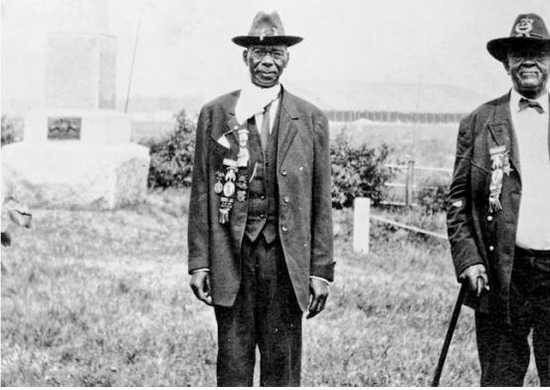
Today in History, June 25: 1913 – “We have found one another again as brothers and comrades in arms, enemies no longer, generous friends rather, our battles long past, the quarrel forgotten—except that we shall not forget the splendid valor.” –President Woodrow Wilson. The Great Civil War Reunion at Gettysburg, Pennsylvania. Nearly half a century after the end of the Civil War, aged men and women who had been sworn enemies, who had lost loved ones on both sides of the great conflict, began to gather at Gettysburg for a reunion to honor those they had lost…and each other. Men missing limbs commiserated with each other, slapped backs, shared stories, joined together as brothers…Union, Confederate, White, Black, recognized that the War was history and they were comrades again. If men and women that were so committed to killing each other could do this….can’t we?

A Bad Idea


Today in History, June 24: 1812 – A bad idea. Napoleon Bonaparte invades Russia with his Grande Armee, 500,000 troops from France and other nations under French control, the largest army ever assembled to that time. The Russians would avoid major conflict, continuously retreating while burning all resources in Napoleon’s path. This is important because in those days armies had to live off the land. Napoleon managed to take Moscow…but the Russians burned their own capitol to deny the French food, housing and resources. Napoleon had no choice but to retreat……in the midst of the Russian winter. But now the Russians changed tactics…now they raided the retreating French army continuously…by the time Napoleon finally reached Russia’s borders (abandoning his army to return to Paris), over 400,000 of his army had starved to death or been killed.