Ben Flies a Kite


Today in History, June 10: 1752 – Long before he was one of our Founding Fathers, Ben Franklin was a successful businessman, and due to early financial security, had the time for his passion as a scientist and inventor. 

Through the 1740’s he experimented with electricity, one of his inventions being the lightning rod to protect buildings and ships, still in use today. 

On this day he performed his famous experiment of flying a kite with a key attached which connected to a Leyden Jar to prove lightning conducted electicity. 

William Jennings Bryan


Today in History, June 9: 1915 – William Jennings Bryan, US Secretary of State, resigns. After a German U-Boat had torpedoed a British passenger ship, the Lusitania, resulting in the deaths of 128 Americans, Bryan sent a conciliatory, almost apologetic message to the German government without President Wilson’s consent. Germany felt impowered and issued an aggressive statement, to which Wilson replied in kind, leaving little doubt that America would not tolerate the sinking of non-combatants. Germany backed off, for a time, and Bryan resigned in protest, believing Wilson was leading the nation towards war. Bryan had been an impressive orator, 3 times a candidate for president, and L. Frank Baum’s inspiration for the Cowardly Lion of the Wizard of Oz in 1900.

The Antiquities Act


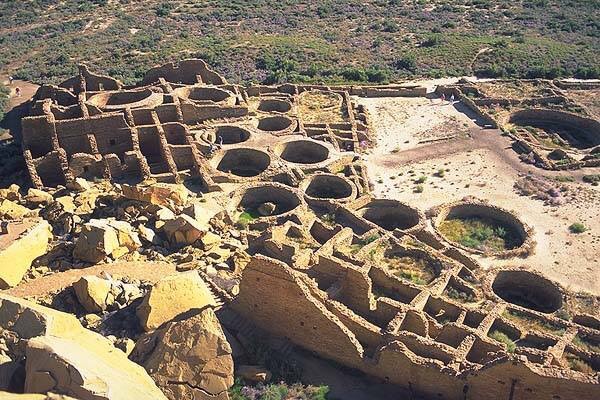
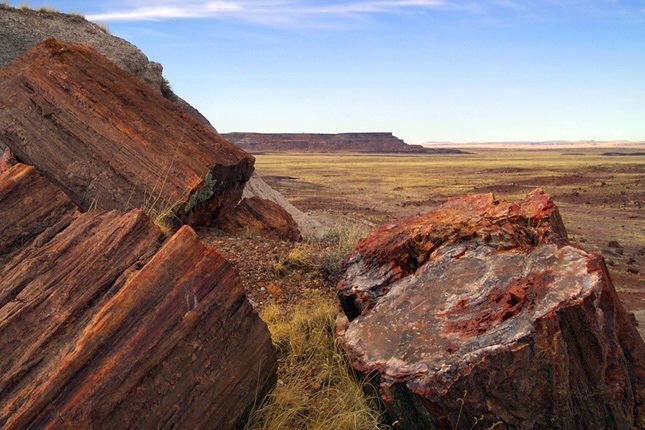
Today in History, June 8: 1906 – The Antiquities Act of 1906 is signed into law by President Theodore Roosevelt after being passed by Congress. In the preceding years historic sites had been discovered in the west, and of course, they were soon raided by thieves, vandals and historians from other countries. The Act was designed to protect these places as National Monuments, preserve them for future generations,  to be named either by the President or Congress. Roosevelt, a historian, quickly took advantage of the new power, naming 18 Monuments before his Presidency ended, including (first) Devil’s Tower, Muir Woods, The Grand Canyon, Chaco Canyon and the Petrified Forest. The Act has become more controversial in the years since FDR named The Grand Teton National Monument (near Jackson Hole, Wyoming) in 1943.  In recent years the subject has become even more volatile as some Westerners believe their land rights are being encroached upon. The current administration is revisiting several sites, raising alarm amongst defenders of National Parks and Monuments. 

The Far West – Once Meant What Would Become Kentucky

526927_2829915565794_724098933_n

Today in History, June 7: 1769 – “Boone Day”. Pioneer Daniel Boone braves the Cumberland Gap, ignoring a British order against westward expansion, to find Kentucky on this date in 1769. Boone would later write, “Not a breeze shook the most tremulous leaf. I had gained the summit of a commanding ridge, and, looking round with astonishing delight, beheld the ample plains, the beauteous tracts below.” He would continue his adventures, settling Boonesborough, Kentucky, becoming a Colonel in the Militia during the Revolutionary War, fighting the British and their allies. He eventually followed his exploring spirit to Missouri, where he died in 1820.

Let’s Go To The Drive-In!

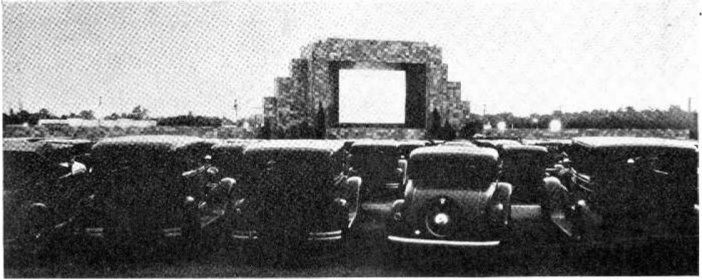
First_drive-in_theater_Camden_NJ_1933

Today in History, June 6: 1933 – The First Drive-in Theater opens in Camden, New Jersey.  The automobile had become primary in American transportation after Ford initiated mass production.  With the birth of the drive-in theater, families could watch movies without concern for noisy children in the comfort of their automobiles.

By the fifties and sixties there were over 4,000 drive-in theaters in the United States.  In the seventies with cable TV and the oil crisis, drive-ins began to close.  Then in the 2000’s they began to experience a resurgence.

Do you remember summer nights sitting on your hood, or relaxing in the seats of your car, watching the latest movies?  The kids running about, playing on playground equipment under the screen, snacking on popcorn from the snack shack?  Or perhaps some other activities we won’t talk about?

D-Day, the Sixth of June

6978_4197115184930_254344356_n

Today in History, June 6: 1944 – D-Day. Operation Overlord. Future US President, Gen. Dwight D. Eisenhower, had made the solitary decision that the Allied invasion of France would take place on the morning of June 6th, despite bad weather reports. Otherwise it would be a month before conditions were right for the invasion; a luxury he could not countenance with thousands upon thousands of Allied troops getting sick on their transports and every day decreasing the chances that the Nazis would not discover the ruse that was promulgated by a fake army built around Gen. George Patton. Thousands of Allied ships crossed the English Channel and began either bombarding the French coast or off-loading troops. American troops at Omaha Beach rushed ashore amidst withering fire….and saved the world.

Literature Starts a Fire

533343_2824765717051_842014571_n

Today in History, June 5: 1851 – “Uncle Tom’s Cabin”, or “Life Among the Lonely”, by Harriett Beecher Stowe is first published in an abolitionist weekly magazine. The story brought the life of a slave to the masses when a publisher picked it up and printed it in book form, making it an international sensation. The book set afire the slavery / anti-slavery camps in the nation. In 1862, when President Lincoln played host to Ms. Stowe in the White House, he is reported to have greeted her with, “So this is the little lady who made this big war?”.  In book form, Uncle Tom’s Cabin would be the number one bestseller of the 19th century, except of course for the Bible.

Bruno Peter Gaido and The Battle of Midway


Today in History, June 4: 1942 – The Battle of Midway and Aviation Machinist Mate First Class Bruno Peter Gaido.

Today is a special day, the 75th Anniversary of the Battle of Midway during WWII.  In brief, US Pacific forces had been decimated by a Japanese onslaught since Pearl Harbor.  The US Navy and USAAF had been fighting back, however, by bombing Japan during the Doolittle Raid, the Battle of the Coral Sea and several raids by Carrier Groups across the Pacific.

During a raid in March, 1942 on the Marshall Islands by a Task Force built around the USS Enterprise (CV 6), the ship was attacked by five twin engine Betty bombers.  Under withering fire, four turn back.  The lead plane however, attempts to crash into the aircraft carrier.  As the bomber grew closer, Aviation Machinist Mate Third Class Bruno Peter Gaido springs from the catwalk surround the flight deck and runs to a nearby SBD Dauntless Diver Bomber.  He climbs into the rear of the plane to use the rear gunner’s machine gun.  He began firing at the enemy plane, maintaining the fire into it’s cockpit even as it’s wing slices the rear of the SBD away mere inches from him.  The Betty crashed into the sea, and Bruno is credited with causing to miss the ship.

Bruno disappeared inside the bowels of the ship, figuring he’d be in trouble for leaving his normal battle station.  Quite the contrary; Admiral William “Bull” Halsey had him brought to the bridge, where he summarily ordered him promoted to Aviation Machinist Mate FIRST Class.

Spring forward to June 4, 1942 and Bruno Gaido was in the rear of Ensign Frank O’Flaherty’s Dauntless as they dove on the IJN Carrier Kaga when Bombing and Scouting 6 from Enterprise sent her to the bottom.  As many know, Akagi, Soryu and Hiryu would also be sunk that day.

Can you imagine what being a rear gunner in a WWII dive bomber must have been like?  During the attack, the aircraft dove at a 70% angle, nearly straight down.  Held tight by safety belts, scanning for any fighters that dared to attempt to follow the dive, the rear gunner may never have known of a crash or a hit by anti-aircraft fire.

After their bombing run Ensign O’Flaherty and AMM Gaido attempted to make it home to Enterprise, but due to a punctured fuel tank and another attack by Japanese Zero fighters, had to ditch at sea.

The pair were picked up, “rescued” by the Japanese destroyer Makigumo.  The officers of the destroyer, angered by the loss they had witnessed of the Japanese carriers, interrogated and tortured the American airmen.  After days of this, on June 15, they ordered weights tied the both men and had them thrown overboard to drown.  The Japanese sailors who survived the war to tell said both men faced their fate with courage and stoicism.  Bruno Gaido’s ship mates had expected no less…he had gained a reputation.

As for the war criminals on the Makigumo?  The ship was sunk during the Guadalcanal campaign and none of the officers responsible for the murder survived the war.

Terrorism Fails – 1919 America


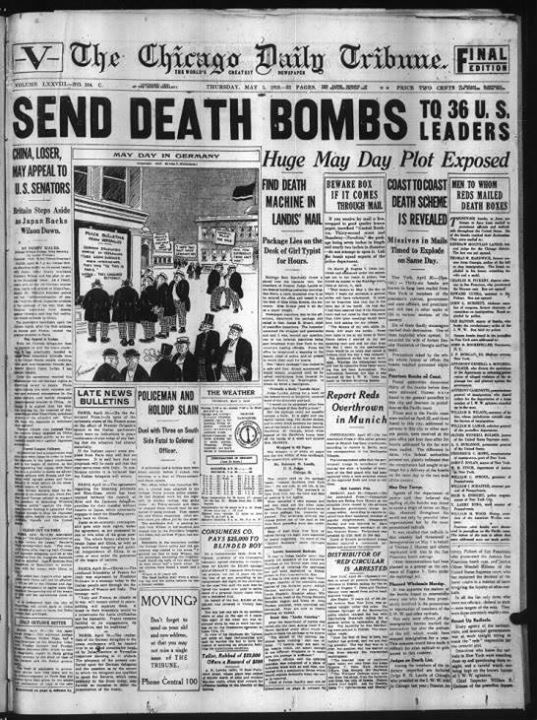
Today in History, June 2: 1919 – Galeanist Anarchists set off 8 bombs almost simultaneously across the country. They were communist sympathetic anarchists that were trying to kill leaders they thought were preventing the over throw of the US government. In April they had sent 36 mail bombs to government and industrial leaders including John D. Rockefeller, Supreme Court Justice Oliver Wendell Holmes, J. P. Morgan, US Attorney General A. Mitchell Palmer, US Secretary of Labor William B. Wilson amongst many others. During the June 2nd bombings, they again targeted one of their primary enemies, Attorney General Palmer, at his home. The bomb killed the bomber when it went off prematurely, injured his housekeeper and his wife, and did significant damage to his home. His neighbors that lived across the street at the time barely escaped injury or death themselves, as they had walked past the front of Palmer’s front door minutes before the explosion occurred. One of the bomber’s body parts was found on their doorstep. Interesting how closely fate comes to changing vast segments of history; the neighbors that barely escaped were Assistant Secretary of the Navy Franklin Delano Roosevelt and his wife Eleanor. Palmer was famous for the Palmer Raids, which targeted radical foreign anarchists for arrest and deportation and which helped launch the career of J. Edgar Hoover.

We Shall Never Surrender

“We shall defend our island, whatever the cost may be, we shall fight on the beaches, we shall fight on the landing grounds, we shall fight in the fields and in the streets, we shall fight in the hills; we shall never surrender.”
 – Winston Churchill, June 4, 1940. (77 years ago tomorrow)
This was in response to the evacuation of Dunkirk a few days earlier, during which every British boat that could float responded to rescue hundreds of thousands of soldiers from the French coast. 
The British people also survived the Blitz, during which Nazi bombers carried out an extended bombing campaign dropping tons of bombs nightly on British civilians…also terror tactics meant to cause surrender. They failed. 
British and Americans have experienced bombings and attacks long before the war on terror (anarchists, IRA, etc). 
Different faces on the attackers. But Britain, America and our Allies will survive and win.