Today in History, May 25: 1961 – The Man on the Moon Speech. President John F. Kennedy asks Congress for the money to send a man to the moon, and return him safely to Earth, by the end of the decade. Please listen all of the way through, then read the quotes from the men that made that happen regarding President Obama’s efforts to decimate the NASA Space Program. In 1961 President Kennedy was asking to regain the lead in space exploration from the Russians.
An “American” Pioneer


Today in History, May 24: 1939 – The first successful single rotor free (un-tethered) flight of a helicopter. Flown by its designer, Igor Sikorsky, the Vought-Sikorsky VS-300 was revolutionary, its single rotor, and single vertical anti-torque tail rotor design is still used in most helicopters today. Sikorsky had been interested in flying since his youth, and was inspired by the Wright Brothers. Already having seen great success in aircraft design in his native Russia (first four engine aircraft) in 1919 he emigrated to America, fearful that his dreams could not be realized in war ravaged Europe or revolutionary Russia. He would design flying boats (Pan American Clippers) and after the VS 300, the R-4, the world’s first mass produced helicopter in 1942.
Curly Joins His Comrades


Today in History, May 23: 1923 – US Army Scout Curly, a Crow Indian, is laid to rest at Little Big Horn where George Armstrong Custer and the remainder of the 7th Cavalry Regiment had been killed. Curly had been part of a contingent of Crow Scouts attached to the army as allies against the Sioux. As the battle began Custer dismissed the scouts so they could seek safety. Curly stayed…until he realized how hopeless the situation was. He made his way to a hill about 2 miles from the battlefield where he watched the events unfold. He then rode quickly to warn other regiments of the massacre. Thus after his death from pneumonia on May 21, he was buried with the 7th.
“Damn Fools” in the Senate


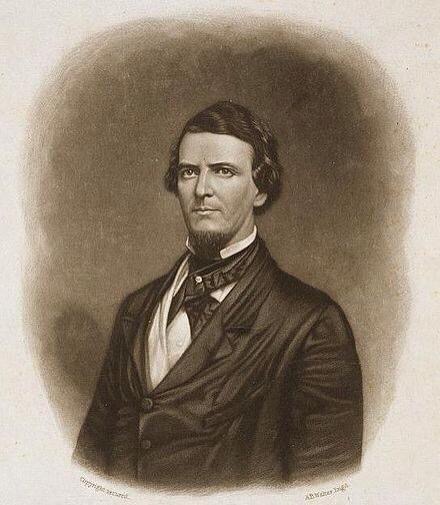

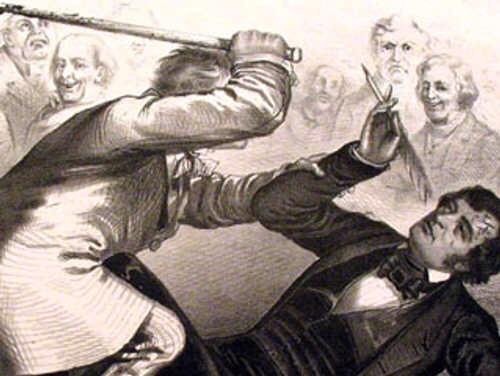
Today in History, May 22: 1856 – Remember when politics used to involve honorable statesmen, not like the politicians we see today? If you do, then standby…its an illusion. On May 20, 1856 US Senator Charles Sumner, a free soil Democrat and later Republican from Massachussetts, had given a firey speech entitled “Crime Against Kansas” about the violence in that state over slavery. A devout abolitionist, he excoriated the south, in particular Senator Andrew Butler of South Carolina, who he likened to a pimp abusing a prostitute (slavery). This enraged Butler’s nephew, Senator Preston Brooks. When Sen. Stephen Douglas heard the speech, he commented, “this damn fool Sumner is going to get himself shot by some other damn fool.” On the 22nd, Brooks entered the Senate chamber with two other Southern Senators, found Sumner at his desk writing and proceeded to bludgeon him nearly to death with his heavy metal tipped cane while Sumner was trapped within his desk, defenseless. Southerners hailed Brooks a hero, Northerners called him a coward. One of these, Republican Representative Anson Burlingame called him such on the House floor. Brooks challenged Burlingame to a duel. When Burlingame actually accepted and showed up, Brooks did not. Sumner would suffer debilitating pain for the rest of his life from his injuries, but would recover to become a key proponent of abolitionist policies during reconstruction, living until 1872. Brooks on the other hand died in January 1857, less than a year after the attack, of the croup.
This was not the first incident of violence in Congress, and would not be the last.
Goodnight Johnny, and Thank You


Today in History, May 21, 1992: Johnny Carson airs his last “The Tonight Show” after thirty seasons beginning in 1962. Many of us grew up with Johnny and his many guests. These photos make it obvious he grew old with us, also. Never better. Wish so much that hosts today had his class.
Go West, Young Man, and Grow Up With the Country!

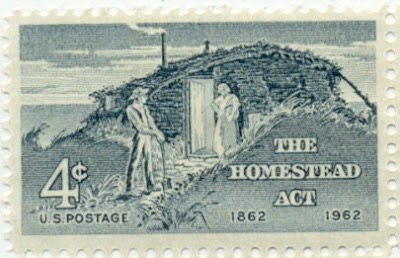
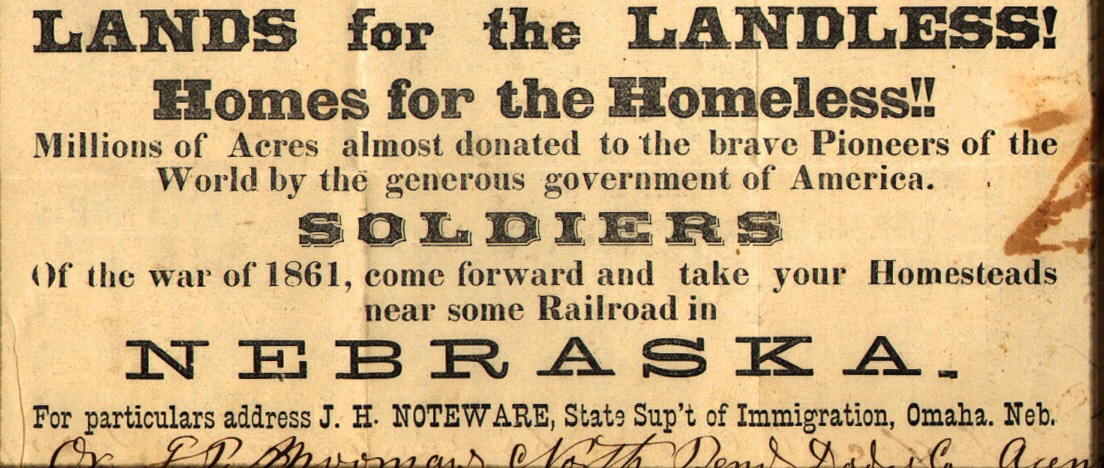
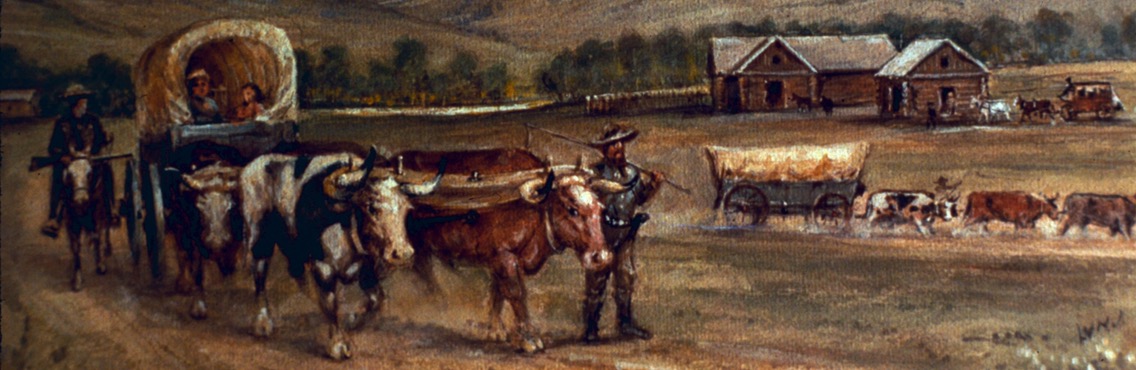
Today in History, May 20: 1862 – President Lincoln signs the Homestead Act, which would give 160 acres of western lands to anyone that would farm it successfully for 5 years and build a residence upon it (often a sod building). The Act would encourage vastly expanded settlement of the west; bad news for Native Americans, good news for those newer Americans wanting to improve their lot in life. Congress had attempted to pass similar acts in 1852, 1854, and 1859, but each time the attempts were shot down by Southern Democrats who were afraid that if the west were populated by poor farmers and immigrants it would result in more “free” states, which would result in more votes against slavery. Once the Republican Lincoln was elected, and the Civil War began, the Southern Democrats were no longer part of the equation. As their states seceded from the Union, their obstructionist votes left Congress. The Republicans soon passed the Homestead Act and the settlement of the west began in earnest. By the end of the war 15,000 settlers (some of which were merely pawns for land speculators) had accepted their lands. Eventually 80 Million acres would be settled.
…the right of the people to keep and bear Arms, shall not be infringed.

Today in History, May 19: 1986 – President Ronald Reagan signs the “Firearms Owners Protection Act” in to law. The Legislation, while effectively banning machine guns from private ownership, primarily responded to complaints from the public and the nascent NRA regarding abuses of the “Gun Control Act of 1968.”
The act by Congress attempted to protect the rights of peaceful firearms owners and also those possessing Federal Firearms Licenses (FFL), or firearms dealers.
Running the Table
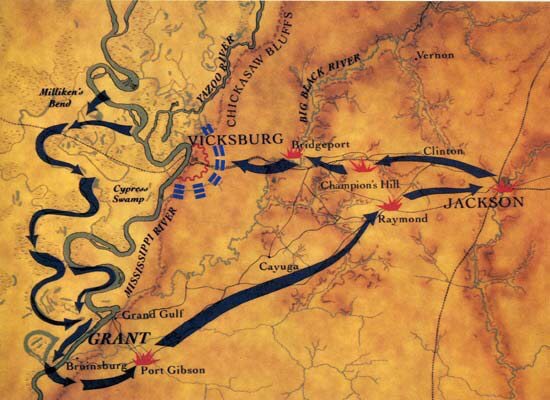
Today in History, May 18: 1863 – Running the Table. Gen. Grant had plan for Vicksburg and Admiral David Dixon Porter’s fleet had run past of the guns at that fortress city. In the interim between then and today’s date, Grant’s army was taken across the Mississippi from several victories in Louisiana, won five major victories in Mississippi, including taking the capitol of Jackson. He pushed Confederate Gen. John C. Pemberton back to the Big Black River Bridge, which Pemberton burned on the 14th during his retreat to Vicksburg.
Pemberton could no longer face Grant in the field, having lost three quarters of his army. Grant had the bridge rebuilt by the 18th, and the siege of Vicksburg had begun. Grant made two unsuccessful attempts to take the city and then determined to have no more losses, lay siege to the city. The siege involved entrenchments, mines and bombardment by land based artillery as well as by Admiral Porter’s ships. The civilians and soldiers in the city had to live underground. By July 4th, his troops and civilians starving and demoralized, Pemberton agreed to surrender. Grant initially demanded his trademark “Unconditional Surrender”, then reconsidered. Even after having lost 3/4 of it’s manpower, Pemberton’s army still numbered 30,000 famished troops. He decided instead to utilize a long respected military method of “paroling” the rebel troops. That meant that they would be freed as long as they never took up arms against the Union again. It would have taken months and a great deal of manpower Grant did not want to expend to move 30,000 prisoners north. The Confederates agreed to the terms. Yet many of them were back in battle against Union troops by September. This ended the act of paroling for the remainder of the war. After Vicksburg and Port Hudson fell in July, President Lincoln proclaimed, “”The Father of Waters again goes unvexed to the sea.” This victory was considered the turning point in the Civil War; Union control of the Mississippi not only allowed US Navy movement and resupply all along it’s course, it effectively cut the Confederacy in half, depriving it of the resources and armies of the west. This battle is also largely the reason Grant was advanced to command of all Union Armies…as Lincoln said, “I cannot spare this man…he fights!” A quality the President found lacking in many of his other Generals.
Going Home…


Today in History, May 17: 1943 – The Memphis Belle returns from her 25th mission over Europe. The B-17 Flying Fortress, heavily armed with nearly a dozen .50 caliber machine guns and thousands of pounds of bombs, had survived what by all reckoning, could not be survived. Thousands upon thousands of airmen died over German territory, blown out of the sky or dropping thousands of feet to their deaths. More airmen died over Europe than Marines fighting across the Pacific. With ten men in each bomber that went down, casualties were so horrific that crews were only expected to fly 25 missions…if they survived that, they went home. The crew of the Memphis Belle were some of those survivors.
The King’s Good Servant, but God’s First

Today in History, May 16: 1532 – “The King’s good servant, but God’s first.”. Sir Thomas More resigns his position as Lord Chancellor of England. More was a humanist in a time when civil rights bore little importance. He was also an author, having written the still important “Utopia” about a land without the problems he found in the real world. He advanced to Lord Chancellor and was fiercely loyal to King Henry the VIII. But when the King usurped the authority of the Pope so that he could divorce his queen, the devout Catholic More could not countenance it and resigned. Within 3 years charges of treason had been trumped up, he was tried by his replacement and the new queen’s father and two brothers, then beheaded. The beginning of this post were his last words. He was canonised by the church in 1935, making him Saint Thomas More.
 Mark Loves History!