The Lee Resolution – and You Can’t Pick Your Family

Today in History, June 7, 1776:

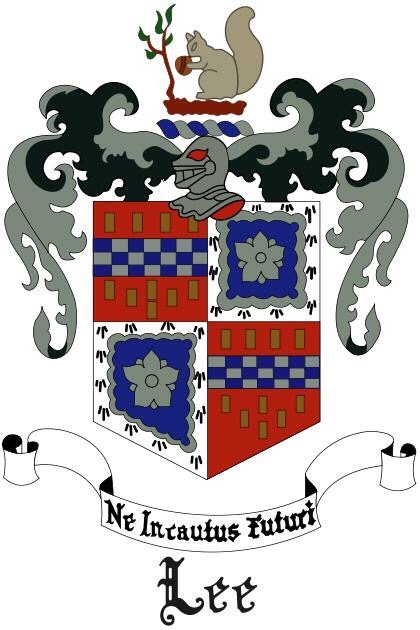
The Lee Resolution.

“Resolved, That these United Colonies are, and of right ought to be, free and independent States, that they are absolved from all allegiance to the British Crown, and that all political connection between them and the State of Great Britain is, and ought to be, totally dissolved. That it is expedient forthwith to take the most effectual measures for forming foreign Alliances. That a plan of confederation be prepared and transmitted to the respective Colonies for their consideration and approbation.”

Continental Congress member Richard Henry Lee, reperesentative from the Virginia Colony, proposes independence from Great Britain after receiving orders to do so from the Virginia Convention. It would take until July, after efforts by John Adams, Sam Adams, and Lee, to gather enough votes to pass the resolution as the Declaration of Independence.

The Lee family would fight in the revolution for Union and Independence. All families are complicated. I would love to know what Richard would have to say about his great-nephew Robert E. Lee fighting so hard to dissolve the Union Richard and his family fought so hard to create.

D-Day, the 6th of June

Today in History, June 6, 1944:

The skies overhead filled with aircraft…thousands of bombers, transports, fighters. The British populace watched the boys board transport ships bound for France…and wept. Their towns, so long filled with those damned Americans were now quiet and empty. They wouldn’t be coming back. Many would fill cemeteries across Europe; others would be headed home for the US after fighting their way to Germany.

In America, as the news was broadcast that the invasion had begun at long last, businesses, theaters, and other workplaces emptied and closed…and the churches filled to capacity.

Americans prayed for their sons, husbands and fathers. I’m sure they prayed not to see the Western Union courier on their street in the coming days.

The Allies had been planning, working for and arguing over this day since America had entered the war. Americans had wanted to make the assault on Europe as early as 1942. Stalin in Russia had been pushing for another front to be opened to relieve pressure on his country which had suffered incredible losses.

The British General Staff and Churchill had won the argument, which saw to fighting in Africa, Sicily and Italy first.

By 1944, as America provided more and more supplies…and troops…to the war, the invasion of France was planned.

The largest, most complex invasion in history began on June 6, 1944 with Americans, British, Canadians and troops from the occupied nations of Europe.

The world was saved by boys who should have lived long, happy lives.

We owe a debt we cannot possibly repay.

On that day, my father would be recognizing his 17th birthday. I don’t know when he shipped out, but that is the year he began his service in the Pacific.

Going West…The Homestead Act

Today in History, May 20, 1862:

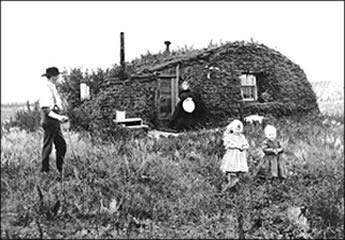
President Lincoln signs the Homestead Act, which would give 160 acres of western lands to anyone that would farm it successfully for 5 years and build a residence upon it (often a sod building).

The Act would encourage vastly expanded settlement of the west; bad news for Native Americans, good news for those newer Americans wanting to improve their lot in life.

Congress had attempted to pass similar acts in 1852, 1854, and 1859, but each time the attempts were shot down by Southern Democrats who were afraid that if the west were populated it would result in more “free” states, which would result in more votes against slavery.

Once the Republican Lincoln was elected, and the Civil War began, the Southern Democrats were no longer part of the equation in Congress. The Republicans soon passed the Homestead Act and the settlement of the west began in earnest. By the end of the war 15,000 settlers (some of which were merely pawns for land speculators) had accepted their lands. Eventually 80 Million acres would be settled.

The Treaty of Windsor

Today in History, May 9, 1386:

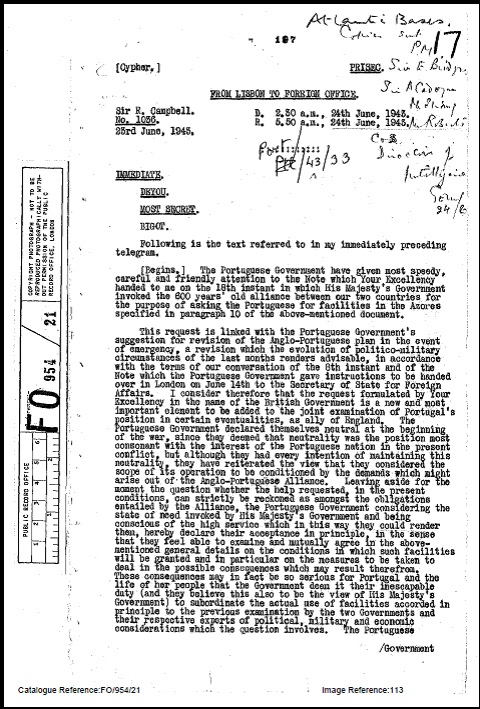
A Treaty of Alliance is ratified at Windsor between King Richard II of England and King John I of Portugal.

The Treaty is the longest alliance still in effect. It came about because the Portuguese needed military assistance in defense against their neighbor Castile (Spain) and England needed the Naval assistance of Portugal against France. Portugal’s sea power was at that time stronger than that of the English.

The treaty was strengthened by the marriage of John I of Portugal to Philippa, daughter of the Duke of Lancaster.

The Alliance was again called upon to thwart a Spanish invasion of Portugal in the 1760’s, to fend off Napoleon in the early 19th century, then in WWII when Portugal provided intel and air bases in the Azores to England and America. Air patrols from the Azores were important in the Battle of the Atlantic. The air bases were again provided to England during the Falkland Islands War.

The First Annual New York Bench Show of Dogs

Today in History, May 8, 1877:

For several years a group of sportsmen had been gathering at their favorite bar inside the Westminster Hotel in New York City to tell tales of their hunting excursions and share a few drinks.

They decided eventually to set up some kennels nearby for their four-legged friends and hire trainers. Thus was born the Westminster Kennel Club, named for their favorite establishment.

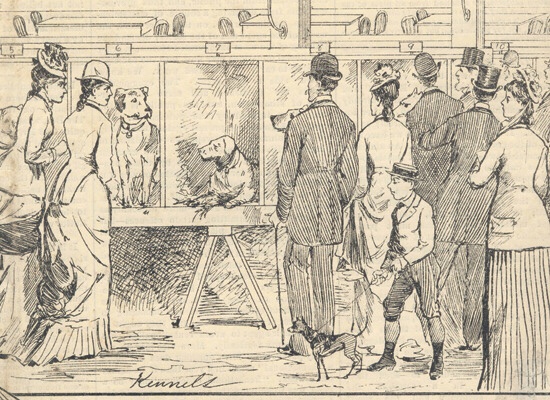
From here it was decided to host a dog show, the first of which drew approximately 1,200 entrants as The First Annual New York Bench Show of Dogs, held at Gilmore’s Garden for three days beginning May 8, 1877.

Today we know the show as the Westminster Kennel Club Dog Show and the venue as Madison Square Garden.

The show is the second longest continuous running sporting event in the United States…bested only by the Kentucky Derby which began in the same decade.

Oh the stories they can tell. Entries reportedly have been made using the late Col. George Custer’s dogs, those of the monarchs of England, Russia and Germany, and the indomitable Nelly Bly.

The show predates movies, the light bulb, many states, and the “show went on” during wars and the Great Depression.

The show has, of course, progressed from hunting dogs to pretty much every breed, and now carries on longer and draws even more remarkable crowds.

George Washington Knew How to Fight…And When Not to Fight…

george-washington-portrait

Today in History, April 22, 1793:

President George Washington issues a Proclamation of Neutrality, making it clear to the great powers of Europe, and France in particular, that the newly born United States would not participate in a war then sweeping the old countries.

[Philadelphia, 22 April 1793]

“Whereas it appears that a state of war exists between Austria, Prussia, Sardinia, Great-Britain, and the United Netherlands, of the one part, and France on the other, and the duty and interest of the United States require, that they should with sincerity and good faith adopt and pursue a conduct friendly and impartial toward the belligerent powers:

I have therefore thought fit by these presents to declare the disposition of the United States to observe the conduct aforesaid towards those powers respectively; and to exhort and warn the citizens of the United States carefully to avoid all acts and proceedings whatsover, which may in any manner tend to contravene such disposition.

And I do hereby also make known that whosoever of the citizens of the United States shall render himself liable to punishment or forfeiture under the law of nations, by committing, aiding or abetting hostilities against any of the said powers, or by carrying to any of them those articles, which are deemed contraband by the modern usage of nations, will not receive the protection of the United States, against such punishment or forfeiture: and further, that I have given instructions to those officers, to whom it belongs, to cause prosecutions to be instituted against all persons, who shall, within the cognizance of the courts of the United States, violate the Law of Nations, with respect to the powers at war, or any of them.

In testimony whereof I have caused the Seal of the United States of America to be affixed to these presents, and signed the same with my hand. Done at the city of Philadelphia, the twenty-second day of April, one thousand seven hundred and ninety-three, and of the Independence of the United States of America the seventeenth.”

Go. WASHINGTON.

By the President.
Th: Jefferson.

The assertion of neutrality did not set well with many Americans, and certainly not with the French.  After all, powerful France had been instrumental in the winning of American independence, finalized in the Treaty of Paris only ten years previous in 1783.  Now France had been inspired to undergo their own Revolution, and expected America to reciprocate in support of her war with the other European nations.  French Edmond Genet was then in the United States, appealing directly to the people for support.  President Washington was none too pleased with Genet’s attempts to bypass the American Federal government in his efforts.
Jefferson, Madison and Hamilton debated the subject in the newspapers using aliases, Pacificus and Helivicus.
It wasn’t that President Washington and his cabinet were unfaithful to their first ally.  They were practical.  The French Revolution had taken on a different tone than the American Revolution, with the beheading of King Louis XVI.
Even more importantly, Washington knew America was not yet a world power.  The British did not yet entirely respect American sovereignty, despite the Treaty of Paris.  Washington new the nation needed decades to build it’s resources and to unify politically before playing a meaningful part in world affairs.
America is truly fortunate to have had the guidance and forethought of our Founding Fathers.  The nation would certainly have plenty of opportunities to return the favors France had provided…World War I, World War II most prominent.

“Don’t Fire Unless Fired Upon. But if They Mean to Have a War, Let it Begin Here.”

Today in History, April 19: 1775 – The Midnight Ride continues. Paul Revere and his fellow rider, William Dawes meet up while warning Lexington of the approaching British soldiers. They had stopped at several villages between there and Boston spreading the alarm.

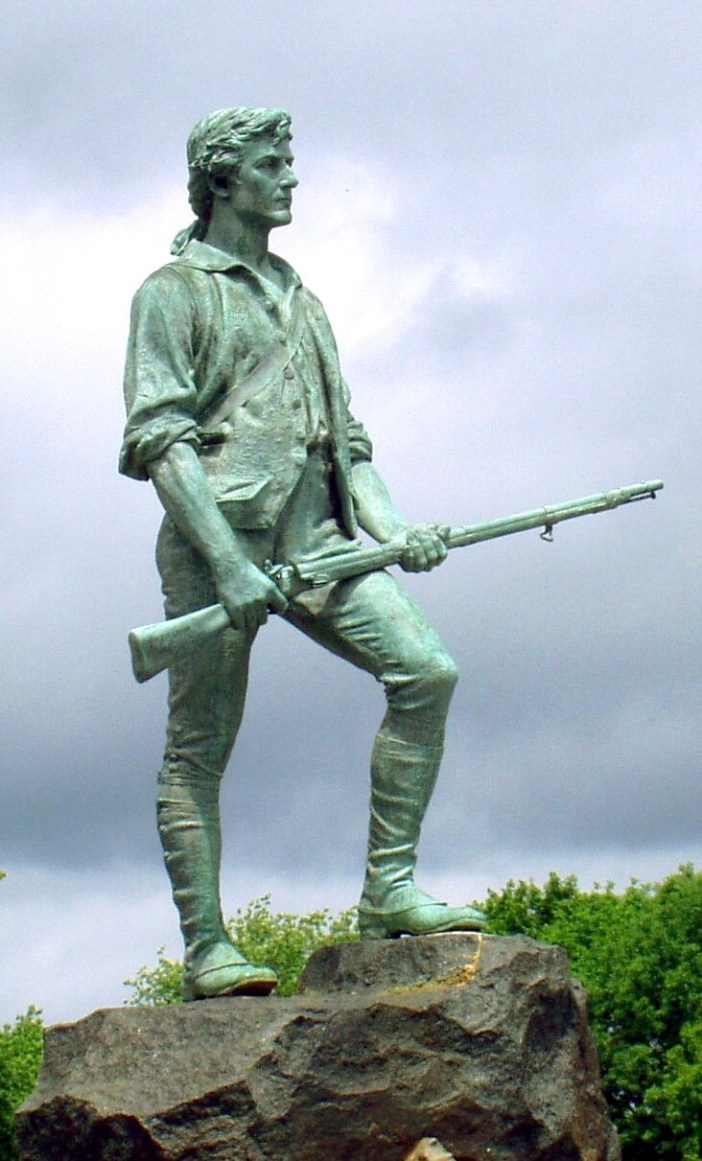
In each village additional riders would set off in all directions to spread the word for minutemen to converge on Lexington and Concord. Village cannons were fired so they would be heard in neighboring villages…a pre-arranged signal. The system was so efficient that before the British soldiers were even disembarking from their boats, still miles away, hundreds of Patriots were converging on the British target of munitions at Concord. Unbeknownst to them, their mission had already been rendered moot. The “rebels”, long aware of the British plans, had already dispersed and hidden the munitions. Revere and Dawes had already warned Samuel Adams and John Hancock, who had been taken elsewhere to prevent their arrest.

In Lexington Revere and Dawes met up with Dr. Samuel Prescott, who had been visiting his fiance. The three set out for Concord to warn them. On the road they encountered an British patrol and were captured. As they were being taken to a nearby meadow Prescott shouted, “Put on!” (scatter, run for it). He and Revere rode off in opposite directions. Prescott jumped his horse over a neaby stone fence and was off into the night. Dawes escaped, but lost his horse, leaving him on foot. Revere made his second escape of the night, as he’d nearly been captured in Charleston earlier. However he soon came upon a group of British officers and was captured again. He would eventually be released, but without his horse. Precott, a Concord native familiar with the area, quickly made his way to Concord and warned them, then continued on to warn others.

“Don’t fire unless fired upon, but if they mean to have a war, let it begin here.” –Militiaman Capt. John Parker, to his troops on Lexington Green. When the 700 British troops reached Lexington, they were confronted with a mere 77 minutemen who had managed to convene there. Capt. Parker, knowing that the British mission had already been rendered pointless, was not eager to risk the lives of is men. He had them form in ranks on Lexington Green, where they could give an expression of dissention without blocking the road to Concord. The British commander decided to confront them anyway. With an expression of great insult, the British commander ordered the “damned rebels” to disperse. Parker directed them to do so as the well trained British regulars approached. Nobody knows who fired the “shot heard ’round the world”. The Americans, of course, believe it was and over eager British soldier; the British believe it was from a minuteman; some speculation is that it was fired from the safety of a nearby tavern. Whoever fired that first shot, it resulted in the British cutting down nearly a dozen minutemen, and one injured British soldier. The British then marched past the dead and injured on their way to Concord. http://youtu.be/wAFz5YNCTGc

The Brits, emboldened, marched on Concord. When they got there they were confronted with more than 300 minutemen. The outcome was quite different than at Lexington. The British were quickly repelled, and decided to return to Boston. As they completed the long march back to Boston, the minutemen continuously fired upon them from behind trees, rocks, fences, etc. By the time the regulars made it back to Boston, they had lost over 300 men.

Why was it the “shot heard ’round the world”? Not just because of the American Revolution. The acts of the revolutionaries did not affect only the “Colonies”. The French were encouraged to aid the Americans with their fleet eventually. Other portions of the British Empire were encouraged to revolt. King George didn’t know it, but on this date, thanks to a few farmer and merchant “peasants”, the sun had begun to set on the British Empire.

Rawhide Down!!

Today in History, March 30, 1981:

“I hope you’re all Republicans”. President Ronald Reagan quipped to the medical team preparing to operate on him at George Washington University Hospital after he had been shot. “Today, sir, we all are.” ”

“Ronny” was leaving the D.C. Hilton where he had given a speech to Union members when he, a Secret Service agent, a D.C. Police Officer, and Press Secretary James Brady were shot by a man attempting to impress Jodie Foster.

Reagan showed his usual good form and humor in the hospital. When he awoke, a nurse was holding his hand; he looked up and asked, “Does Nancy know about us?” When Nancy arrived, he commented, “Honey, I forgot to duck” (quoting Jack Dempsey). While waiting for surgery, he stated, “All in all, I’d rather be in Philadelphia” (W.C. Fields quote). Within two weeks the President was back at work.

I’m glad we were allowed to have his honor, humor, positive attitude and leadership as long as we did.

Congress Censures Jackson

Today in History, March 28, 1834:

For the first time, Congress censures an American President, Andrew Jackson.

Jackson wanted to dismantle the 2nd “Bank of the United States”. With nearly all of the country’s finances controlled by a central bank, the ultra wealthy that controlled the bank had an inordinate amount of power. With this power they controlled economic and political events, more so than the government or the people.

Jackson (man of the people), angered by many of their actions, vetoed a Congressional act to renew the bank’s charter. He then had the treasury divide the funds formerly controlled by the Bank of the United States amongst numerous state banks, who were more willing to give loans to common citizens and to invest in western interests.

History.com’s report indicates that Democrat Jackson had more personal reasons, and that the dispute was to a large extent between him and Senator Henry Clay, who History.com identifies as a Whig, then in parenthesis indicates a Whig is the same as a Republican.

After listening to a biography of Jackson, I found that Jackson’s motives were more pure…he was the first President to come up from a hardscrabble life and resented the bank’s refusal to help lower income Americans.

Some of my other reading has taught me that Whig does not equal Republican. In 1854 (20 years after these events) several Whig politicians (including Abraham Lincoln) broke away from the Whig party and created the Republican party because they were abolitionists and felt the Whig party was not living up to their ideals. I don’t know whether the History Channel misreported these subjects intentionally, or out of simple error. Either way, don’t assume something is accurate simply because it made it into print. Study it for yourself, whether its history or politics. Which often are intertwined.

Cherry Blossoms

Today in History, March 27, 1912:

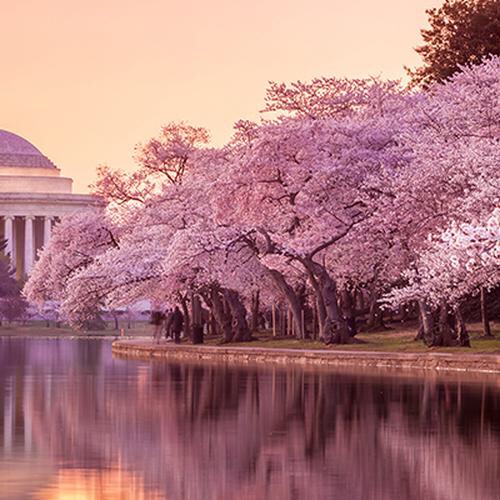
First Lady Helen Taft and the wife of the Japanese Ambassador, Viscountess Chinda, plant two Cherry Blossom trees along the Potomac near the Jefferson Memorial.

They were part of 3,020 Cherry Blossom trees given to the US by the Japanese to be planted in DC. The city of Tokyo had actually given 2,000 trees in 1910, but they were diseased by the time they reached the US and could not be used.

A private Japanese citizen then paid to have the 3,020 trees sent in their place. The beautiful trees bloom each Spring, and are the subject of festivals.

The trees came from a famous collection in Tokyo, which was mostly destroyed during bombing in WWII. After the war, the US sent cuttings from DC’s trees to replenish the Tokyo collection from whence they came.