A Day of Battles


Today in History, July 1: A day for important battles. 

 1863 – The Union and the Confederates first clash at The Battle of Gettysburg, and both send reinforcements. The first day went badly for the Union, but the largest battle in North America had three more days to go, and would become a major turning point in the Civil War. 

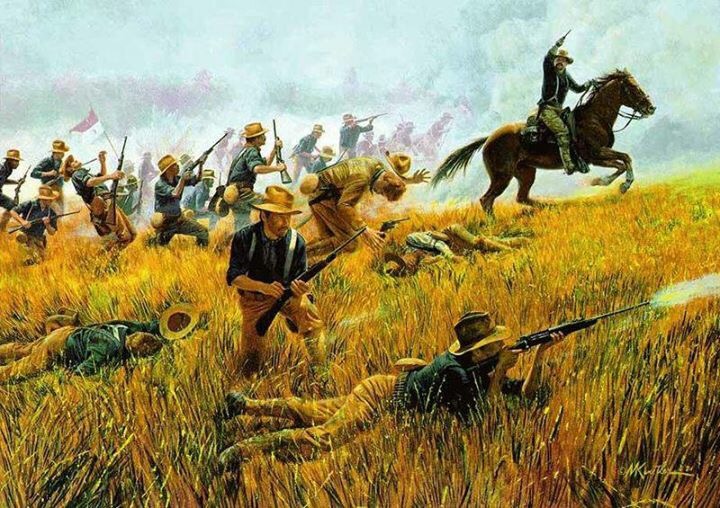
 1898 – The Battle of San Juan Hill becomes a major victory for the US in the Spanish-American War as the US Army’s Fifth Corps takes the heights over Santiago de Cuba. It also set the stage for Colonel Theodore Roosevelt to become President as he became famous for leading his Rough Riders up Kettle Hill (not San Juan). 

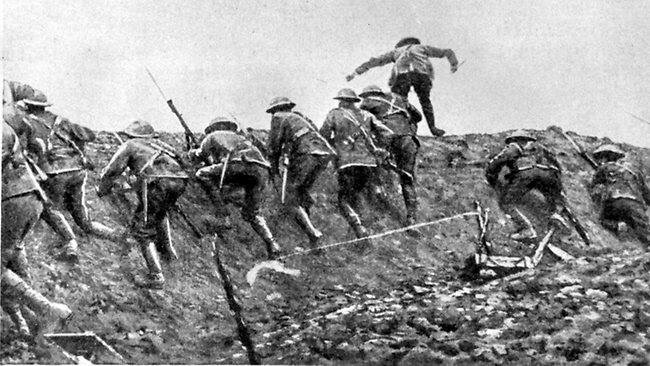
 1916 – The Battle of the Somme in France; after a week’s bombardment with over 250,000 shells, the British launch an attack into no-man’s land. The Germans had retained many machine guns despite the bombardment, and the British soldiers were slaughtered. With 20,000 dead and 40,000 wounded in one day, it was one of the worst defeats for the British military’s history. 

 1942 – The Battle of El Alamein; In North Africa Erwin Rommel’s army had routed the British and their allies, driving them back so quickly that they had to leave much of their equipment behind. But on today’s date the British Army, resupplied by Americans and reorganized, turned the tide back on Rommel at El Alamein.

Union Soldiers Burn the White House


Today in History, June 28:  1862 – Union soldiers inadvertently burn the White House.  No, not that White House.  In fact, the Executive Mansion which housed the President wasn’t known by that name until 1902 when President Theodore Roosevelt renamed it.

Another difference between these “White Houses”, is that George Washington never resided in the Presidential Mansion along the Potomac.  His successor, John Adams was the first President to live there.  But he courted and married the widow Martha Custis at and near the White House on the Pamunkey River.

One of General Washington’s officers was Henry “Light Horse Harry” Lee.  His son, Robert E. Lee, would marry Martha Custis-Washington’s granddaughter, Mary.  Together they would live in Arlington House, overlooking the Potomac…and the Executive Mansion.  When the Civil War began, Robert E. Lee chose to support “his country”, Virginia; which also meant the Confederacy.  As a result he and his family had to leave Arlington House and move to one of their more southern Virginia properties…the White House on the Pamunkey.

As the Union dead mounted, Union Secretary of War Edwin Stanton ordered the area around Arlington House to be used as a cemetery so that Lee could never again live there.  Today it is Arlington National Cemetery.

In 1862 during the Seven Day’s Battles, Union forces pushed the Confederates back past Lee’s family’s new home at White House Landing, using it as a major supply base.

Before she fled further south from yet another home, Mary Lee left a message on the door of the residence, “Northern soldiers, who profess to reverence Washington, forbear to desecrate the house of his first married life, the property of his wife, now owned by her descendants.”  Union soldiers agreed.  General George McClellan ordered a guard to posted around the house to prevent looting or vandalism.

McClellan took a lot of heat from the press and DC for the protection of General Washington’s one-time home.  It should be used as a hospital for Union soldiers!  Even though it had but six rooms.

As was frequent in the Civil War, the lines moved back north after moving south.  And on this date in 1862 Confederates took White House Landing back.  As the Union Army fled, McClellan ordered all supplies and outbuildings burned to prevent their use by the Confederates…with the exception of the White House, it was to be spared.

As often happens in war, orders from the top rarely get carried out to the letter.  The White House was burned to the ground.

Brothers…Before and After


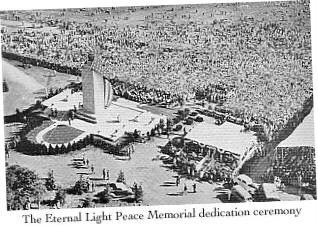
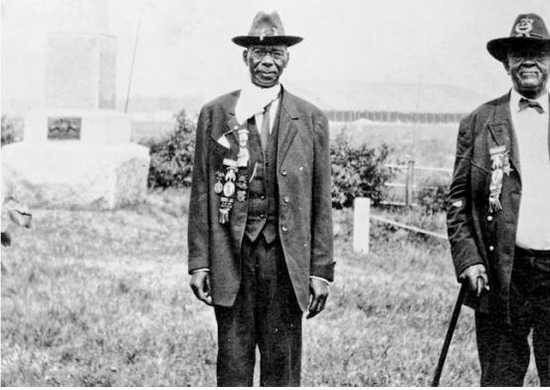
Today in History, June 25: 1913 – “We have found one another again as brothers and comrades in arms, enemies no longer, generous friends rather, our battles long past, the quarrel forgotten—except that we shall not forget the splendid valor.” –President Woodrow Wilson. The Great Civil War Reunion at Gettysburg, Pennsylvania. Nearly half a century after the end of the Civil War, aged men and women who had been sworn enemies, who had lost loved ones on both sides of the great conflict, began to gather at Gettysburg for a reunion to honor those they had lost…and each other. Men missing limbs commiserated with each other, slapped backs, shared stories, joined together as brothers…Union, Confederate, White, Black, recognized that the War was history and they were comrades again. If men and women that were so committed to killing each other could do this….can’t we?

West Virginia Joins the Union


Today in History, June 20: 1863 – West Virginia becomes the 35th state of the Union. As early as 1769 residents of the western counties of Virginia contemplated separating from the remainder of the state, mostly due to a difference in cultures. The eastern Virginians were mostly wealthy land owners and slave holders. The westerners were predominately small time, lower income farmers who had no use for slavery. In 1861 when Virginia seceded from the Union, the citizens of the western counties declined to follow, and sought to stay in the Union. Many important battles were fought in their territory, including at the pictured Harper’s Ferry. An incident at Harper’s Ferry was part of the ignition of the Civil War. 

Stanton Sends a Message to Lee


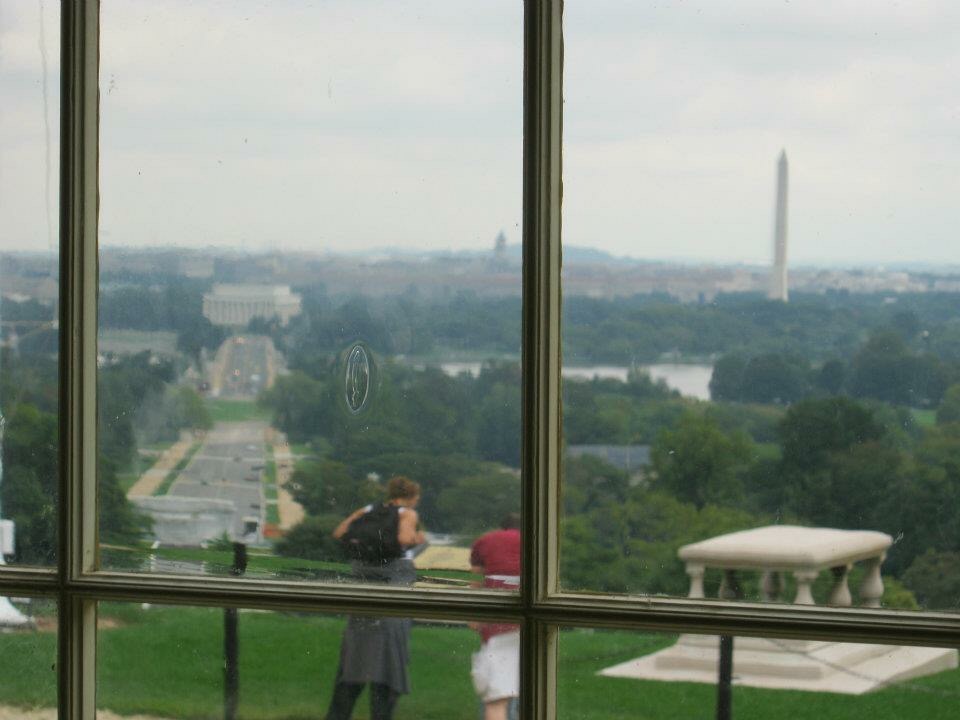
Today in History, June 15: 1864 – US Secretary of War Edwin M. Stanton sets aside the land around Arlington House, the home of Robert E. Lee, as a National Cemetery. The home had been passed down to Lee’s wife from her ancestor, Martha Custis Washington, George Washington’s wife. When the Civil War broke out, Robert E. Lee, a US Army officer, surrendered his commission and went home to his “country”, Virginia, where he became the commander of the Army of Northern Virginia for the Confederacy. When Lee’s efforts began filling up Northern cemeteries, Stanton decided to use Lee’s home to give the Union dead a place to rest, and Arlington National Cemetery was born. When you stand in Lee’s living room, you can see the White House, the Washington Monument, The Lincoln Memorial, and most of D.C. It is fascinating.    

Training Ground…


Today in History, May 11: 1846 – President James K. Polk asks for and is given a declaration of war against Mexico, beginning the Mexican-American War. The war would prove to be a training ground for a cadre of American officers that would fight in the coming US Civil War on both sides. Perhaps the Civil War lasted as long as it did because the combatants knew the tactics and personalities of those across the battlefield well, having grown up together. Ironically, two men (amongst others) shared the opinion that the Mexican-American war was unjust…a strong nation taking unfair advantage of a weaker nation…a young lawyer from Illinois who argued against the action and one of the young officers that fought valiantly in Mexico City, showing off his amazing horsemanship to win the battle. 15 years later Abraham Lincoln and Ulysses S. Grant would be fighting the Civil War…a war they believed in.

How Can I Draw My Sword Upon Virginia?

Today in History, April 20: 1861 – “Mr. Blair, I look upon secession as anarchy. If I owned the four millions of slaves in the South I would sacrifice them all to the Union; but how can I draw my sword upon Virginia, my native state?” Robert E. Lee was the son of a Revolutionary War hero (Light Horse Harry Lee). He was a graduate of West Point, and would serve as superintendent of the USMA (West Point). He was a hero of the Mexican-American War, and was respected as the best officer, the best engineer, in the US Army. The Administration offered him the command of the defenses around Washington, but he turned it down, he could not raise his sword against his “country” of Virginia. On this date, Lee resigned his commission in the US Army and went home, after 32 years of service to the US Army. 3 days later he would accept a command in the Virginia militia, surprising even his family. Lee is such an enigma. He was a dedicated servant to his country, but served with the same dedication to the Confederacy. After the war, he acted as a gentleman in efforts to bring the nation back together. Whether we approve of his decisions or not, we can only see Robert E. Lee as an American. 

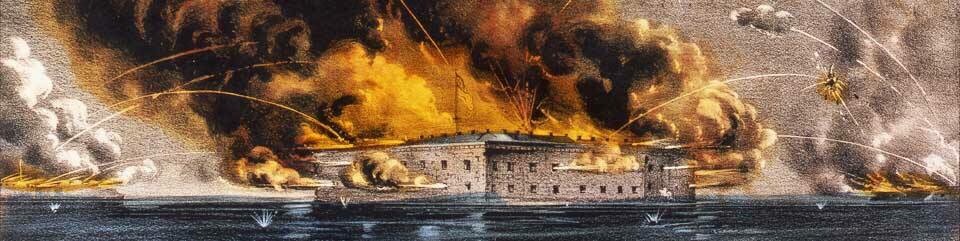
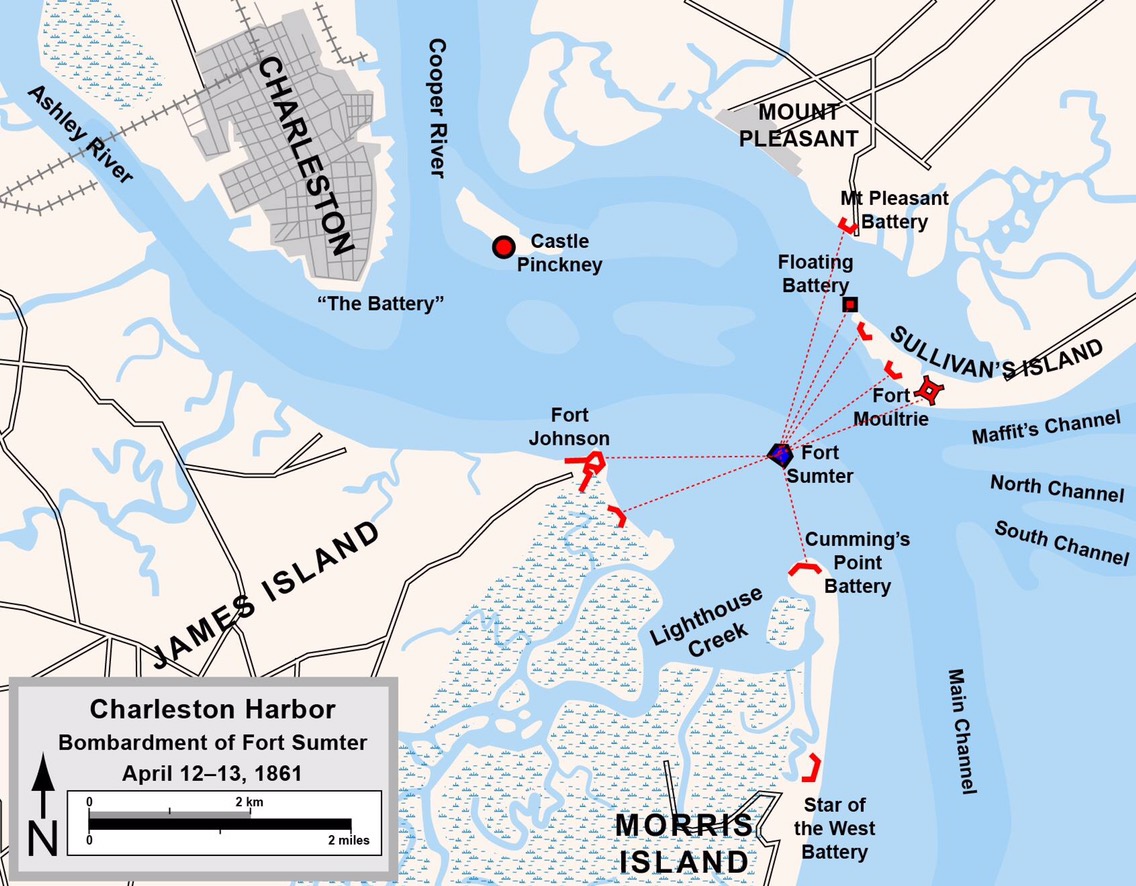
Today in History, April 12: 1861 – South Carolina batteries fire on the Union held Ft. Sumter in Charleston Harbor. This began the American Civil War, although it will depend upon who you ask which side started the conflict. Most historians will say that Gen. P.G.T. Beauregard’s order for the bombardment began the war. Some in the South still refer to the war as the “War of Northern Aggression”, and consider that the fact the Union refused to leave the fort in what they considered sovereign South Carolina territory as the trigger. When President Lincoln took office, closed his inaugural address, ” In your hands, my dissatisfied fellow-countrymen, and not in mine, is the momentous issue of civil war. The Government will not assail YOU. You can have no conflict without being yourselves the aggressors. You have no oath registered in heaven to destroy the Government, while I shall have the most solemn one to “preserve, protect, and defend it.” 34

  I am loath to close. We are not enemies, but friends. We must not BE enemies. Though passion may have strained it must not break our bonds of affection. The mystic chords of memory, stretching from every battlefield and patriot grave to every living heart and hearthstone all over this broad land, will yet swell the chorus of the Union, when again touched, as surely they will be, by the better angels of our nature.”

Appomattox Courthouse; The Beginning of the End

Today in History, April 9: 1865 – One of the most momentous events in American history. After years of foiling every move the Union made, Confederate Gen. Robert E. Lee had finally been run to ground. Countless Yankee Generals had been bested by him, but he had finally met his match…not tactically, but in determination, by Lt. Gen. Ulysses S. Grant. At Appomattox Courthouse, Virginia, Lee, his army starving and with nowhere else to run, in spite of the fact that he would “rather die a thousand deaths”, agreed to surrender the Army of Northern Virginia to Grant. Lee arrived in his best uniform; Grant, typically, arrived in a muddy private’s uniform. Grant offered terms that included Confederate officers keeping their horses and sidearms, enlisted men keeping their horses so that they could farm their land, as long as they agreed to abide by their paroles and obey the laws of the land. Lee was very appreciative of these terms, saying they would be helpful to his army, men he loved. As Lee mounted his horse and left the site of the surrender, Union soldiers began to cheer. Grant quickly silenced them, reminding them that the Confederates were once again their countrymen. The surrender document was signed in the home of Wilmer McLean. Ironically, in the first battle of the war, First Bull Run, or First Manassas if you are from the South, Confederate Gen. P.G.T. Beauregard’s headquarters were in McLean’s home in Manassas, where cannon shot destroyed part of the house. McLean moved south to Appomattox Courthouse to keep his family safe. So, as is said, the Civil War began in Wilmer McLean’s front yard, and ended in his parlor.

Lee was given the opportunity by Grant to allow one of his subordinates to accept the surrender…to avoid humiliation. Lee refused…his FATHER, Light Horse Harry Lee, had been with Washington at Yorktown and witnessed the ungentlemanly act of British Gen. Lord Cornwallis sending a subordinate to surrender his sword to Washington. Lee refused to dishonor his family name by repeating the act. Grant did not require Lee to surrender his sword, but Lee was the man that represented his army at Appomattox Courthouse. Both gentlemen, North and South, maintained their honor.

Other notables at the meeting were Captain Robert Todd Lincoln, the President’s son.  Robert had insisted on serving despite his father’s reservations, so Grant found a place for him on his staff.  Major Gen. Phillip Sheridan, who had been a very successful commander and who would one day command all of the US Army.  Also Grant’s adjutant, Ely S. Parker, a Seneca Indian who was chosen to write out the surrender because he had the best hand writing of those present.

Poor McLean’s woes were not over, either.  Officers present made off with almost everything except the wallpaper in the room to remember the occasion.


Let ’em up easy…

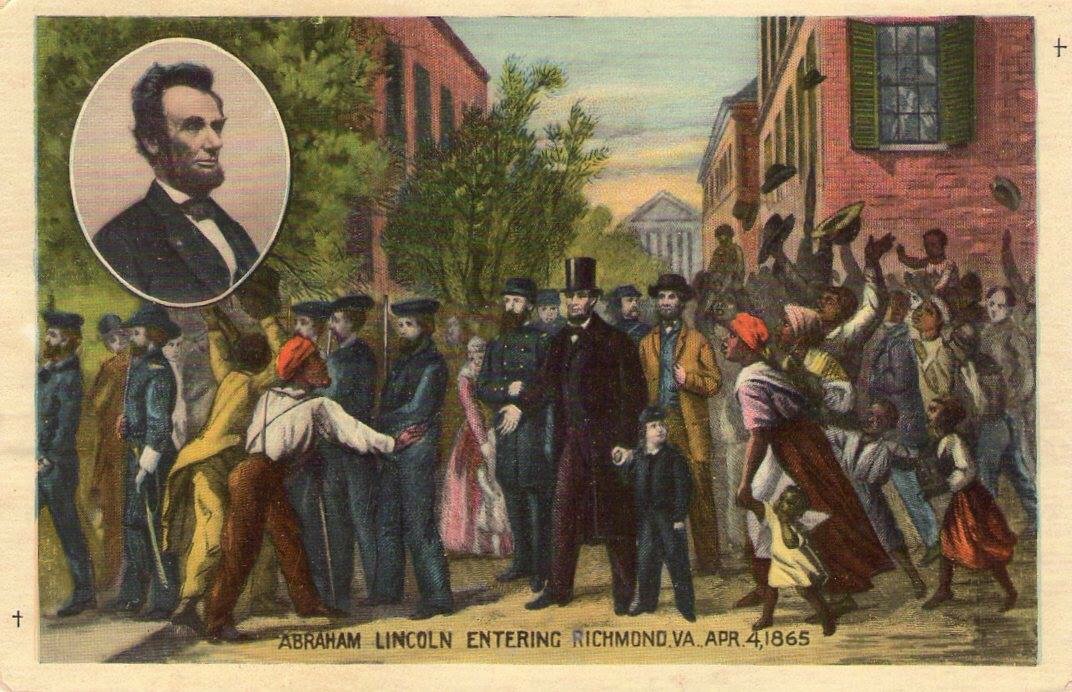
Today in History, April 4: 1865 –  President Lincoln enters Richmond, the Confederate Capitol. Lincoln had been at City Point when informed that Richmond had been taken the day before by Union Army forces. He immediately sailed on the USS Malvern, Flag Officer David Dixon Porter’s flagship for Richmond. After he disembarked, he was initially escorted through crowds by a contingent of sailors, who were very relieved when they were met by a group of Union Cavalry to assist in escorting the President to the home of Confederate President Jefferson Davis. Many former slaves attempted to pay homage to Lincoln, who would not allow it. Onlookers watched from the windows and street corners. At Davis’ house, Lincoln sat in Davis’ chair, then toured the house. When later asked by Union Gen. Weitzel how the conquered rebels should be treated, Lincoln indicated that he would not give an order in that regard, but that his advice would be to, “Let them up easy….let them up easy”. As for the nervous sailors and cavalrymen that escorted him? As it turns out, Lincoln was safer in the Confederate capitol that his own. He had only ten days until he would be assassinated.