Kentucky…Better Left Alone. Polk’s Blunder


Today in History, September 3: 1861 – Unintended consequences. At the outset of the Civil War, Kentucky declared itself neutral, primarily because the state had an almost equal allegiance to both sides. President Lincoln, on precarious footing with the border states, was careful to respect the neutrality. Kentucky covered key geography and the North couldn’t afford to push it to the South. 

Confederate General Leonidus Polk (2nd cousin to President Polk), was not quite as politically astute, making one of the worst blunders of the war. He made the decision to secure the strategic town of Columbus, Kentucky. The act pushed the fence sitting Kentucky government to the other side, and they asked for Federal protection from the Confederate “invaders”.  This came in the form of Gen. US Grant’s Army forcing Polk out. 

While there were Kentucky units that fought for both the Union and the Confederacy, the state itself was now officially Union.

Who Do You Trust


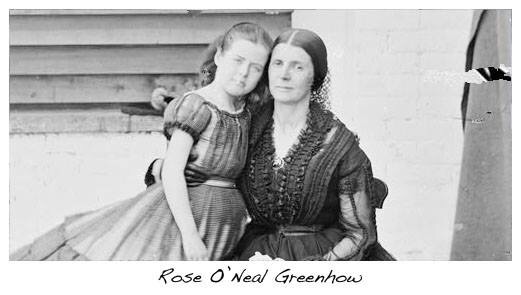
Today in History, August 23: 1861 – Widow and Washington, D. C. socialite Rose O’Neal Greenhow is arrested and placed under house arrest in her home by Allan Pinkerton and his agents.  Her story exemplifies the atmosphere at the outbreak of the Civil War. Many of those loyal to the Confederacy went south, but many stayed put. 

Mrs. Greenhow, a fiercely loyal Confederate spy, used her intellect, her many connections and her wiles to provide information to Confederate Gen. PGT Beauregard prior to the Civil War’s first battle (First Battle of Bull Run or First Manassas) which contributed greatly to a Southern win, such as it was. 

 She continued to obtain and sneak out information, but Pinkerton was pretty smart himself and after surveillance and investigating, built his case. Even under house arrest she continued her operations and eventually she and her young daughter “Little Rose” were imprisoned. The conditions were horrible, the child often going hungry. Rose remained arrogant and rebellious throughout and in 1862 was paroled and sent South. 

She would then be sent to Europe in an attempt to gain support for the Confederacy. Sailing for home in 1864, she was almost there when a Union ship appeared. Rather than be taken prisoner again, she attempted to swim to shore, but drowned in the process.

“There is no Second, Your Majesty”


Today in History, August 22: 1851 – Members of the New York Yacht Club had designed and built a radically new yacht and named it “America”. 

 They sailed it across the Atlantic and challenged the old world sailing experts in The Royal Yacht Squadron’s “One Hundred Guinea Cup”. Seeing her speed, nobody would challenge her until the final day in the final 53 mile race around the Isle of Wight. After she sailed across the finish line 18 MINUTES ahead of her nearest competitor.

Queen Victoria, watching, asked, “Who came in second?”, and was answered with, “There is no second, your Majesty.” The British, rewarding the cup to “The America”, changed the name of the race to “The America’s Cup”. 

 The America would be sold to several different private owners in the coming years, would serve as a combatant for the Confederacy in the US Civil War as a blockade runner, be sunk, raised by the Union, once again renamed America, and serve as a blockade ship, sinking blockade runners. 

 The US Navy would use her as a training ship, she would once again see private hands and then be given back to the Navy. 

 Unfortunately she fell into disrepair and the shed she was kept in collapsed on her in the 1940’s. She and the shed were scrapped. What a shame.

The Right Man for the Job


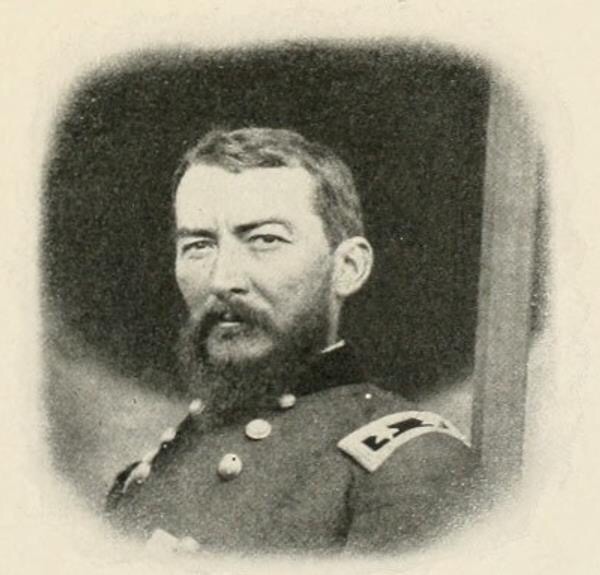
Today in History, August 1: 1864 – Over the objections of Secretary of War Edwin M. Stanton, who thought he was too young for the command of an army, Gen. Ulysses S. Grant names Gen. Phillip Sheridan as commander of the Army of the Shenandoah. Throughout the war, each time the Union began to encroach on the Confederate capitol at Richmond, Virginia, the South would send an army through the Shenandoah Valley to threaten Washington, DC, forcing the Union to protect it’s own capitol. Grant didn’t fall for this, however as he lay siege to Petersburg, which protected Richmond. The Confederacy sent Gen. Jubal Early through the Valley to threaten DC. The Shenandoah was not only the route north for the Confederate armies, it was the “bread basket” for the south, much as the midwest is for the country now. Grant sent Sheridan to command a new Valley of the Shenandoah, and ordered him, “The people should be informed that so long as an army can subsist among them recurrences of these raids must be expected, and we are determined to stop them at all hazards. … Give the enemy no rest … Do all the damage to railroads and crops you can. Carry off stock of all descriptions, and negroes, so as to prevent further planting. If the war is to last another year, we want the Shenandoah Valley to remain a barren waste.” The Confederates called Sheridan’s campaign “The Burning”, precursor to the scorched earth campaign that Sherman enforced in Georgia. Sheridan not only drove Early from the valley, but lay waste to all resources in the Shenandoah, depriving the South of the much needed resources. Lincoln, Stanton, and Grant sang his praises, as did the nation.

A Day of Battles


Today in History, July 1: A day for important battles. 

 1863 – The Union and the Confederates first clash at The Battle of Gettysburg, and both send reinforcements. The first day went badly for the Union, but the largest battle in North America had three more days to go, and would become a major turning point in the Civil War. 

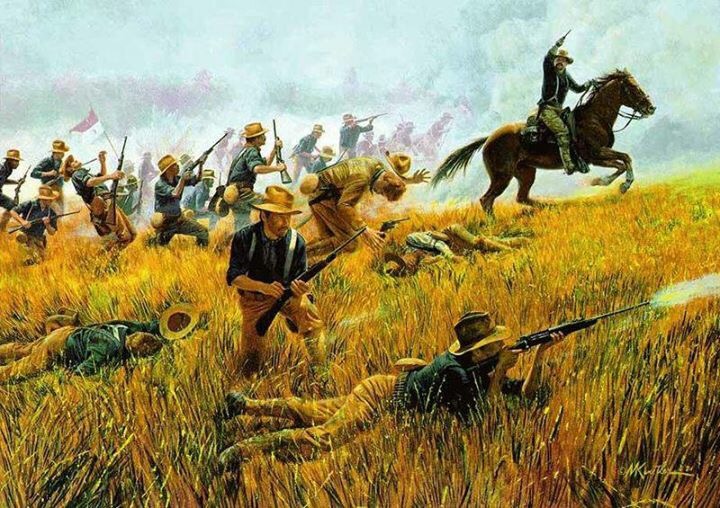
 1898 – The Battle of San Juan Hill becomes a major victory for the US in the Spanish-American War as the US Army’s Fifth Corps takes the heights over Santiago de Cuba. It also set the stage for Colonel Theodore Roosevelt to become President as he became famous for leading his Rough Riders up Kettle Hill (not San Juan). 

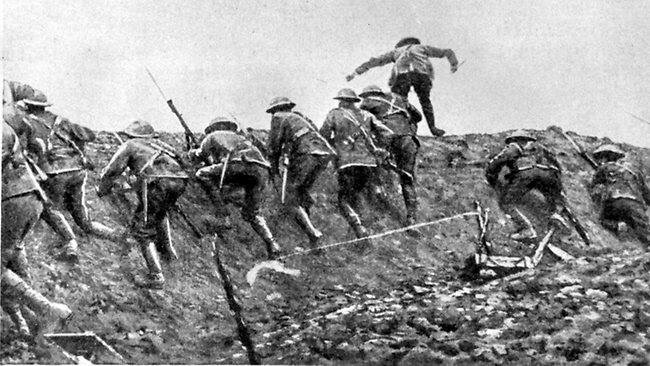
 1916 – The Battle of the Somme in France; after a week’s bombardment with over 250,000 shells, the British launch an attack into no-man’s land. The Germans had retained many machine guns despite the bombardment, and the British soldiers were slaughtered. With 20,000 dead and 40,000 wounded in one day, it was one of the worst defeats for the British military’s history. 

 1942 – The Battle of El Alamein; In North Africa Erwin Rommel’s army had routed the British and their allies, driving them back so quickly that they had to leave much of their equipment behind. But on today’s date the British Army, resupplied by Americans and reorganized, turned the tide back on Rommel at El Alamein.

Union Soldiers Burn the White House


Today in History, June 28:  1862 – Union soldiers inadvertently burn the White House.  No, not that White House.  In fact, the Executive Mansion which housed the President wasn’t known by that name until 1902 when President Theodore Roosevelt renamed it.

Another difference between these “White Houses”, is that George Washington never resided in the Presidential Mansion along the Potomac.  His successor, John Adams was the first President to live there.  But he courted and married the widow Martha Custis at and near the White House on the Pamunkey River.

One of General Washington’s officers was Henry “Light Horse Harry” Lee.  His son, Robert E. Lee, would marry Martha Custis-Washington’s granddaughter, Mary.  Together they would live in Arlington House, overlooking the Potomac…and the Executive Mansion.  When the Civil War began, Robert E. Lee chose to support “his country”, Virginia; which also meant the Confederacy.  As a result he and his family had to leave Arlington House and move to one of their more southern Virginia properties…the White House on the Pamunkey.

As the Union dead mounted, Union Secretary of War Edwin Stanton ordered the area around Arlington House to be used as a cemetery so that Lee could never again live there.  Today it is Arlington National Cemetery.

In 1862 during the Seven Day’s Battles, Union forces pushed the Confederates back past Lee’s family’s new home at White House Landing, using it as a major supply base.

Before she fled further south from yet another home, Mary Lee left a message on the door of the residence, “Northern soldiers, who profess to reverence Washington, forbear to desecrate the house of his first married life, the property of his wife, now owned by her descendants.”  Union soldiers agreed.  General George McClellan ordered a guard to posted around the house to prevent looting or vandalism.

McClellan took a lot of heat from the press and DC for the protection of General Washington’s one-time home.  It should be used as a hospital for Union soldiers!  Even though it had but six rooms.

As was frequent in the Civil War, the lines moved back north after moving south.  And on this date in 1862 Confederates took White House Landing back.  As the Union Army fled, McClellan ordered all supplies and outbuildings burned to prevent their use by the Confederates…with the exception of the White House, it was to be spared.

As often happens in war, orders from the top rarely get carried out to the letter.  The White House was burned to the ground.

Brothers…Before and After


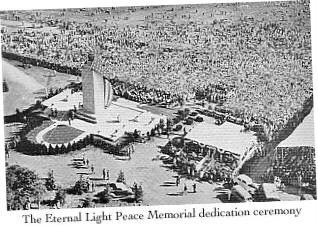
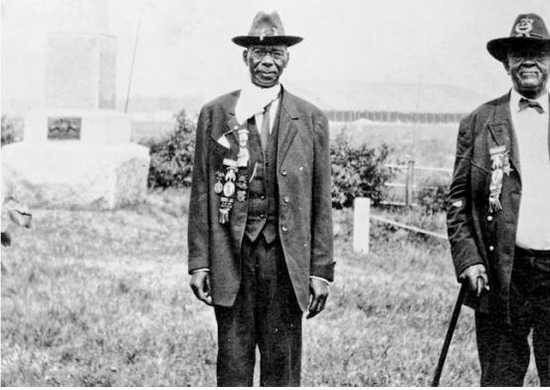
Today in History, June 25: 1913 – “We have found one another again as brothers and comrades in arms, enemies no longer, generous friends rather, our battles long past, the quarrel forgotten—except that we shall not forget the splendid valor.” –President Woodrow Wilson. The Great Civil War Reunion at Gettysburg, Pennsylvania. Nearly half a century after the end of the Civil War, aged men and women who had been sworn enemies, who had lost loved ones on both sides of the great conflict, began to gather at Gettysburg for a reunion to honor those they had lost…and each other. Men missing limbs commiserated with each other, slapped backs, shared stories, joined together as brothers…Union, Confederate, White, Black, recognized that the War was history and they were comrades again. If men and women that were so committed to killing each other could do this….can’t we?

How Can I Draw My Sword Upon Virginia?

Today in History, April 20: 1861 – “Mr. Blair, I look upon secession as anarchy. If I owned the four millions of slaves in the South I would sacrifice them all to the Union; but how can I draw my sword upon Virginia, my native state?” Robert E. Lee was the son of a Revolutionary War hero (Light Horse Harry Lee). He was a graduate of West Point, and would serve as superintendent of the USMA (West Point). He was a hero of the Mexican-American War, and was respected as the best officer, the best engineer, in the US Army. The Administration offered him the command of the defenses around Washington, but he turned it down, he could not raise his sword against his “country” of Virginia. On this date, Lee resigned his commission in the US Army and went home, after 32 years of service to the US Army. 3 days later he would accept a command in the Virginia militia, surprising even his family. Lee is such an enigma. He was a dedicated servant to his country, but served with the same dedication to the Confederacy. After the war, he acted as a gentleman in efforts to bring the nation back together. Whether we approve of his decisions or not, we can only see Robert E. Lee as an American. 

All the Worlds’ Navies Became Obsolete…In 3 Hours

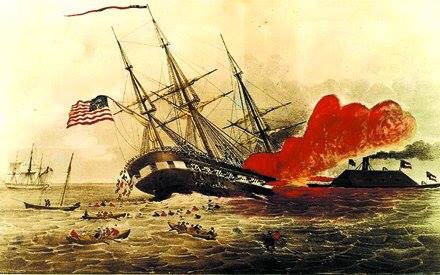
Today in History, March 9: 1862 – The Battle of Hampton Roads. Few are able to be part of a truly history changing event. When the Civil War began, the Union abandoned the Naval Base at Norfolk, Virginia, burning everything they could in retreat. The Confederacy took the base, and raised the sunken Union ship USS Merrimack. They then turned her into the ironclad CSS Virginia. The Union Navy placed an embargo on all Southern ports, including the entrance to the Southern capitol of Richmond. The South attempted to break this embargo with their new ironclad ship, sinking two Union wooden “ships of the line” in the process. The Virginia returned to base for the night, then returned to finish off the last major embargo ship on 9 March, 1862. She was confronted by the Union version of the ironclad…the USS Monitor. The two new iron ships battered away at each other for over three hours without seriously damaging each other, and then withdrew. The Virginia would be scuttled at her base as the Union advanced…the Monitor would be lost at sea. But more importantly….navies worldwide…Britain, France, Spain, the Far East, watched and realized that their wooden navies had suddenly become obsolete.