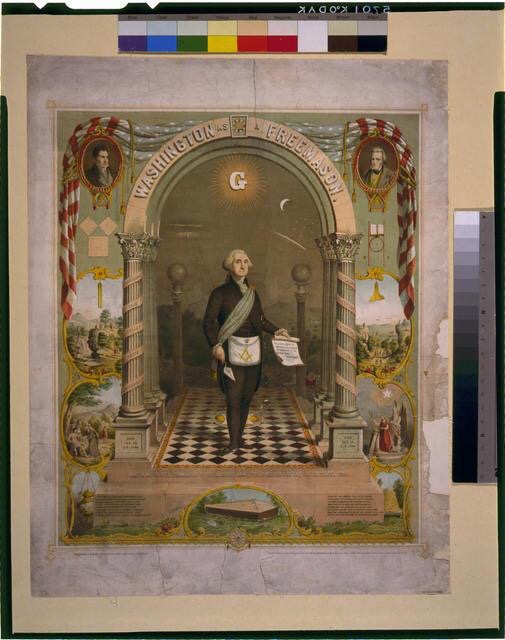
Today in History, August 4: 1753 – 21-year-old George Washington becomes a Master Mason, the highest rank of Freemason in Fredericksburg, Virginia. Rather than an evil conspiracy, the Freemasons were (are) a fraternity based on the medieval guild system, thus “masons”. Their requirements were (are) public service and high moral standards. 14 US Presidents were Freemasons.
Tag: History
Operation Northwest Passage


Today in History, August 3, 1958 – For centuries European nations had sent forth explorers with one goal in mind…to find the Northwest Passage to the Orient to enhance trade. Many failed, many never returned and their fate is unknown.
In 1947 a Russian born U. S. Navy Captain named Hyman Rickover was placed in charge of a program to build the first “Atomic” powered submarine in the world. By 1954 his team had done so, and the USS Nautilus came to be.
On this date in 1958 the world’s first Nuclear powered submarine sailed beneath the Geographic North Pole, going on to traverse the Polar Ice Cap for the first time, creating the long searched for “Northwest Passage.” Of course the submerged ship carrying 116 men 500 feet beneath the surface of the ocean did not create the path of commerce nations long dreamed of, but it was a technological marvel.
PT 109

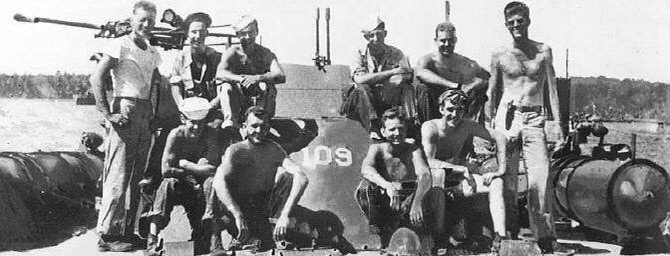

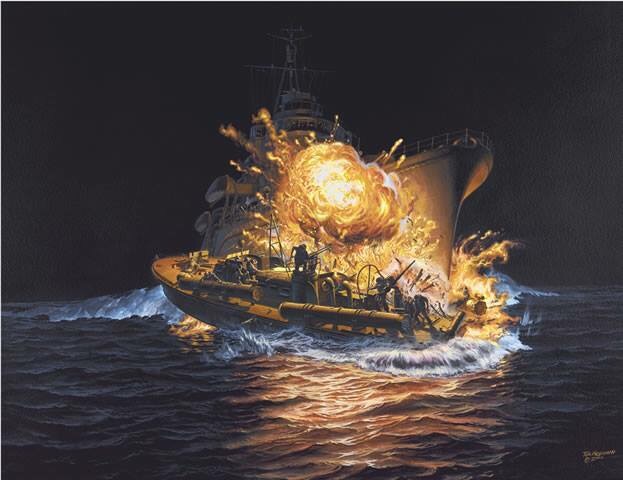
Today in History, August 2: 1943 – Lt (jg) John Fitzgerald Kennedy and the crew of torpedo boat PT-109 are on patrol in Blackett Strait of the Solomon Islands when they are rammed by a Japanese destroyer, IJN Amagiri. The destroyer continued on her way; the crew of the plywood patrol boat began a days long ordeal of survival at sea. Kennedy, in spite of a bad back, towed a wounded crewman by a strap for two miles to a nearby island. He and another officer took turns swimming out into the strait attempting to flag down help. Eventually they encountered natives who were working with an Australian Coast Watcher, who arranged rescue. There was no doubt JFK’s actions were heroic, but heroes were everywhere during those years. His exploits were used during his presidential campaign to great success. He kept the coconut upon which he had written a message to the coast watcher.
Dead Man’s Hand

Today in History, August 2: 1876 – Deadwood, South Dakota. Gunfighter, sometimes lawman, showman, gambler, vagrant Wild Bill Hickok is sitting with his back to the door in a saloon playing poker, holding a pair of black aces and black eights. A coward steps behind him and shoots him in the back of the head, killing him instantly, Hickok’s pistol still in it’s holster. The coward attempted to shoot others in the saloon, but the first round was the only one that wasn’t a dud. He would be tried and hanged. Hickok’s last hand is now known as the “Deadman’s Hand”.
The Right Man for the Job
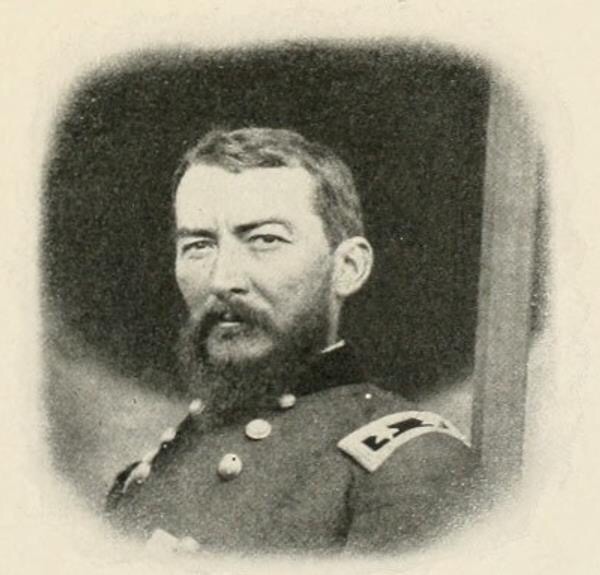
Today in History, August 1: 1864 – Over the objections of Secretary of War Edwin M. Stanton, who thought he was too young for the command of an army, Gen. Ulysses S. Grant names Gen. Phillip Sheridan as commander of the Army of the Shenandoah. Throughout the war, each time the Union began to encroach on the Confederate capitol at Richmond, Virginia, the South would send an army through the Shenandoah Valley to threaten Washington, DC, forcing the Union to protect it’s own capitol. Grant didn’t fall for this, however as he lay siege to Petersburg, which protected Richmond. The Confederacy sent Gen. Jubal Early through the Valley to threaten DC. The Shenandoah was not only the route north for the Confederate armies, it was the “bread basket” for the south, much as the midwest is for the country now. Grant sent Sheridan to command a new Valley of the Shenandoah, and ordered him, “The people should be informed that so long as an army can subsist among them recurrences of these raids must be expected, and we are determined to stop them at all hazards. … Give the enemy no rest … Do all the damage to railroads and crops you can. Carry off stock of all descriptions, and negroes, so as to prevent further planting. If the war is to last another year, we want the Shenandoah Valley to remain a barren waste.” The Confederates called Sheridan’s campaign “The Burning”, precursor to the scorched earth campaign that Sherman enforced in Georgia. Sheridan not only drove Early from the valley, but lay waste to all resources in the Shenandoah, depriving the South of the much needed resources. Lincoln, Stanton, and Grant sang his praises, as did the nation.

Today in History, July 31: 1976 – The Big Thompson Canyon Flood. While Colorado was celebrating its Centennial, a highly unusual thunderstorm broke out high in the mountains, near the source of the Big Thompson Canyon in northern Colorado. The storm deluged the canyon with the equivalent of 3/4’s of the area’s annual rainfall in a matter of hours. It sent a wall of water 20 feet high racing down the canyon, filled with deadly debris.
Residents and tourists miles away from the storm near the mouth of the canyon had no idea there was a storm higher up, much less a torrent of flood water headed their way. 144 died.
Colorado State Trooper Sgt. W. Hugh Purdy and Estes Park Officer Michel O. Conley were advised of the approaching flood. Remember that this before cell phones and other mass media, most of which wouldn’t have worked in the canyon anyway. These men drove their patrol cars up the canyon, telling people to flee using their public address systems, with full knowledge of what they were doing….until they met the water and were killed.
The Arch de Triomphe
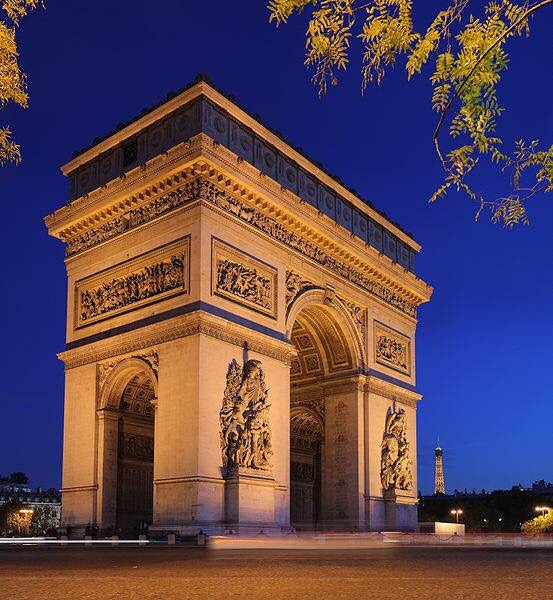


Today in History, July 29: 1836 – Originally designed in 1806, the Arch de Triomphe in Paris, France is inaugurated on this date in 1836 to commemorate French victories, mostly during the French Revolution and by Napoleon Bonaparte.
Intended for French armies to march through after military victories, it has since been used also by foreign armies celebrating their conquest of France. The Germans marched through (or around) the arch twice, the French have taken the march also, as have American and British forces liberating France after it’s conquest.
After WWI, the French tomb of the unknown soldier was entombed beneath the arch; as a sign of respect, armies have since marched around rather than through the Arch, including Hitler’s armies in 1940.
After WWI in 1919, Charles Godefroy flew his French Nieuport biplane through the Arch, giving us an idea of it’s size.
Tragedy on the 79th Floor

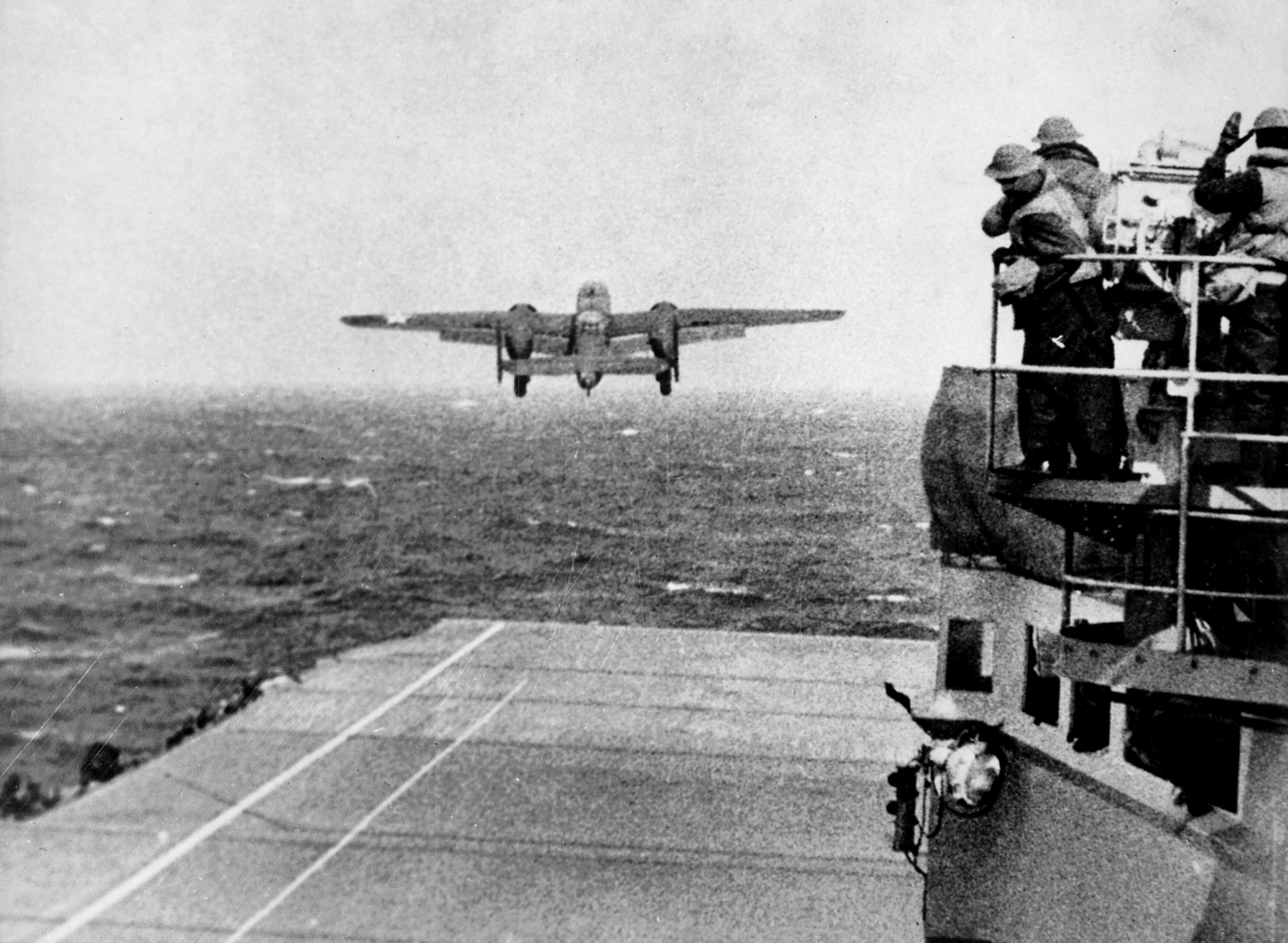

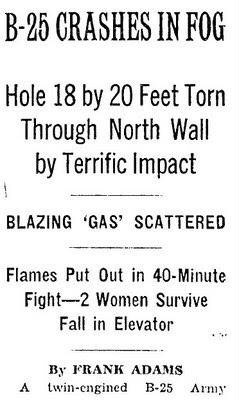


Today in History, July 28: 1945 – A US Army Air Corps B-25 “Mitchell” bomber, lost in the fog over Manhattan, crashes into the Empire State Building. The same type aircraft had been utilized in the Doolittle Raid over Tokyo in 1942. The airplane had missed the Chrysler Building, but in diverting from impact with that skyscraper, turned into the Empire State Building, then the tallest building in the country. The aircraft’s high octane fuel severely damaged the structure, several of her parts landed on or in nearby buildings, and one of her engines caused an elevator to fall. the safety features in the elevator stopped it’s free-fall, and the woman occupying it was saved just before the engine landed upon it. All three crew members and 11 workers in the building were killed.
The Day the Earth Stood Still
Today in History, July 20: 1969 – The day the Earth stood still. Over a billion people world wide stopped what they were doing to watch in awe as Neil Armstrong became the first man to set foot on the moon. It had been a decade long odyssey, begun with JFK’s comments that it should be done before the end of the 60’s decade. So much has been gained from America’s space exploration. I was a seven year old boy laying in the living room floor, allowed to stay up late and watch this happen on our black and white TV. First “The Eagle has landed”, then….
Life, Liberty and the Pursuit of Happiness. A Date Full of Historic Significance!





Today in History, July 4: This is my favorite day of the year to post, not only because it is America’s birthday, but because the date is so rich in American History.
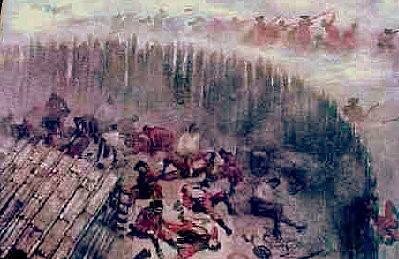
1754 – During the French and Indian Wars, a young colonial member of the British Army abandons “Fort Necessity” after surrendering it to the French the day before. The officer, 22-year-old Lt. George Washington had also commanded British forces in the first battle of the war on the American continent weeks before. The French and Indian Wars were only part of a global conflict between England and France, the Seven Years War. His experience here would serve Washington well in our War for Independence.
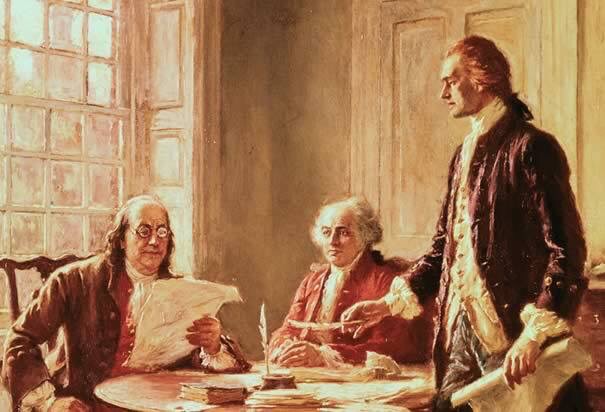
1776 – The second Continental Congress adopts the Declaration of Independence from England after years of conflict as colonists, “We hold these truths to be self-evident, that all men are created equal, that they are endowed by their Creator with certain unalienable Rights, that among these are Life, Liberty and the pursuit of Happiness.”
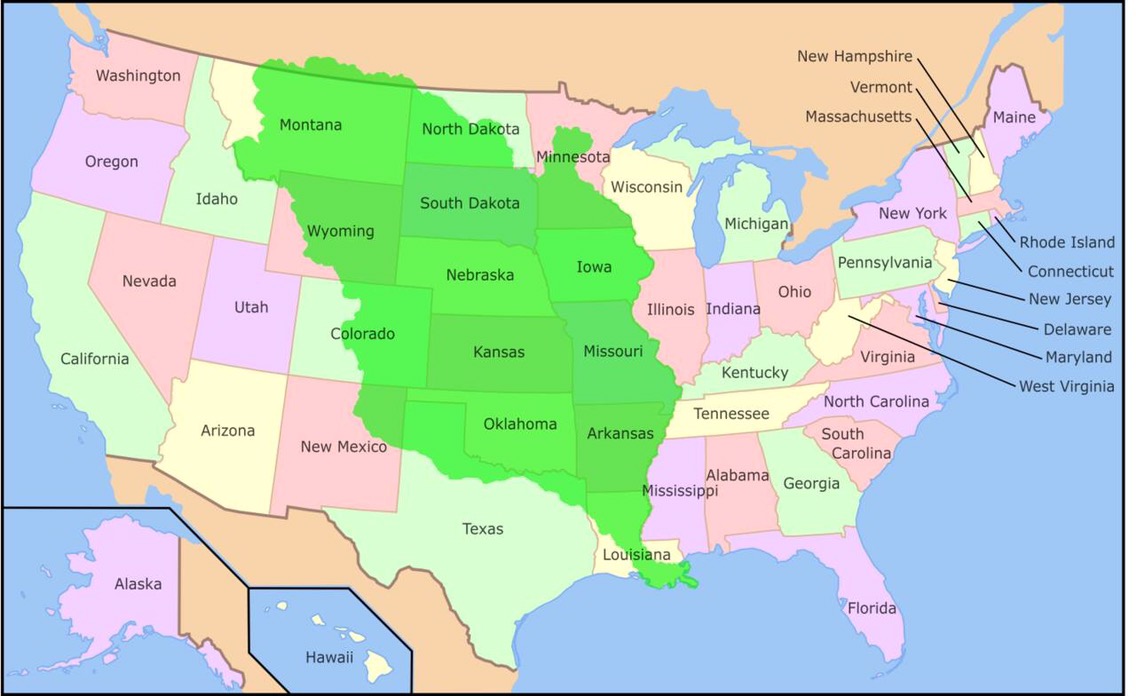
1803 – President Thomas Jefferson announces the signing of a treaty in Paris formalizing the Louisiana Purchase, effectively doubling the size of the United States in one day for $15M.
1826 – 50 years after the adoption of the Declaration of Independence, two of it’s signers, second President John Adams and third President Thomas Jefferson, die on the same day. The two had become bitter political enemies for years (Adams a devout Federalist, Jefferson an equally devout state’s rights man, in addition to vicious political vitriol the two had exchanged). But in 1812 they made amends and began a years’ long correspondence, making them good friends again. It is said that Adams’ last words were, “Jefferson survives”. He was wrong, Jefferson had died five hours before. Many Americans at the time saw their death on the same day 50 years after the Nation’s birth as a divine sign.
1863 – Confederate General John C. Pemberton surrenders Vicksburg, Mississippi to Union General Ulysses S. Grant. Pemberton had sent a note asking for terms on the 3rd, and initially Grant gave his usual “unconditional surrender” response. He then thought about what he would do with 30,000 starving Southern troops, who he had lay siege to since May 18th, and granted them parole, accepting the surrender on the 4th. The capture of Vicksburg effectively secured the main artery of commerce for the Union and cut off of the Confederate states west of the Mississippi (and their supplies) from the South. Grant’s parole of the rebels would come back to haunt him, as the Confederacy did not recognize it’s terms and many of the parolees fought again…which came back to haunt the Confederacy because as a result the Union stopped trading prisoners. Celebrated as a great victory by the North, but by Vicksburg not so much. The Citizens of the Southern city had to take to living in caves during the siege as US Navy and Army continuously bombarded their homes. Starving and desperate, they saw Grant’s waiting a day to accept surrender as malicious. Independence Day would not be officially celebrated in Vicksburg for a generation.
1863 – On the same day, half a continent away, Confederate General Robert E. Lee led his defeated Army of Northern Virginia south away from the Battle of Gettysburg, Pennsylvania. This was no small matter…”Bobby Lee” had been out-foxing and out-maneuvering multiple Union Generals practically since the war began. No official surrender here…Lee’s army would survive to fight another day. While both battles were turning points, they did not spell the end of the South as many believe. There were years of hard, bitter fighting still to come with ghastly losses in life and injury. Gettysburg was, however, the last serious attempt by the South to invade the North.
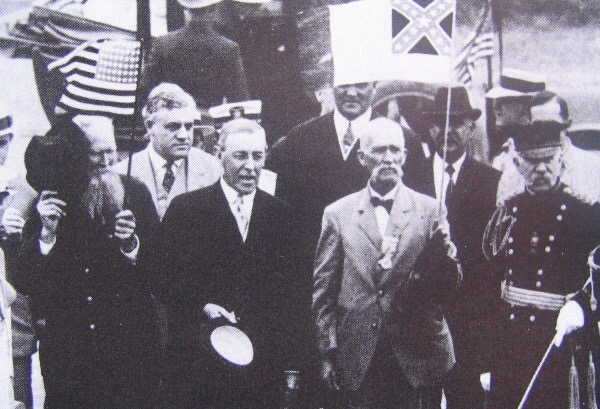
1913 – President Woodrow Wilson addresses the Great 50 Year Reunion of Gettysburg, attended by thousands of Veterans from both sides, who swapped stories, dined together…and it would seem, forgave for a time.
1939 – “I consider myself the luckiest man on the face of the Earth”. After 17 years as a beloved member of Major League Baseball, New York Yankee Lou Gehrig stands in Yankee Stadium and says goodbye to his fans, having been diagnosed with a terminal disease that now bears his name. I doubt there was a dry eye in the house. I’ve posted the video below.
God Bless America! And thank you to our service men and women that continue to make our freedoms possible.
 Mark Loves History!