Israel is “Re-Born”

Today in History, May 14, 1948:

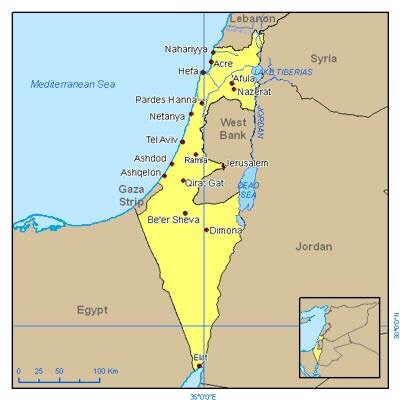
David Ben-Gurion, soon to be Israel’s first Premier, declares the birth of the first Jewish State in 2,000 years. As he finished his speech, the gunfire from the first Israeli-Arab War could be heard in the distance, as Egyptian forces began their attack.

The story continues…and many have changed sides or at least become more vocal in their anti-Israeli sentiments.

This discussion, and the bloodshed, has been ongoing for centuries.

Churchill Becomes Prime Minister

Today in History, May 10, 1940:

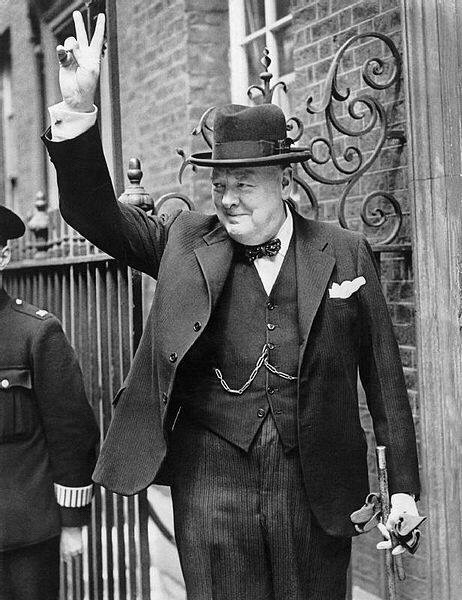
Sir Winston Churchill is made Prime Minister of England, a post he had long desired, but not necessarily under these circumstances. Churchill had been a member of the British government since the turn of the century, as his father had before him.

Due to politics, he had been abandoned to the political “wilderness” in the early 30’s…still a member of the House of Commons, but not of HMG…Her Majesty’s Government.

Throughout the 30’s he repeatedly called for beefing up the military to prepare for German aggression…and was repeatedly denied…cast as a crank looking for attention. It wasn’t until the Germans actually took France that his countrymen realized that Neville Chamberlain was the crank and that “Winston” knew what he was talking about.

On this date they cast their lot with him…and he did not disappoint.

The Treaty of Windsor

Today in History, May 9, 1386:

A Treaty of Alliance is ratified at Windsor between King Richard II of England and King John I of Portugal.

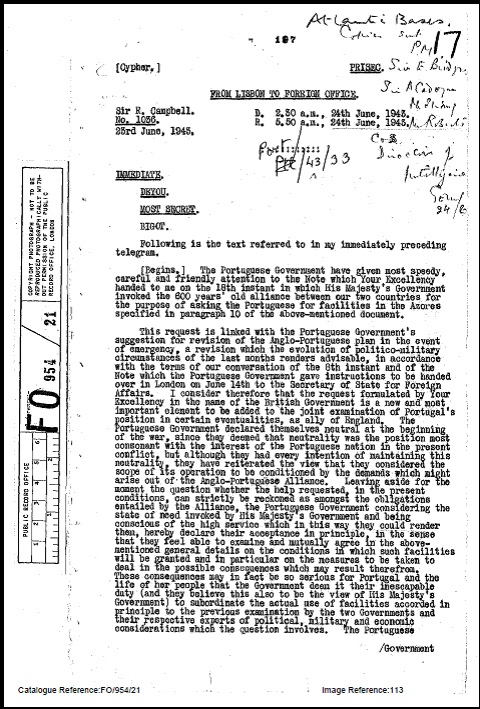
The Treaty is the longest alliance still in effect. It came about because the Portuguese needed military assistance in defense against their neighbor Castile (Spain) and England needed the Naval assistance of Portugal against France. Portugal’s sea power was at that time stronger than that of the English.

The treaty was strengthened by the marriage of John I of Portugal to Philippa, daughter of the Duke of Lancaster.

The Alliance was again called upon to thwart a Spanish invasion of Portugal in the 1760’s, to fend off Napoleon in the early 19th century, then in WWII when Portugal provided intel and air bases in the Azores to England and America. Air patrols from the Azores were important in the Battle of the Atlantic. The air bases were again provided to England during the Falkland Islands War.

The First Annual New York Bench Show of Dogs

Today in History, May 8, 1877:

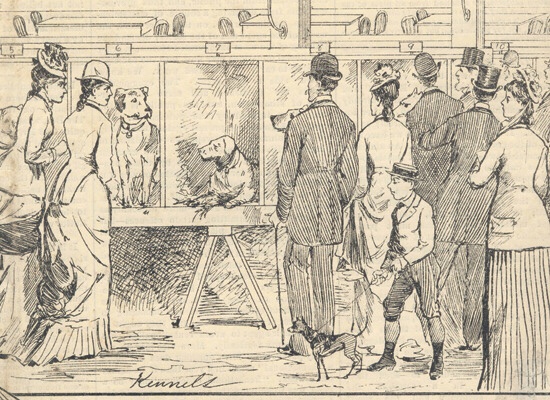
For several years a group of sportsmen had been gathering at their favorite bar inside the Westminster Hotel in New York City to tell tales of their hunting excursions and share a few drinks.

They decided eventually to set up some kennels nearby for their four-legged friends and hire trainers. Thus was born the Westminster Kennel Club, named for their favorite establishment.

From here it was decided to host a dog show, the first of which drew approximately 1,200 entrants as The First Annual New York Bench Show of Dogs, held at Gilmore’s Garden for three days beginning May 8, 1877.

Today we know the show as the Westminster Kennel Club Dog Show and the venue as Madison Square Garden.

The show is the second longest continuous running sporting event in the United States…bested only by the Kentucky Derby which began in the same decade.

Oh the stories they can tell. Entries reportedly have been made using the late Col. George Custer’s dogs, those of the monarchs of England, Russia and Germany, and the indomitable Nelly Bly.

The show predates movies, the light bulb, many states, and the “show went on” during wars and the Great Depression.

The show has, of course, progressed from hunting dogs to pretty much every breed, and now carries on longer and draws even more remarkable crowds.

Send in the Marines!

Today in History, May 4, 1946:

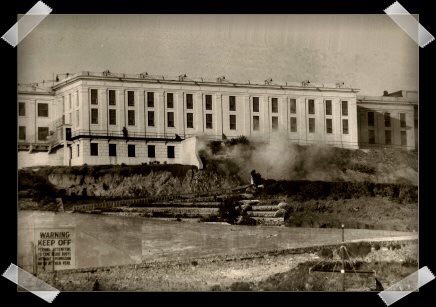
Call in the Marines! The Battle of Alcatraz. On May 2nd, three inmates on D Block of Alcatraz prison managed to overtake the block of cells. One of them managed to expand and crawl between bars leading to the catwalk above the cells and overpower the guard there. Soon they had imprisoned the guards in two cells and taken their weapons. Now they only needed to find the key to the “yard” and they could steal the island’s launch to escape. However by the time they found the key, they had tampered with the lock so much that a security feature kicked in and they were sealed inside. Over the next couple of days they fired on guards outside and on the guards they had imprisoned inside, killing 3 and injuring 14. The Warden called for help from Marines stationed at the nearby Treasure Island Naval Base, many of whom were fresh from fighting Japanese hidden in caves in the Pacific. The Marines assaulted D Block with machine gun fire, grenades and mortars. When the guards went to secure the building, they found the three ringleaders dead in a utility corridor to which they had retreated. Two more inmates would later be executed for their role in the attempted escape.

Friendly Fire Changes History

Today in History, May 2, 1863:

He was, in today’s vernacular, the epitome of a “nerd”. He had an odd, ungainly walk, was very strict in his interpretations of religion, and either ignored or did not see his contemporaries and his students mocking him and laughing at him behind his back for his awkwardness.

He graduated from West Point, served with distinction in the Mexican-American War, and then became a professor at the Virginia Military Institute (VMI). He was a terrible teacher, and mocking him became a tradition amongst the students.

Then the Civil War came. Thomas Jackson didn’t have any particular political views, but he was true to his “country” of Virginia. So he served, proving to be efficient at training brigades at drill and military movements.

While still considered ungainly, Jackson earned the faith of his men by always being at the front, without guile, without fear. At the First Battle of Manassas (Bull Run for the Union, Confederates called it Manassas), he did the same.

One of his contemporaries from the Mexican-American War, Gen. Bernard Bee, rallied his own men by shouting, “There is Jackson standing like a stone wall. Let us determine to die here, and we will conquer. Rally behind the Virginians!” And they did, and the battle was won.

The awkward Thomas J. Jackson had transformed into the legend of “Stonewall” Jackson and he would soon become the right hand man of Gen. Robert E. Lee. After many battles won, on today’s date, during the Battle of Chancellorsville, Jackson was returning to his camp at night when he was taken for a Yankee soldier and accidentally shot by a sentry. Within a few days, one of the South’s greatest heroes would die of his injuries.

Lee in particular would mourn the loss of a valued lieutenant, and would miss him during battles to come, particularly Gettysburg.

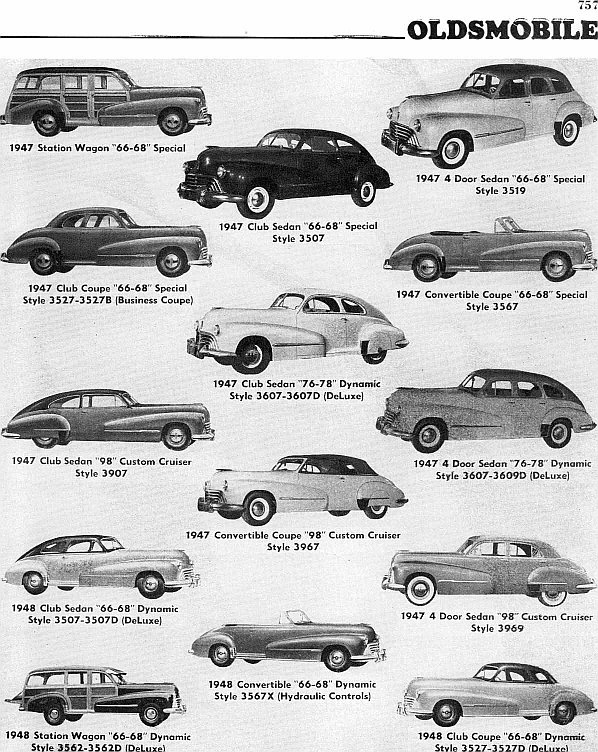
Oldsmobile…End of a Era

Today in History, April 29, 2004:

The last Oldsmobile, an “Alero”, rolls off of the assembly line.

The iconic brand was one of the oldest in America, begun by Ransom E. Olds, who would also create REO cars and trucks after he left Oldsmobile.

Oldsmobile would be bought up by General Motors along with Buick, Pontiac and others.

The Cutlass would be the highest selling model in the 70’s and 80’s after being one of the hottest “muscle cars.”

By the late nineties sales had dropped off precipitously and by 2000 GM announced the brand would meet it’s demise in 2004.

The Dawes Commission in Indian Territory

Today in History, April 28: 1897 – The Chickasaw and Choctaw tribes, two of the five civilized tribes, agree to relinquish communal control of their lands after being convinced to do so by the Dawes Commission. The Dawes Act had previously ruled that other tribes must give up their lands and adapt to white customs, but the five civilized tribes were exempt; an 1830 treaty gave them control of their lands as long as the grass grows and the rivers run. Soon after convincing the Chickasaws and the Choctaws to give up the rights to their lands, the other civilized tribes followed suit, resulting in most of their land being given to settlers, including in the Sooner’s land run. In FDR’s administration the five civilized tribes would be given back the control over some of their lands, but the damage had been done.

The Tragedy of the SS Sultana

Today in History, April 27, 1865:

The SS Sultana.

They had left their farms, their jobs and their families, to fight for the Union, some for glory, some for honor. Any glory in the war faded, as it always must, as they fought through terrible battles. They saw their friends die mutilated, many of them suffered irreparable injuries.

Then they were captured by their enemy and sent to horrific prison camps such as the despised Andersonville. Conditions there were unspeakable; even if the Confederates had any sympathy for them, the South didn’t have the resources to care for it’s own, much less it’s prisoners.

Finally after months or years of starvation and brutality, the war was over; they were liberated. They were going home! Can you imagine the joy, the rapture they must have felt? Most had to have believed it would never happen, that they would die in their captivity.

They marched (those that could still walk) to ports on the Mississippi to board steamships for the trip north and home. Desperate to get home as quickly as possible, they begged, cajoled, bartered or simply boarded the overloaded river boats clandestinely. You can take just one more, right?

The steamer SS Sultana was one of those commissioned by the Union Government to get them home. Her capacity was for 376 passengers. 376. By the time she sailed from the captured city of Vicksburg, MS she was loaded down with at least 2,400…mostly those Union prisoners on their way home.

At 2 AM on the 27th of April her decks and quarters were jammed beyond capacity, but their must have been peace amongst the passengers. The ship was top heavy and as she made the turns of the river, the water in her inter-connected boilers sloshed back and forth, lowering the water levels in the boilers opposite the turn. One of the boilers had been hastily patched to allow her use on the trip.

Suddenly, one of the boilers burst, causing at least two more to follow. The ship exploded, the suddenly escaping steam burned hundreds to death in an instant, setting the wooden ship afire to kill hundreds more. Most of those that managed to escape the ship into the water, already emaciated, drowned before they could be rescued; the first ship to reach them was an hour away in the frigid waters.

Of the 2,400, as many as 1,900 perished. 7 to 9 miles above Memphis on the river, even the recently defeated Confederates there responded with compassion, opening their homes to the few survivors.

No one was ever prosecuted for the disaster, however Maj. Gen. Napoleon Jackson Tecumseh Dana, commander of the Department of the Mississippi, was relieved of his command by Lt. Gen. Grant.
Assassin’s Demise

Today in History, April 26, 1865:

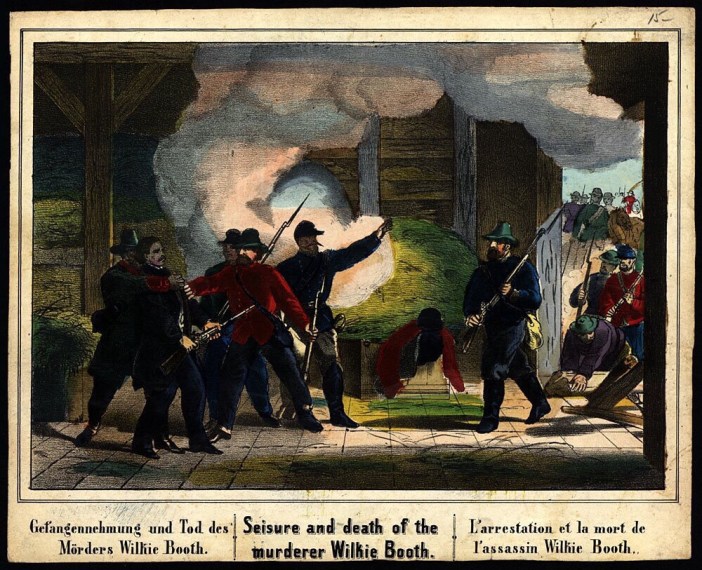
Union Army forces track down John Wilkes Booth 12 days after he assassinated President Lincoln. In the meantime, he had been hidden by Confederates, treated by Doctor Samuel Mudd (your name is mud) and hidden in a barn on the Garrett farm in Virginia, where he was found.

The barn was set afire and his associate surrendered. Booth refused…a Union soldier, Boston Corbett, saw Booth inside the barn and fired his Colt revolver…causing a mortal wound to Booth.

Many Confederates saw Booth as a hero. However many Southerners wept openly at Lincoln’s death, and Confederate Generals, including Lee and Johnston, denounced Booth’s actions.

Fortunately, in the interim between his deed and his death, Booth was able to see news accounts that recorded his hero’s denunciation of his act. So when he died, he knew what he was.