Going West…The Homestead Act

Today in History, May 20, 1862:

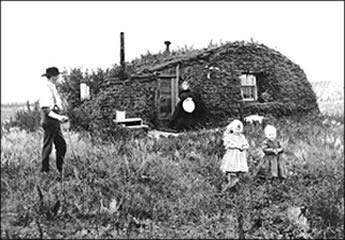
President Lincoln signs the Homestead Act, which would give 160 acres of western lands to anyone that would farm it successfully for 5 years and build a residence upon it (often a sod building).

The Act would encourage vastly expanded settlement of the west; bad news for Native Americans, good news for those newer Americans wanting to improve their lot in life.

Congress had attempted to pass similar acts in 1852, 1854, and 1859, but each time the attempts were shot down by Southern Democrats who were afraid that if the west were populated it would result in more “free” states, which would result in more votes against slavery.

Once the Republican Lincoln was elected, and the Civil War began, the Southern Democrats were no longer part of the equation in Congress. The Republicans soon passed the Homestead Act and the settlement of the west began in earnest. By the end of the war 15,000 settlers (some of which were merely pawns for land speculators) had accepted their lands. Eventually 80 Million acres would be settled.

Assassin’s Demise

Today in History, April 26, 1865:

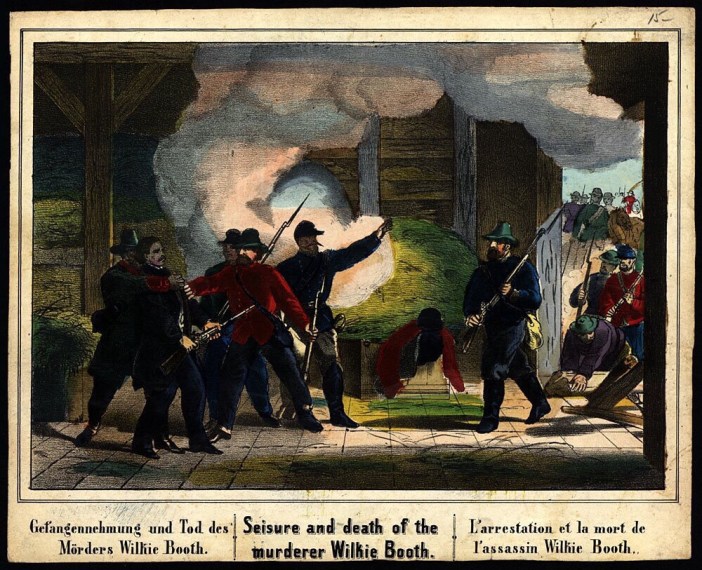
Union Army forces track down John Wilkes Booth 12 days after he assassinated President Lincoln. In the meantime, he had been hidden by Confederates, treated by Doctor Samuel Mudd (your name is mud) and hidden in a barn on the Garrett farm in Virginia, where he was found.

The barn was set afire and his associate surrendered. Booth refused…a Union soldier, Boston Corbett, saw Booth inside the barn and fired his Colt revolver…causing a mortal wound to Booth.

Many Confederates saw Booth as a hero. However many Southerners wept openly at Lincoln’s death, and Confederate Generals, including Lee and Johnston, denounced Booth’s actions.

Fortunately, in the interim between his deed and his death, Booth was able to see news accounts that recorded his hero’s denunciation of his act. So when he died, he knew what he was.

Citizenship in a Republic

Today in History, April 23, 1910:

“The Man in the Arena” speech. After his presidency, President Theodore Roosevelt took a tour of Europe and was received with great fanfare and accolades, both from the common man and royalty. On this date he gave a 35 page speech entitled “Citizenship in a Republic” about the responsibilities involved at the Sorbonne in Paris, France. A segment on page 7 became an inspirational and historic passage.

“It is not the critic who counts; not the man who points out how the strong man stumbles, or where the doer of deeds could have done them better. The credit belongs to the man who is actually in the arena, whose face is marred by dust and sweat and blood; who strives valiantly; who errs, who comes short again and again, because there is no effort without error and shortcoming; but who does actually strive to do the deeds; who knows great enthusiasms, the great devotions; who spends himself in a worthy cause; who at the best knows in the end the triumph of high achievement, and who at the worst, if he fails, at least fails while daring greatly, so that his place shall never be with those cold and timid souls who neither know victory nor defeat.”

Shiloh

Today in History, April 7, 1862:

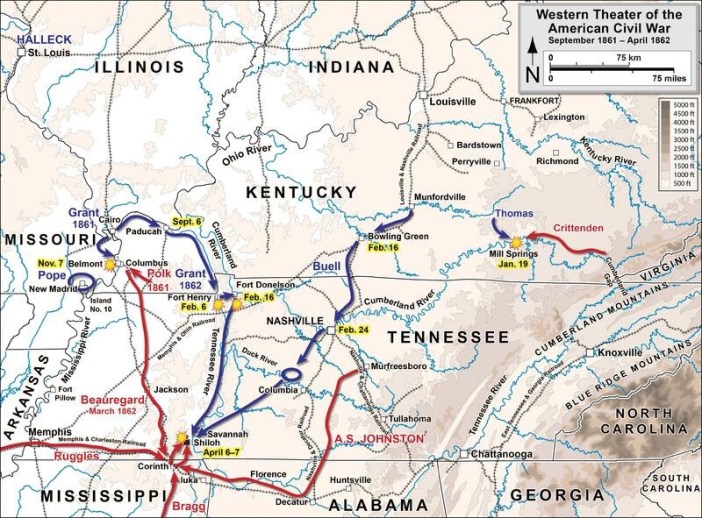
The Battle of Shiloh comes to and end with a Union “Victory”. Union Gen. US Grant had moved his army into Tennessee and was preparing his next campaign.

But Confederate Gen. Albert Sidney Johnston, considered second only to Robert E. Lee by both armies, had different ideas. His troops, in addition to those of CSA Gen. Pierre G. T. Beauregard almost literally caught the Northern Army sleeping….attacking in the morning and routing the Yankees.

The Confederates, always hungry due to their lack of supplies, actually stopped to eat the breakfasts the Union soldiers left in flight. The battle was vicious all through the day. But by the morning of the 7th, Grant had been reinforced by Gen. Buell’s Corps, and Grant quickly turned the rebels back. Shiloh was not so much a victory as a recovery for the North.

But the North nearly lost it’s best commander in the aftermath, as the press excoriated Grant as a drunk who was asleep at the wheel. President Lincoln answered the charges by saying that he could not spare Grant, “he fights” and offering to buy his other generals the brand of whiskey Grant used. In truth Grant had taken to drink when missing his family during his pre-war assignment in California, but was always focused during the Civil War Campaigns.

During the battle, Albert Sydney Johnston was mortally wounded. He died looking in fascination at the sky above.

The Grand Army of the Republic

Today in History, April 6, 1866:

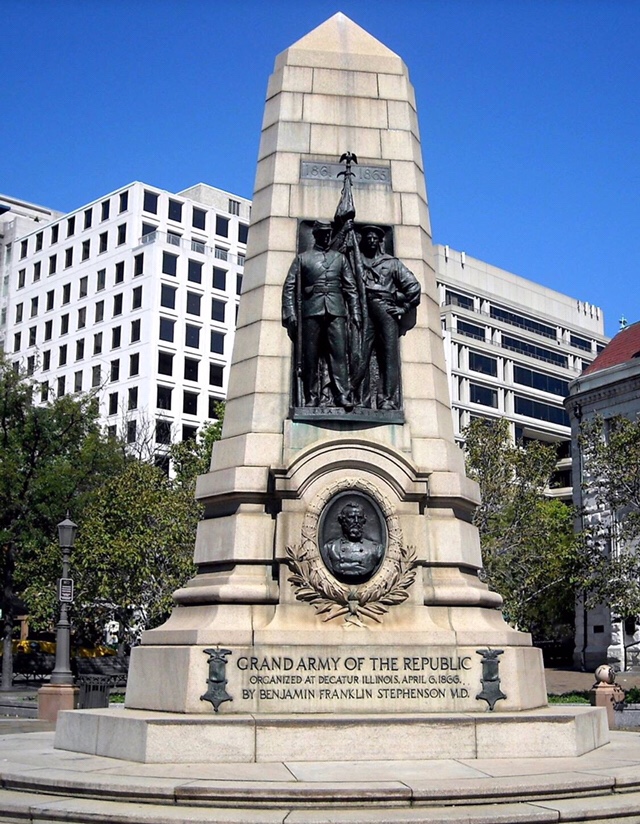
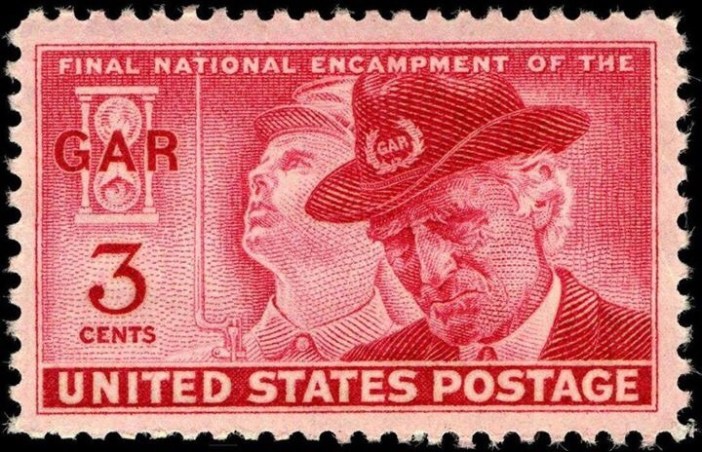
Fraternity, Charity and Loyalty.” The Grand Army of the Republic is formed in Decatur, Illinois, bringing together a Fraternal organization of veterans of the Union (US) Army, Navy, Marines, and “Revenue Cutter Service” (Coast Guard) from the Civil War.

Admittedly an arm of the Republican Party, the GAR was one of the first bi-racial fraternal organizations in the US…white and black veterans worked together to gain veteran’s pensions, elect Republican Presidents Grant, Hayes, Garfield, Harrison and McKinley, all Civil War veterans.

At it’s high point, the organization had 490,000 members; it passed with it’s last member’s death in 1956, to be replaced by the “Sons of Union Veterans of the Civil War.

Victory and Assassination

Today in History, April 4: 1865:

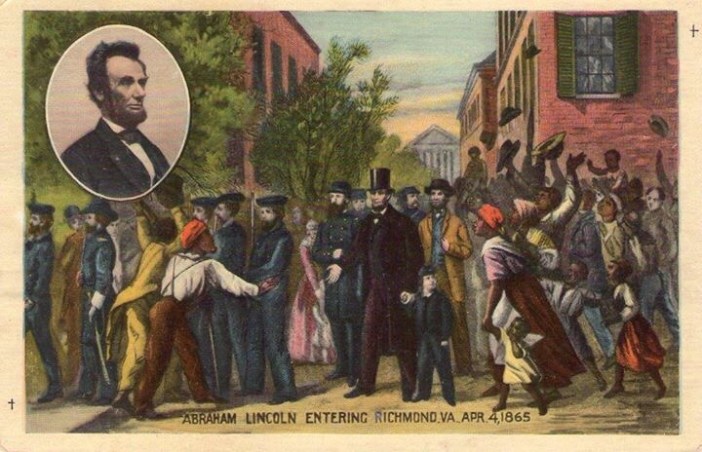
150 years ago today. President Lincoln enters Richmond, the Confederate Capitol. Lincoln had been at City Point when informed that Richmond had been taken the day before by Union Army forces.

He immediately sailed on the USS Malvern, Flag Officer David Dixon Porter’s flagship for Richmond. After he disembarked, he was initially escorted through crowds by a contingent of sailors, who were very relieved when they were met by a group of Union Cavalry to assist in escorting the President to the home of Confederate President Jefferson Davis.

Many former slaves attempted to pay homage to Lincoln, who would not allow it. Onlookers watched from the windows and street corners.

At Davis’ house, Lincoln sat in Davis’ chair, then toured the house.

When later asked by Union Gen. Weitzel how the conquered rebels should be treated, Lincoln indicated that he would not give an order in that regard, but that his advice would be to, “Let them up easy….let them up easy”.

As for the nervous sailors and cavalrymen that escorted him? As it turns out, Lincoln was safer in the Confederate capitol that his own. He had only ten days until he would be assassinated.

103 years later to the day, another man dedicated to civil rights and the advancement of justice, Dr. Martin Luther King, Jr. would be assassinated in Memphis, Tennessee.

April is a Historic month with many stories to tell.

Rawhide Down!!

Today in History, March 30, 1981:

“I hope you’re all Republicans”. President Ronald Reagan quipped to the medical team preparing to operate on him at George Washington University Hospital after he had been shot. “Today, sir, we all are.” ”

“Ronny” was leaving the D.C. Hilton where he had given a speech to Union members when he, a Secret Service agent, a D.C. Police Officer, and Press Secretary James Brady were shot by a man attempting to impress Jodie Foster.

Reagan showed his usual good form and humor in the hospital. When he awoke, a nurse was holding his hand; he looked up and asked, “Does Nancy know about us?” When Nancy arrived, he commented, “Honey, I forgot to duck” (quoting Jack Dempsey). While waiting for surgery, he stated, “All in all, I’d rather be in Philadelphia” (W.C. Fields quote). Within two weeks the President was back at work.

I’m glad we were allowed to have his honor, humor, positive attitude and leadership as long as we did.

Congress Censures Jackson

Today in History, March 28, 1834:

For the first time, Congress censures an American President, Andrew Jackson.

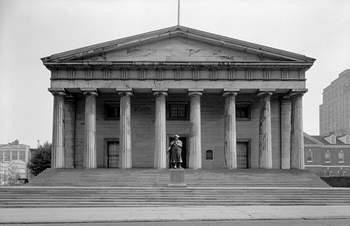
Jackson wanted to dismantle the 2nd “Bank of the United States”. With nearly all of the country’s finances controlled by a central bank, the ultra wealthy that controlled the bank had an inordinate amount of power. With this power they controlled economic and political events, more so than the government or the people.

Jackson (man of the people), angered by many of their actions, vetoed a Congressional act to renew the bank’s charter. He then had the treasury divide the funds formerly controlled by the Bank of the United States amongst numerous state banks, who were more willing to give loans to common citizens and to invest in western interests.

History.com’s report indicates that Democrat Jackson had more personal reasons, and that the dispute was to a large extent between him and Senator Henry Clay, who History.com identifies as a Whig, then in parenthesis indicates a Whig is the same as a Republican.

After listening to a biography of Jackson, I found that Jackson’s motives were more pure…he was the first President to come up from a hardscrabble life and resented the bank’s refusal to help lower income Americans.

Some of my other reading has taught me that Whig does not equal Republican. In 1854 (20 years after these events) several Whig politicians (including Abraham Lincoln) broke away from the Whig party and created the Republican party because they were abolitionists and felt the Whig party was not living up to their ideals. I don’t know whether the History Channel misreported these subjects intentionally, or out of simple error. Either way, don’t assume something is accurate simply because it made it into print. Study it for yourself, whether its history or politics. Which often are intertwined.

Historic Connections: Lincoln-Hay-Roosevelt

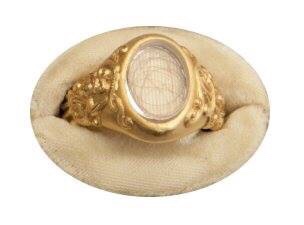
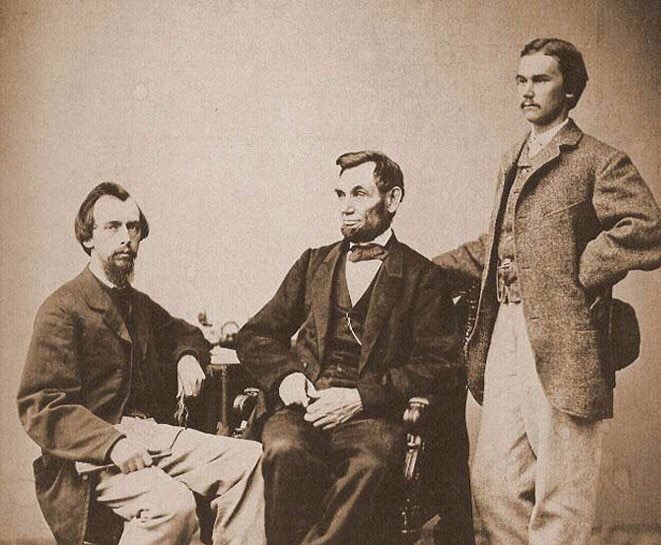
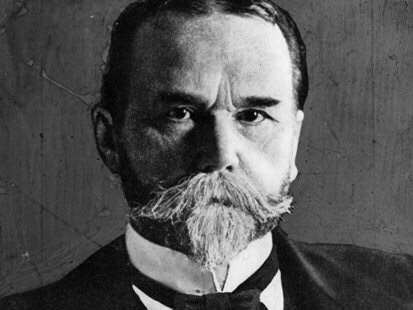
Today in History, March 4: 1861 (Lincoln Inauguration) / 1905 (Theodore Roosevelt Inauguration) – A very special connection between two Presidents, 40 years apart. As a young man in Illinois, John Hay got the chance of a lifetime. His friend John Nicolay was working at the law firm of Abraham Lincoln, Presidential candidate. When Lincoln was elected, Hay and Nicolay became his private secretaries in the Executive Mansion and became his confidants…he would stay up nights sharing stories with them and came to trust them; they helped to keep him balanced through the trials and tragedies of the Civil War. They, in turn nearly idolized him, referring to him as the Ancient One. When Lincoln was assassinated it devastated Hay. He recovered and went on to serve in numerous posts within the government, including the Ambassador to the Court of St. James (England); he was a successful author and journalist (remarkably understated..but I must keep this somewhat brief). He served several other presidents, becoming Secretary of State for President William McKinley. When McKinley was assassinated, Hay stayed on to serve in Theodore Roosevelt’s administration. He was largely responsible for the Open Door Policy in China and negotiated the Hay–Bunau-Varilla Treaty to build the Panama Canal. He initially thought TR a rogue cowboy, but as he grew to respect the President, they became fast friends. TR came to respect Hay’s experience and wisdom, and came to depend upon him. The night before TR was to be inaugurated for his second term, his first in which he was elected, John Hay sent TR a gift. A ring containing a strand of President Lincoln’s hair under glass, taken during his autopsy. Hay included a note:

“Dear Theodore:

The hair in this ring is from the head of Abraham Lincoln. Dr. Taft cut it off the night of the assassination, and I got it from his son-a brief pedigress.

Please wear it tomorrow; you are one of the men who most thoroughly understand and appreciate Lincoln.

I have had your mongram and Lincoln’s engraved on the ring.

Longas, O utiman, bone dux, ferias, Praestes Hesperia.

(Mayest thou, Good Captain, give long holiday to Hesperia!)

Yours affectionately, John Hay”

TR replied:

“Dear John, Surely no other President, on the eve of his inauguration, has ever received such a gift from such a friend. I am wearing the ring now; I shall think of it and you as I take the oath tomorrow. I wonder if you have any idea what your strength and wisdom and sympathy, what the guidance you have given me and the mere delight in your companionship, have meant to me these three and a half years?

With love and gratitude, Ever yours….”

What a life! A integral part of the story of two of our best presidents, and a key player in numerous historic decisions and events. Aside from the photos of the ring, there are photos of Hay in his youth, as an older man (he would die later in 1905), and even the photo of Lincoln’s funeral procession through New York City is important…in a window of one of the buildings to the left are two small boys watching the procession go by…young Theodore Roosevelt, Jr and his brother Elliott.
Veto Override

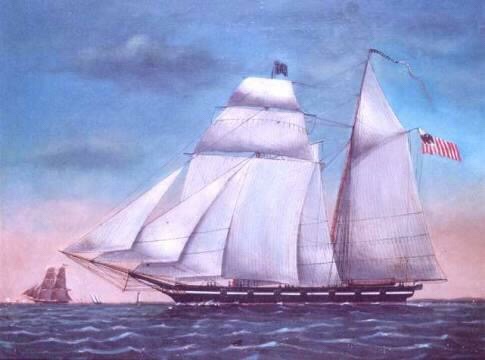
Today in History, March 3: 1845 – Congress overrides a Presidential Veto for the first time. Representative Jabez Huntington of Connecticut had authored a bill restricting the President from authorizing the building of ships for the Revenue Marine Service (precursor to the Coast Guard) unless the Congress had approved the funds first. President John Tyler, in an attempt to protect current contracts and Presidential prerogative, promptly vetoed the bill. On March 3rd, the last day of the 28th Congressional session, the Senate voted to override the veto unanimously, and the House voted 126-31 after midnight to override. Presidents have vetoed over 2,500 bills, with Congress overriding less than 5% of them.