Evacuation Day

Today in History, November 25: 1783 –

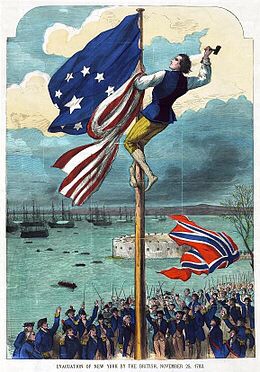
After seven years of occupation, the last British troops depart New York City, three months after the Treaty of Paris was signed ending the American Revolutionary War.

At the outset of the war Gen. George Washington had wanted to fight to keep NYC, but after losing tactically to British forces, had to flee with his army in the dark of night. NY would remain in British hands throughout the war.

After the last British troops left, Gen. Washington entered the city to great fanfare from its citizens.

He would later be inaugurated as the first President in the city that would become the nation’s first capitol.

First Female President in 1919?


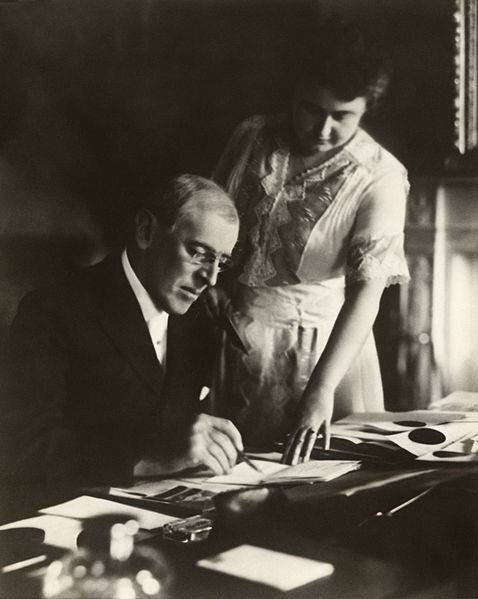
Today in History, October 2: 1919 – President Woodrow Wilson (D) had been on a whirlwind tour of the nation, 8,000 miles in 22 days, pushing America’s entry into the League of Nations (precursor to the United Nations). 

 On September 25 in Pueblo, Colorado, suffering from exhaustion and recovering from a bout with influenza, he collapsed. He made it back to DC before suffering a debilitating stroke that paralyzed his left side and left him bedridden. 

His wife Edith, fiercely protective, cut off almost all access to him in order to keep his incapacitation a secret. She signed off on paperwork and made decisions without consulting the President, claiming she was only acting as a steward to him. He would eventually recover enough to take part in cabinet meetings, but his participation was severely limited. 

 As for the League of Nations? Wilson’s Republican opponents in the Congress, ferociously opposed to the League, continued to fight it, and with the election of Republican President Warren Harding, the League of Nations issue died.

Bloody Antietam’s Importance 


Today in History, September 17: 1862 – The Battle of Antietam during the Civil War. Confederate General Robert E. Lee made the first of several attempts at taking Washington, DC. The Army of the Potomac met Lee’s army at Antietam Creek to defend the city. Lee, Thomas “Stonewall” Jackson, and James Longstreet lead the Southern forces, While George McClellan, Ambrose Burnside and Joseph Hooker lead the Union forces. In 13 hours of fierce fighting, 23,000 of 100,000 combatants are killed or wounded, more in one day than all of America’s wars to that point, and the most American’s ever killed in a single day in our history. Typically, while Hooker’s and Burnside’s commands moved on their enemy, McClellan stayed in place, not engaging. The end of the battle found both armies where they were when it began. But Lee soon retreated back to Virginia. Two important consequences of the battle…it gave President Lincoln a victory that gave him the confidence to issue the Emancipation Proclamation, and European powers decided against recognizing the Confederacy.

“Now look! That damned cowboy is President of the United States!” -Sen. Mark Hanna


Today in History, September 14: 1901 – About a year earlier, Senator Mark Hanna had been discussing with other high-powered Republican leaders whether or not to enlist New York Governor Theodore Roosevelt to be the Vice-Presidential nominee for President William McKinley’s second term. Hanna made no bones about his opposition, “Don’t any of you realize there’s only one life between this madman and the presidency?” But, other political leaders from New York state wanted the head-strong reformer out of their governor’s office, and most felt he would be rendered harmless as VP. However this former NYC Police Commissioner, Under Secretary of the Navy, Colonel of the Rough Riders and yes, Cowboy, was wildly popular and would be a boon for the ticket. When named, TR set records on the campaign trail.

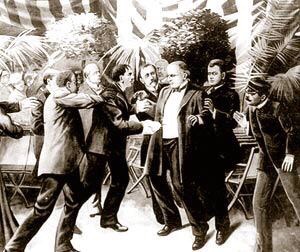
On today’s date in 1901 President McKinley succumbed to infection from his wounds from being shot by an anarchist at the Pan-American Exposition in Buffalo, New York. McKinley had prided himself on shaking as many hands as possible, and was prepared to shake his assassin’s hand when shot by a concealed .32 revolver.
It initially looked as if President McKinley would recover, so Roosevelt left his side in Buffalo and joined his family mountain climbing in the Adirondacks. When the first messenger ran up the mountain to inform TR that the President had taken a turn for the worse, he decided to stay with his family. When the second messenger came up the mountain to say the President was dying, Roosevelt left immediately. He once gain set records in wild wagon rides to make it to the nearest train station and return to McKinley’s side. It was not to be….WM had passed while TR was on his wild ride down the mountain.
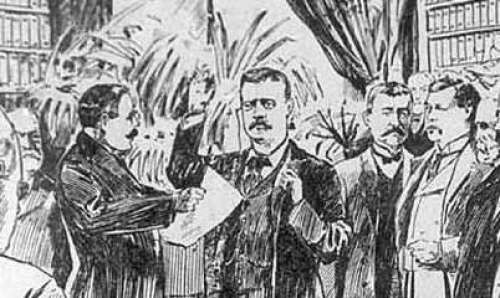
Theodore Roosevelt paid his respects at the residence where McKinley’s body laid, then was sworn in as the youngest President at a friends home in Buffalo in a small ceremony.
When TR asked Mark Hanna for his support, Hanna had two conditions…that Roosevelt would continue McKinley’s policies (sort of did) and…if Roosevelt would stop calling Hanna the “old man”, Hanna would stop referring to TR by the nickname he hated, “Teddy.” Hanna gave his support, but the nicknames continued.

Assassination of President McKinley


Today in History, September 6: 1901 – President William McKinley assassinated. The President was shaking hands at the Pan-American Exhibition in Buffalo, New York when a Polish immigrant Socialist suddenly pointed a gun at him and fired twice. The man was ready to fire a third time when he was tackled by the President’s body guards. McKinley lingered until the 14th before succumbing to his injuries.

George Washington Setting the Standard 


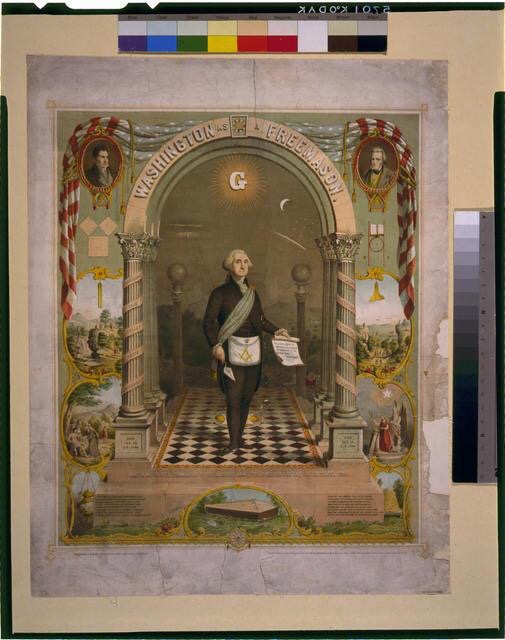
Today in History, August 4: 1753 – 21-year-old George Washington becomes a Master Mason, the highest rank of Freemason in Fredericksburg, Virginia. Rather than an evil conspiracy, the Freemasons were (are) a fraternity based on the medieval guild system, thus “masons”. Their requirements were (are) public service and high moral standards. 14 US Presidents were Freemasons.

Connections Bring History Home


Today in History, July 17: 1763 – John Jacob Astor is born in Germany in modest circumstances.  He would immigrate to America…selling flutes.  Convinced to sell the musical instruments in New York and invest in the fur trade, he became America’s first Millionaire with his American Fur Company.  On April 12, 1912 his grandson and namesake, the world’s richest man, John Jacob Astor IV would die in the Titanic Disaster.

July 17: 1918 – Crossing paths in history.  The RMS Carpathia is sunk by U-Boat U-55 during WWI.  All but 5 of her crew managed to escape to lifeboats. They were in turn saved by the Sloop HMS Snowdrop, which arrived and drove off the German sub before it could machine gun the crew in their boats.

As previously stated, on April 12, 1912, RMS Titanic struck an iceberg and sank within 4 hours. The nearest ship to receive her distress signal was the RMS Carpathia, which sped at full speed for two hours to the disaster scene. Upon her arrival, she rescued 705 survivors from the freezing waters of the North Atlantic. The Carpathia’s crew became heroes, being awarded medals. Her Captain, Arthur Henry Rostron, was knighted and was a guest of President William Taft in the White House. During WWI the Carpathia served as a troop ship, transporting thousands of American soldiers across the Atlantic to the war in Europe.

Among them was Frank Buckles, who would become the last surviving American Soldier from WWI before his death in 2011. He was a prisoner of war in the Philippines during WWII (as a civilian) and a strong advocate for a WWI Memorial, which…led him to be a guest of President George W. Bush in the White House. 

Everything is connected in history…you just have to find it.

President & Chief Justice


Today in History, June 30: 1921 – President Warren G. Harding nominated former President William Howard Taft as Chief Justice of the Supreme Court of the United States after the death of the previous Chief Justice, Edward Douglass White…who Taft had nominated when he was President. The irony is that Taft never wanted to be President…he became such as the result of the efforts of President Theodore Roosevelt…one of his closest friends. TR then turned on him vociferously when Taft didn’t carry out TR’s policies to his liking. Taft was crushed by the attacks by his friend…but in the end, he obtained the job he had wanted since he was a child…Chief Justice of the Supreme Court of the United States…years after being President.

Historical Connections: Lincoln-Hay-Roosevelt

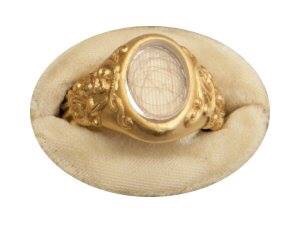
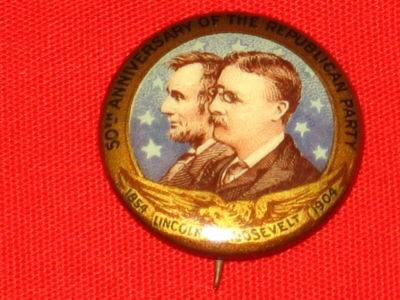
Today in History, March 4: 1861 (Lincoln Inauguration) / 1905 (Theodore Roosevelt Inauguration) – A very special connection between two Presidents, 40 years apart. As a young man in Illinois, John Hay got the chance of a lifetime. His friend John Nicolay was working at the law firm of Abraham Lincoln, Presidential candidate. When Lincoln was elected, Hay and Nicolay became his private secretaries in the Executive Mansion and became his confidants…he would stay up nights sharing stories with them and came to trust them; they helped to keep him balanced through the trials and tragedies of the Civil War. They, in turn nearly idolized him, referring to him as the Ancient One. When Lincoln was assassinated it devastated Hay. He recovered and went on to serve in numerous posts within the government, including the Ambassador to the Court of St. James (England); he was a successful author and journalist (remarkably understated..but I must keep this somewhat brief). He served several other presidents, becoming Secretary of State for President William McKinley. When McKinley was assassinated, Hay stayed on to serve in Theodore Roosevelt’s administration. He was largely responsible for the Open Door Policy in China and negotiated the Hay–Bunau-Varilla Treaty to build the Panama Canal. He initially thought TR a rogue cowboy, but as he grew to respect the President, they became fast friends. TR came to respect Hay’s experience and wisdom, and came to depend upon him. The night before TR was to be inaugurated for his second term, his first in which he was elected, John Hay sent TR a gift. A ring containing a strand of President Lincoln’s hair under glass, taken during his autopsy. Hay included a note:
“Dear Theodore:

The hair in this ring is from the head of Abraham Lincoln. Dr. Taft cut it off the night of the assassination, and I got it from his son-a brief pedigress.

Please wear it tomorrow; you are one of the men who most thoroughly understand and appreciate Lincoln.

I have had your mongram and Lincoln’s engraved on the ring.

Longas, O utiman, bone dux, ferias, Praestes Hesperia.

(Mayest thou, Good Captain, give long holiday to Hesperia!)

Yours affectionately, John Hay”
TR replied:

“Dear John, Surely no other President, on the eve of his inauguration, has ever received such a gift from such a friend. I am wearing the ring now; I shall think of it and you as I take the oath tomorrow. I wonder if you have any idea what your strength and wisdom and sympathy, what the guidance you have given me and the mere delight in your companionship, have meant to me these three and a half years?  

With love and gratitude, Ever yours….”
What a life! A integral part of the story of two of our best presidents, and a key player in numerous historic decisions and events. Aside from the photos of the ring, there are photos of Hay in his youth, as an older man (he would die later in 1905), and even the photo of Lincoln’s funeral procession through New York City is important…in a window of one of the buildings to the left are two small boys watching the procession go by…young Theodore Roosevelt, Jr and his brother Elliott.
“Neither let us be slandered from our duty by false accusations against us, nor frightened from it by menaces of destruction to the Government nor of dungeons to ourselves. Let us have faith that right makes might, and in that faith, let us, to the end, dare to do our duty as we understand it.” – Abraham Lincoln at Cooper Union

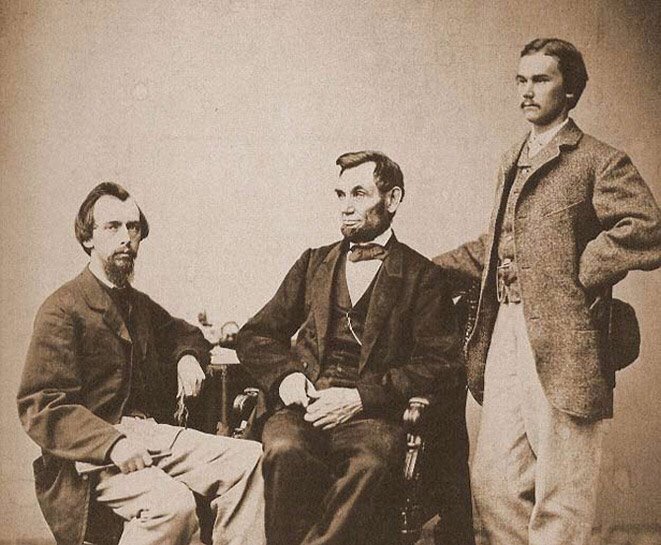
Today in History, February 27: 1860 – “One of the most happiest and most convincing political arguments ever made in this City … No man ever made such an impression on his first appeal to a New-York audience.” — Horace Greeley in his paper regarding “The Cooper Union Speech” by Abraham Lincoln. A former Congressman and Illinois lawyer, Lincoln had been launched to the national stage by his debates with Stephen Douglas over the slavery question 2 years before, but he was still mostly unknown in the east. A young Republicans group in New York invited him to speech at Cooper Union’s Great Hall. The hall was not filled for the speech, but the text of it was given to Greeley’s and other’s papers; from there it was broadly published across the nation in pamphlet form. Lincoln made convincing arguments that the Founding Fathers were against the expansion of slavery and desired it’s eventual end. At the same time he tried to convince Southerners that the Republican party did not wish to interfere in their affairs. While in New York he had his photo taken by Matthew Brady, and the photo was used along with the pamphlet to broaden his recognition. It is widely believed that the speech is what launched him into the Presidency. He closed with a message to his colleagues: “Neither let us be slandered from our duty by false accusations against us, nor frightened from it by menaces of destruction to the Government nor of dungeons to ourselves. Let us have faith that right makes might, and in that faith, let us, to the end, dare to do our duty as we understand it.” (See below for video of Sam Waterston performing the speech).