A Pardon for “Little Sister”

Today in History, December 14: 1863 –

President Lincoln grants amnesty to his sister-in-law, Emilie Todd Helm, whose Confederate General husband had been killed at the Battle of Chickamauga. Emilie had made her way to DC and was staying in the White House with the President and her half sister, Mary Todd Lincoln. This was part of a plan Lincoln had to re-unite the Union.

By his order, any Confederate “rebel” that would swear an oath of loyalty to the Union would be granted amnesty. Lincoln hoped this would foster reconciliation and diminish the ranks of the Confederate Army.

Ironically, “four score and seven” years earlier, the British Army had pronounced the same decree, stating that any “rebel” involved in the Revolutionary War who would swear an oath of loyalty to the British Crown, would be granted amnesty; and the British decree was proffered for the same reason. In 1776 it met with limited success. In 1863, it met with some success, but the war would continue for two more years.
And Good Riddance!

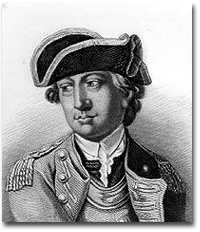
Today in History, December 13: 1776 – This is one of those “God knows what you need more than you do” stories. When the Continental Congress chose George Washington as commander-in-chief of the Continental Army, they bypassed an extremely experienced and competent alternative; Gen. Charles Lee…

Charles Lee has served as an officer in the British Army, serving with distinction in the French and Indian War. Lee never forgave the perceived slight.

In the fall of 1776, Washington and the army he commanded had fled in horrible conditions across New Jersey and were holed up at the Delaware River, bedraggled, barely clothed, starving, and facing a vastly superior force of British regulars. What was worse was that many of Washington’s soldier’s enlistments were up soon, and few were likely to stay.

Washington sent repeated messages to Lee encouraging him bring his well rested army to the Delaware. Lee, satisfied to see Washington fail, hesitated, delayed and finally responded slowly. On this day in 1776 he left his Army and went with a small guard contingent to look for female companionship at a local tavern.

Loyalists to the crown were often informing the British of Colonial movements. Two days later Lee was caught in his bedclothes as he relaxed in the tavern where he had partaken of his chosen prostitutes. British Col. Banastre Tarleton and his troops raided the tavern and captured Lee, who was the Colonial’s most experienced Officer; many had called for him to lead the Army rather than Washington.

The British were exhilarated at having captured Lee, the Americans were demoralized. Washington, however, was privately relieved. Now the army that had been commanded by Lee could be utilized by more loyal officers to continue the fight.

A Farewell to Brothers in Arms

1395866_10201909935988807_8561429912288198909_n

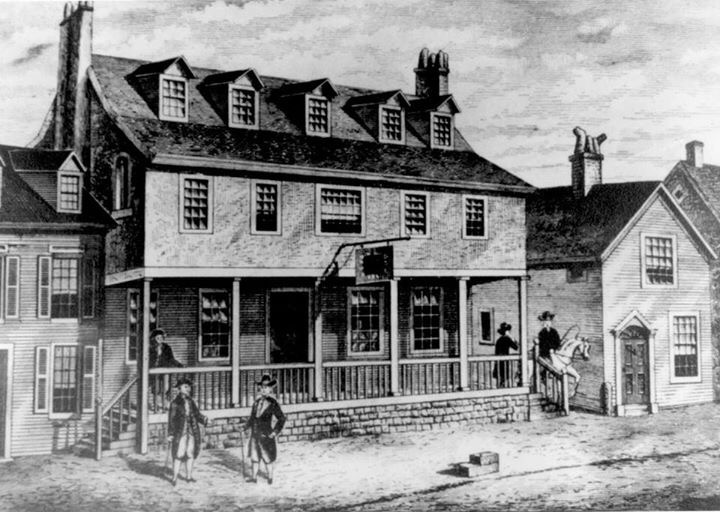
Today in History, December 4: 1783 – General George Washington, veteran of the French and Indian War, leader of his men from Bunker Hill to Valley Forge to Yorktown, with all of the hardships involved, announces to his officers that he is resigning his commission and returning to civilian life at the Fraunces Tavern in New York City. “with a heart full of love and gratitude, I now take leave of you. I most devoutly wish that your latter days may be as prosperous and happy as your former ones have been glorious and honorable.” Washington then took a moment with each of his officers alone. There was not a dry eye in the house, including the future President…George Washington….wept.

Evacuation Day

Today in History, November 25: 1783 –

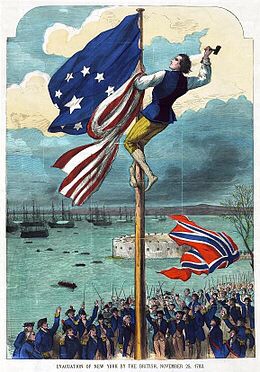
After seven years of occupation, the last British troops depart New York City, three months after the Treaty of Paris was signed ending the American Revolutionary War.

At the outset of the war Gen. George Washington had wanted to fight to keep NYC, but after losing tactically to British forces, had to flee with his army in the dark of night. NY would remain in British hands throughout the war.

After the last British troops left, Gen. Washington entered the city to great fanfare from its citizens.

He would later be inaugurated as the first President in the city that would become the nation’s first capitol.

The USMC is Born


Today in History, November 10: 1775 – The First Continental Congress commissions a local innkeeper to raise two battalions of Marines to serve in the Revolutionary War. At Tun Tavern in Philadelphia the recruiting took place, and the United States Marine Corps was born. Aboard numerous US Navy ships during the Revolution, at Tripoli, during the Civil War, Belleau Wood, Iwo Jima and dozens of places in between, when the chips were down, the cry went out, “Send in the Marines!”

America’s First and Real “Yes We Can”


Today in History, October 17: 1777 – 

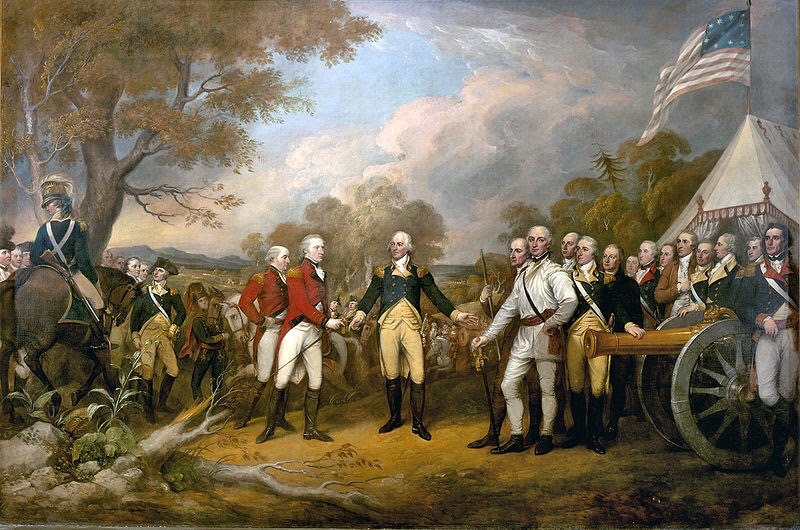
Surrender of British Army at the Battle of Saratoga. British Gen. John Burgoyne was leading an army of 8,000 British regulars south from Canada to meet up and combine forces with Gen. Sir William Howe on the Hudson River. 

 His army clashed with the American army several times, and finally had to take refuge in the village of Saratoga, NY. With about 5,000 of his troops left, surrounded by nearly 20,000 American troops, he had no choice but to surrender the largest British force to that date to the “Colonials”. 

 The battle showed the world that the Americans could defeat the British in combat, which gave France and Spain the confidence to enter the war and provide supplies, soldiers and naval support to the Americans. Their support was instrumental in winning the war, thus Saratoga is seen as a turning point in the Revolution.

King’s Mountain 


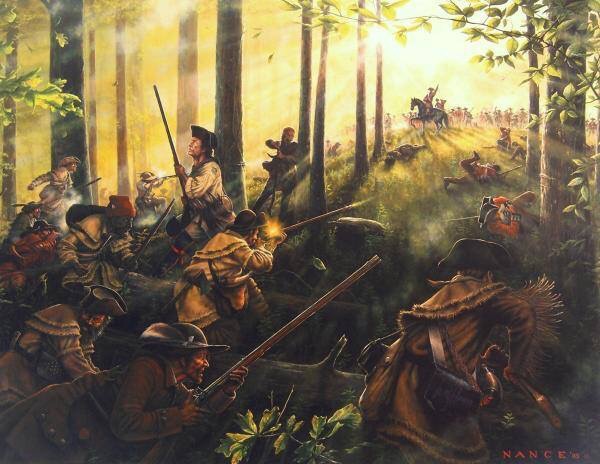
Today in History, October 7: 1780 – The Battle of King’s Mountain. During the American Revolutionary War, the British, along with “loyalist” militia, had been seeing success, including at the Battle of Waxhaws in May, where Col. Banastre Tarleton’s troops had massacred defeated “rebel” troops. At King’s Mountain, South Carolina a contingent of loyalist troops led by British regulars were caught by rebel (loyalist to us) militia made up of mountain men (including Davy Crockett’s father). In a pitched 65 minute battle, the Americans made repeated advances up the mountain, finally cornering their prey. When the loyalists attempted to surrender, the furious patriots shouted “Give ’em Banastre’s Quarter!!!” and continued firing until their Colonels were finally able to regain control of them. The biggest reason for the Patriot success? Tactics. They used cover and concealment in their attacks…common sense to us, but not in the days when soldiers were lined up and advanced in the open.

A Spy is Hanged


Today in History, September 29: 1780 – 

British Major John Andre is sentenced to death by hanging by Gen. George Washington. Andre had been the spy who met with the traitor Benedict Arnold in Arnold’s attempt to give the fort at West Point, New York to the British in exchange for a commission in the British Army. 

 Washington first offered to trade Andre for Arnold, who had fled to the Royal Navy ship Vulture. When he received no response from Britsh General Henry Clinton, Washington ordered the spy’s hanging.

The hanging was also carried out because the British had set the precedent four years earlier when they had hanged American spy Nathan Hale. 

Siege(s) at Yorktown 


Today in History, September 28: 1781 – The Siege of Yorktown during the Revolutionary War begins as The Continental Army and their French Allies corner British Lt. General Cornwallis’ forces from land and sea. The siege would last until October 19 when Cornwallis sent one of his officers out to surrender. This would be the last major land battle of the war, and would result in the British government negotiating for peace. Ironically, 81 years later, during the Civil War, Confederate forces would use some of Cornwallis’ trenches in another Siege of Yorktown, this time by forces under the command of Union Gen. George B. McClellan. The result would be different this time; by the time McClellan was ready to act, the Southerners and slipped the noose and escaped.

I Regret Only That I Have But One Life to Give For My Country


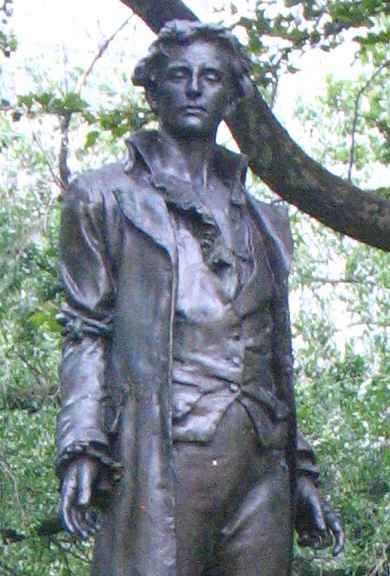
Today in History, September 10: 1776 – “I regret only that I have but one life to give for my country.” Continental Army General George Washington asks for a volunteer to go undercover and spy on the British in New York. 21-year-old Captain Nathan Hale immediately steps up…America’s first spy. A Yale graduate, he would pose as a Dutch teacher and gather information on British troop strength and movements. On September 21st he would be captured attempting to sneak back to Continental lines. British General William Howe interrogated him and summarily ordered that he be hanged the next day. Before his death, young Hale made his now historic statement. His demise would result in another death. Four years later, also in September, British master spy Major John Andre would be captured by the Americans behind their lines meeting with traitor Gen. Benedict Arnold. Tried and found guilty, Gen. Washington, who actually liked Andre, reacted in kind. The British were horrified as the upstart Americans hanged Andre, using the standard set by the British with Hale.