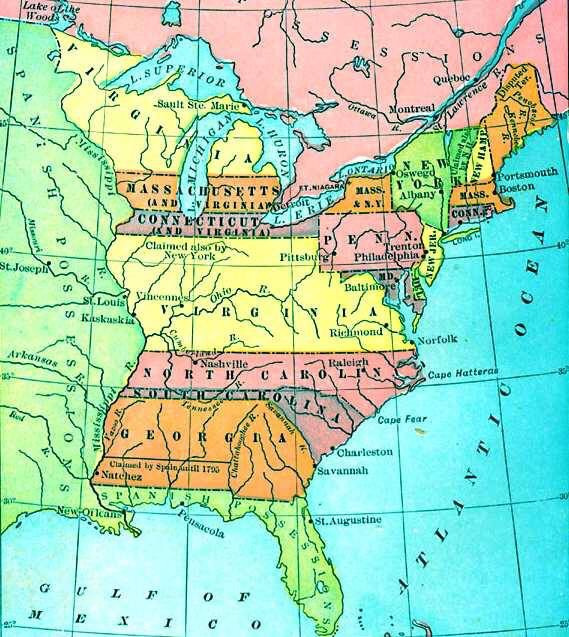
Today in History, September 9: 1776 – The Continental Congress declares that henceforth the “United Colonies” shall be known as the “United STATES of America”.
Tag: revolutionary war
Choices and Legacies
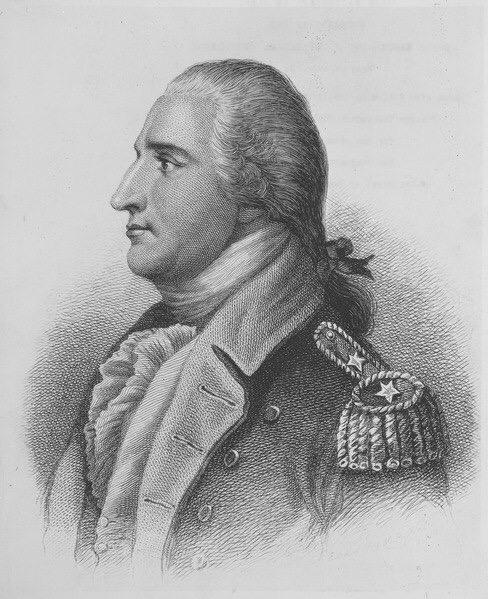
Today in History, August 30: 1780 – Heretofore known as a dedicated, fierce warrior for the American cause, a hero of the Canadian campaign who had lost a leg in the service of his country, 38-year-old Benedict Arnold trades these monikers in to make his name synonymous with treason.
On this date Arnold, who had been given the command of the fortress at West Point, offers to surrender it to the British in exchange for 10,000 pounds and a commission in the British Army.
Strapped for cash, angry over perceived slights by his contemporaries, and trying support the desires of his 21-year-old wife who came from a wealthy British family, Arnold made all the wrong choices. He would die in 1801 in London, forsaken by his country, ignored by the British, impoverished.
If he had stood fast with his country, his name would be in the line of Washington, Greene, and Lee.
“…if They Mean to Have a War…Let it Begin Here.”
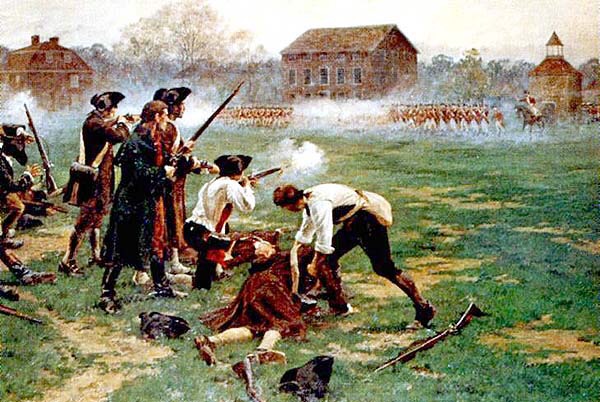

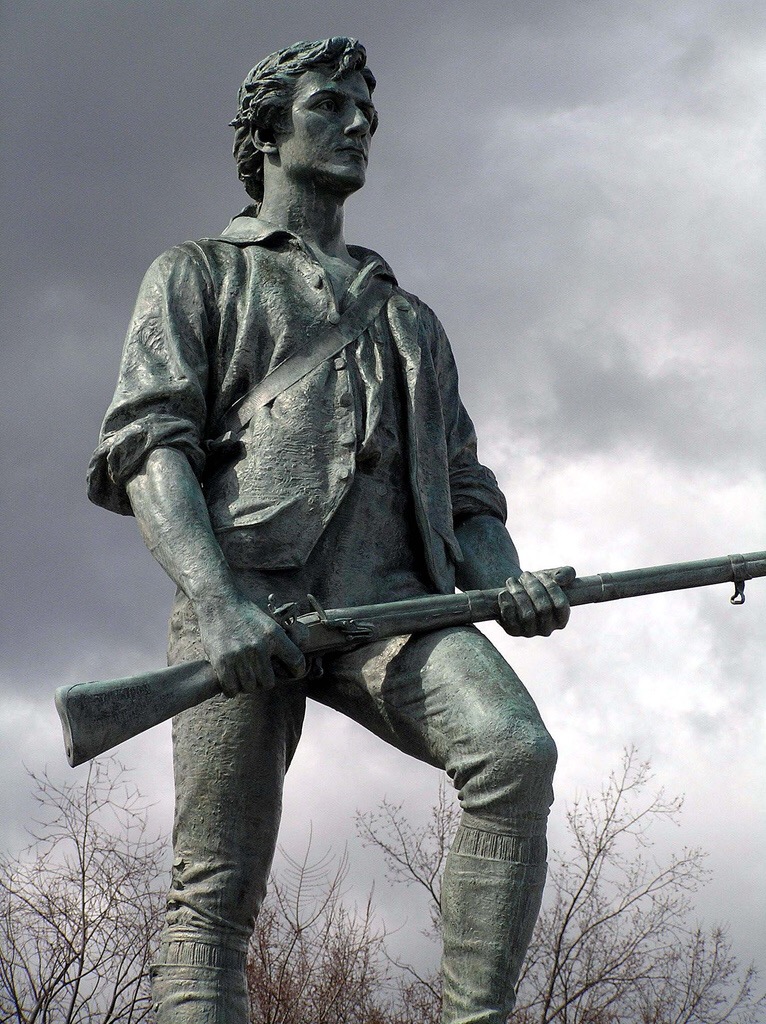
Today in History: July 13, 1729 – Future Captain John Parker is born in Lexington, Massachusetts.
A veteran of the French and Indian Wars, Captain Parker led a contingent of Minutemen on April 19, 1775 when they heard that the King’s soldiers were approaching. In the Skirmish on Lexington Green, Parker ordered the militia, “Stand your ground. Don’t fire unless fired upon, but if they mean to have a war, let it begin here.”
Though simple, if you think about what this command meant in the grand scheme of things, it is profound. Captain Parker was dead by September of the same year, a victim of disease, as so many of the Revolutionary War soldiers were.
A Crucial Split Second at Weehawken

Today in History, June 11: 1804 – A duel between Alexander Hamilton and Vice-President Aaron Burr ends in the death of Hamilton. Both men had played important roles in the birth of America, Hamilton greatly more so. Hamilton had been an aide to Gen. Washington during the Revolutionary War and a key player in the writing of the Constitution, and then the primary driver in creating our financial system.
Burr had been a hero of the Canadian campaign during the war and was a talented politician, if less than diligent in his ethics. Hamilton despised Burr, and considered it his duty to defeat Burr’s ambitions wherever he could. Finally, after Hamilton played a key role in defeating Burr’s ambitions to be New York’s next Governor, Burr challenged Hamilton to a duel.
Duels were then illegal in New York, and most of the challenges were brought to an amicable solution without gunfire. The combatants and their seconds had to go across the river to New Jersey, to a promontory known as Weehawken. Depending on which side you listen to, Hamilton fired his shot into the air, believing the duel to be frivolous. In this version, Burr then took careful aim and shot Hamilton dead.
Burr’s second reports that Hamilton fired at Burr and missed. With the death of such a prominent American, Burr was excoriated as a cad. He finished out his term as Vice-President to hide behind the immunity from prosecution it provided. Afterwards he instigated a scheme to create a separate nation within the Louisiana Territory, going to the British for support (which was refused) and was tried for treason, of which he was acquitted. Nonetheless, he was despised by all, and remained so in history.
This is one of those moments in History, that will forever be shrouded in mystery. As with time travel theories…what if this had never happened? What if Burr had missed? There is a very real possibility Hamilton could have been President at some point. If so, what effect would he have on the War of 1812? With his financial acumen, would he have affected Andrew Jackson’s battle with the Bank? Or would Jackson or any since have even been President?
How often has a split second in History…changed History?
Life, Liberty and the Pursuit of Happiness. A Date Full of Historic Significance!





Today in History, July 4: This is my favorite day of the year to post, not only because it is America’s birthday, but because the date is so rich in American History.
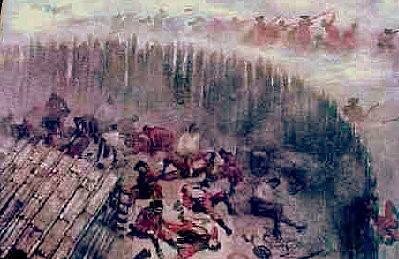
1754 – During the French and Indian Wars, a young colonial member of the British Army abandons “Fort Necessity” after surrendering it to the French the day before. The officer, 22-year-old Lt. George Washington had also commanded British forces in the first battle of the war on the American continent weeks before. The French and Indian Wars were only part of a global conflict between England and France, the Seven Years War. His experience here would serve Washington well in our War for Independence.
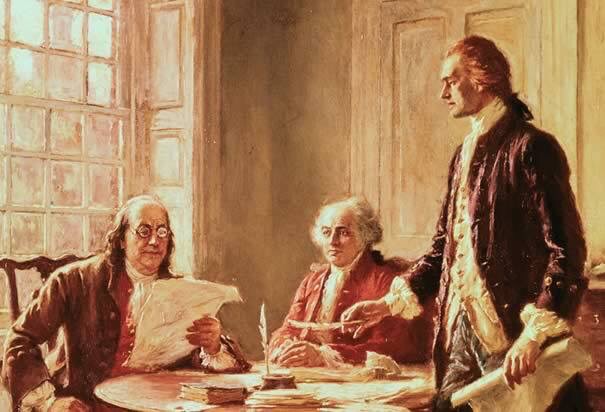
1776 – The second Continental Congress adopts the Declaration of Independence from England after years of conflict as colonists, “We hold these truths to be self-evident, that all men are created equal, that they are endowed by their Creator with certain unalienable Rights, that among these are Life, Liberty and the pursuit of Happiness.”
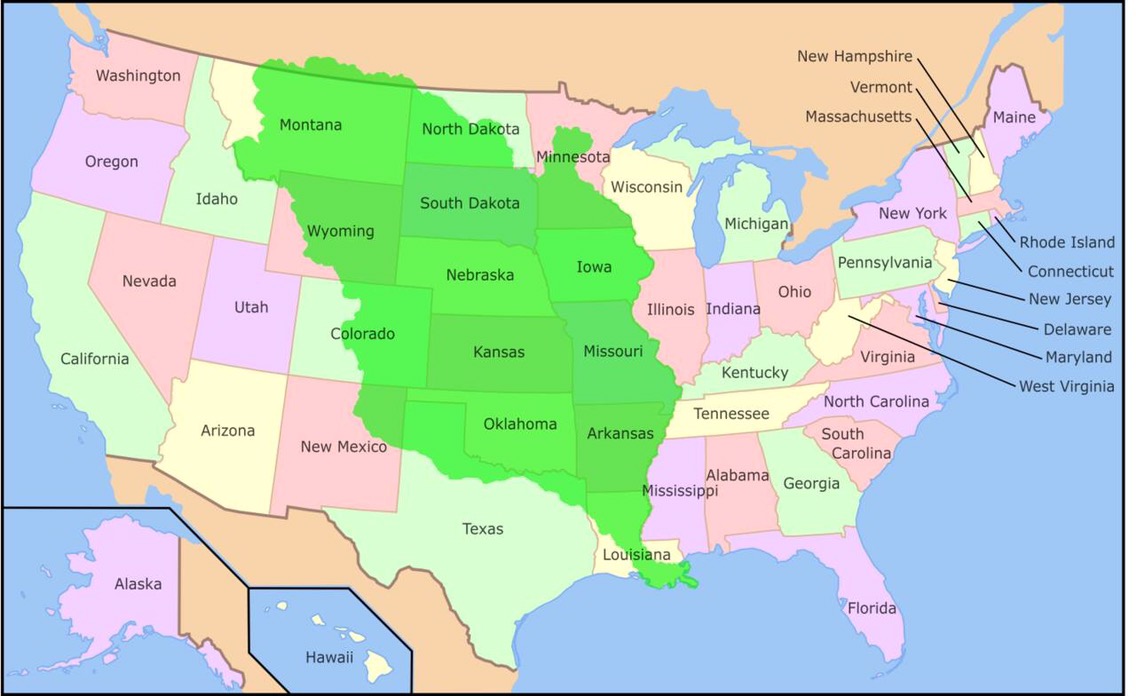
1803 – President Thomas Jefferson announces the signing of a treaty in Paris formalizing the Louisiana Purchase, effectively doubling the size of the United States in one day for $15M.
1826 – 50 years after the adoption of the Declaration of Independence, two of it’s signers, second President John Adams and third President Thomas Jefferson, die on the same day. The two had become bitter political enemies for years (Adams a devout Federalist, Jefferson an equally devout state’s rights man, in addition to vicious political vitriol the two had exchanged). But in 1812 they made amends and began a years’ long correspondence, making them good friends again. It is said that Adams’ last words were, “Jefferson survives”. He was wrong, Jefferson had died five hours before. Many Americans at the time saw their death on the same day 50 years after the Nation’s birth as a divine sign.
1863 – Confederate General John C. Pemberton surrenders Vicksburg, Mississippi to Union General Ulysses S. Grant. Pemberton had sent a note asking for terms on the 3rd, and initially Grant gave his usual “unconditional surrender” response. He then thought about what he would do with 30,000 starving Southern troops, who he had lay siege to since May 18th, and granted them parole, accepting the surrender on the 4th. The capture of Vicksburg effectively secured the main artery of commerce for the Union and cut off of the Confederate states west of the Mississippi (and their supplies) from the South. Grant’s parole of the rebels would come back to haunt him, as the Confederacy did not recognize it’s terms and many of the parolees fought again…which came back to haunt the Confederacy because as a result the Union stopped trading prisoners. Celebrated as a great victory by the North, but by Vicksburg not so much. The Citizens of the Southern city had to take to living in caves during the siege as US Navy and Army continuously bombarded their homes. Starving and desperate, they saw Grant’s waiting a day to accept surrender as malicious. Independence Day would not be officially celebrated in Vicksburg for a generation.
1863 – On the same day, half a continent away, Confederate General Robert E. Lee led his defeated Army of Northern Virginia south away from the Battle of Gettysburg, Pennsylvania. This was no small matter…”Bobby Lee” had been out-foxing and out-maneuvering multiple Union Generals practically since the war began. No official surrender here…Lee’s army would survive to fight another day. While both battles were turning points, they did not spell the end of the South as many believe. There were years of hard, bitter fighting still to come with ghastly losses in life and injury. Gettysburg was, however, the last serious attempt by the South to invade the North.
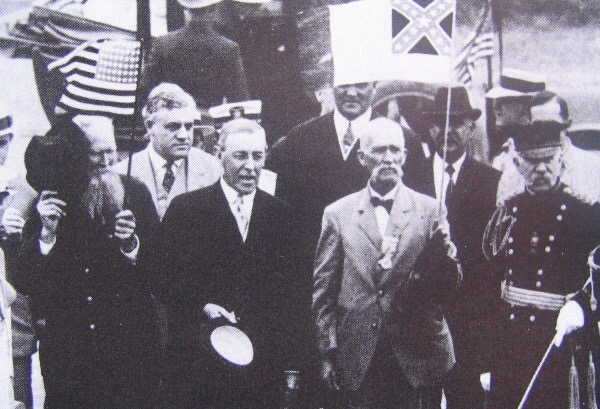
1913 – President Woodrow Wilson addresses the Great 50 Year Reunion of Gettysburg, attended by thousands of Veterans from both sides, who swapped stories, dined together…and it would seem, forgave for a time.
1939 – “I consider myself the luckiest man on the face of the Earth”. After 17 years as a beloved member of Major League Baseball, New York Yankee Lou Gehrig stands in Yankee Stadium and says goodbye to his fans, having been diagnosed with a terminal disease that now bears his name. I doubt there was a dry eye in the house. I’ve posted the video below.
God Bless America! And thank you to our service men and women that continue to make our freedoms possible.
The Far West – Once Meant What Would Become Kentucky

Today in History, June 7: 1769 – “Boone Day”. Pioneer Daniel Boone braves the Cumberland Gap, ignoring a British order against westward expansion, to find Kentucky on this date in 1769. Boone would later write, “Not a breeze shook the most tremulous leaf. I had gained the summit of a commanding ridge, and, looking round with astonishing delight, beheld the ample plains, the beauteous tracts below.” He would continue his adventures, settling Boonesborough, Kentucky, becoming a Colonel in the Militia during the Revolutionary War, fighting the British and their allies. He eventually followed his exploring spirit to Missouri, where he died in 1820.
The Importance of Petersburg, VA…in the Revolutionary War
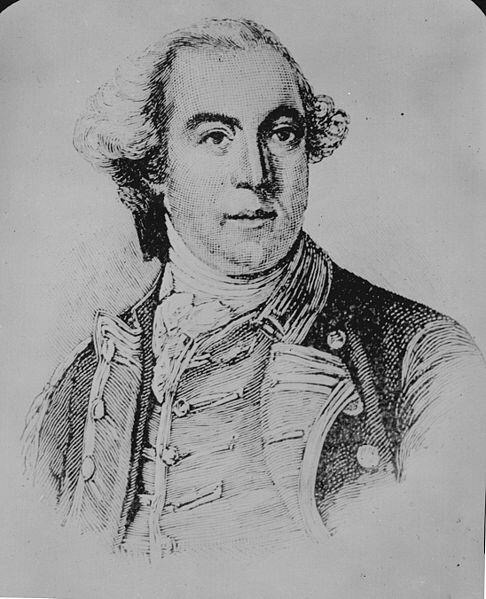


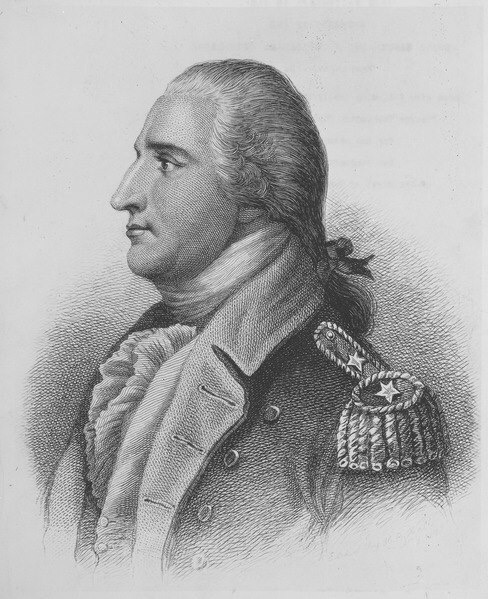 Today in History, April 24: 1781 – British General William Phillips and British General Benedict Arnold, traitor formerly of the American Continental Army, begin a march on Petersburg, Virginia with 2,500 troops. The city was defended by 1,000 scantly trained militia led by Major General Friedrich Wilhelm von Steuben, who had trained General Washington’s soldiers at Valley Forge and General Peter Muhlenberg. Phillips and Arnold were sent to Virginia, which had been left mostly alone previously, to divert Washington’s attention from offenses in the north. von Steuben and Muhlenberg knew they could not prevail with their much smaller, poorly trained forces, so they retreated from the city, setting up defenses in surrounding cities until they could be joined by Continental regulars. What was supposed to lead to American defeat actually were the first steps in the south that would lead to the defeat of the British.
Disaster in New Orleans…No, Not That One…


Today in History, March 21: 1788 – Have you ever visited the French Quarter in New Orleans? Did you know that the vast majority of those buildings in the “French” Quarter are actually…Spanish? On this date in 1788 the Army Treasurer in New Orleans, Don Vincente Jose Nunez, and his family were celebrating Good Friday in their home less than a block from the Plaza de Armas (later Jackson Square). They apparently lit a few too many candles while immersed in prayer and caught their home on fire. Before the day was over, 856 of the 1,100 buildings in the city were destroyed, most of the city. Spain had control of Louisiana at that time, and during a subsequent fire in 1794 that took 212 buildings. So the structures that replaced those of wood that were lost were made of stucco or brick, and of Spanish architecture.
Louisiana Governor Miro’s report: If the imagination could describe what our senses enable us to feel from sight and touch, reason itself would recoil in horror, and it is no easy matter to say whether the sight of an entire city in flames was more horrible to behold than the suffering and pitiable condition in which everyone was involved. Mothers, in search of a sanctuary or refuge for their little ones, and abandoning – their earthly goods to the greed of the relentless enemy, would retire to out-of-the-way places rather than be witnesses of their utter ruin. Fathers and husbands were busy in saving whatever objects the rapidly spreading flames would permit them to bear off, while the general bewilderment was such as to prevent them from finding even for these a place of security. The obscurity of the night coming on threw its mantle for a while over the saddening spectacle; but more horrible still was the sight, when day began to dawn, of entire families pouring forth into the public highways, yielding to their lamentations and despair, who, but a few hours before, had been basking in the enjoyment of more than the ordinary comforts of life. The tears, the heartbreaking sobs and the pallid faces of the wretched people mirrored the dire fatality that had overcome a city, now in ruins, transformed within the space of five hours into an arid and fearful, desert. Such was the sad ending of a work of death, the result of seventy years of industry.
For some chronological relation, further east on our continent the nascent 13 nascent states spent the years of 1788 approving the US Constitution; two weeks after the disastrous fire, pioneering Americans established Marietta (later Ohio) as the first American settlement beyond the borders of “America.”
Happy Saint Patrick’s Day

Today in History, March 17: 1780 – “The General directs that all fatigue and working parties cease for to-morrow the SEVENTEENTH instant,” read the orders, “a day held in particular regard by the people of [Ireland].” General George Washington’s Army was bedded down amidst 6 foot snow drifts, suffering through the worst winter on record…even worse than Valley Forge. Recently the Irish, who were also in rebellion against the Crown, had declared themselves AMERICANS in solidarity with the American colonists that were fighting for their independence. At least a quarter of Washington’s army was Irish…and a vast majority of his commanders shared that distinction. So GW decided that St. Patrick’s Day…(not Christmas, nor Easter)…would be a day of rest and celebration for his army.
Navy & Marine History Made
 Today in History, March 3: 1776 – The Continental Navy transports a contingent of Continental Marines to Nassau, Bahamas where the Marines make their first amphibious landing. The mission was to raid and capture gunpowder and munitions stored at the British possession for use in the American Revolutionary War. The Continental Navy and Marines are of course the origins of the US Navy and US Marines.
 Mark Loves History!