Snatching defeat from the jaws of victory 


Today in History, September 18: 1862 – Snatching defeat from the jaws of victory…again and for the last time. The Battle of Antietam in Maryland had drawn to a close the previous day. The bloodiest single day battle in American history, it can’t be said that either side “won” the battle, but it was a tactical victory for the Union. Lee had to retreat back to Virginia, Lincoln was able to announce the Emancipation Proclamation, and European powers decided not to recognize the Confederacy as a result. And yet, Union Major General George B. McClellan managed to let go of an advantage that could have ended the war much earlier, saving countless lives….

Lee’s Army of Northern Virginia, arguably the most fierce force the South had at it’s disposal, 43,000 strong, was exhausted, demoralized, and had it’s back to the Potomac River. McClellan, who had 50,000+ in his Union army, a third of which (the portion under his immediate control) had not engaged in the battle, and with thousands of fresh reinforcements arriving by the hour, refused to engage with Lee, allowing the Army of Northern Virginia to escape across the Potomac. He then refused for over a month to give chase. McClellan had an incredible ego, but it was not commensurate with his abilities. He had a persistent knack for overestimating his enemies. He assumed that Lee had 100,000 troops, which was a ridiculous assumption…he had done this several times in his career…if he’d had a million troops, he would have said his enemy had five. President Lincoln and Chief of Staff Henry Halleck implored McClellan repeatedly to use the army he commanded, but he made excuse after excuse and refused. Finally, on November 9th, Lincoln fired him for the final time. McClellan would run against the President in ’64 on a platform calling for an end to the war without achieving victory (a platform he reportedly denounced.)

Bloody Antietam’s Importance 


Today in History, September 17: 1862 – The Battle of Antietam during the Civil War. Confederate General Robert E. Lee made the first of several attempts at taking Washington, DC. The Army of the Potomac met Lee’s army at Antietam Creek to defend the city. Lee, Thomas “Stonewall” Jackson, and James Longstreet lead the Southern forces, While George McClellan, Ambrose Burnside and Joseph Hooker lead the Union forces. In 13 hours of fierce fighting, 23,000 of 100,000 combatants are killed or wounded, more in one day than all of America’s wars to that point, and the most American’s ever killed in a single day in our history. Typically, while Hooker’s and Burnside’s commands moved on their enemy, McClellan stayed in place, not engaging. The end of the battle found both armies where they were when it began. But Lee soon retreated back to Virginia. Two important consequences of the battle…it gave President Lincoln a victory that gave him the confidence to issue the Emancipation Proclamation, and European powers decided against recognizing the Confederacy.

The Right Man for the Job


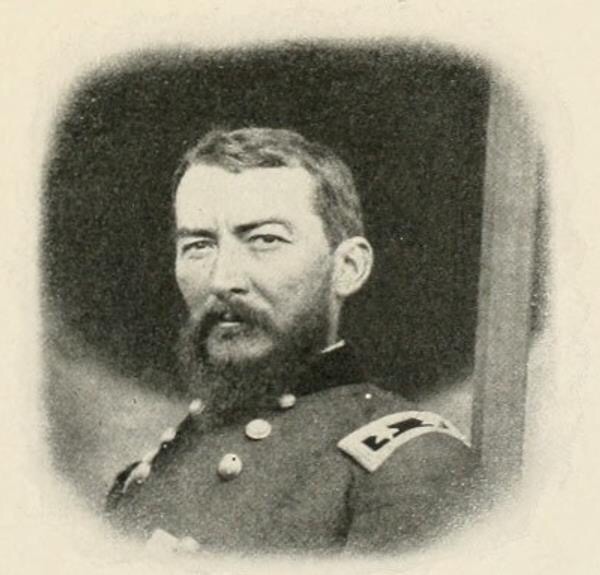
Today in History, August 1: 1864 – Over the objections of Secretary of War Edwin M. Stanton, who thought he was too young for the command of an army, Gen. Ulysses S. Grant names Gen. Phillip Sheridan as commander of the Army of the Shenandoah. Throughout the war, each time the Union began to encroach on the Confederate capitol at Richmond, Virginia, the South would send an army through the Shenandoah Valley to threaten Washington, DC, forcing the Union to protect it’s own capitol. Grant didn’t fall for this, however as he lay siege to Petersburg, which protected Richmond. The Confederacy sent Gen. Jubal Early through the Valley to threaten DC. The Shenandoah was not only the route north for the Confederate armies, it was the “bread basket” for the south, much as the midwest is for the country now. Grant sent Sheridan to command a new Valley of the Shenandoah, and ordered him, “The people should be informed that so long as an army can subsist among them recurrences of these raids must be expected, and we are determined to stop them at all hazards. … Give the enemy no rest … Do all the damage to railroads and crops you can. Carry off stock of all descriptions, and negroes, so as to prevent further planting. If the war is to last another year, we want the Shenandoah Valley to remain a barren waste.” The Confederates called Sheridan’s campaign “The Burning”, precursor to the scorched earth campaign that Sherman enforced in Georgia. Sheridan not only drove Early from the valley, but lay waste to all resources in the Shenandoah, depriving the South of the much needed resources. Lincoln, Stanton, and Grant sang his praises, as did the nation.

Gettysburg, Day Three. 


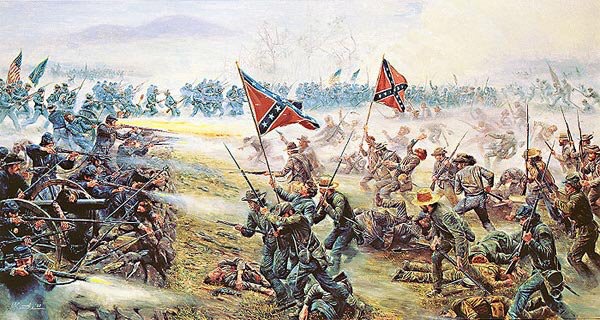
Today in History, July 3: 1863 – Pickett’s Charge, the 3rd and last day of the Battle of Gettysburg. Confederate Gen. Robert E. Lee had assaulted the Union positions on the left and the right; today he ordered an artillery barrage and an all out frontal assault on the Union center on Cemetery Ridge, which seems to be prophetic. Gen. George Pickett and his superior, Gen. Longstreet had doubts, but when it looked as if the Yankees were retreating, they implemented Lee’s command. 12,500 rebels assaulted the ridge…to do so they had to climb over a fence and advance nearly a mile across open ground to reach the ridge…but the Union troops were not retreating, and they had held most of their cannon fire during the Confederate barrage.

The Union troops opened up with a fierce cannon barrage of their own, coupled with intense rifle fire. The few Confederates that reached the Union positions had left fully half of their brethren dead or injured on the field. After this massacre, Lee rode out onto the field, reassuring his men, “This has all be my fault”. It was not a self-pitying statement; it was reassurance to his adoring men that the failure was not theirs to carry. The ever resourceful Lee had to retreat, and Union Gen. Meade’s Army was in no shape to pursue. The Union lost 23,000 dead and wounded, the South 25,000+. It would be hard to say who “won” with those numbers, but i there was a winner, it was the Union. Lee and the South would never again be able to take the offensive against the North. On the 4th, Pickett wrote to his fiancee, “It is all over now. Many of us are prisoners, many are dead, many wounded, bleeding and dying. Your soldier lives and mourns and but for you, my darling, he would rather be back there with his dead, to sleep for all time in an unknown grave.”

A Day of Battles


Today in History, July 1: A day for important battles. 

 1863 – The Union and the Confederates first clash at The Battle of Gettysburg, and both send reinforcements. The first day went badly for the Union, but the largest battle in North America had three more days to go, and would become a major turning point in the Civil War. 

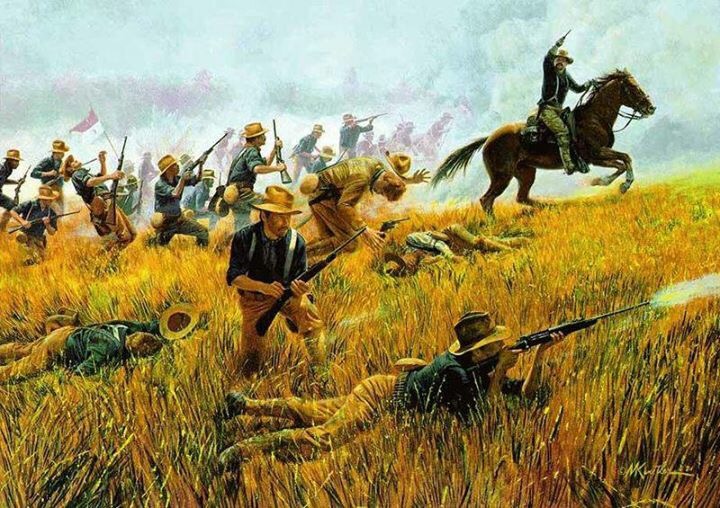
 1898 – The Battle of San Juan Hill becomes a major victory for the US in the Spanish-American War as the US Army’s Fifth Corps takes the heights over Santiago de Cuba. It also set the stage for Colonel Theodore Roosevelt to become President as he became famous for leading his Rough Riders up Kettle Hill (not San Juan). 

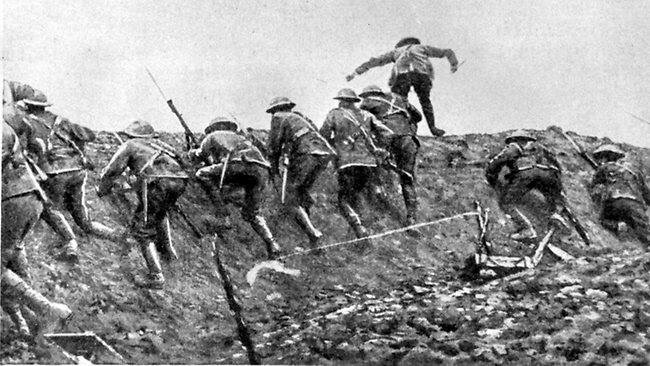
 1916 – The Battle of the Somme in France; after a week’s bombardment with over 250,000 shells, the British launch an attack into no-man’s land. The Germans had retained many machine guns despite the bombardment, and the British soldiers were slaughtered. With 20,000 dead and 40,000 wounded in one day, it was one of the worst defeats for the British military’s history. 

 1942 – The Battle of El Alamein; In North Africa Erwin Rommel’s army had routed the British and their allies, driving them back so quickly that they had to leave much of their equipment behind. But on today’s date the British Army, resupplied by Americans and reorganized, turned the tide back on Rommel at El Alamein.

Union Soldiers Burn the White House


Today in History, June 28:  1862 – Union soldiers inadvertently burn the White House.  No, not that White House.  In fact, the Executive Mansion which housed the President wasn’t known by that name until 1902 when President Theodore Roosevelt renamed it.

Another difference between these “White Houses”, is that George Washington never resided in the Presidential Mansion along the Potomac.  His successor, John Adams was the first President to live there.  But he courted and married the widow Martha Custis at and near the White House on the Pamunkey River.

One of General Washington’s officers was Henry “Light Horse Harry” Lee.  His son, Robert E. Lee, would marry Martha Custis-Washington’s granddaughter, Mary.  Together they would live in Arlington House, overlooking the Potomac…and the Executive Mansion.  When the Civil War began, Robert E. Lee chose to support “his country”, Virginia; which also meant the Confederacy.  As a result he and his family had to leave Arlington House and move to one of their more southern Virginia properties…the White House on the Pamunkey.

As the Union dead mounted, Union Secretary of War Edwin Stanton ordered the area around Arlington House to be used as a cemetery so that Lee could never again live there.  Today it is Arlington National Cemetery.

In 1862 during the Seven Day’s Battles, Union forces pushed the Confederates back past Lee’s family’s new home at White House Landing, using it as a major supply base.

Before she fled further south from yet another home, Mary Lee left a message on the door of the residence, “Northern soldiers, who profess to reverence Washington, forbear to desecrate the house of his first married life, the property of his wife, now owned by her descendants.”  Union soldiers agreed.  General George McClellan ordered a guard to posted around the house to prevent looting or vandalism.

McClellan took a lot of heat from the press and DC for the protection of General Washington’s one-time home.  It should be used as a hospital for Union soldiers!  Even though it had but six rooms.

As was frequent in the Civil War, the lines moved back north after moving south.  And on this date in 1862 Confederates took White House Landing back.  As the Union Army fled, McClellan ordered all supplies and outbuildings burned to prevent their use by the Confederates…with the exception of the White House, it was to be spared.

As often happens in war, orders from the top rarely get carried out to the letter.  The White House was burned to the ground.

Stanton Sends a Message to Lee


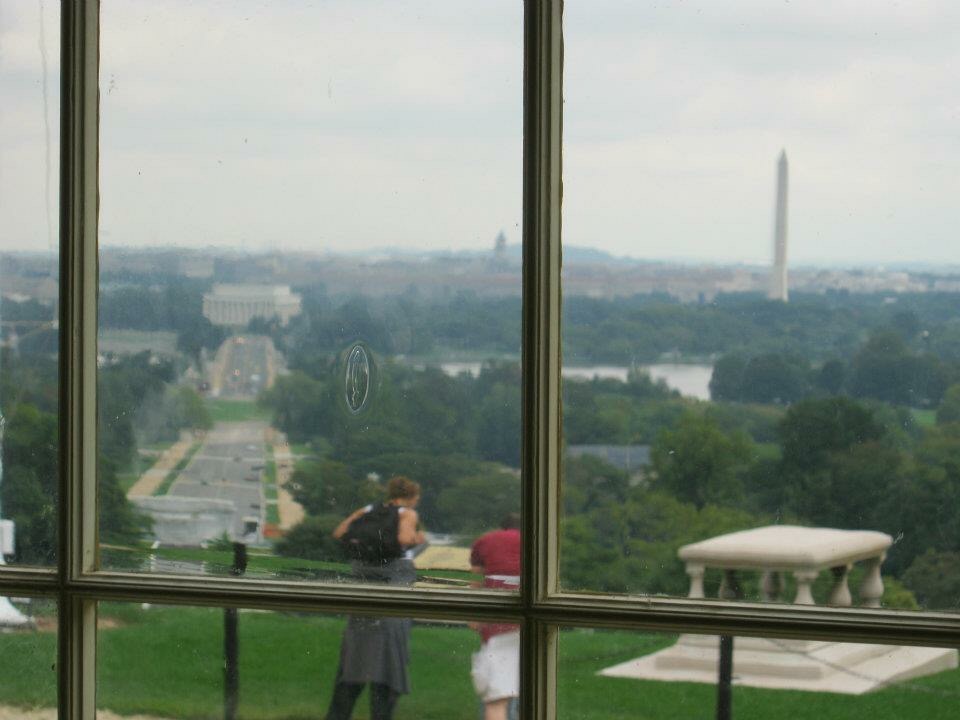
Today in History, June 15: 1864 – US Secretary of War Edwin M. Stanton sets aside the land around Arlington House, the home of Robert E. Lee, as a National Cemetery. The home had been passed down to Lee’s wife from her ancestor, Martha Custis Washington, George Washington’s wife. When the Civil War broke out, Robert E. Lee, a US Army officer, surrendered his commission and went home to his “country”, Virginia, where he became the commander of the Army of Northern Virginia for the Confederacy. When Lee’s efforts began filling up Northern cemeteries, Stanton decided to use Lee’s home to give the Union dead a place to rest, and Arlington National Cemetery was born. When you stand in Lee’s living room, you can see the White House, the Washington Monument, The Lincoln Memorial, and most of D.C. It is fascinating.    

Vengeance is Mine, Saith Edwin Stanton

541968_2731686990141_322840196_n

Today in History, May 13: 1864 – A Union soldier is buried on the grounds of the Custis-Lee House, otherwise known as Arlington House. The adopted son of George Washington and Martha Custis-Washington had built the mansion in 1802. In 1831 his daughter, Mary Anna Custis married Lt. Robert E. Lee, and they lived in the home until 1861, when West Point graduate Lee resigned from the US Army and accepted the command of the Confederate Army.

1864 Secretary of War Edwin Stanton authorized the Lee’s property to become Arlington National Cemetery, so that Lee and his family could never again occupy the mansion. You can look out the front window of the mansion and see the major landmarks of Washington DC across the Potomac…it’s that close. Today, over 320,000 service men and women have been laid to rest at Arlington, including many of our nation’s most famous heroes from every war from the Revolution to Afghanistan. By the way, I took the photo I used…touring Arlington was a truly inspiring experience. To see the final resting place of so many of my heroes was an experience I’ll cherish forever.

How Can I Draw My Sword Upon Virginia?

Today in History, April 20: 1861 – “Mr. Blair, I look upon secession as anarchy. If I owned the four millions of slaves in the South I would sacrifice them all to the Union; but how can I draw my sword upon Virginia, my native state?” Robert E. Lee was the son of a Revolutionary War hero (Light Horse Harry Lee). He was a graduate of West Point, and would serve as superintendent of the USMA (West Point). He was a hero of the Mexican-American War, and was respected as the best officer, the best engineer, in the US Army. The Administration offered him the command of the defenses around Washington, but he turned it down, he could not raise his sword against his “country” of Virginia. On this date, Lee resigned his commission in the US Army and went home, after 32 years of service to the US Army. 3 days later he would accept a command in the Virginia militia, surprising even his family. Lee is such an enigma. He was a dedicated servant to his country, but served with the same dedication to the Confederacy. After the war, he acted as a gentleman in efforts to bring the nation back together. Whether we approve of his decisions or not, we can only see Robert E. Lee as an American.