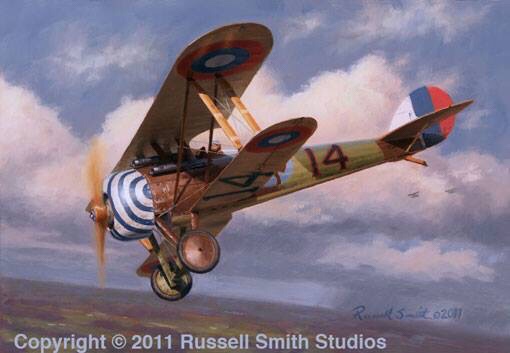
Quentin Roosevelt

Today in History, July 14, 1919:

US Airman Quentin Roosevelt, youngest son of President Theodore Roosevelt, dies when he is shot down over France in WWI.

He and his brothers, who all served in WWI were very competitive in the voracity of their service, trying to live up to their father’s exploits…a father who also wanted to serve but was refused due to President Wilson’s fear that TR’s service might lead to a run for President in 1920. TR wouldn’t live that long…and he spent his last years heartbroken over the loss of his youngest son.

TR Jr. would die of a heart attack just weeks after leading his division in the Normandy invasion of 1944…again living up to his father’s legacy. A family of immense wealth; several generations of which dedicated their lives to service to their country.

NYC Draft Riots

Today in History, July 13, 1863:

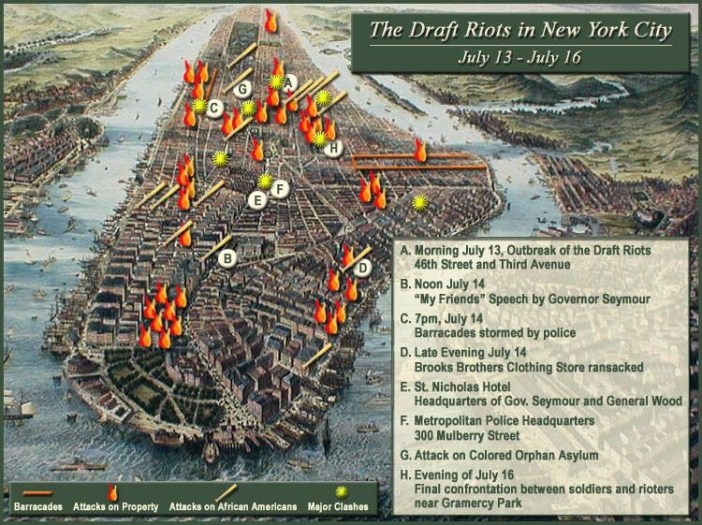
Just days after men had died fighting at Gettysburg, Pennsylvania, Irish immigrants began rioting in New York City against a draft.

The poor immigrants, who had recently come to America to escape the famines in Ireland, and who were living in poverty, were not happy to be drafted into military service when rich men could buy their way out of the draft for $300.

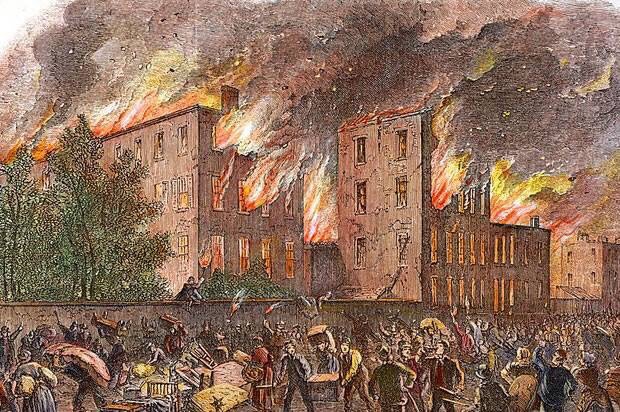
They were also competing directly with black freedmen for jobs, so the riot soon took on a racial component…even a black orphanage was burned.

Those men that had fought at Gettysburg? They had to leave their dead and move quickly to New York City to put down the insurrection. The NYC Draft Riots remain the most damaging in our history.

As an aside, to remain true to history…my favorite President’s father, Theodore Roosevelt, Sr. was one of the wealthy men that bought his way out of service. Making up for that is part of the reason TR gave up a safe position as Under Secretary of the Navy to head up the Rough Riders in Cuba.

Mr. President, Mr. Chief Justice

Today in History, July 11, 1921:

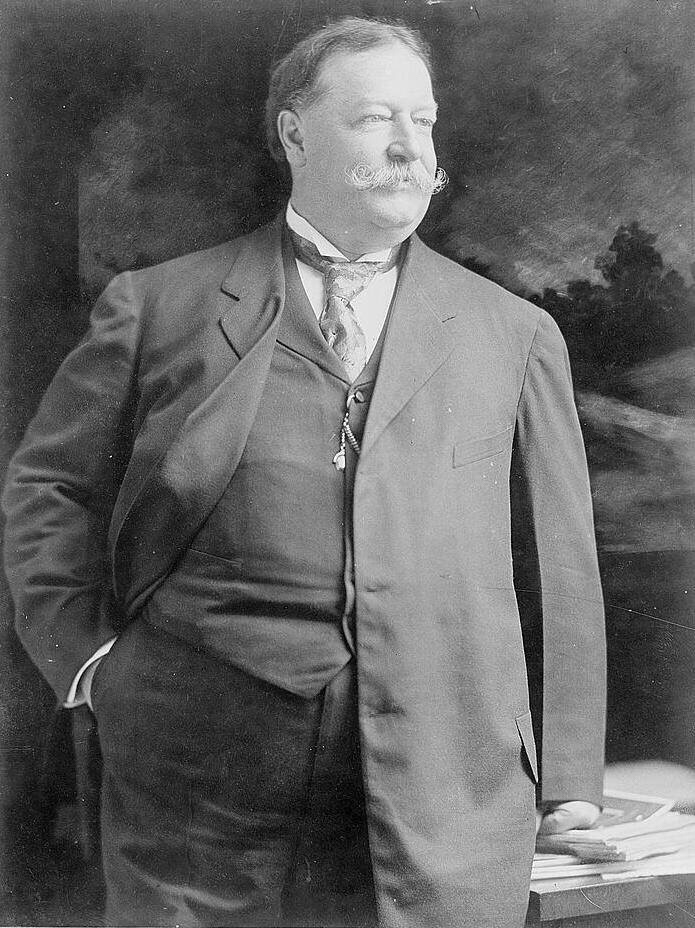
Former President William Howard Taft is sworn in as Chief Justice of the US Supreme Court, his dream job.

He had been a jurist in several different posts, Governor-General of the Philippines, Secretary of War and finally President. His former friend Theodore Roosevelt had tried to appoint him to the court several times, but he had refused because he felt responsibilities to the positions he filled at the time.

He never really wanted to be President, but Chief Justice had been his life long dream. President Warren G. Harding gave it to him, making him the only person to hold both jobs, and the only former President to swear in future Presidents.

General Slocum

Today in History, June 15, 1904:

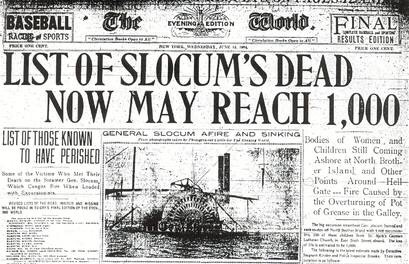
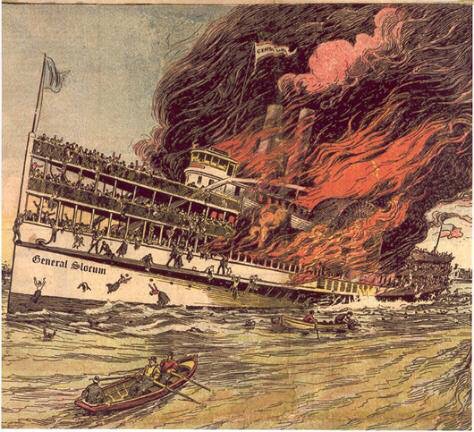
The General Slocum Disaster. The St. Mark’s German Lutheran Church charters the River Boat General Slocum to transport their teachers and children across the East River to Brooklyn to hold their annual picnic.

Keep in mind this was 1904, and Brooklyn was not part of a metropolis. One of the 1,360 passengers, a child, went to the boat’s captain to report that he had seen fire in a room below decks. The Captain responded basically with “go away kid”. By the time the crew found the fire, it was too late.

The Captain, Captain Van Schaik, decided to beach to boat on an island rather than at a dock where fire crews could have assisted with the fire. The boat’s rescue boats were tied down tight, so they couldn’t be used. The life preservers were not buoyant, so the children that donned them sank to the bottom of the river.

Over 1,000 of the passengers were either burned to death or drowned in the conflagration. The “Knickerbocker Company” was charged, but only the Captain actually served any time for the disaster. President Theodore Roosevelt fired the inspector responsible for the safety of the General Slocum.

The Antiquities Act

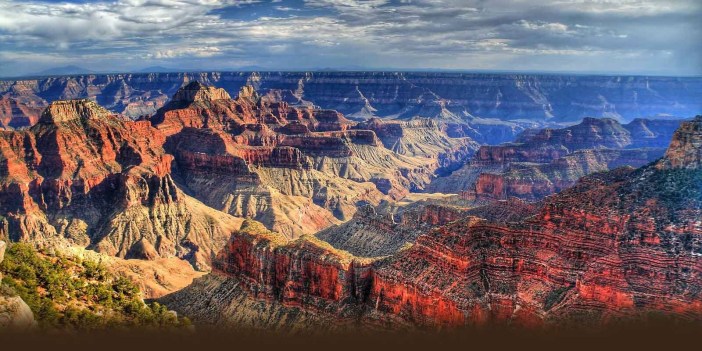
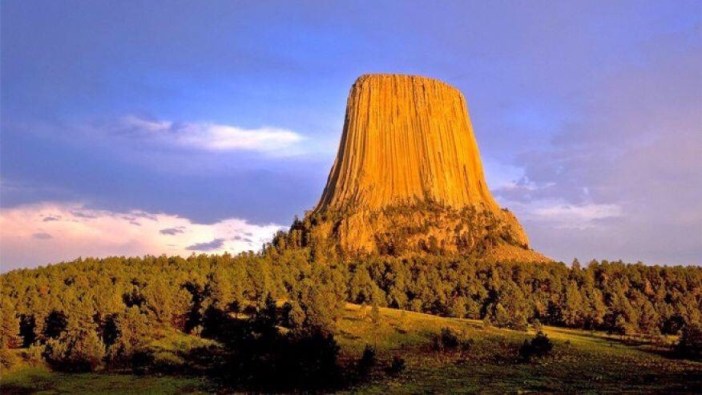
Today in History, June 8: 1906 – The Antiquities Act of 1906 is signed into law by President Theodore Roosevelt after being passed by Congress. In the preceding years historic sites had been discovered in the west, and of course, they were soon raided by thieves, vandals and historians from other countries. The Act was designed to protect these places as National Monuments, to be named either by the President or Congress. Roosevelt, a historian, quickly took advantage of the new power, naming 18 Monuments before his Presidency ended, including (first) Devil’s Tower, Muir Woods, The Grand Canyon, Chaco Canyon and the Petrified Forest. The Act has become more controversial in the years since FDR named The Grand Teton National Monument (near Jackson Hole, Wyoming) in 1943.

“Do You Remember the Fun of Him?”

23559588_10207971499324102_4987994775791310013_n

“Do you remember the fun of him, Mrs. Robinson?  It was not only that he was a great man, but, oh, there was such fun in being led by him!”

Today in History, May 6, 1895:

Theodore Roosevelt is sworn in as the President of the Board of Police Commissioners of New York City, effectively, the Police Commissioner. That’s right, TR was a cop. He instituted numerous policies to root out corruption in the city’s police department, making several enemies along the way. Officers on the beat grew used to Commissioner Roosevelt showing up at all hours of the day and night. The corrupt officers hated him; the honest officers loved him. He was tireless and relentless, a trait his family was well aware of, and that the national politicians were soon to become well acquainted with.

At this point in his storied life, Roosevelt had “built his body” as a sickly child, successfully completed studies at Harvard, traveled Europe, become a NY state legislator, lost his mother and wife the same day after the birth of his daughter, and secluded himself to the Dakota Territory in grief.  While in the west he took on his persona as a “cowboy”, having chased and captured thieves, fought in barroom fights, raised cattle, and hunted frequently.

NYC was TR’s hometown, and when he got the job as Police Commissioner he was driven to rid not only the police department but the city of it’s rampant corruption.  He would make “Midnight” walks around the city, catching officers sleeping or taking solace in the bawdy houses.  He also worked against real corruption within the department, making enemies.

Roosevelt also took steps to provide the officers training, firearms and equipment they’d never had before, intent on making them into a professional agency.  These efforts won him many fans within the rank and file.

One of his less popular actions…obviously a mistake…was when he ordered all of the houses of liquor closed on Sunday.  The only problem is that the high society Roosevelt did not realize working class German and Irish voters worked 6 days a week…Sunday was their only day to “throw one back.”

Of course after his adventures on NYPD Roosevelt went on to be Under Secretary of the Navy where he helped build a modern force, the Colonel of the Rough Riders in Cuba, NY Governor, Vice-President, President, and then adventurer and hunter.

You never know what will be the final epitaph or testimonial for someone.  To this day it can be argued whether Theodore Roosevelt was more hated or more loved by the officers he worked with.

However a chance encounter at his funeral near Sagamore Hill, Oyster Bay, NY in January of 1919 proves TR’s influence for me.

As the mourners trailed out after the service, a Police Captain stopped Roosevelt’s sister, Corinne.  It had been nearly a quarter century since the man had worked for “The Commissioner.”  Do you know how much time hardens a policeman?  The Captain was in tears, overcome.

“Do you remember the fun of him, Mrs. Robinson?  It was not only that he was a great man, but, oh, there was such fun in being led by him!”


Citizenship in a Republic

Today in History, April 23, 1910:

“The Man in the Arena” speech. After his presidency, President Theodore Roosevelt took a tour of Europe and was received with great fanfare and accolades, both from the common man and royalty. On this date he gave a 35 page speech entitled “Citizenship in a Republic” about the responsibilities involved at the Sorbonne in Paris, France. A segment on page 7 became an inspirational and historic passage.

“It is not the critic who counts; not the man who points out how the strong man stumbles, or where the doer of deeds could have done them better. The credit belongs to the man who is actually in the arena, whose face is marred by dust and sweat and blood; who strives valiantly; who errs, who comes short again and again, because there is no effort without error and shortcoming; but who does actually strive to do the deeds; who knows great enthusiasms, the great devotions; who spends himself in a worthy cause; who at the best knows in the end the triumph of high achievement, and who at the worst, if he fails, at least fails while daring greatly, so that his place shall never be with those cold and timid souls who neither know victory nor defeat.”

The Birth of Naval Aviation. Samuel Langley and Theodore Roosevelt Together Again…

530155_2490408238323_104830550_n

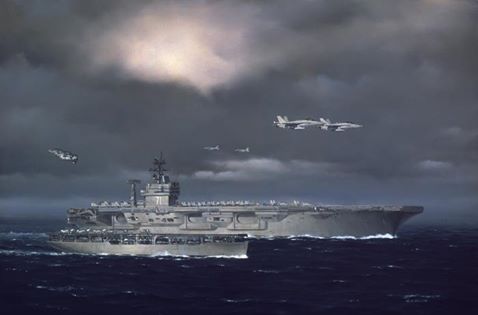
Today in History, March 25: 1898 – Assistant Secretary of the Navy Theodore Roosevelt (that crazy cowboy) proposes that the Navy investigate the use of a flying machine being researched by Samuel Langley. As a result, congress authorized $50,000 to support Langley’s design. This was nearly a decade before the Wright Brothers accomplished the first manned, powered flight, but many people had been working on the challenge for years. Langley’s, and Roosevelt’s insight was the beginning of US Naval Aviation. Check out this print by R.G. Smith, which portrays the 1st US aircraft carrier, the USS Langley (CV 1), and the nuclear powered aircraft carrier USS Theodore Roosevelt (CVN 71) cruising together. Of course this is inspired imagination…Langley, converted to a sea plane tender, was lost in WWII.

The Langley was converted from the Collier USS Jupiter in 1920. By WWII she had been converted to a seaplane tender, her larger subsequent sisters taking on the aircraft carrier role. Attempting to deliver p-40 fighter planes to Java, on February 27, 1942 she was attacked by Japanese aircraft and damaged so badly she had to be scuttled.

“You May Cast Off, Buck, When You Are Ready.”

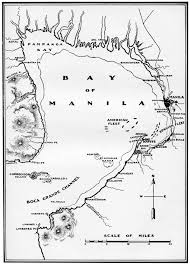
ron5-3MacArthur's_Escapept32220px-USS_Olympia_with_Dewey_at_Battle_of_Manila_bay_DSCN4191_at_Vermont_Statemanila bay


Today in History, March 11, 1942:

General Douglas MacArthur is evacuated from the Philippines at the order of President Franklin Roosevelt.  At the beginning of WWII the previous December the Japanese had invaded the Philippines; the American and Filipino forces, commanded by MacArthur, had been fighting off persistent advances ever since.  At the outset the American air forces had been almost completely destroyed on the ground, caught by surprise by the initial attacks.  Now they had been backed up to the peninsula of Bataan, and in the middle of the bay, the island of Corregidor.

General MacArthur was already quite famous when the war began; his father Arthur was also a noted American general, Douglas served in WWI and was in command in Washington, DC when protesting WWI veterans were dispersed during the Depression.  He and his father would become the first father and son to be awarded the Medal of Honor.

American morale was already suffering, and the President did not want an additional blow of MacArthur being taken prisoner when the Philippines fell, which was a foregone conclusion at this point.  So he ordered MacArthur to evacuate to Australia, leaving General Jonathan Wainwright in command of the fall.

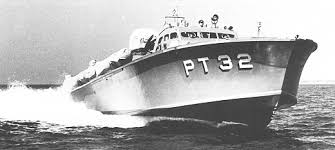
MacArthur had the choice to leave by submarine, aircraft, or by PT (patrol torpedo) boat.  He knew and trusted the commander of PT squadron 3, Lieutenant John D. Bulkeley, so he chose to leave by boat.

On the evening of March 11, 1942, Lt. Bulkeley’s PT-41 was alongside the north pier at Corregidor with General MacArthur and his family aboard, when the General looked to the Lieutenant and said, “You may cast off, Buck, when you are ready.”  Thus began a 600 mile run to Mindanao through minefields and enemy infested waters which MacArthur would later liken to a ride in a cement mixer.  Almost everyone was seasick.  Bulkeley would meet up with the remainder of his PT squadron, their decks filled with gasoline drums so they could make the trip.  It was a harrowing journey; from Mindanao MacArthur and his staff would continue the journey by air.

The journey, how it came to be, and it’s aftermath are all worth more detail.  But for this post, I can’t help but focus on MacArthur’s words as he set sail from his defeat in Manila Bay…

“You may cast off, Buck, when you are ready.”

General MacArthur was an intelligent, educated man, a West Point graduate and a fast climber through the ranks.  What was in his mind as he escaped one of the worst military defeats in American history that day?  The MacArthur family was also already a significant part of Philippine history.  Nearly forty-four years earlier, in 1898 during the Spanish-American War, Arthur MacArthur had been victorious during the Battle of Manila.  He would then command during the Philippine-American War and become the Military Governor General of the Philippines until he got sideways when the Civilian Governor of the Philippines, William Howard Taft.

At the outset of the Spanish-American War, the Philippines were a Spanish possession.  The war was significant because with it, America would become a player on the world stage, defeating one of the European colonial powers.

With the Battle of Manila Bay on May 1, 1898, the US Navy would show it’s mettle in easily defeating the Spanish fleet stationed there.  Admiral George Dewey commanded the US Asiatic Fleet from the bridge of his flagship, the USS Olympia.  As they approached the Spanish ships, Dewey spoke a now famous phrase to the commander of the Olympia, Captain Charles Gridley…

“You may fire when ready, Gridley.”

To enter Manila Bay from the South China Sea, Admiral Dewey and his fleet would have sailed past the island which guarded the entrance to the bay, Corregidor.  Hours before his famous victory, Admiral Dewey would have sailed within a few hundred yards of where MacArthur would stand in 1942, having lost all Dewey had gained.  In his mind’s eye, was he watching the Olympia pass by?

“You may cast off, Buck, when you are ready.”
Historic Connections: Lincoln-Hay-Roosevelt

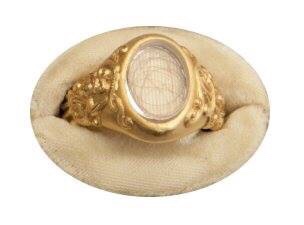
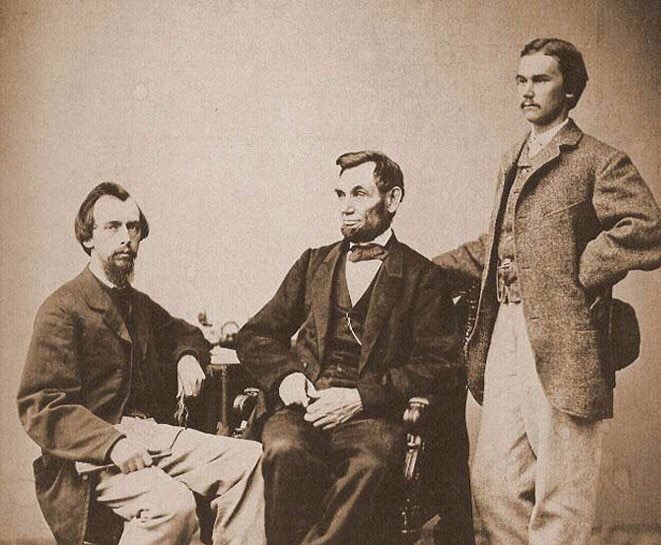
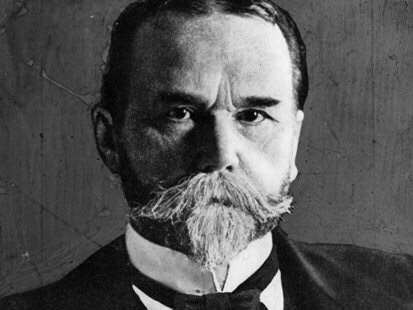
Today in History, March 4: 1861 (Lincoln Inauguration) / 1905 (Theodore Roosevelt Inauguration) – A very special connection between two Presidents, 40 years apart. As a young man in Illinois, John Hay got the chance of a lifetime. His friend John Nicolay was working at the law firm of Abraham Lincoln, Presidential candidate. When Lincoln was elected, Hay and Nicolay became his private secretaries in the Executive Mansion and became his confidants…he would stay up nights sharing stories with them and came to trust them; they helped to keep him balanced through the trials and tragedies of the Civil War. They, in turn nearly idolized him, referring to him as the Ancient One. When Lincoln was assassinated it devastated Hay. He recovered and went on to serve in numerous posts within the government, including the Ambassador to the Court of St. James (England); he was a successful author and journalist (remarkably understated..but I must keep this somewhat brief). He served several other presidents, becoming Secretary of State for President William McKinley. When McKinley was assassinated, Hay stayed on to serve in Theodore Roosevelt’s administration. He was largely responsible for the Open Door Policy in China and negotiated the Hay–Bunau-Varilla Treaty to build the Panama Canal. He initially thought TR a rogue cowboy, but as he grew to respect the President, they became fast friends. TR came to respect Hay’s experience and wisdom, and came to depend upon him. The night before TR was to be inaugurated for his second term, his first in which he was elected, John Hay sent TR a gift. A ring containing a strand of President Lincoln’s hair under glass, taken during his autopsy. Hay included a note:

“Dear Theodore:

The hair in this ring is from the head of Abraham Lincoln. Dr. Taft cut it off the night of the assassination, and I got it from his son-a brief pedigress.

Please wear it tomorrow; you are one of the men who most thoroughly understand and appreciate Lincoln.

I have had your mongram and Lincoln’s engraved on the ring.

Longas, O utiman, bone dux, ferias, Praestes Hesperia.

(Mayest thou, Good Captain, give long holiday to Hesperia!)

Yours affectionately, John Hay”

TR replied:

“Dear John, Surely no other President, on the eve of his inauguration, has ever received such a gift from such a friend. I am wearing the ring now; I shall think of it and you as I take the oath tomorrow. I wonder if you have any idea what your strength and wisdom and sympathy, what the guidance you have given me and the mere delight in your companionship, have meant to me these three and a half years?

With love and gratitude, Ever yours….”

What a life! A integral part of the story of two of our best presidents, and a key player in numerous historic decisions and events. Aside from the photos of the ring, there are photos of Hay in his youth, as an older man (he would die later in 1905), and even the photo of Lincoln’s funeral procession through New York City is important…in a window of one of the buildings to the left are two small boys watching the procession go by…young Theodore Roosevelt, Jr and his brother Elliott.