“I don’t mind if you don’t like my manners. They’re pretty bad. I grieve over them during the long winter nights.” – Raymond Chandler, The Big Sleep

Today in History, July 23, 1888:

“Down these mean streets a man must go who is not himself mean, who is neither tarnished nor afraid. The detective must be a complete man and a common man and yet an unusual man. He must be, to use a rather weathered phrase, a man of honor. He talks as the man of his age talks, that is, with rude wit, a lively sense of the grotesque, a disgust for sham, and a contempt for pettiness.”

Raymond Chandler, father of the hard scrabble detectives like Sam Spade among others, is born in Chicago.

“I needed a drink, I needed a lot of life insurance, I needed a vacation, I needed a home in the country. What I had was a coat, a hat and a gun. I put them on and went out of the room.”

Army Air Service Formed

Today in History, July 18, 1914:

“Be it enacted…, that there shall hereafter be, and there is hereby created, an aviation section, which shall be a part of the Signal Corps of the Army, and which shall be, and is hereby, charged with the duty of operating or supervising the operation of all military aircraft, including balloons and aeroplanes, all appliances pertaining to said craft, and signaling apparatus of any kind when installed on said craft; also with the duty of training officers and enlisted men in matters pertaining to military aviation.Public Law 63-143, July 18, 1914”

By an act of Congress, the Aviation Section of the US Army Signal Corps is created…Grandfather to the US Air Force, separated only by the US Army Air Corps? The members of this poorly paid, poorly funded, poorly equipped group fought in Mexico against Pancho Villa and then in WWI.

A Family of Heroes

Today in History, July 16, 1862:

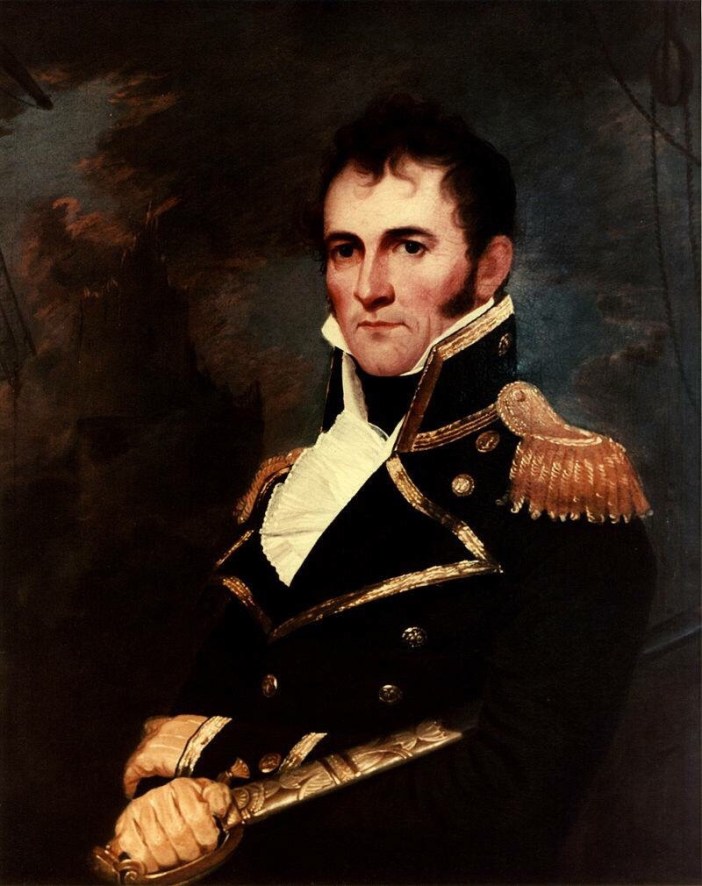
In spite of naval heroes like Capt. John Paul Jones, the first Rear Admiral in the US Navy is commissioned on this date…Rear Admiral David Farragut.

What an amazingly important family! Farragut had been orphaned at the age of nine, when his mother died from yellow fever.

Navy Capt. David Porter took him in, and at the age of 9, Farragut was at sea as a midshipman. He served in the Pacific, commanded a captured ship at the age of 12…wounded at Val Paraiso, Chile in a battle…fought in the War of 1812 as a boy….fought pirates in the West Indies, and was the famous Captain who at Mobile Bay during the Civil War, while standing on the rigging of his ship, shouted, “Damn the Torpedoes, Full Speed Ahead!” His foster father, David Porter, foster brothers David Dixon Porter and William Porter would also be Naval war heroes.

Quentin Roosevelt

Today in History, July 14, 1919:

US Airman Quentin Roosevelt, youngest son of President Theodore Roosevelt, dies when he is shot down over France in WWI.

He and his brothers, who all served in WWI were very competitive in the voracity of their service, trying to live up to their father’s exploits…a father who also wanted to serve but was refused due to President Wilson’s fear that TR’s service might lead to a run for President in 1920. TR wouldn’t live that long…and he spent his last years heartbroken over the loss of his youngest son.

TR Jr. would die of a heart attack just weeks after leading his division in the Normandy invasion of 1944…again living up to his father’s legacy. A family of immense wealth; several generations of which dedicated their lives to service to their country.

NYC Draft Riots

Today in History, July 13, 1863:

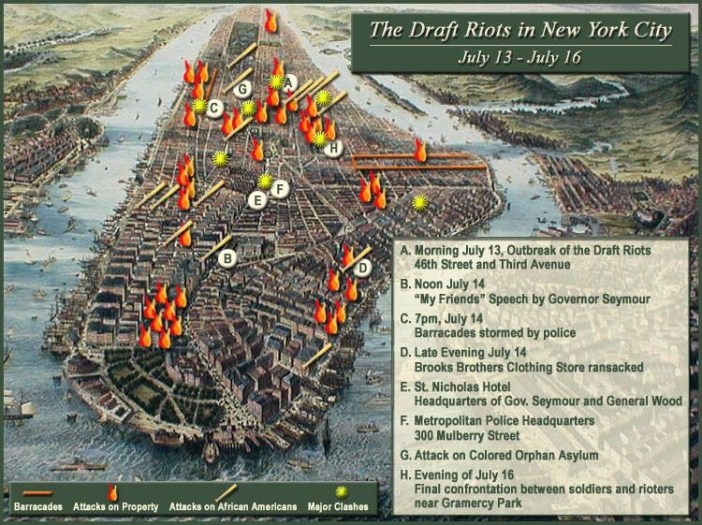
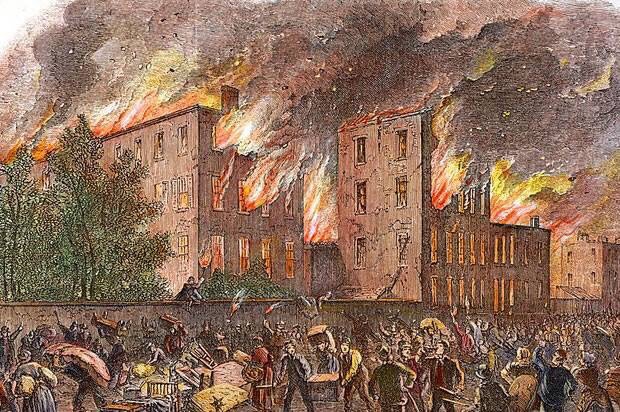
Just days after men had died fighting at Gettysburg, Pennsylvania, Irish immigrants began rioting in New York City against a draft.

The poor immigrants, who had recently come to America to escape the famines in Ireland, and who were living in poverty, were not happy to be drafted into military service when rich men could buy their way out of the draft for $300.

They were also competing directly with black freedmen for jobs, so the riot soon took on a racial component…even a black orphanage was burned.

Those men that had fought at Gettysburg? They had to leave their dead and move quickly to New York City to put down the insurrection. The NYC Draft Riots remain the most damaging in our history.

As an aside, to remain true to history…my favorite President’s father, Theodore Roosevelt, Sr. was one of the wealthy men that bought his way out of service. Making up for that is part of the reason TR gave up a safe position as Under Secretary of the Navy to head up the Rough Riders in Cuba.

Mr. President, Mr. Chief Justice

Today in History, July 11, 1921:

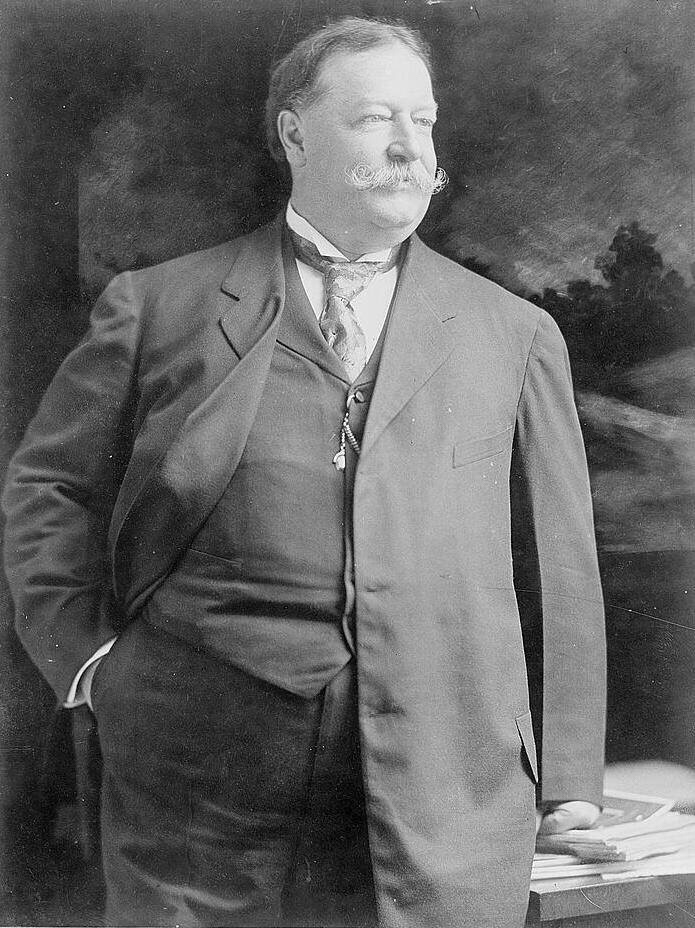
Former President William Howard Taft is sworn in as Chief Justice of the US Supreme Court, his dream job.

He had been a jurist in several different posts, Governor-General of the Philippines, Secretary of War and finally President. His former friend Theodore Roosevelt had tried to appoint him to the court several times, but he had refused because he felt responsibilities to the positions he filled at the time.

He never really wanted to be President, but Chief Justice had been his life long dream. President Warren G. Harding gave it to him, making him the only person to hold both jobs, and the only former President to swear in future Presidents.

Consequences of Propaganda

Today in History, July 9, 1944:

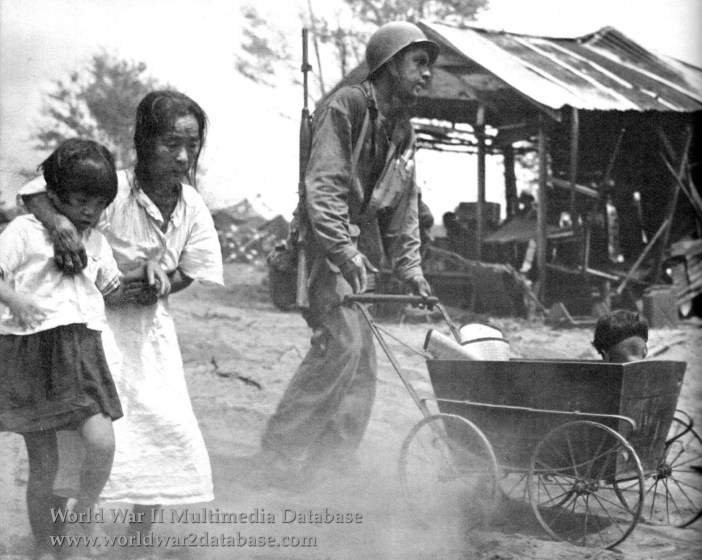
Victory at the Battle of Saipan. The US Marines defeat the Japanese military on Saipan, the first island with Japanese civilians to be taken by the US.

It was a difficult battle, made all the more so by the existence of a civilian population. The Marines set up well lit camps for the civilians to be safe from battle.

Fearing that his citizens would find out that the Americans were not the vicious, heartless enemy projected by propaganda, the Emperor issued a communique to the civilian population of Saipan, telling them that if they committed suicide they would receive the same treatment in the afterlife as Japanese soldiers that died in battle.

American servicemen were horrified as Japanese civilians threw their children from cliffs, then followed them to the rocks below. The newly won island would be used as an air base for B-29 Superfortress bombers that would bomb the Japanese mainland.

The White House Razed

Today in History, June 28, 1862:

Union soldiers inadvertently burn the White House.  No, not that White House.  In fact, the Executive Mansion which housed the President wasn’t known by that name until 1902 when President Theodore Roosevelt renamed it.

Another difference between these “White Houses”, is that George Washington never resided in the Presidential Mansion along the Potomac.  His successor, John Adams was the first President to live there.

But he courted and married the widow Martha Custis at and near the White House on the Pamunkey River.

One of General Washington’s officers was Henry “Light Horse Harry” Lee.  His son, Robert E. Lee, would marry Martha Custis-Washington’s granddaughter, Mary.

Together they would live in Arlington House, overlooking the Potomac…and the Executive Mansion.  When the Civil War began, Robert E. Lee chose to support “his country”, Virginia; which also meant the Confederacy.  As a result he and his family had to leave Arlington House and move to one of their more southern Virginia properties…the White House on the Pamunkey.

As the Union dead mounted, Union Secretary of War Edwin Stanton ordered the area around Arlington House to be used as a cemetery so that Lee could never again live there.  Today it is Arlington National Cemetery.

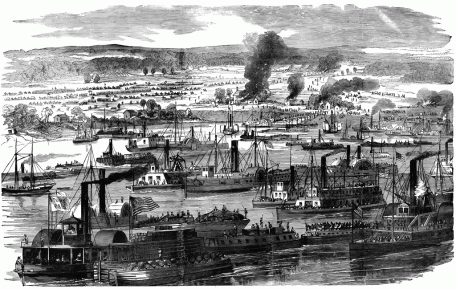
In 1862 during the Seven Day’s Battles, Union forces pushed the Confederates back past the Lee family’s new home at White House Landing, using it as a major supply base.

Before she fled further south from yet another home, Mary Lee left a message on the door of the residence, “Northern soldiers, who profess to reverence Washington, forbear to desecrate the house of his first married life, the property of his wife, now owned by her descendants.”

Union soldiers agreed.  General George McClellan ordered a guard to posted around the house to prevent looting or vandalism.

McClellan took a lot of heat from the press and DC for the protection of General Washington’s one-time home.  It should be used as a hospital for Union soldiers!  Even though it had but six rooms.

As was frequent in the Civil War, the lines moved back north after moving south.  And on this date in 1862 Confederates took White House Landing back.  As the Union Army fled, McClellan ordered all supplies and outbuildings burned to prevent their use by the Confederates…with the exception of the White House, it was to be spared.

As often happens in war, orders from the top rarely get carried out to the letter.  The White House was burned to the ground.

Thank You James Smithson…and Henry Hungerford…

Today in History, June 27: 1829 – Strange that we should be thankful that Henry James Hungerford died childless in 1835. On this date in 1829 a British scientist who had never set foot on American soil died in Genoa, Italy. James Smithson was a wealthy man. He wrote in his will, “In the case of the death of my said Nephew without leaving a child or children, or the death of the child or children he may have had under the age of twenty-one years or intestate, I then bequeath the whole of my property… to the United States of America, to found at Washington, under the name of the Smithsonian Institution, an Establishment for the increase & diffusion of knowledge among men.”….

So thanks to James Smithson’s eccentricity, which he never explained, and the untimely death of his nephew, the US came into possession of over $500,000.00 in funds dedicated to research and learning. President Andrew Jackson sent a diplomat to receive the funds, President James K. Polk signed the bill creating the Smithsonian Institute once Congress agreed how to use the money. President Theodore Roosevelt saw to the movement of Smithson’s body from Italy to “The Castle” of the Institute in 1904. Smithson was escorted from Genoa to Washington by none other than Institute regent Alexander Graham Bell and his wife. Today the Smithsonian has 19 museums and the national zoo, including the National Aeronautics and Space Museum, the most visited museum in the world. Thank you, Mr. Smithson.