Pearl Harbor…An Unmitigated Failure for Japan

Today in History, December 7: 1941 –

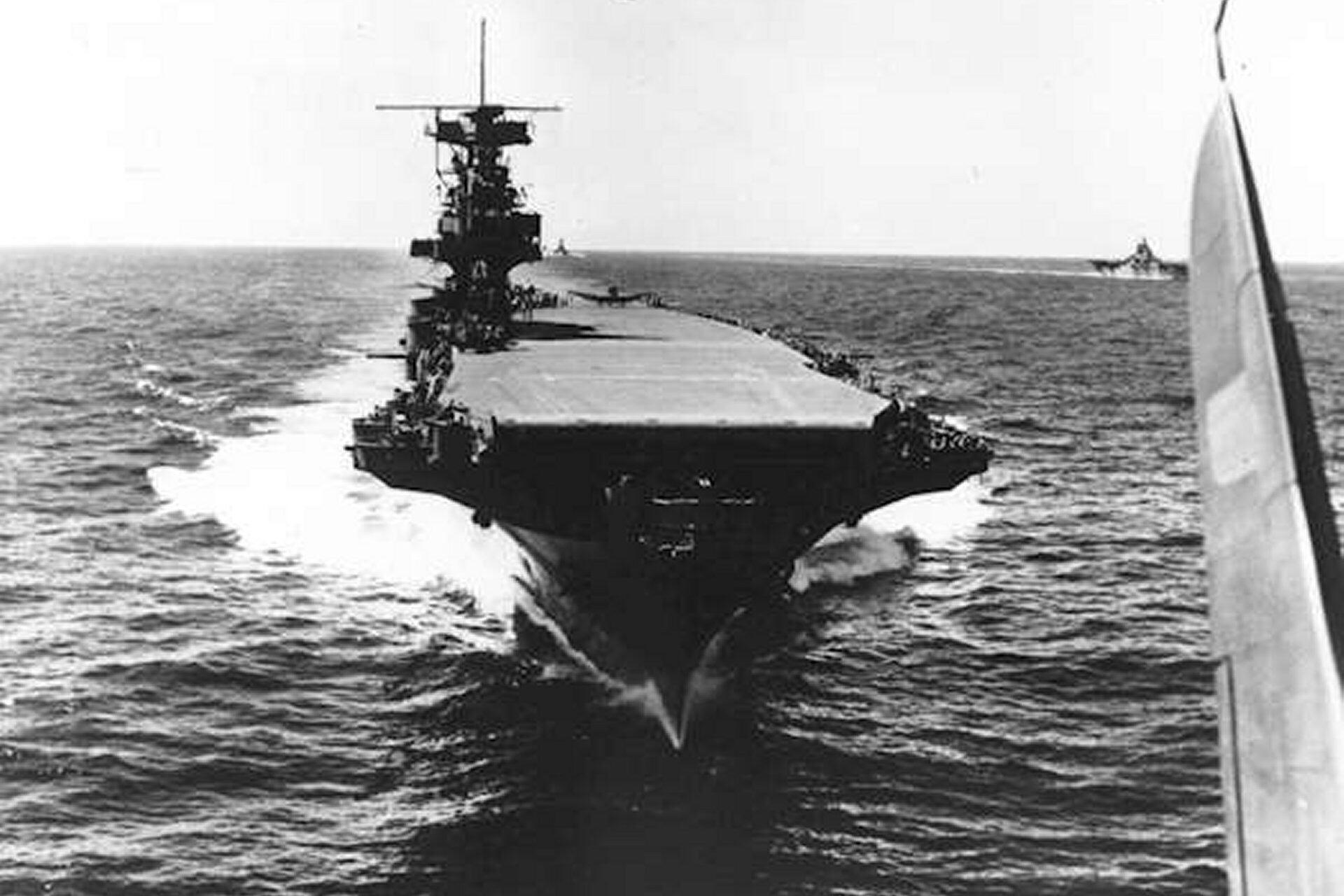
Did you know that the Japanese surprise attack on the bases at Pearl Harbor, Hawaii was…a tremendous failure? In spite of the horrific losses in lives and the loss of combatant ships and aircraft, the Japanese Task Force missed their primary targets. The battleships and most of the aircraft they destroyed were obsolete…and they knew it.

They were after the American aircraft carriers, which they recognized as the next generation capital ships. Their intelligence was that the American carriers were in port at their berths, but the Kawanishi flying boat that provided that info couldn’t catch that the carriers left soon after it’s recon mission.

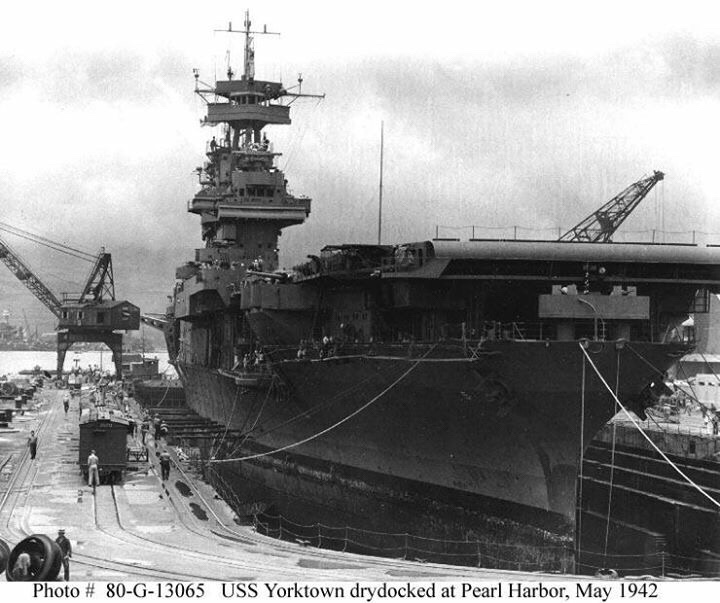
The Japanese aircraft failed to destroy the dry dock facilities at Pearl…allowing the repair of many of the ships damaged during the attack, and importantly, the USS Yorktown after the Battle of the Coral Sea, allowing her to take part in the tide-turning Battle of Midway.

And due to Admiral Nagumo’s decision to cancel another sortee, the attack failed to destroy or damage the fuel storage depot at Pearl. Had they done so, the entire fleet would have been forced to retreat the 2500 miles to San Diego (if they could make it there). The US fleet could not have operated from Pearl for nearly a year if they had lost that fuel depot. So while the attack was a flashy victory for the Empire, it was a tactical loss. America’s industrial capacity quickly replaced the losses. God bless our heroes that lost their lives that day.

What was supposed to be the backbone of the US Pacific Fleet, several Battleships, were either completely destroyed or so badly damaged that it would take years before they could put to sea again. the Arizona was virtually blown apart by a direct hit that ignited her magazines (her ammunition stores); the Oklahoma rolled over and capsized; only one of the behemoths managed to get steam up and make a run for the sea. But her commander wisely beached her, fearful that she might be sunk in the channel and put the entire harbor out of commission for months.

The Army commander, more worried about sabotage than air attacks, had ordered all of the Army Air Corps’ aircraft lined up wingtip to wingtip so they could be more easily guarded. They made easy targets for strafing Japanese fighters. Only two Army fighters made it into the air to do battle with the enemy (my father grew up with one of the pilots).

Being Late Made History

Today in History, December 6: 1941 –

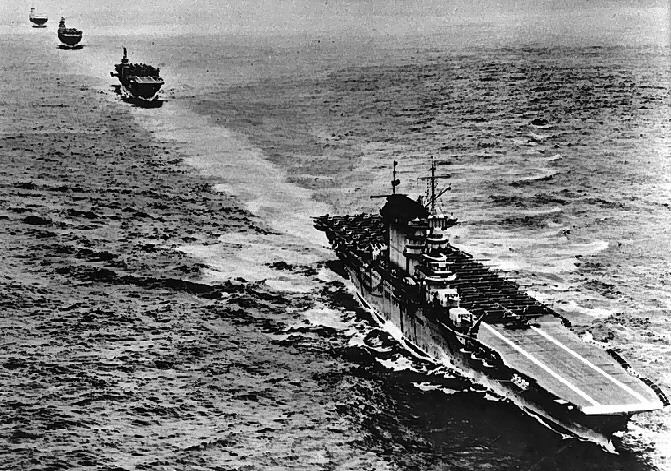
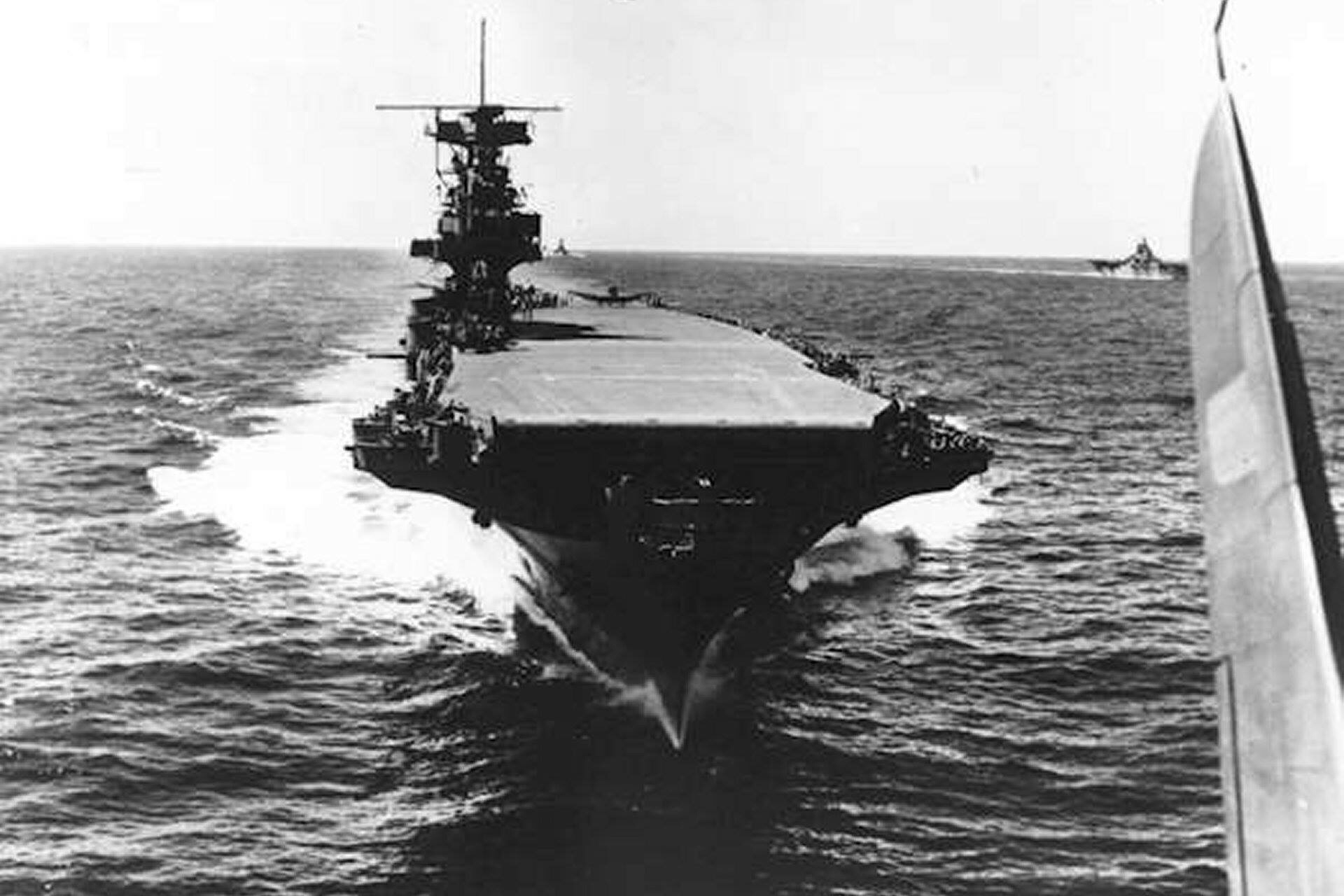
The aircraft carrier USS Enterprise (CV6) was at sea, returning to Pearl Harbor, Hawaii after delivering a squadron of Marine fighter planes and their pilots to Wake Island.

Seas had been rough, and the Task Force’s timing was not what they wanted. The sailors were looking forward to Saturday night on Oahu and Sunday morning relaxing on the golf course or at the Royal Hawaiian. Instead the destroyer sailors spent the night being tossed about;

the Enterprise crew, aboard a larger ship, sat down in the hangar deck to watch the now famous motion picture, “Sergeant York” about a heroic soldier from WWI.

Some of the viewers, considered lucky because they would be aboard the scout flights assigned to fly ahead to Pearl the next morning, would be dead within hours. The rest would be the lucky ones…because of the delay, the Enterprise was not at her berth on the morning of December 7th.

The Enterprise and her crew would earn 20 battle stars during WWII. Her air crews would be responsible for a large part of the victory at Midway and she would play a large part in the battles during the Guadalcanal Campaign. She would, for a time, be the only American carrier in the Pacific.

So, had she not encountered that storm, had she been in Pearl on December 7, how different would the course of WWII been? How many more lives lost?

Giving up Coffee for the Troops

Today in History, November 29: 1942 –

Rationing of Coffee begins in the United States. There wasn’t a shortage…South American coffee growers were experiencing banner years. However with shipping problems (U-boats, etc) and so many American servicemen overseas, the government enacted rationing of basic goods…gasoline, rubber goods, etc to ensure that the troops had what they needed.

And the nectar of the Gods, the elixir of life, coffee. Imagine how thankful those soldiers and sailors were to be able to have a cup of coffee in their distant battlefields.

Battle Order #1

Today in History, November 28: 1941 –

Ten days before the Japanese attack on Pearl Harbor, a Task Force built around the aircraft carrier USS Enterprise (CV-6) sailed from Pearl Harbor bound for Wake Island.

In response to a “war warning” the Enterprise had taken aboard a squadron of US Marine F4F Wildcat fighter planes and their pilots, with orders to deliver them to Wake to bolster the island’s defenses.

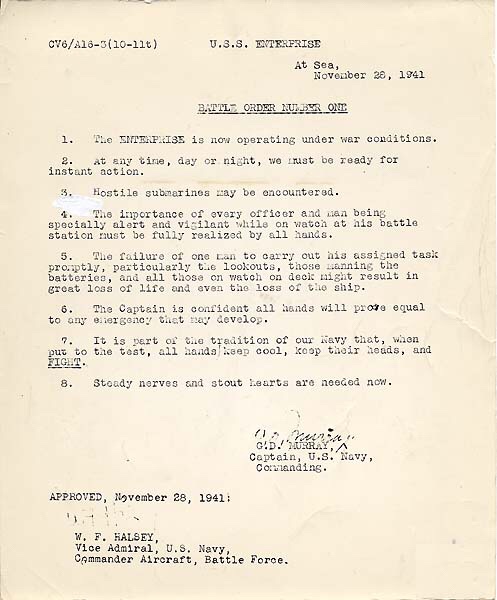
Once they were at sea, the TF commander, Admiral William F. (Bull) Halsey signed off on Battle Order #1, which put the Enterprise and her supporting Cruisers and Destroyers on a war footing.

The crew began adding armor behind the pilot’s position’s in the ship’s fighters, painting them in combat colors, and arming them for combat.

More than a week before the Japanese attacked, the Enterprise TF had orders to shoot first and ask questions later should they encounter any foreign ships or planes. The CAP (Combat Air Patrol) kept watch overhead.

The Big E would deliver the Marines and return to Pearl on Sunday, December 7. Her scout plane pilots would fly ahead, ending up right in the middle of the air raid. But that’s another story.

But on this date, Admiral Halsey and Captain Murray closed by telling their sailors “Steady nerves and stout hearts are needed now.”

“Louis, I think this is the beginning of a beautiful friendship.”


Today in History, November 26:  1942 – The motion picture “Casablanca” premieres in New York City.  The movie that would become a screen classic would be released to theaters in the remainder of the country on January 23, 1943.

The film was set in Casablanca, Morocco in December, 1941.  This time frame is important to the viewer if not the players.  Rick Blaine is an exiled American who owns a high-end bar.  Between continuously matching wits with the local French authorities and Nazis, Rick manages to barter for immigration papers for those fleeing the Nazis and to deal with an old romance interest who re-enters his life…Ilsa.  “Of all the gin joints in all the towns in all the world, she walks into mine.”

The film is at heart a romance, but at the same time a gritty war thriller.  Humphrey Bogart was well accustomed to playing the heavy, and did so well.  Ingrid Bergman did an excellent job playing the femme fatale, but by the time the show is over, one is hard pressed not to find Claude Rains’ portrayal of Captain Louis Renault to be the most compelling.

The plethora of one-liners definitely added to place Casablanca at the top of any “greatest” list, even 75 years later.  Near the end of the film, Rick and Louis are caught at the airport by Nazi SS Major Strasser.  Louis ends up shooting the Major.  As Louis’ troops rush up in response to the shot, Louis says hastily, “Major Strasser’s been shot.  Round up the usual suspects.”

It is important to note the film was released less than a year after the Pearl Harbor attack at a time when the question of who would be victorious was still a very open discussion.  Those viewing the movie most likely had fathers, brothers and sons fighting on a steaming, miserable island named Guadalcanal or on ships in the same theater.  Less than a month earlier (November 8) American soldiers and sailors took part in the landings of Operation Torch assaulting French North Africa.  This would include fighting the Nazis and the Vichy French (French sympathetic to or under the thumb of the Nazis.)  These battles would include Morocco and the Naval Battle of Casablanca between Allied, German and Vichy French naval forces.

All of this was the backdrop for the premiere of Casablanca.  How much more real, how much more emotion, must have been involved seeing it for the first time in 1942.

Sacrifices Avenged…One Last Attempt by the IJN

Today in History, November 14: 1942 –

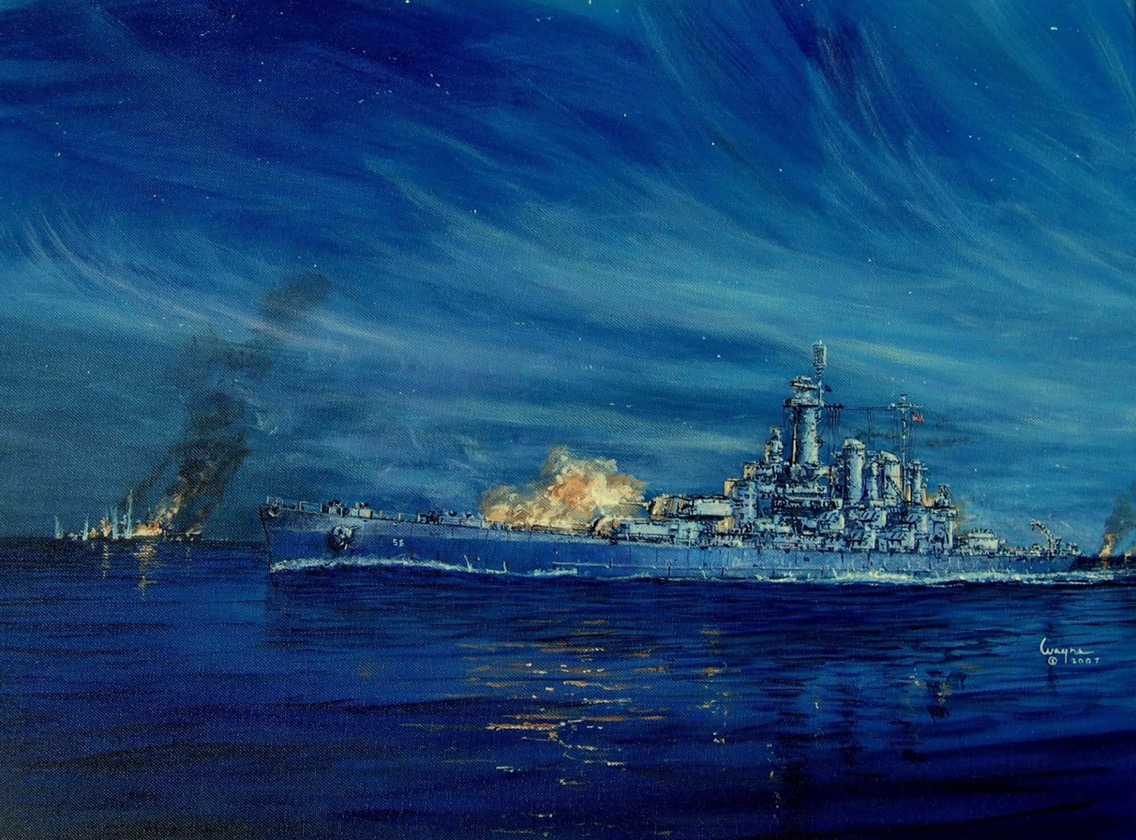
The Second Battle of Guadalcanal. Late on the 14th, early on the 15th, IJN Admiral Kondo was sent with a force of cruisers and destroyers built around the battleship Kirishima to take another shot at Henderson Field and the transports off shore.

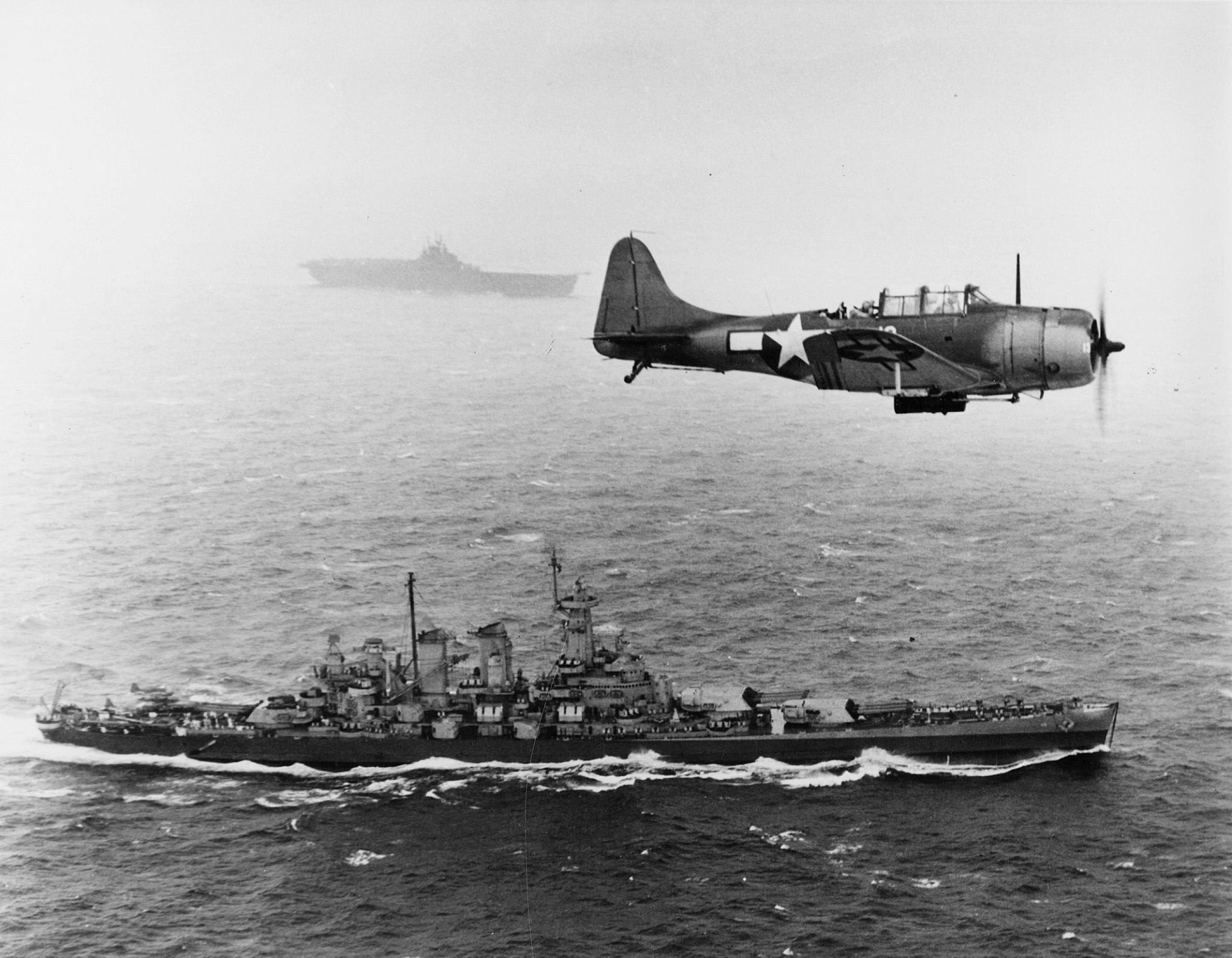
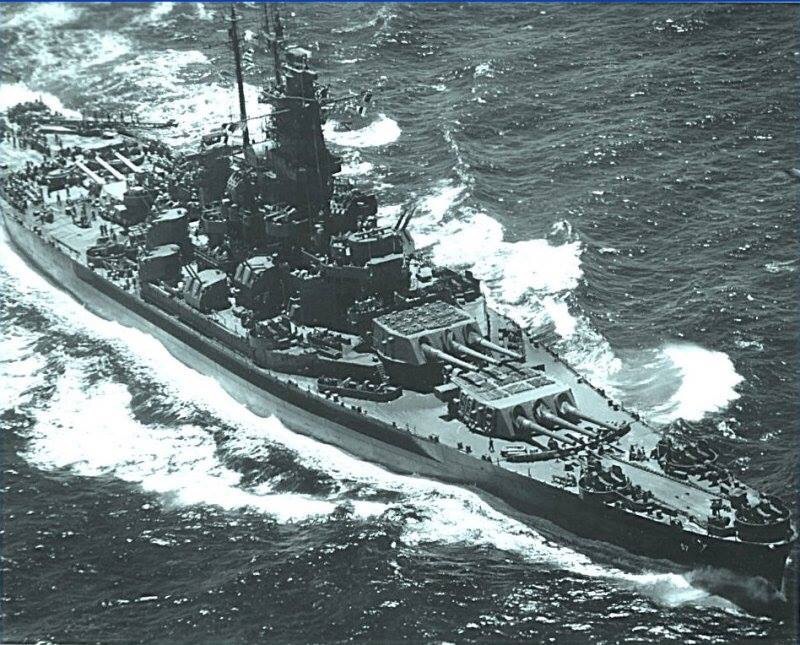
Most of the effective American combatants had been either sunk or put out of commission in the first battle, so Admiral Halsey detached a significant portion of the screening force for the USS Enterprise to protect the airfield and the transports. The Battleships USS Washington and USS South Dakota, along with the 4 destroyers with the most fuel took the job.

This US Task Force made better use of their radar and spotted the Japanese ships first. The American destroyers sacrificed themselves to fight off Japanese cruisers and destroyers; the South Dakota had nothing but trouble after losing her electrical systems. As the Kirishima and others focused on the nearly defenseless South Dakota, the Washington closed within 9,000 yards of the Kirishima and tore her apart with her main and secondary batteries.

Kondo ordered a retreat. Some IJN supply ships beached and began unloading, but when the sun came up, they were exposed to American aircraft. By the time US aircraft and an American destroyer were done with them, only about 3,000 troops were ashore…without any supplies, munitions or food…making them more of a detriment than a help.

The major significance of this battle is that it was the last time the IJN attempted an all out assault on Guadalcanal by sea; now they would only offer meager supplies with the use of the “Tokyo Express” up the “Slot”…not enough to support their armies on Guadalcanal. By December 31st the Emperor had agreed to abandon Guadalcanal to the Allies.

The most amazing thing to me is that in ’42 the Americans won or lost by scraping together a few ships to fight…at this point Enterprise was the only US Carrier in the Pacific…by this time in ’44, American combat ships were numerous and almost invincible.

Today in History, November 13: 1942 –

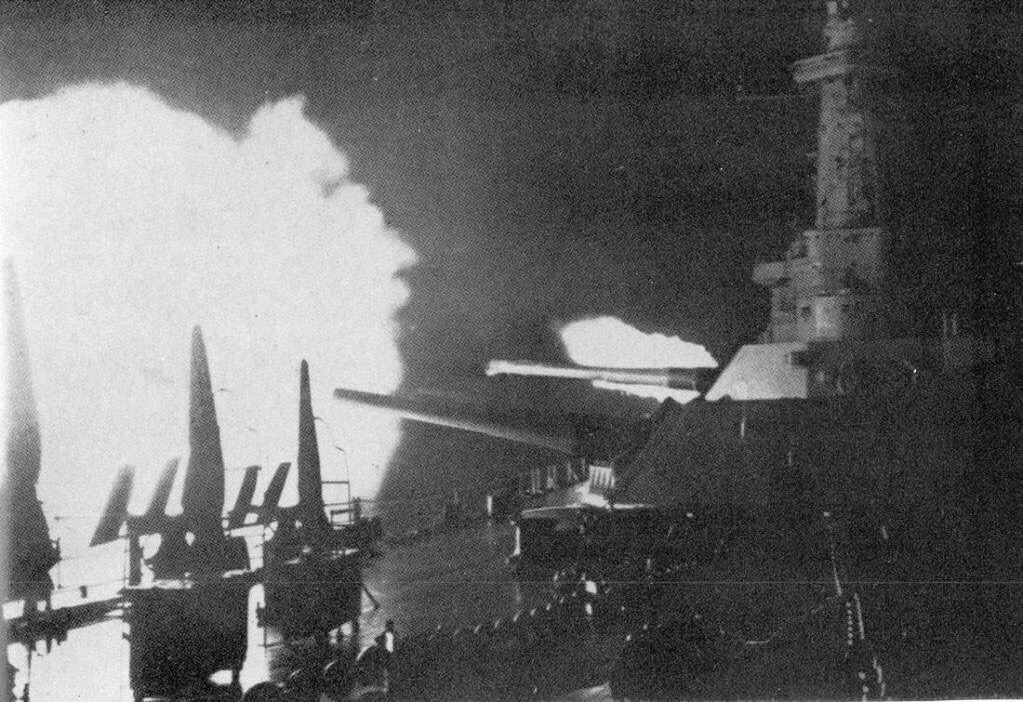
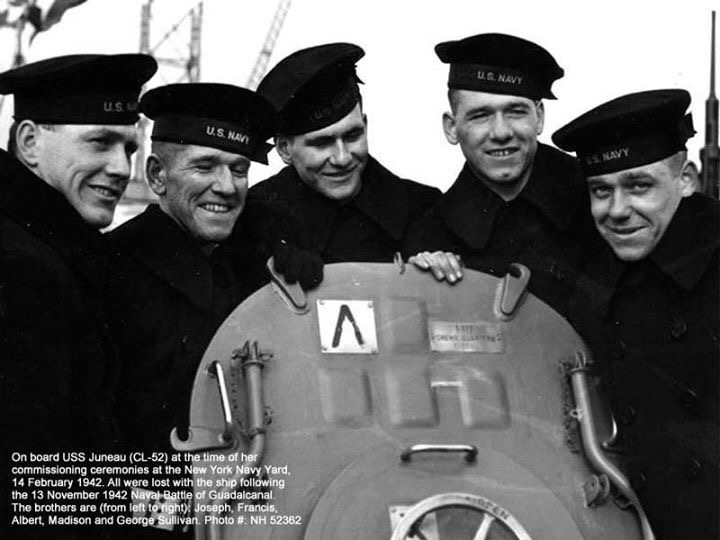
The First Naval Battle of Guadalcanal takes place in what would become known as “Ironbottom Sound” off Guadalcanal. US intelligence had warned US Navy forces that the IJN planned to bombard Henderson Field and land reinforcements on the embattled island. Admirals Callahan and Scott took their forces to interdict IJN Admiral Abe’s forces. In a fierce, confusing, intense night action the Japanese won a tactical victory by sinking more American ships, while the Americans won a strategic victory…Henderson was not bombarded and the American troop ships remained undamaged. But it came at a heavy cost for both sides. Admirals Callahan and Scott would be the only US Admirals to be killed in direct ship to ship combat in the war, and aboard the USS Juneau, the five “Fighting Sullivan” brothers would all be lost.

For the Japanese; surviving battleship Hiei, among others, would fall prey to repeated air attacks from Henderson, Espirito Santo, and the USS Enterprise when the sun came up. And this was only the beginning of the battle.

Moments Which Changed Naval History

Today in History, November 11: 1940 – A History changing event. The British aircraft carrier HMS Illustrious launches several obsolete aircraft, “Fairey Swordfish” torpedo aircraft…flying kites, really, in an attack on the Italian Naval Base at Taranto, Italy.

The Harbor was shallow, so the Italians thought they were safe. In this, the first attack by aircraft from a carrier, the Italian navy was devastated, by what many naval officers considered a gimmick…the airplane. On the other side of the world, someone took notice of the successful attack. The Imperial Japanese Navy was encouraged in their plans against Pearl Harbor…also a shallow anchorage considered safe. Naval History was changed…tactics forever adapted by those few British pilots.

Yesterday’s Enemies


Today in History, November 3: 1941 – A Japanese military council makes the decision that Pearl Harbor should be bombed, and in 2 days time issues the order to the Imperial Combined Fleet to prepare for the attack on December 8th. Secret Order #1 also included plans for the bombing of the Philippines and Malaysia, amongst other Pacific installations. 

 The Japanese had been preparing for this assault for sometime…IJN pilots had been training since the spring for the special tactics needed to bomb in the shallow harbor in Hawaii. “Negotiations” continued with the American government, even as the Japanese fleet moved and prepared for the attack.

Yesterday’s enemies are often today’s strongest allies. 

Desperate Courage – The Battle Off Samar


Today in History, October 25: 1944 – 

A desperate fight for survival, The Battle off Samar.  The Battle off Samar was only one of several major naval conflicts that constituted the Battles of Leyte Gulf. 

Gen. Douglas MacArthur had returned to the Philippines and invaded Leyte. His invasion was supported by what is likely the largest assembled fleet in history. In the days since the invasion began, the Japanese Navy had sent 3 battle groups to intercede. One group of Battleships, cruisers and destroyers were to approach the landing forces in Leyte Gulf through Surigao Strait, another built around the massive IJN Yamato was to approach via San Bernadino Strait, and the last, built around Fleet Carriers with few planes left, was to sail far to the north and make sure they were seen, so that major US forces defending the thin skinned landing ships would leave them unprotected. 

 The Japanese fleet approaching through Surigao Strait was decimated by American Battleships raised from the mud of Pearl Harbor in the last Battleship vs Battleship engagement in history (US Cruisers and Destroyers were key also). 

Admiral Kurita’s force around Yamato was bombed on the 24th and turned back. Admiral William F. Halsey, known to Americans and Japanese for his aggressive nature, “By the time we’re done, the Japanese language will be spoken only in hell” commanded the US 3rd fleet…4 battle groups of 4 fast carriers each, and another of fast battleships. He took the bait, going after the Japanese carriers that were actually playing no combative part in the battle. This left only cargo ships, small combatants, and “Jeep Carriers”, or Escort Carriers…basically cargo ships with a flight deck built atop their small, thin hulls. 

 The escort carriers were tasked with close support for troops ashore, and were not equipped with ammunition for a sea battle. So far, I’ve just set the stage for the events of the Battle off Samar Island…now for the good part. There were 3 small escort carrier task forces left in Leyte Gulf…Taffy 1, Taffy 2 and Taffy 3. As they began operations on the morning of the 25th, Admiral Clifton “Ziggy” Sprague and the men of Taffy 3 were shocked to find that IJN Admiral Kurita’s task force of fast battleships, cruisers and destroyers, who had turned around in the night, bearing down on them. Reference “Last Stand of the Tincan Sailors” by James Hornfischer, although I knew about this battle, I found out much more, and Oklahoma connections. The entirety of Taffy 3…6 jeep carriers, 2 Fletcher class destroyers and 3 destroyer escorts…did not match the tonnage of the Yamato alone. And Yamato was joined by several other Battleships, Cruisers and destroyer task forces. The Japanese could manage much more speed than the small American ships, and their guns (18 inch for the Yamato, 14 and 8 inch for the others, out-ranged the American’s 5 inch guns by MILES. As the long range rifles (22 miles avg) began dropping shells around the carriers and destroyers, Admiral Sprague ordered the small destroyers and destroyer escorts to lay smoke and attempt to delay the inevitable. Oklahoman Harold Kite, loading a 5 inch gun on the stern of the carrier USS Fanshaw Bay, watched the tiny escort ships turning to race towards the huge enemy ships, and likened them to the horses that had raced across the plains of central Oklahoma as he was growing up, and marveled at their courage. The closest escort ship to the Japanese fleet, the USS Johnston, was commanded by another Oklahoman…Commander Ernest E. Evans, known to his Annapolis classmates as “Chief” for his Cherokee heritage. His crew knew what they were in for. Cmdr. Evans had been there for the American defeat during the Guadalcanal campaign, and took his warrior heritage seriously. When he took command of the Johnston, he told her crew, “This is going to be a fighting ship. I intend to go in harm’s way, and anyone who doesn’t want to go along had better get off right now. Now that I have command of a fighting ship, I will never retreat from an enemy force.” See comments for much more.

And he didn’t. Under the fire of longer range, larger guns and other fast destroyers, he raced in close, ordering his gun crews to fire constantly, which they did with amazing effect, and launched his small ship’s torpedoes against the enemy, achieving strikes that disabled cruisers. Fighting to the end, Evans was looking after the survivors of his sinking ship when a Japanese shell destroyed the part of the superstructure he was in, and he went down with his ship. The other American destroyers and destroyer escorts (even smaller) followed suit, delaying the Japanese ships and confusing them to the point that the Japanese thought they were actually fighting American cruisers and fast carriers…heavies in Navy parlance. 

The Jeep carrier’s aircrews were launched in desperation as the battle began…armed with whatever they had…depth charges, anti-personnel bombs, but nothing that was designed to sink ships. The aircrews, flying torpedo bombers, dive bombers and fighter planes, attacked the Japanese ships with desperate ferocity. They dropped the depth charges as best they could beneath enemy ships, dropped their bombs, then came back and made runs against the enemy ships without arms because it would mean the IJN ships had to evade (and slow down) since they didn’t know there were no torpedoes or bombs on the American aircraft. One pilot, out of ammunition, flew alongside a Japanese heavy, opened his canopy, and emptied his .38 revolver into the ship’s bridge to the amazement of her crew. The flyers then flew to a land base on Leyte and re-armed to attack again. In the end, Admiral Kurita, believing he was attacking a much larger force, ordered his massive force to turn about and retreat.

As for Halsey, who couldn’t leave even his Battleships, or even 4 of his 16 Carriers to defend the Taffy’s and the all but defenseless cargo ships in Leyte Gulf….he received a dispatch from his boss, Admiral Chester W. Nimitz, asking, “Where is Task Force 34? All the world wonders.” The story is that “all the world wonders” was just jibberish added to transmissions to confuse the enemy…but the result was an angry Halsey throwing his cap to the deck and spewing a string of invectives. Of the destroyers, including the Johnston and the Samuel B. Roberts that went down in the battle? Amazingly, many of their crew were lost to sharks before they were rescued in the days hence, the result of faulty reports of their locations. So many brave heroes.