“Oh, ah, Mr. Wayne, I heard you were dead?” ——-“NOT Hardly…..”

Today in History, June 11, 1979:

John Wayne, The Duke, Marion Michael Morrison, dies. He was not just an actor, he was an American icon that inspired us to great things. We won’t see his like again.

Yet John Wayne lives on in his legacy. Each time someone tries to emulate him, live like him, the country is all the better for it.

So perhaps the Duke is not gone at all.

Vengeance at Midway

Today in History, June 4, 1942:

The Battle of Midway.

The war had been going badly for the Americans in the Pacific. The Japanese had begun the war 7 months earlier by bombing Pearl Harbor, destroying most of the American fleet, but missing the US carriers, which had all been at sea. In the interim came sweeping victories across the Pacific for the IJN, raids by US carrier task forces on Japanese strongholds, the Doolittle Raid and the Battle of the Coral Sea. The US lost the Lexington at Coral Sea, and the Yorktown had been badly damaged.

Then code breakers at Pearl figured out that the next target of the IJN was Midway Island, the westernmost island of the Hawaiian chain. Admiral Yamamoto’s plan was to draw the American carriers out and destroy them, leaving the Pacific unprotected. The code breakers changed the entire game.

The Enterprise and Hornet rushed back to Pearl for rearming, as did the Yorktown. The repair crew told Admiral Nimitz they needed 3 months to repair the Yorktown; he gave them 3 days.

When the IJN attacked Midway, they expected the American carriers to be responding to the scene, giving them plenty of time to lay a trap; instead, Nimitz had positioned his carriers northeast of Midway to lay in wait. When a PBY seaplane (Strawberry 5) spotted the Japanese carriers, it was all Admirals Spruance and Fletcher needed.

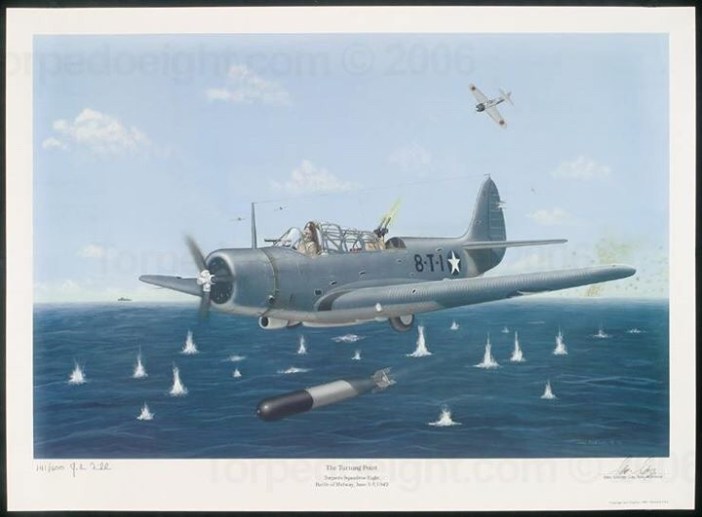
The three American carriers launched their aircraft. The obsolete TBD Devastator torpedo bombers were the first to find the IJN carriers. The versatile Japanese Zero fighters dove to the wave tops and tore them apart, leaving almost no survivors. The sacrifice, while not intentional, served a purpose.

Next to arrive on the scene were SBD Dauntless dive bombers, which dove to attack from altitude. With all of the Japanese fighters drawn to the “deck”, they had no fighters to oppose them. Diving at 70 degrees, the pilots hanging from their seat belts, the rear gunners pressed against their seats with no view of what was to come, the bombers dropped their bombs with deadly accuracy.

Admiral Nagumo, informed of the American fleet by a scout plane, had ordered his aircraft, just back from Midway, rearmed. So when the American bombs fell, the Japanese carrier decks were filled with aircraft, bombs, torpedoes and fuel. Three of the four IJN carriers were destroyed in minutes. The fourth would be picked off in a later raid.

Within minutes, thanks to the sacrifice and courage of a few brave airmen, the tide of the war in the Pacific had changed. There was still a long road ahead; but the seemingly unstoppable onslaught of the IJN had been stopped. Worse than the loss of 4 carriers was the loss of hundreds of Japans finest aviators.

The Americans would lose the Yorktown, but the Japanese were devastated. Admiral Yamamoto had told his contemporaries that they had a year before the tide of the war turned against them due to American industries. The American sailors and airmen at Midway cut that time in half.

H. Norman Schwarzkopf Stared Down into Baby Charles Lindbergh’s Shallow Grave…

Today in History, May 12, 1932:

H. Norman Schwarzkopf looks down into the recently found shallow grave of infant Charles Lindbergh, Jr. in a field not far from the Lindbergh home.

The Lindbergh baby had been kidnapped from his home on March 1st, the ransom paid, but the child was not returned to his parents.

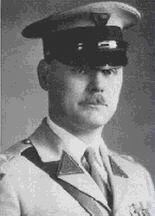
Schwarzkopf, a West Point graduate and WWI veteran, had been appointed in 1921 by the Governor of New Jersey to create, organize and train the New Jersey State Police.

It was in this capacity that he led the investigation of the Lindbergh Kidnapping, the “Crime of the Century”. He would prove that the baby had been killed accidentally as he was being carried down a ladder from his second floor bedroom.

When a new governor took office, Schwarzkopf would be sacked. Politics.

He would return to the US Army when WWII broke out, where he would be tasked to use his logistics and organizational talents to train the Iranian police, a country where the US was setting up railroads to supply the Soviet Union for the fight against Germany.

After the war, Schwarzkopf would also help set up the security forces of the Shah of Iran…back before the Iranian revolution made that country enemy #1.

Two years after he investigated the Lindbergh kidnapping, his son, H. Norman Schwarzkopf, Jr. would be born.

And as most know, “Stormin’ Norman” would follow his father to the middle east in the service of his country nearly six decades later.

The elder H. Norman Schwarzkopf would take part in the intrigue and skullduggery of the Middle East during the forties and fifties after solving the Lindbergh Kidnapping; his namesake would go back to the volatile region with him father’s background and wisdom, but to kick ass and take names.

The Battle of Alcatraz

Today in History, May 4, 1946:

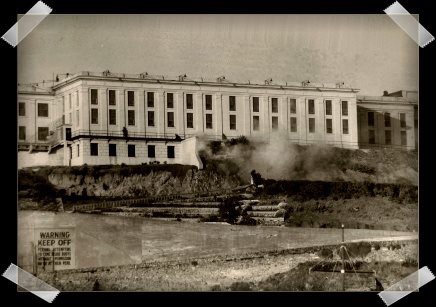
Call in the Marines! The Battle of Alcatraz.

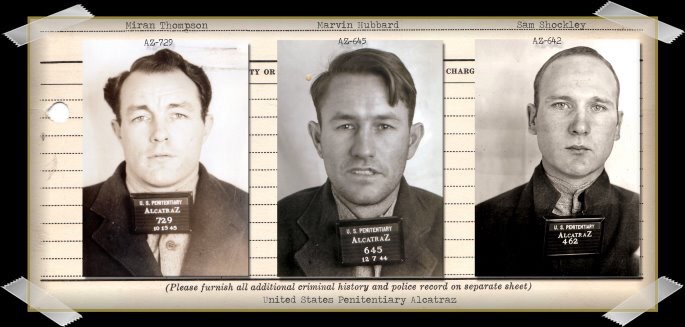
On May 2nd, three inmates on D Block of Alcatraz prison managed to overtake the block of cells. One of them managed to expand and crawl between bars leading to the catwalk above the cells and overpower the guard there.

Soon they had imprisoned the guards in two cells and taken their weapons. Now they only needed to find the key to the “yard” and they could steal the island’s launch to escape. However by the time they found the key, they had tampered with the lock so much that a security feature kicked in and they were sealed inside.

Over the next couple of days they fired on guards outside and on the guards they had imprisoned inside, killing 3 and injuring 14.

The Warden called for help from Marines stationed at the nearby Treasure Island Naval Base, many of whom were fresh from fighting Japanese hidden in caves in the Pacific. The Marines assaulted D Block with machine gun fire, grenades and mortars. When the guards went to secure the building, they found the three ringleaders dead in a utility corridor to which they had retreated. Two more inmates would later be executed for their role in the attempted escape.

A Fight to the Death

Today in History, April 16, 1945:

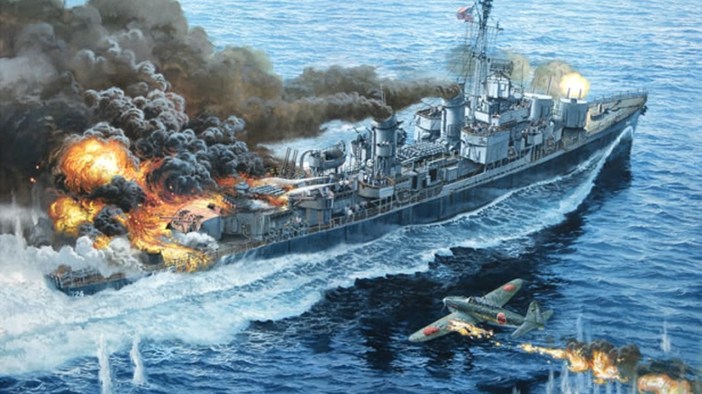
Picket duty in the seas off of Okinawa was a very dangerous place.  Destroyers were stationed in exterior positions from the US fleet to provide radar warnings for the carriers, bombardment and landing groups.  That also made them the first targets for Japanese Kamikaze aircraft inbound.

The USS Laffey (DD 724) was on picket duty.  She was already a veteran of D-Day where she served with Pearl Harbor survivor USS Nevada, and then several other actions in the Pacific.

A flight of approximately 50 Japanese suicide planes attacked the fleet, and many of them chose to target the tiny destroyer.  Val diver bombers and others repeatedly dove on the desperately maneuvering ship while the Laffey’s gun crews kept up a killing fire.  The crew kept fighting, shooting down several of the bombers, taking numerous bomb hits and being impacted by six of the Kamikazes.

A flight of 4 Grumman Wildcat F4F’s and a squadron of 12 F4U Corsairs from nearby carriers raced in the help, shooting down some of the attackers.  A couple of the fighters went down in the melee, including one Corsair which clipped the destroyer’s antennas before crashing into the sea.  Fortunately all of the flyers were rescued.

The Navy’s most notable Historian, Samuel Eliot Morrison, said, “Probably no ship has ever survived an attack of the intensity she experienced.”

The Presidential Unit Citation awarded to the Laffey’s crew read:

CITATION:  “For extraordinary heroism in action as a Picket Ship on Radar Picket Station Number One during an attack by approximately thirty enemy Japanese planes, thirty miles northwest of the northern tip of Okinawa, April 16, 1945. Fighting her guns valiantly against waves of hostile suicide planes plunging toward her from all directions, the U.S.S. LAFFEY set up relentless barrages of antiaircraft fire during an extremely heavy and concentrated air attack. Repeatedly finding her targets, she shot down eight enemy planes clear of the ship and damaged six more before they crashed on board. Struck by two bombs, crash-dived by suicide planes and frequently strafed, she withstood the devastating blows unflinchingly and, despite severe damage and heavy casualties, continued to fight effectively until the last plane had been driven off. The courage, superb seamanship and indomitable determination of her officers and men enabled the LAFFEY to defeat the enemy against almost insurmountable odds, and her brilliant performance in this action, reflects the highest credit upon herself and the United States Naval Service.”

For the President,

/s/ James Forrestal
Secretary of the Navy

You can still walk the decks where these brave men fought and several died aboard the Laffey at Patriot’s Point in Charleston Harbor, South Carolina.  Her museum location is significant as she was named for US Navy Seaman Bartlett Laffey, who earned the Medal of Honor during the Civil War, which began in Charleston Harbor.

The Texas City Disaster

Today in History, April 16, 1947:

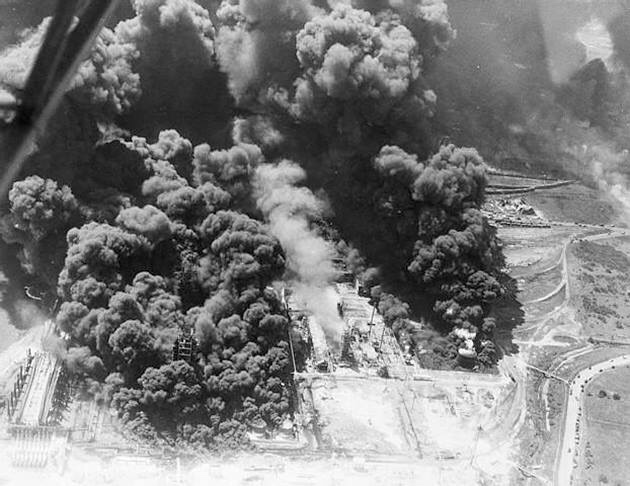
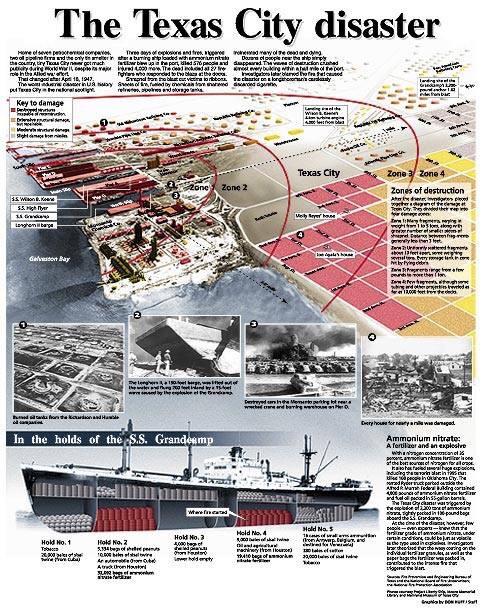
The Texas City Disaster, the worst industrial disaster in US History.

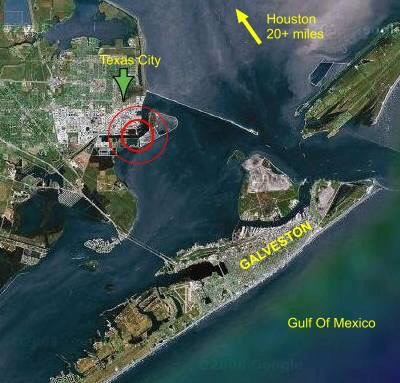
A French ship, the SS Grandcamp, loaded with 2300 tons of ammonium nitrate fertilizer in the port city of Texas City, across from Galveston, explodes in the channel leading to Houston, devastating the docks and the town.

All but one of the town’s firefighters were killed, and several other fires were ignited on other ships and in the oil town in the following days. Most of the city was destroyed, and at least 581 people were killed.

A Devil’s Bargain

Today in History, April 13, 1941:

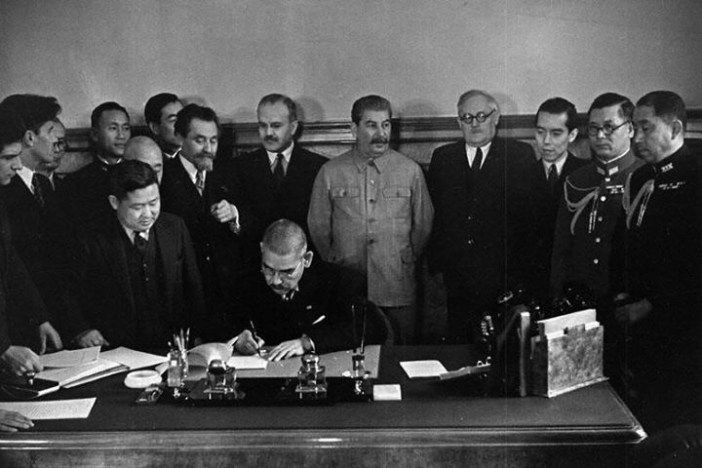
The Russian and Japanese governments sign a non-aggression treaty. The treaty gave both nations much needed cover.

The Russians didn’t have to fight the Japanese in Manchuria, freeing up hundreds of thousands of troops to fight the Germans.

The Japanese, likewise, freed up hundreds of thousands of troops to fight the Americans. FDR encouraged Stalin at Malta to declare war on Japan after the defeat of Germany.

They did so, conveniently, between the atomic bombings of Hiroshima and Nagasaki, ostensibly after the war was over, invading Manchuria and demanding the northern islands of Japan for their “effort”.

A Kamikaze in London

Today in History, April 9, 1937:

A Kamikaze in….London.

In the 1930’s most nations were attempting to set aircraft range records…for the sake of doing so and for military purposes.

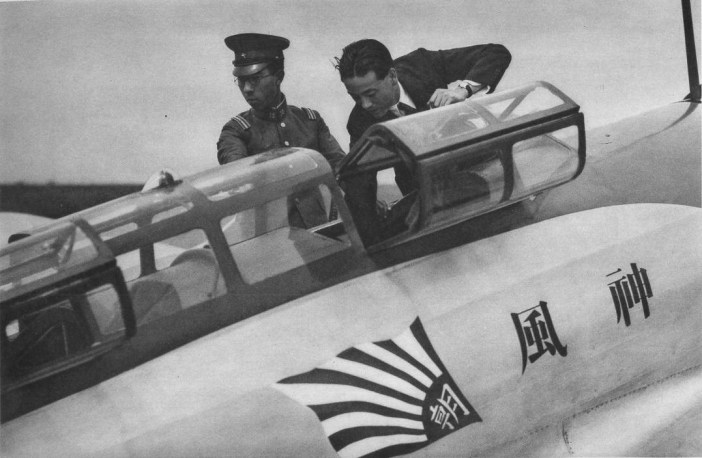
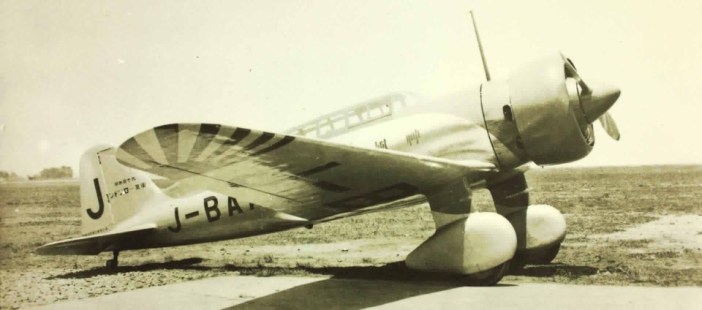
The Japanese newspaper Asahi Shimbun sponsored the flight of the “Kamikaze-Go”, a long range reconnaissance aircraft from Tokyo to London in honor of the coronation of King George VI.

Arriving at it’s destination in a little over 51 hours, the aircraft was greeted in London by cheering crowds.

It’s pilot, Masaaki Iinuma, became a Japanese national hero, hailed as the Japanese Lindbergh. He and his navigator, Kenji Tsukagoshi would both be killed during WWII.

The aircraft would crash, be recovered, and placed in a museum which would be destroyed by aerial bombardment.

The aircraft type would be used as a long range recon plane during the war. The whole thing began as the Japanese designed aircraft that could reach their far-ranging territories.

American Patrol

Today in History, April 2, 1942:

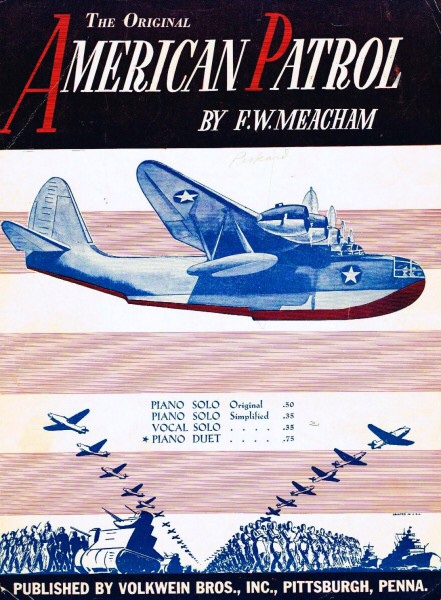
In Hollywood, California, Glenn Miller and his Orchestra record their version of “American Patrol.” 

The tune was originally written in 1885 by F. W. Meacham, but Miller’s orchestra would add swing and jazz to the already inspiring instrumental.

This would make it representative and nearly synonymous with the jaunty, cock-sure attitude of American servicemen fighting World War II in multiple theaters.  Miller and his band would entertain the troops with this and other hits in live shows until his death on December 15, 1944, when he would be lost while flying to France for a performance. 

Think of the most popular entertainer you can, and they would pale in comparison to Glenn Miller in the late thirties and early forties.  Major Miller’s loss was felt.

It is important to remember what was occurring in April of 1942.  The attack on Pearl Harbor was only five months in the past, American troops at Bataan were about to surrender, the US Navy was conducting hit and run raids on Japanese strongholds, the Doolittle Raid on Tokyo was in this month, and Americans were training up for the war in Europe while U-Boats lurked off of American shores.

“The Girl I Left Behind Me.”  If you listen, and know what you are listening for, at about the 1:40 mark you pick up on the overlay Miller’s crew added to “American Patrol” of “The Girl I Left Behind Me.”  While versions of this tune were popular in Dublin and the British service long before, it became popular in the US Army during the Civil War and in the Cavalry as a marching tune.  So popular in fact, you’ve likely heard it in movies about the US Cavalry.

Just What a War-Weary Audience Needed

Today in History, March 31, 1943:

Historically Broadway musicals had gone for flash and opened with a bang.

So most critics expected this folksy, country new musical, opening on Broadway in the middle of WWII, to bomb.

They misunderstood the mood of the nation, which had been in the midst of world war and the related personal losses and stress for years.

When Rodgers and Hammerstein’s Oklahoma! premiered on this date in 1943 on Broadway, it opened with the melodious tunes of a cowboy singing as he greeted a peaceful morning.

Almost in unison the war weary audience let out an audible “aaaaahh”.

By the time the cast had sung the title song and closed the play, Joan Roberts (Laurey) says that the applause was deafening through two encores. The record setting musical would run for 15 years, 2,212 performances, before closing.