Tossing Around the…Pluto Platter

Today in History, January 23, 1957:

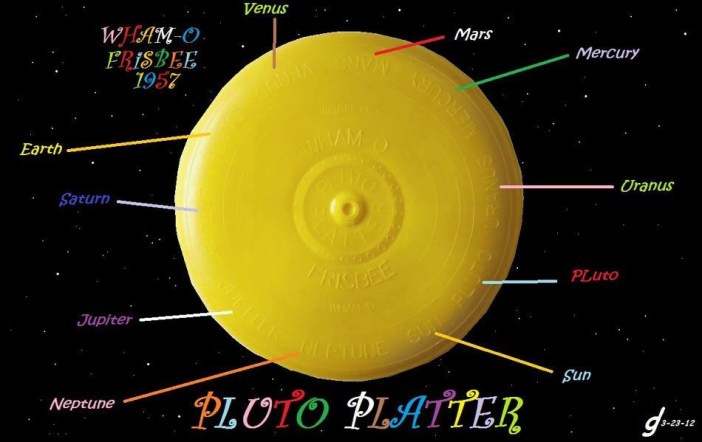
Walter Frederick Morrison sells the rights for an invention to the Wham-O Toy Company.

He and his wife had begun on the invention by selling “Flying Cake Pans” in 1937.

Nearly a decade later, after having learned more about aerodynamics while flying combat missions over Italy in a P-47 Thunderbolt fighter (shot down, spent time as a POW), Morrison began working on the invention again after WWII.

He and an investor began working with plastics, and he eventually came up with what he called the “Pluto Platter”, which is what he sold to Wham-O. Once college students began referring to it as a “Frisbee”, Wham-O changed the name.

NUTS!! Monty Shows His….Ego

Today in History, January 7, 1945:

The Battle of the Bulge.

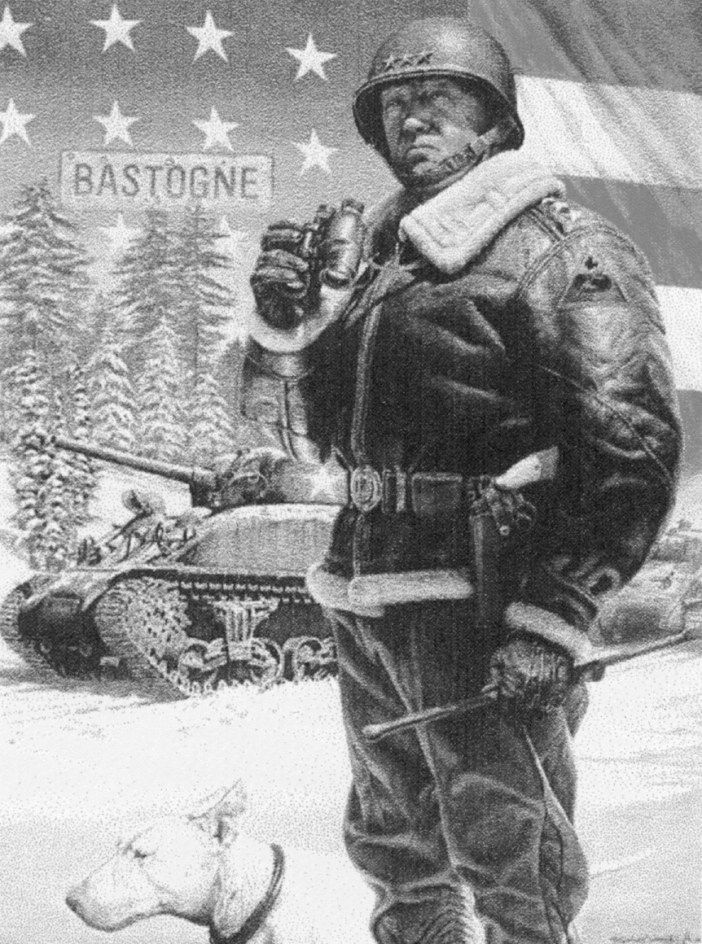
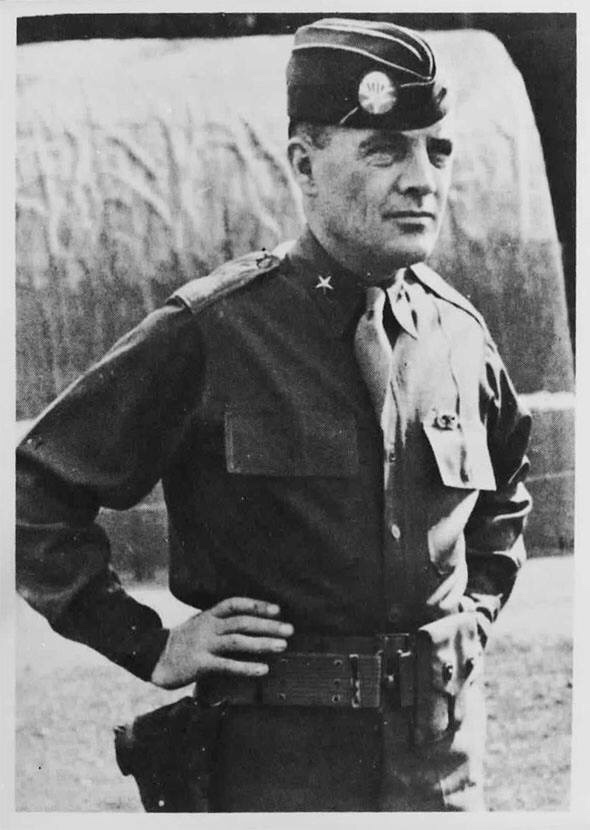
After the American 101st Airborne held out against overwhelming German forces for days, refusing to surrender (Gen. Anthony McAuliffe replied Nuts! to a surrender command, confusing the hell out of the Germans); after American Gen. George S. Patton turned his entire 3rd Army 90 degrees and ran full tilt through winter conditions to reach his comrades; after American air power helped save the day when the weather cleared,

British Gen. Bernard Law Montgomery held a press conference during which he took credit for the hard won victory.

Prime Minister Winston Churchill had to address Parliament to assert the truth that The Battle of the Bulge was solely an American victory after the political fall-out of Montgomery’s typically arrogant statements.

Pappy’s Air War Ends

Today in History, January 3, 1944:

Moments after he became the top fighter ace in the Pacific Theater by shooting down his 26th enemy plane, USMC Major Gregory “Pappy” Boyington was himself shot down over the Japanese base of Rabaul.

He would be captured by the Japanese and held prisoner, brutally treated until rescued from a Japanese prisoner of war camp.

Boyington had been one of the American servicemen to resign their commissions to serve in the AVG, the American Volunteer Group, or “Flying Tigers” in China prior to America’s entry into the war. After Pearl Harbor he rejoined the Marines and fought in the Pacific.

Boyington was a Medal of Honor recipient. A warrior. And a drunk. In his good will tours after the war, he stated bluntly, “Show me a hero, and I’ll show you a bum.”

NUTS!!

Today in History, December 22, 1944:

The 101st Airborne Division was surrounded by the Nazis at Bastogne, Belgium, after the Germans had broken through Allied lines in their last major assault of WWII. The “Battle of the Bulge” had caught the Allied command (well..not all, but thats another story) by surprise. The weather had Allied air support grounded and the German mechanized units (tanks) helped them quickly overrun the Americans. Freezing temperatures contributed to their woes.

Low on supplies and ammo, no air support due to the weather, three days before Christmas, their commander, Brigadier General Anthony McAuliffe received a demand from the German commander to surrender.

It took the Germans a bit to comprehend the one word, typically American vernacular,

“NUTS!”

The 101st would not surrender and fought on in desperate conditions until finally relieved by General Patton’s Army Corps and Allied Air Support when the weather broke.

Tragedy for Christmas

Today in History, December 15, 1944:

Think of any of your favorite singers, musicians, or groups, roll them altogether, and they aren’t as popular as Glenn Miller and his band were from 1937 to 1944.

In September of 1942 Miller, at the apex of his popularity, gave up the luxuries of home and entered the US Army Air Corps as a Captain to lead the US Army Air Corps Band. He and the band went to England and gave concerts to the troops, which was richly received.

On this date in 1944, Miller took off in a single engine aircraft from England en route to Paris to set up a show for the troops who had just taken that city back from the Nazis. Its the last time Miller was heard from, his plane went down over the English Channel; his remains nor his plane were ever found.

I can’t listen to this song without picturing all of the men and women…girls and boys…who put their lives on hold and saved the world during World War II, from Normandy to Iwo Jima to the Homefront.  Glenn Miller represented them, they were listening to his music before the war at High School dances and on radios before they went into combat.  Thank you, Mr. Miller.

  https://youtu.be/FhZ-yTIXXYI

“The American People, in Their Righteous Might, Will Win Through to Absolute Victory…”

Today in History, December 8, 1941:

As the Japanese continued their invasion of the Philippines, Malaysia, Hong Kong and other Allied interests in the Pacific, President Franklin Roosevelt gives his famous “Day of Infamy” speech asking Congress to declare that a state of war had existed since the bombs began to fall on Pearl Harbor the day before.

Shoot First, Ask Questions Later…

Today in History, November 28: 1941 –

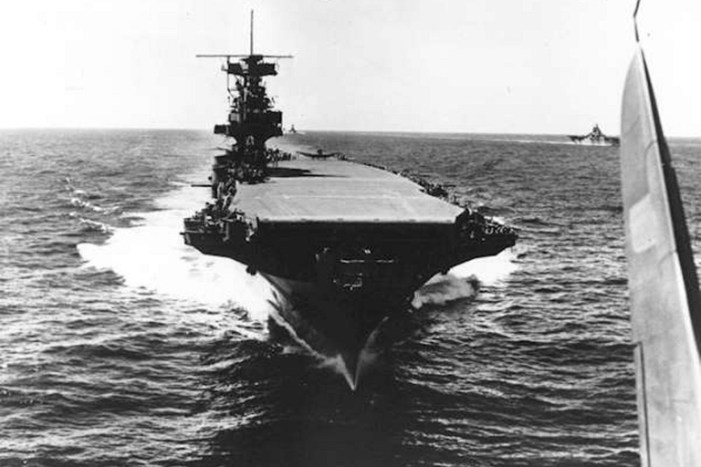
Ten days before the Japanese attack on Pearl Harbor, a Task Force built around the aircraft carrier USS Enterprise (CV-6) sailed from Pearl Harbor bound for Wake Island.

In response to a “war warning” the Enterprise had taken aboard a squadron of US Marine F4F Wildcat fighter planes and their pilots, with orders to deliver them to Wake to bolster the island’s defenses.

Once they were at sea, the TF commander, Admiral William F. (Bull) Halsey signed off on Battle Order #1, which put the Enterprise and her supporting Cruisers and Destroyers on a war footing.

The crew began adding armor behind the pilot’s position’s in the ship’s fighters, painting them in combat colors, and arming them for combat.

More than a week before the Japanese attacked, the Enterprise TF had orders to shoot first and ask questions later should they encounter any foreign ships or planes. The CAP (Combat Air Patrol) kept watch overhead.

The Big E would deliver the Marines and return to Pearl on Sunday, December 7. Her scout plane pilots would fly ahead, ending up right in the middle of the air raid. But that’s another story.

But on this date, Admiral Halsey and Captain Murray closed by telling their sailors “Steady nerves and stout hearts are needed now.”

How Closely “Casablanca” Hit Home

Today in History, November 26, 1942:

The motion picture “Casablanca” premieres in New York City.  The movie that would become a screen classic would be released to theaters in the remainder of the country on January 23, 1943.

The film was set in Casablanca, Morocco in December, 1941.  This time frame is important to the viewer if not the players.  Rick Blaine is an exiled American who owns a high-end bar.  Between continuously matching wits with the local French authorities and Nazis, Rick manages to barter for immigration papers for those fleeing the Nazis and to deal with an old romance interest who re-enters his life…Ilsa.  “Of all the gin joints in all the towns in all the world, she walks into mine.”

The film is at heart a romance, but at the same time a gritty war thriller.  Humphrey Bogart was well accustomed to playing the heavy, and did so well.  Ingrid Bergman did an excellent job playing the femme fatale, but by the time the show is over, one is hard pressed not to find Claude Rains’ portrayal of Captain Louis Renault to be the most compelling.

The plethora of one-liners definitely added to place Casablanca at the top of any “greatest” list, even 75 years later.  Near the end of the film, Rick and Louis are caught at the airport by Nazi SS Major Strasser.  Louis ends up shooting the Major.  As Louis’ troops rush up in response to the shot, Louis says hastily, “Major Strasser’s been shot.  Round up the usual suspects.”

It is important to note the film was released less than a year after the Pearl Harbor attack at a time when the question of who would be victorious was still a very open discussion.  Those viewing the movie most likely had fathers, brothers and sons fighting on a steaming, miserable island named Guadalcanal or on ships in the same theater.  Less than a month earlier (November 8) American soldiers and sailors took part in the landings of Operation Torch assaulting French North Africa.  This would include fighting the Nazis and the Vichy French (French sympathetic to or under the thumb of the Nazis.)  These battles would include Morocco and the Naval Battle of Casablanca between Allied, German and Vichy French naval forces.

All of this was the backdrop for the premiere of Casablanca.  How much more real, how much more emotion, must have been involved seeing it for the first time in 1942.
When America Came Together…for a Time

Today in History, November 13, 2001:

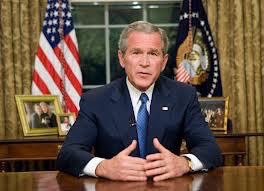
U.S. President George W. Bush signed an executive order that would allow for military tribunals to try any foreigners captured with connections to the terrorist attacks on the United States on September 11, 2001.

It was the first time since World War II that a president had taken such action. The home territory of the United States had been attacked with a tremendous loss of innocent lives. For a time, the nation came together in common cause.

USS Oklahoma

Today in History, November 3: 1943 – The USS Oklahoma (BB-37) is re-floated at Pearl Harbor, Hawaii after a months long salvage operation. She had been on Battleship Row on December 7, 1941 when Japanese torpedoes caused her to capsize quickly. After being decommissioned, the ship was sold for scrap, being too old and too damaged for further service. En route from Pearl to San Francisco, the Oklahoma slipped the line from her tow ship and sank to the bottom of the Pacific. I guess she didn’t want to end up in a scrap yard.

https://www.militarytimes.com/2015/07/27/remains-of-pearl-harbor-victims-exhumed-for-identification/