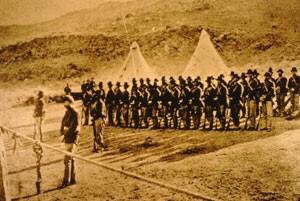
Today in History, October 3: 1873 – Modoc Indian Chief Kintpuash, aka Captain Jack, and three others are hanged by the US Army for the murder of US Army General Edward Canby and Reverend Eleazar Thomas. The Modocs had agreed to move from their ancestral lands to the Klamath Reservation, but were treated poorly by another tribe there, so they returned to their lands in Northern California. Although they attempted to be peaceful, the settlers in the area were not happy with their presence and the army moved them back to the reservation; they again left, holding up in the Lava Beds in California. Gen. Canby agreed to a meeting with the Chief and several others. Under pressure from some of his tribe members, Captain Jack murdered Canby and Thomas. Canby had been a West Point graduate, a veteran of the Mexican-American War and a hero of the Civil War, and the first and only general officer killed in the Indian Wars. In response, Canby’s replacement, Gen. Jefferson C. Davis (no relation to the Confederate President) had Chief Kintpuash and his associates rounded up and tried for murder.
Category: History
First Female President in 1919?

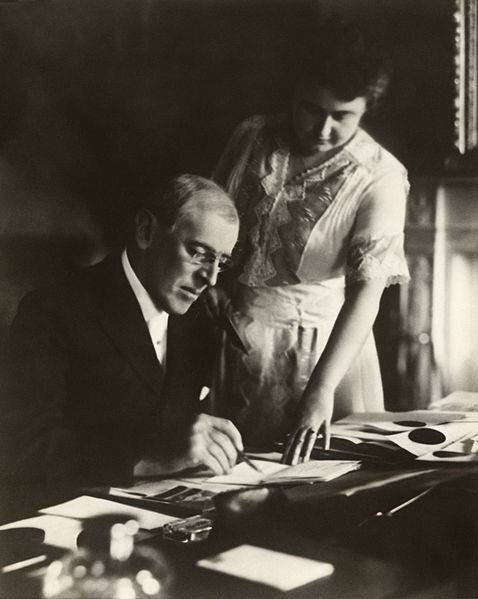
Today in History, October 2: 1919 – President Woodrow Wilson (D) had been on a whirlwind tour of the nation, 8,000 miles in 22 days, pushing America’s entry into the League of Nations (precursor to the United Nations).
On September 25 in Pueblo, Colorado, suffering from exhaustion and recovering from a bout with influenza, he collapsed. He made it back to DC before suffering a debilitating stroke that paralyzed his left side and left him bedridden.
His wife Edith, fiercely protective, cut off almost all access to him in order to keep his incapacitation a secret. She signed off on paperwork and made decisions without consulting the President, claiming she was only acting as a steward to him. He would eventually recover enough to take part in cabinet meetings, but his participation was severely limited.
As for the League of Nations? Wilson’s Republican opponents in the Congress, ferociously opposed to the League, continued to fight it, and with the election of Republican President Warren Harding, the League of Nations issue died.
Sabres Drawn…

Today in History, October 1: 1947 – America’s first “swept wing” jet fighter, the North American F-86 Sabre, makes it’s first flight.
Sleek, beautiful and deadly, the Sabre would go into production and arrive in Korea in time to save the day, as America’s mostly propeller driven air forces were desperately fighting the Russian Mig 15 swept wing fighter. The Sabre and the Mig both had advantages over each other, but American training, as usual, made the difference. The Sabre is my favorite jet fighter. The last one was retired from the Bolivian Air Force in 1994.
A Spy is Hanged

Today in History, September 29: 1780 –
British Major John Andre is sentenced to death by hanging by Gen. George Washington. Andre had been the spy who met with the traitor Benedict Arnold in Arnold’s attempt to give the fort at West Point, New York to the British in exchange for a commission in the British Army.
Washington first offered to trade Andre for Arnold, who had fled to the Royal Navy ship Vulture. When he received no response from Britsh General Henry Clinton, Washington ordered the spy’s hanging.
The hanging was also carried out because the British had set the precedent four years earlier when they had hanged American spy Nathan Hale.
Siege(s) at Yorktown

Today in History, September 28: 1781 – The Siege of Yorktown during the Revolutionary War begins as The Continental Army and their French Allies corner British Lt. General Cornwallis’ forces from land and sea. The siege would last until October 19 when Cornwallis sent one of his officers out to surrender. This would be the last major land battle of the war, and would result in the British government negotiating for peace. Ironically, 81 years later, during the Civil War, Confederate forces would use some of Cornwallis’ trenches in another Siege of Yorktown, this time by forces under the command of Union Gen. George B. McClellan. The result would be different this time; by the time McClellan was ready to act, the Southerners and slipped the noose and escaped.

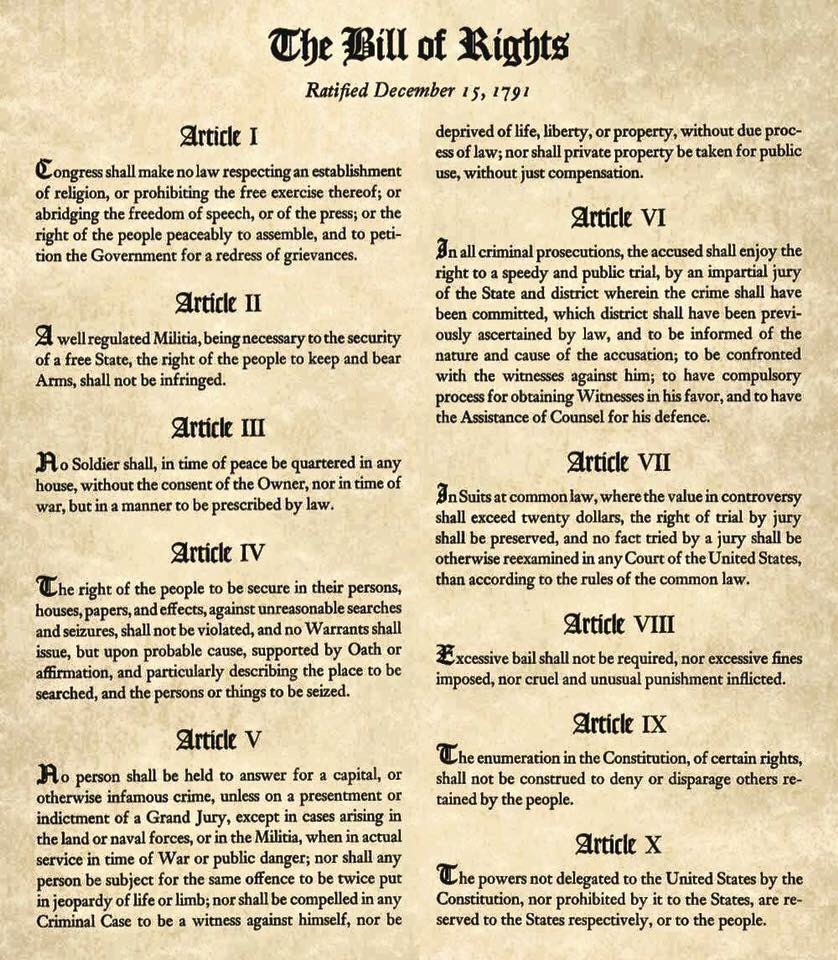
Today in History, September 25: 1789 –
The US Congress approves the first ten ammendments to the Constitution, or The Bill of Rights. The ammendments were more about restricting the powers of government than “bestowing” rights the founders considered natural. The Bill of Rights would be ratified by the states in December, 1791.
Little Rock

Today in History, September 25: 1957 –
The Little Rock Nine and historic connections. In 1954 the Supreme Court decided in Brown vs Board of Education that desegregation of public schools was the law of the land. In 1957 one of the first tests of the law began when 9 African-American students were enrolled in Little Rock Central High School in Arkansas.
Local police escorted them at first, but their task was soon overwhelming as over 1,000 angry whites protested the students. The Arkansas Governor supported the protestors. But the odds were stacked against him. Not only was righteousness inevitable, but he and the protestors were soon up against President Dwight Eisenhower, who activated 1,200 men of the US Army 101st Airborne Division to provide security, escort the students and keep the peace in Little Rock. Eisenhower also FEDERALIZED the 10,000 soldiers of the Arkansas National Guard, taking them out of the control of the Arkansas governor and putting them to work keeping the peace at the school for the remainder of the school year.
The Historic connections? What chance did racism have when confronted by the General whose command had defeated Hitler and the Nazis during WWII and the soldiers of the Airborne unit that dropped into Normandy on D-Day, then fought their way across Europe? (See the photo of Eisenhower addressing the 101st before they flew into history). With only 13 years between the two events, could some of the men who fought tyranny at D-Day been there at Little Rock protecting those brave children? The Civil Rights movement was well on it’s way. I love History.
Patton Gets Himself Fired

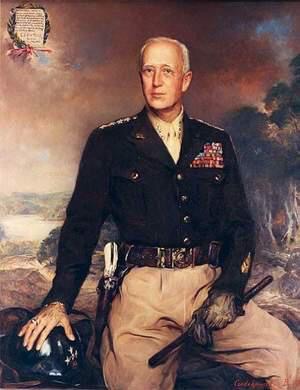
Today in History, September 22: 1945 –
Gen. George S. Patton gets himself fired. The war in Europe was over, and establishment of civil policies underway.
While talking to reporters, Patton comments that he doesn’t see the need for “this denazification thing”. Then he went on to relate the “Nazi thing” to Republicans and Democrats.
This was the final straw in regards to Patton saying what he thought in public. He had frequently gotten himself in hot water. His gaffs had been overlooked due to his talents on the battlefield. With the war over he no longer had this cover.
Had he articulated his views better he could have proven he was correct. Most of the “Nazis” that he wanted to leave in administrative positions were only German civilians who were Nazis because they didn’t want to cross the SS or Hitler. They kept the trains running on time, etc. They were not leaders. Patton had just spent years encouraging his soldiers to kill nazis. It is not reasonable to believe he was defending nazis.
Patton would never make it home, being killed in an automobile collision. But that is another story.
Years later, long after his death, of course, Patton would be proven correct during the Iraqi war. All of the “Bathists” were removed from their administrative positions and from the Iraqi army. And many of them had been part of the Bath party to survive. The move created many problems in the Iraq War.
“From Where the Sun Now Stands, I Will Fight No More Forever”

Today in History, September 21: 1904 –
“I am tired of fighting. “Our chiefs are killed. Looking Glass is dead. Toohoolhoolzote is dead. The old men are all dead. It is the young men who say, ‘Yes’ or ‘No.’ He who led the young men (Olikut, his brother) is dead. It is cold, and we have no blankets. The little children are freezing to death. My people, some of them, have run away to the hills, and have no blankets, no food. No one knows where they are—perhaps freezing to death. I want to have time to look for my children, and see how many of them I can find. Maybe I shall find them among the dead. Hear me, my chiefs! I am tired. My heart is sick and sad. FROM WHERE THE SUN NOW STANDS, I WILL FIGHT NO MORE FOREVER.”
Chief Joseph, who in 1877 had led his band of the Nez Perce in a running battle for 1400 miles in an attempted retreat into Canada from the US Cavalry, ending in his surrender to US troops under Gen. Nelson A. Miles, dies in Washington State. His people had been friendly with the white people since the time of the Lewis and Clark Expedition.
Goodbye 55
Today in History, September 20: 1995 – The US House of Representatives votes to approve the National Highway Designation Act, intended among other things to repeal the mandatory National Speed Limit of 55 MPH signed into law by President Nixon in 1974. The Emergency Highway Energy Conservation Act had been enacted as a response to the 70’s oil embargo by OPEC nations.
President Clinton would sign the law repealing it on November 28th, and speed limits would go back up almost immediately when it went into effect December 8th.