President James Monroe announces in his State of the Union address what will become known as the Monroe Doctrine…telling the European powers that America would not interfere in European conflicts (we didn’t want to and did not have the means anyway), and that America would police the western hemisphere…Europeans were to stay out. We couldn’t really enforce this doctrine at the time, but it was to England’s benefit…so the Royal Navy did so for us.
In 1904, when European powers attempted to collect on supposed debts the Americas, Theodore Roosevelt added the Roosevelt Corollary to the Monroe Doctrine. The Corollary again told outsiders that if there were problems in finances in Western Hemisphere countries, the US would handle it.
The Doctrine has been tested repeatedly over the years, most notably and dangerously during the Cuban Missile Crisis of 1962 when the Soviet Union attempted to place nuclear missiles 90 miles off America’s southern shores.PresidentKennedy responded with a Naval Embargo, and after a few days Soviet leaders blinked.
The Howe Brothers, Admiral Richard and General William, in command of the Engliah Army and Navy in the Americas issue a proclamation that American colonists who will “desist from treasonable acts and doings” would receive a pardon.
Of course, most of the colonists were determined. After the British signed the Treaty of Paris in 1783, those “Tories” that had accepted the offer, mostly New Yorkers, were evacuated by the British to Canada.
American railroads were hardly ever on time. Each depot was on a different time, since they used the path of the sun to determine what time it was. As a result, American railroads established a system of “time zones”, so that more of the country would be on the same time.
East, Central, Mountain and Pacific. Eventually cities and then the entire country would adopt the system.
The game had gone long and the New York Jets were defeating the Oakland Raiders 32-29.
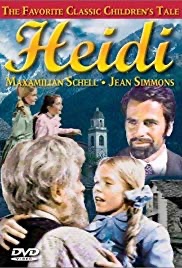
It had been a hard fought contest with lots of injuries and delays. NBC executives tried to call their studios to delay the 7 PM airing of “Heidi”, but the phone lines were jammed by viewers afraid they would miss part of the game. As a result the game dropped in the Eastern time zone and Heidi began.
With only a minute left in the game (who knew), The Raiders scored twice, winning a surprise victory 43-32.
Broadcasters now have dedicated phone lines known as “Heidi phones” to ensure communication with their studios.
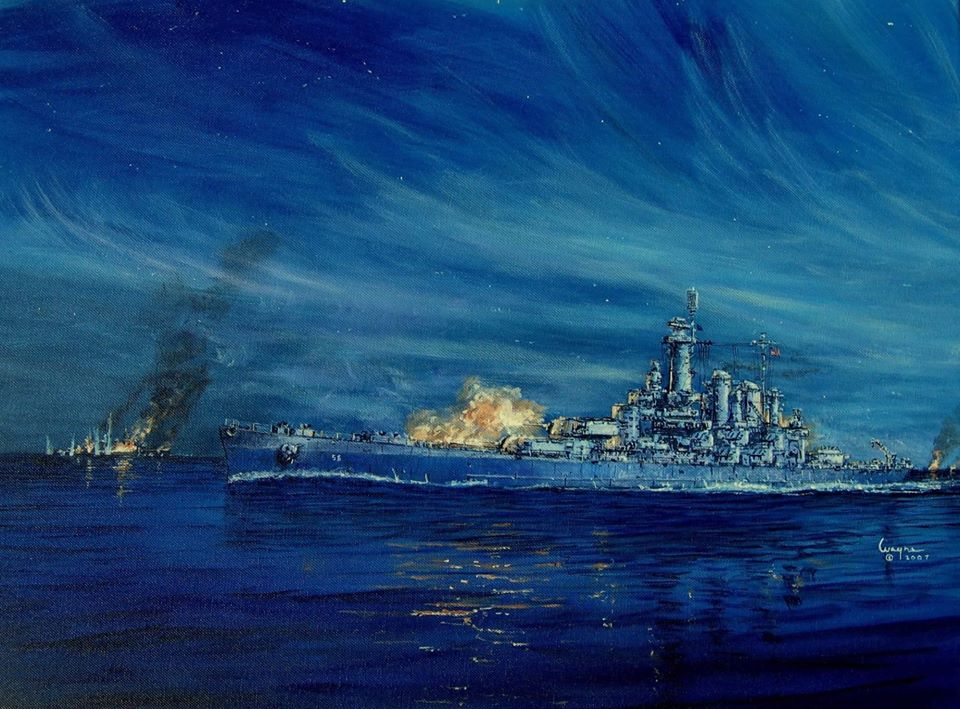
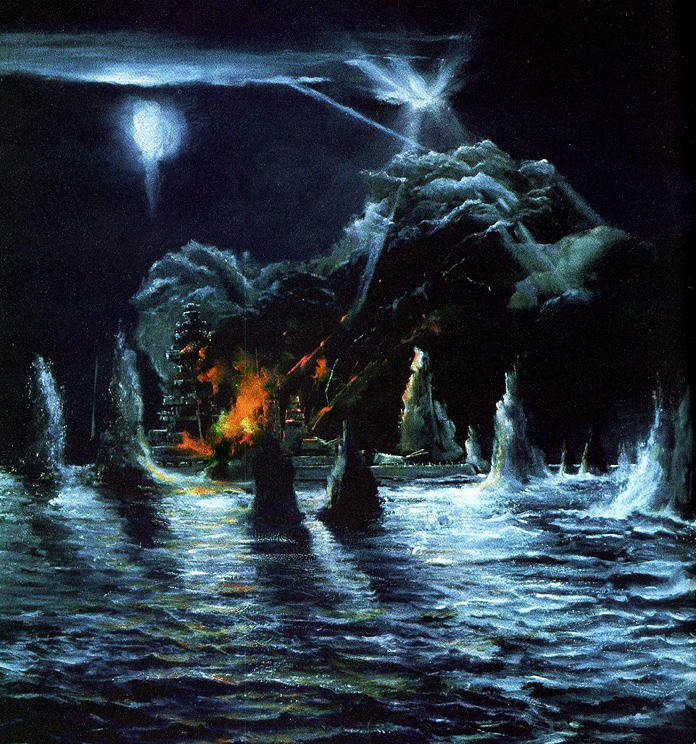
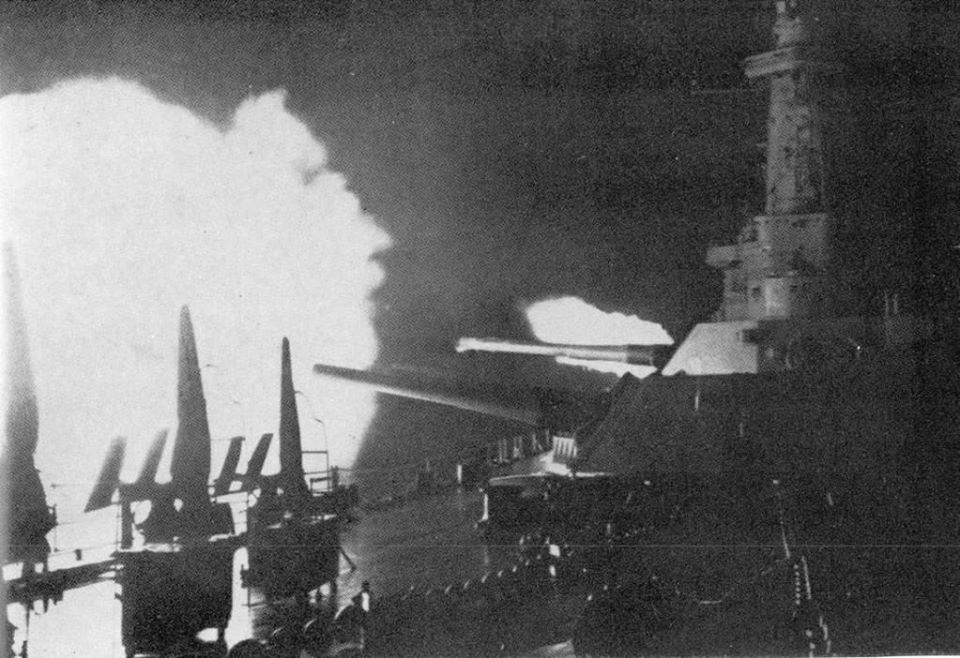
The First Naval Battle of Guadalcanal takes place in what would become known as “Iron-bottom Sound” off Guadalcanal.
US intelligence had warned US Navy forces that the IJN planned to bombard Henderson Field and its Marines, and land reinforcements on the embattled island.
Admirals Callahan and Scott took their forces to interdict IJN Admiral Abe’s forces. In a fierce, confusing, intense night action the Japanese won a tactical victory by sinking more American ships, while the Americans won a strategic victory…Henderson was not bombarded and the American troop ships remained undamaged.
But it came at a heavy cost for both sides.
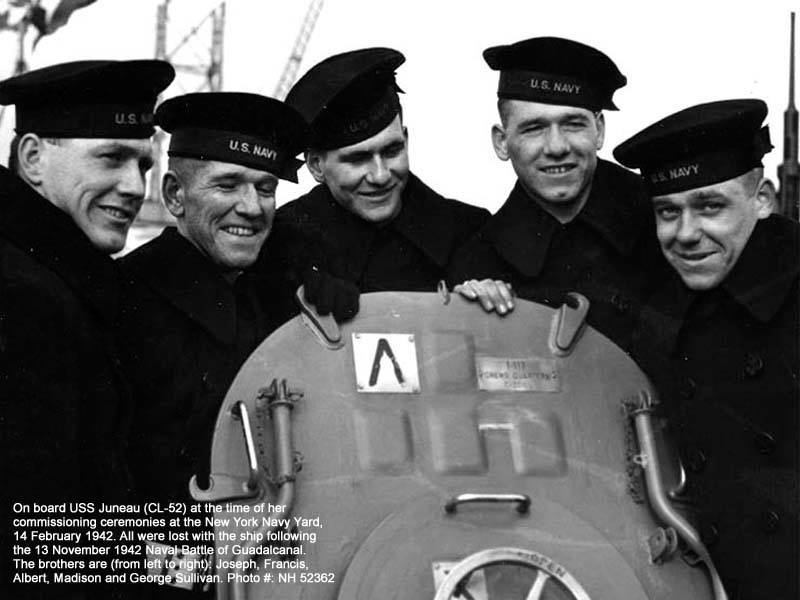
Admirals Callahan and Scott would be the only US Admirals to be killed in direct ship to ship combat in the war, and aboard the USS Juneau, the five “Fighting Sullivan” brothers would all be lost. Of course many more Americans died that night, good Irish names or not.
For the Japanese, surviving battleship Hiei, among others, would fall prey to air attacks from Henderson, Espirito Santo, and the USS Enterprise. And this was only the beginning of the battle. The American aircrews missed by the Japanese were eager to get some retribution for their big gun Navy comrades.
Lessons came out of the devastation. Commanders learned how to utilize their newly assigned radar equipment to their advantage; they learned how effectively trained the Japanese were at night fighting.
And, they changed the rules to forbid siblings and close relatives from serving in the same units…so some poor Officer wouldn’t have to knuckle a door and tell a mother that ALL FIVE of her sons who she had raised and loved were gone from one horrific action.
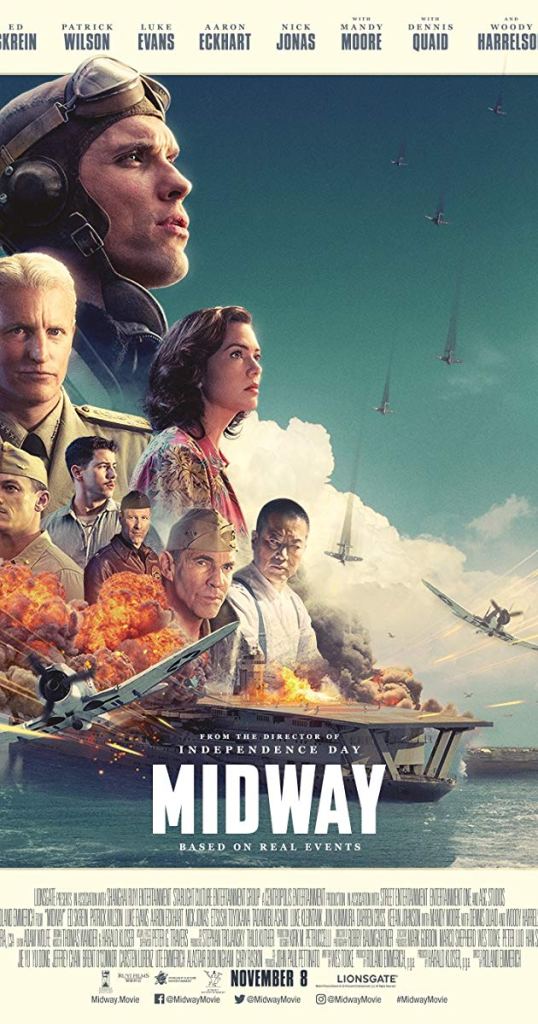
I have been looking forward to the movie “Midway” for some time. I’ve read criticisms of the film, however my opinion was that judgment should be withheld until I watched it for myself.
First, I was not disappointed. While there are subjects I believe may have been done better, I have absolutely no complaints. I could tell the producers of the film attempted to remain true to the history of the events. There were some details left out, some details were a little inaccurate; however with such a complex story I would not expect them to get everything right.
First for my opinion of a couple of the most often repeated criticisms. “I liked the original better.” The 1976 movie Midway was not the “original” any more than there is an original movie about D-Day or Gettysburg. The original Midway was a battle in June of 1942, and that is the only standard to which any movie on the subject should be held. I liked the 1976 movie also, the cast was spectacular. But the Henry Fondas and Hal Holbrooks are gone.
Henry Fonda will always be my closest image of Nimitz, short of the man himself. However I believe Woody Harrelson did a commendable job of portraying Admiral Nimitz. He lent a sense of humor and chain smoking which they probably would not allow Fonda to portray in ’76. I had problems with some of the details, but that is probably more on the writers. I won’t go into it simply because the movie is just released and I don’t want to add any spoilers.
“The CGI is like a video game.” Okay. Perhaps. But what is the alternative? Even those of us who liked Midway ’76 were frustrated with stock footage of carriers and aircraft that did not exist in 1942 because that is what the producers in ’76 had to work with. Nobody could or would actually build a Yorktown class carrier or numerous Dauntless, Devastator, Zero or Kate aircraft. We are truly blessed to live in a time when Hollywood can recreate with special effects mostly accurate depictions of the ships and aircraft involved. It was the closest I will ever come to seeing The Big E in action, short of the small amount of actual combat footage available.
As much as I enjoyed it, I have to wonder if by spending so much time depicting Pearl Harbor, the Doolittle Raid and the Marshall Island Raid, if the producers shorted themselves too much in the time necessary to develop the characters of anyone other than Dick Best. Namely Nimitz, Halsey and Spruance.
I was very happy to see they decided to portray Bruno Guido’s story so prominently. Again, there were some details which were inaccurate or not detailed enough, but I don’t want to add in spoilers.
I have some questions which I would have to do research on. Did McClusky and Best really have such a contentious relationship? Were the combat sequences just a little overdone? Or incredibly overdone? Were Japanese bombers and fighters really flying parallel and between the occupants of Battleship Row repeatedly ala Star Wars? I never had the impression they were.
Overall I believe the producers put a good effort into making the movie historically accurate, and I’m very happy that a new generation will be exposed to the incredible story of the Midway Battle.
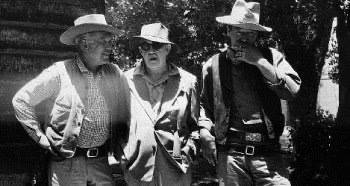
Ward Bond, John Wayne and director John Ford had made dozens of movies together over the years.
Ward Bond was a prolific actor, making as many as 30 movies in a single year. Of the AMA’s 100 top movies, he appeared in 7…more than any other actor, to include Gone With the Wind, The Grapes of Wrath, The Maltese Falcon, It’s a Wonderful Life and The Searchers.
While staring in “Wagon Train” he went to Dallas, Texas to see a ball game and died of a massive heart attack on this date.
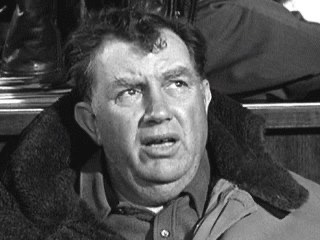
He, Wayne and Ford were all best friends and prolific drinking buddies, in addition to Andy Devine.
Like any good friend, and likely heartbroken, at Bond’s funeral, John Ford walked up to Devine and said, “Now YOU’RE the biggest asshole I know.”
Several Catholic conspirators had hatched a plan to blow up the Parliament building in London while the king and parliament met.
One of the conspirators told a relative not to attend, and that relative told authorities. On the night of November 5th, conspirator Guy Fawkes was caught lurking in the basement of the building, and subsequently 20 barrels of gunpowder he had hidden there were located.
Fawkes named his conspirators under torture. Several, including Fawkes, were sentenced to be drawn and quartered. As Fawkes climbed a ladder to the gallows, he jumped to his death.
Today is Guy Fawkes day in England, celebrating the failure of the plot.
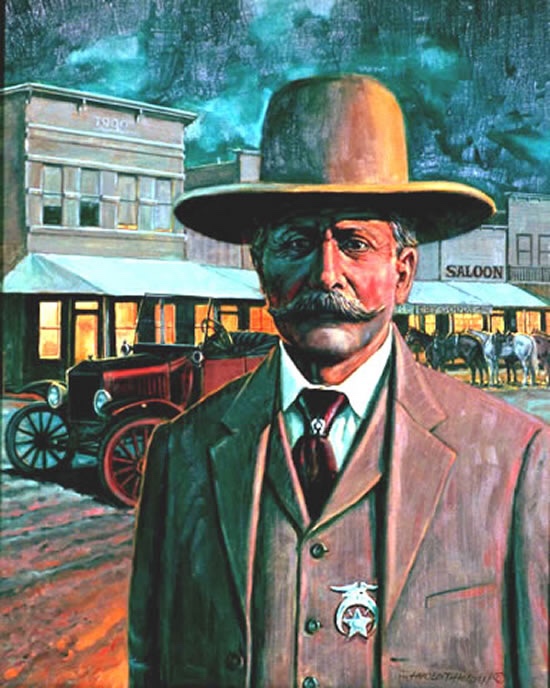
1924 – This should make you Oklahoma proud. Law enforcement proud. THIS is what its all about: On this day, William Tilghman is murdered by a corrupt prohibition agent who resented Tilghman’s refusal to ignore local bootlegging operations. Tilghman, one of the famous marshals who brought law and order to the Wild West, was 71 years old.
Known to both friends and enemies as “Uncle Billy,” Tilghman was one of the most honest and effective lawmen of his day. Born in Fort Dodge, Iowa, in 1854, Tilghman moved west when he was only 16 years old. Once there, he flirted with a life of crime after falling in with a crowd of disreputable young men who stole horses from Indians. After several narrow escapes with angry Indians, Tilghman decided that rustling was too dangerous and settled in Dodge City, Kansas, where he briefly served as a deputy marshal before opening a saloon. He was arrested twice for alleged train robbery and rustling, but the charges did not stick.
Despite this shaky start, Tilghman gradually built a reputation as an honest and respectable young man in Dodge City. He became the deputy sheriff of Ford County, Kansas, and later, the marshal of Dodge City. Tilghman was one of the first men into the territory when Oklahoma opened to settlement in 1889, and he became a deputy U.S. marshal for the region in 1891. In the late 19th century, lawlessness still plagued Oklahoma, and Tilghman helped restore order by capturing some of the most notorious bandits of the day.
Over the years, Tilghman earned a well-deserved reputation for treating even the worst criminals fairly and protecting the rights of the unjustly accused. Any man in Tilghman’s custody knew he was safe from angry vigilante mobs, because Tilghman had little tolerance for those who took the law into their own hands. In 1898, a wild mob lynched two young Indians who were falsely accused of raping and murdering a white woman. Tilghman arrested and secured prison terms for eight of the mob leaders and captured the real rapist-murderer.
In 1924, after serving a term as an Oklahoma state legislator, making a movie about his frontier days, and serving as the police chief of Oklahoma City, Tilghman might well have been expected to quietly retire. However, the old lawman was unable to hang up his gun, and he accepted a job as city marshal in Cromwell, Oklahoma. Tilghman was shot and killed while trying to arrest a drunken Prohibition agent.
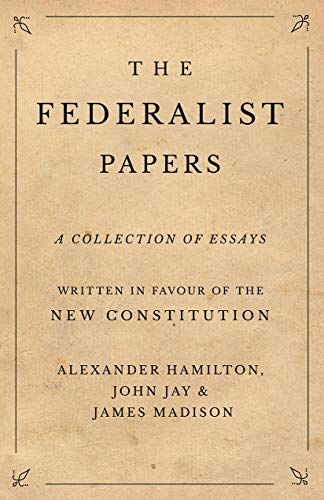
The first of 85 Federalist Papers are published in New York’s Independent Journal.
A collaboration between Alexander Hamilton, James Madison and John Jay, published under the name “Publius”, the Papers used eloquence and remarkable examples from the history of governments, ancient and modern at that point to advocate the ratification of the new Constitution recently approved by a constitutional convention.
They were selling an idea abhorrent to most Americans who had just won a hard fought battle for independence – a strong central government.
If you are into that sort of thing, they are worth reading. You will find examples of the genius of our government and of how our government has been changed from the vision of our founding fathers.
But for the most part, the well thought out form of government they designed has survived the ravages of time and the attempts of less ethical men to corrupt it.


 Broadcasters now have dedicated phone lines known as “Heidi phones” to ensure communication with their studios.

 Mark Loves History!