Before They Became Enemies, They Were Brothers

Today in History, March 29, 1847:

The siege of Veracruz, Mexico, led by American General Winfield Scott, is completed successfully with the capture of Veracruz by American forces after the first amphibious landing by American troops.

This was important by itself…but it added to the historical record, because many of the comrades in arms at Veracruz would, within 13 years, despite their loyalty to each other, become devout enemies.

Fighting together at Veracruz were Robert E. Lee, George Meade, Ulysses S. Grant, James Longstreet, and Thomas “Stonewall” Jackson. Some would be Unionists, some Confederates…but before the Civil War, they are comrades.

Congress Censures Jackson

Today in History, March 28, 1834:

For the first time, Congress censures an American President, Andrew Jackson.

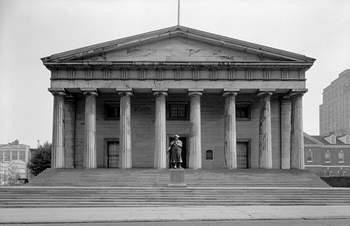
Jackson wanted to dismantle the 2nd “Bank of the United States”. With nearly all of the country’s finances controlled by a central bank, the ultra wealthy that controlled the bank had an inordinate amount of power. With this power they controlled economic and political events, more so than the government or the people.

Jackson (man of the people), angered by many of their actions, vetoed a Congressional act to renew the bank’s charter. He then had the treasury divide the funds formerly controlled by the Bank of the United States amongst numerous state banks, who were more willing to give loans to common citizens and to invest in western interests.

History.com’s report indicates that Democrat Jackson had more personal reasons, and that the dispute was to a large extent between him and Senator Henry Clay, who History.com identifies as a Whig, then in parenthesis indicates a Whig is the same as a Republican.

After listening to a biography of Jackson, I found that Jackson’s motives were more pure…he was the first President to come up from a hardscrabble life and resented the bank’s refusal to help lower income Americans.

Some of my other reading has taught me that Whig does not equal Republican. In 1854 (20 years after these events) several Whig politicians (including Abraham Lincoln) broke away from the Whig party and created the Republican party because they were abolitionists and felt the Whig party was not living up to their ideals. I don’t know whether the History Channel misreported these subjects intentionally, or out of simple error. Either way, don’t assume something is accurate simply because it made it into print. Study it for yourself, whether its history or politics. Which often are intertwined.

Cherry Blossoms

Today in History, March 27, 1912:

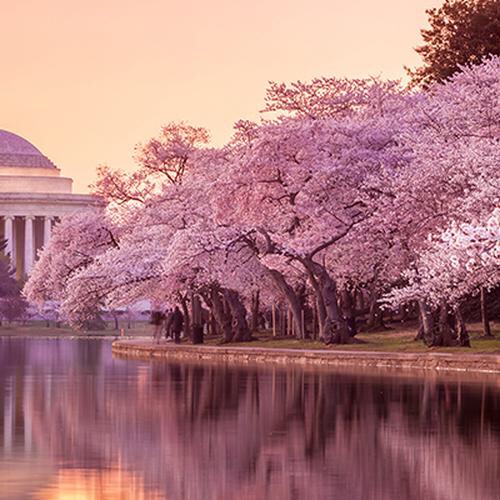
First Lady Helen Taft and the wife of the Japanese Ambassador, Viscountess Chinda, plant two Cherry Blossom trees along the Potomac near the Jefferson Memorial.

They were part of 3,020 Cherry Blossom trees given to the US by the Japanese to be planted in DC. The city of Tokyo had actually given 2,000 trees in 1910, but they were diseased by the time they reached the US and could not be used.

A private Japanese citizen then paid to have the 3,020 trees sent in their place. The beautiful trees bloom each Spring, and are the subject of festivals.

The trees came from a famous collection in Tokyo, which was mostly destroyed during bombing in WWII. After the war, the US sent cuttings from DC’s trees to replenish the Tokyo collection from whence they came.

Six Frigates…The US Navy Makes a Name for Itself

Today in History, March 27: 1794:

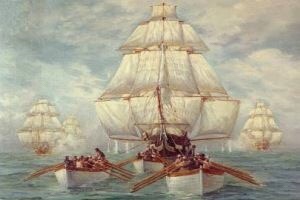
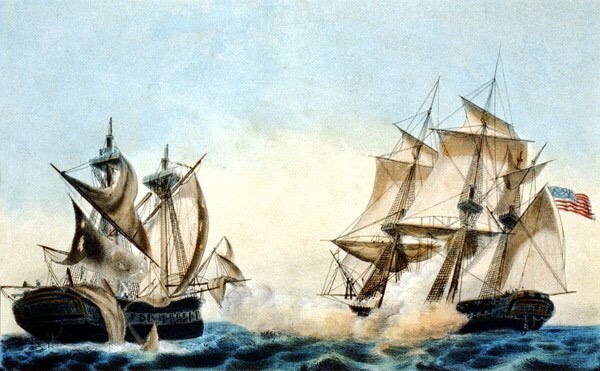
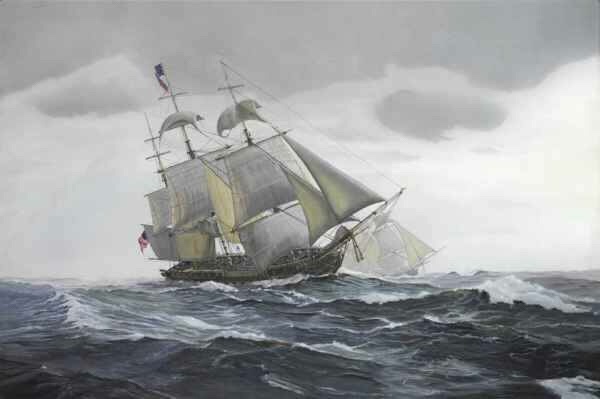
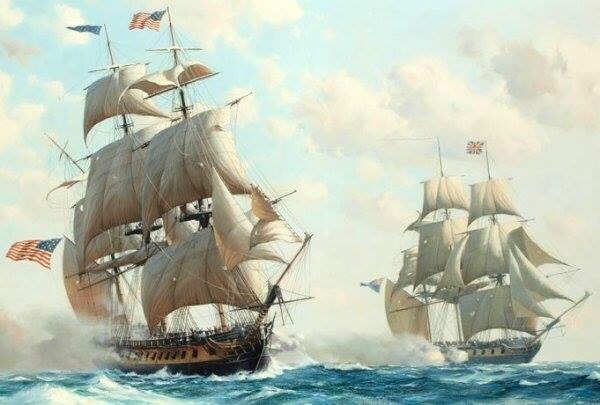
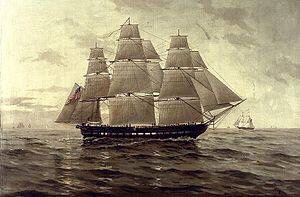
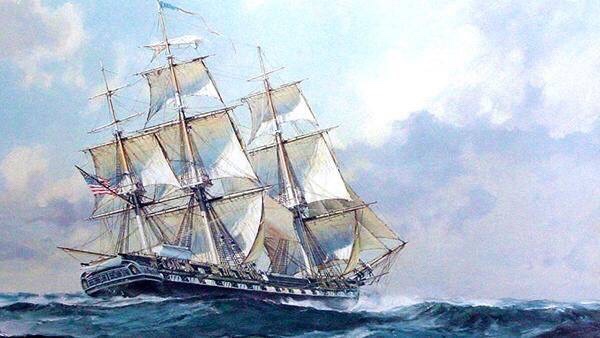
President Washington signs the Naval Act of 1794, ordering the construction of 6 Frigates capable of high speed and of holding their own against “ships of the line.”

After the Revolutionary War, America didn’t feel it needed a navy; after having several ships seized by Barbary pirates, and after abuses by the Royal Navy, the administration and Congress came to the realization that America needed a navy to protect it’s shipping.

Thus the USS Constitution (Old Ironsides, oldest commissioned US Navy vessel), USS Constellation, USS President, USS Congress, USS United States and the USS Chesapeake began their illustrious Naval careers.

The Birth of Naval Aviation. Samuel Langley and Theodore Roosevelt Together Again…

530155_2490408238323_104830550_n

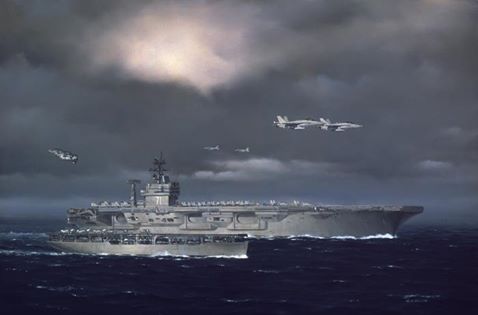
Today in History, March 25: 1898 – Assistant Secretary of the Navy Theodore Roosevelt (that crazy cowboy) proposes that the Navy investigate the use of a flying machine being researched by Samuel Langley. As a result, congress authorized $50,000 to support Langley’s design. This was nearly a decade before the Wright Brothers accomplished the first manned, powered flight, but many people had been working on the challenge for years. Langley’s, and Roosevelt’s insight was the beginning of US Naval Aviation. Check out this print by R.G. Smith, which portrays the 1st US aircraft carrier, the USS Langley (CV 1), and the nuclear powered aircraft carrier USS Theodore Roosevelt (CVN 71) cruising together. Of course this is inspired imagination…Langley, converted to a sea plane tender, was lost in WWII.

The Langley was converted from the Collier USS Jupiter in 1920. By WWII she had been converted to a seaplane tender, her larger subsequent sisters taking on the aircraft carrier role. Attempting to deliver p-40 fighter planes to Java, on February 27, 1942 she was attacked by Japanese aircraft and damaged so badly she had to be scuttled.

Exxon Valdez…Disaster in Paradise

Today in History, March 24, 1989:

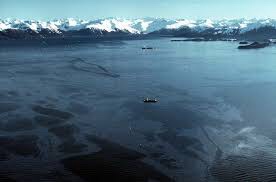
The Exxon Valdez, an oil tanker which had just filled up and was headed through Prince William Sound, Alaska, runs aground on Bligh Reef.

The rupture in the tanker’s hull allowed nearly 11 million gallons of oil to spill into the waters of the Sound and The Gulf of Alaska.

Over the next several days the crude eventually spread over approximately 1300 miles if pristine Coastline in what is arguably the last wild frontier.

Hundreds of thousands of fish, birds and other animals that make Alaska and its waters home were defenseless against the sudden onslaught. Many were rescued by volunteers equipped with dish soap, while many more died.

Exxon, the government and others tried several methods in attempts to clean up the mess, but what I’ve read indicated the results were meager, and nature is doing a better job of healing the Unfathomable damage itself. Still, almost 30 years later, the effects of the crew and company’s irresponsibility remain.

Exxon estimates it spent approximately 2.1 billion dollars on cleanup.

In the end a price or cost from the disaster can’t be quantified.

Give Me Liberty, or Give Me Death!

Today in History, March 23: 1775 – “Is life so dear, or peace so sweet, as to be purchased at the price of chains and slavery? Forbid it, Almighty God! I know not what course others may take; but as for me, GIVE ME LIBERTY, OR GIVE ME DEATH!” Patrick Henry implores his fellow legislators at the Virginia Convention for separation from England. Henry, the son of Scottish immigrant, had failed at business twice before becoming a successful lawyer. He became part of the Virginia legislature and soon became a talented politician. Considered one of the Founding Fathers, he risked his life to see America free. After freedom was won, he was an ardent opponent to the federalist system, believing any affront to states rights would destroy individual rights.

Fighting the Good Fight…and Consequences

Today in History, March 22: 1871:

North Carolina Governor William Holden (no, not THAT William Holden) is removed from office by impeachment…the first US Governor to receive this punishment.

His crime? Holden was a Republican and an abolitionist…during his tenure as Governor he hired two dozen detectives to hunt down the leaders of the NC KKK, got a bill passed that called out the militia against the KKK, and suspended habeas corpus to enhance his ability to prosecute the leaders of the Klan.

In 1870 the state’s Democrats won the legislature and quickly moved to impeach Holden for his hard-handed tactics against the KKK.

Holden had enacted these actions to counter the assassination of a Republican Senator and the hanging of an African-American police officer, amongst other crimes. In 2011, the entirety of the North Carolina Senate voted to pardon Holden.

Alcatraz

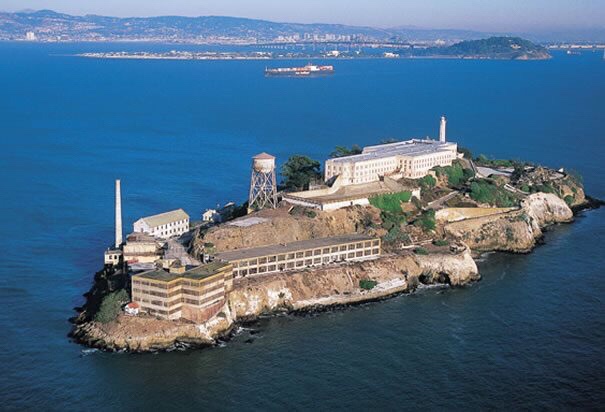
Today in History, March 21: 1963 – Alcatraz, the preeminent, harshest prison in the federal system, closes and the worst of the worst are transferred to other prisons in the system. Alcatraz was know for the impossibility of escape due to it’s placement on an island in San Francisco Bay. It had been a military outpost designed to protect shipping in the Bay before becoming a prison. Now it is a Historic site and tourism destination.

Ride, Boldly Ride…

Today in History, March 20, 1616:

Gaily bedight,

A gallant knight,

In sunshine and in shadow,

Had journeyed long,

Singing a song,

In search of Eldorado.

But he grew old—

This knight so bold—

And o’er his heart a shadow—

Fell as he found

No spot of ground

That looked like Eldorado.

And, as his strength

Failed him at length,

He met a pilgrim shadow—

‘Shadow,’ said he,

‘Where can it be—

This land of Eldorado?’

‘Over the Mountains

Of the Moon,

Down the Valley of the Shadow,

Ride, boldly ride,’

The shade replied,—

‘If you seek for Eldorado!’

-Edgar Allen Poe

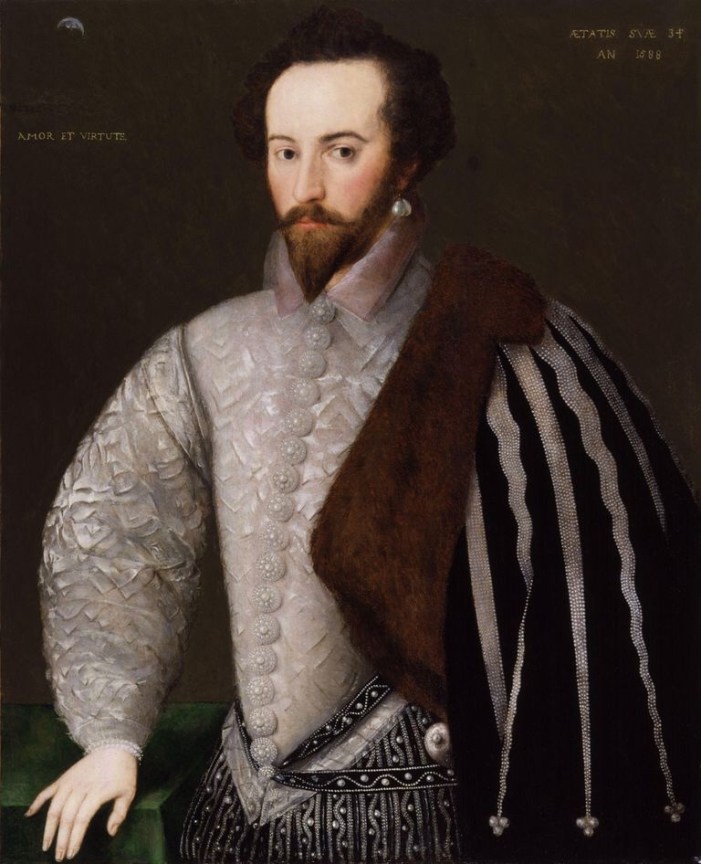
On this date in 1616, Sir Walter Raleigh, English courtier and explorer, was released from confinement in the Tower of London (for the second time) so he could lead an expedition to the Americas in search of the fabled City of Gold, Eldorado (for the second time.)

In his lifetime Sir Raleigh explored Virginia, being instrumental in its settlement. He also was instrumental in popularizing the import and use of tobacco in England.

During his second search for Eldorado some of his men raided a Spanish outpost, which violated a treaty of peace between the two nations.

As a consequence, when he returned home, he was arrested and executed.