The Philippine – American War

Today in History, February 4: 1899 –

The beginning of the Philippine-American War. The Americans had won the Spanish-American War, obtaining several Spanish colonies in the process.

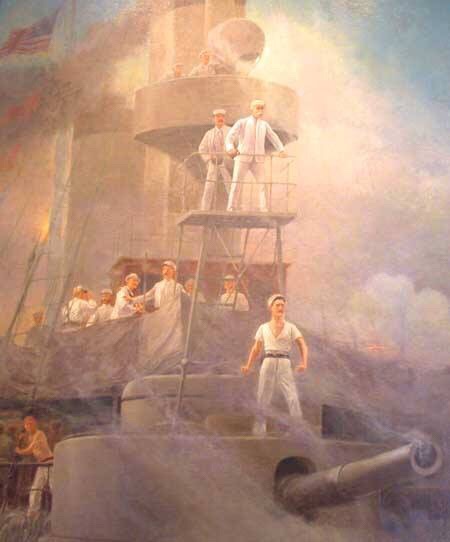
The Americans knew the value of Cuba, but even President McKinley had to have the Philippines, where Admiral Dewey had won a tremendous naval victory, pointed out to him on the map.

McKinley commented that he wished Dewey had just sailed away after the victory…what was America to do with the Pacific Island nation??

But after further research, it was discovered that Germany would love to obtain the opportunities for a coaling station and empire. America and their British allies couldn’t have that. So the US annexed the Philippines…for the time being.

The Philippinos, who some in the US saw as “Indians” of the west…thinking the US was a liberator, turned to war for their independence. Oddly enough, the Americans did see themselves as liberators, having no desire for traditional imperialism. After 4 years of war, a compromise was reached. The Philippines would eventually be an independent nation.

The Fifteenth Amendment

Today in History, February 3: 1870 –

“Section 1. The right of citizens of the United States to vote shall not be denied or abridged by the United States or by any State on account of race, color, or previous condition of servitude.

Section 2. The Congress shall have power to enforce this article by appropriate legislation.”

The Fifteenth Amendment to the US Constitution is ratified, solidifying the rights of African-Americans to vote. This and several other legislative actions were passed by the Republican majority after the Civil War in the advancement of civil rights in America.

They Found What on The Land We Sold??

Today in History, February 2: 1812 –

The Russian government establishes Fort Ross…just north of San Francisco on the California coast. The Russians had been in western America since 1741 (Alaska) and needed Ft. Ross as a base and farming area to supply their sea otter operations farther north.

The farming in the area proved poor, the competition with Mexican nationals and Americans moving west proved too much. In 1841 Russia sold the fort to American John Sutter for $30,000 which he reportedly never paid. He used the supplies at the fort for his Sacremento Valley settlement where gold would be discovered 7 years later.

The Thirteenth Amendment

Today in History, February 1: 1865 –

“Section 1. Neither slavery nor involuntary servitude, except as a punishment for crime whereof the party shall have been duly convicted, shall exist within the United States, or any place subject to their jurisdiction.

Section 2. Congress shall have power to enforce this article by appropriate legislation.”

One day after Congress passed the Thirteenth Amendment to the US Constitution, President Abraham lincoln signs the act outlawing slavery.

It would take until December of the same year for enough states to ratify the amendment so that Secretary of State William Seward could proclaim it the law of the land. Of course Lincoln would give his life the cause of Union and freedom before then.

The Importance of Being Thorough…

Today in History, February 1, 1942:

Less than two months after the bombing of Pearl Harbor, the US Navy strikes back.

Task Forces built around the USS Yorktown (CV-5) and USS Enterprise (CV-6) sped in quickly in cover of darkness, then struck at Japanese air bases and shipping in the Marshall Islands. The US aircrews made repeated sorties against the islands throughout the day, until Admiral William Halsey decided they had pressed their luck enough and ordered a withdrawal…the carriers and their support ships were valuable and in short supply.

The air raid did little damage…however it was a tremendous morale booster for the military and the folks at home, and brought home the realization to the Japanese that they could be “touched.”

Now for a History link…I love those. While the US had significant facilities in parts of the Pacific, they had spent little in Japanese held areas before the war.

The command staff and they flyers involved were using the very latest charts and maps they had of Kwajalein Atoll and the Marshall Islands…they were at least 100 years old in 1942.

In 1838, wanting to join the scientific communities of the European nations, the United States authorized and supplied six ships commanded by Lt. Charles Wilkes to explore the Antarctic region, the Northwest and Western coastal regions of the US and the Pacific.

During a more than 3 year circumnavigation of the world, the “US Ex Ex”, or US Exploring Expedition collected more than 4,000 scientific samples, documented their contacts with peoples along their route, and meticulously charted the many islands, bays, inlets, etc they found. Wilkes was very dedicated to this portion of the Expedition, much to the annoyance of the scientists aboard.

Wilkes lengthy US Navy career would bring him to fame again during the Civil War with the Trent Affair…but that’s another story.

As he was charting the Marshalls, his intent was for whalers and other ships to make use of his efforts…he almost certainly couldn’t imagine massive ships carrying aircraft which would drop explosives on the Pacific paradise 100 years hence.

Naval Satellite Communication

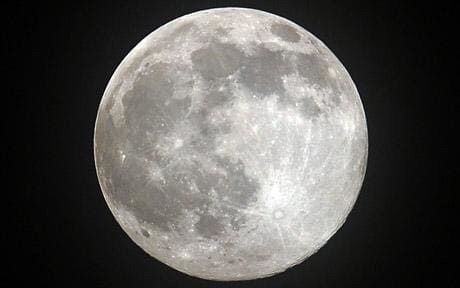
Today in History, January 28: 1960 – US Navy Chief of Naval Operations Arleigh Burke uses the first satellite communications system, developed by the Naval Research Laboratory, to send a secure radio message from Washington DC the Commander of the Pacific Fleet in Hawaii. The satellite? The moon.

A system had been developed to bounce high frequency radio waves off of the moon, creating a stable world wide communications system for the Navy. It would be used until the late sixties when man made satellites were in place.

First Casualties in American Space Exploration

Today in History, January 27, 1967:

The crew of Apollo 1, Gus Grissom, Edward White II and Roger Chafee are performing a test launch in the command module of their craft when fire breaks out.

The test was considered to be a no risk event, as fuel had not yet been loaded. However the capsule was filled with a volatile level of oxygen and too many flammable materials. The escape hatch design required too much time for removal in the event of emergency.

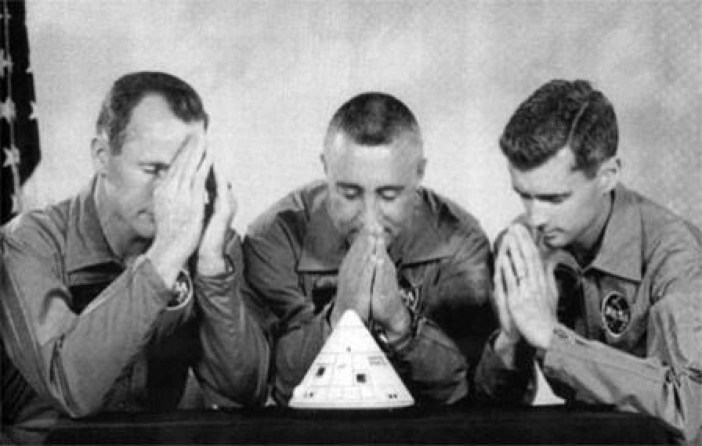
The astronauts had expressed concerns about the safety of the craft during previous testing, going to the effort to provide the project’s chief with a photo of them praying in from of a model of the capsule, “It isn’t that we don’t trust you, Joe, but this time we’ve decided to go over your head.”

The testing had been paused more than once that day to work on issues, such as Grissom’s mic being stuck open. At 6:31 PM the astronauts first reported a fire in the cockpit. With a matter of seconds they spoke of it twice more. The fire spread quickly in the small space, killing all three men.

Autopsy results indicated all three died of cardiac arrest from high concentrations of carbon monoxide.

Grissom, White and Chafee were the first courageous astronauts to die in the NASA program, but they would not be the last. With all of the dangers involved in the new frontier, it is amazing NASA has the safety record it does.

Rocky Mountain National Park Joins the National Park System

Today in History, January 26: 1915 –

President Woodrow Wilson signs a bill creating the Rocky Mountain National Park on the Front Range of the Rocky Mountains in Northern Colorado.

Inspired by former President Theodore Roosevelt’s creation of National Parks, Colorado naturalists campaigned for the park and succeeded.

During the 1930’s, TR’s cousin Franklin Delano Roosevelt created the Civilian Conservation Corps during the Great Depression, which, among many other things, built a great deal of the infrastructure in RMNP. If you’ve never been, you should add it to your bucket list…it is magnificent.