Six Frigates…The US Navy Makes a Name for Itself

Today in History, March 27: 1794:

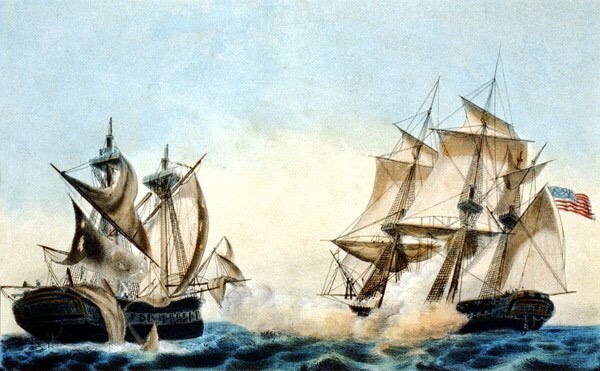
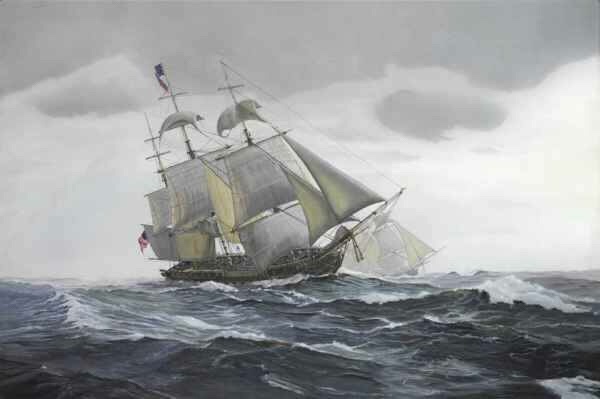
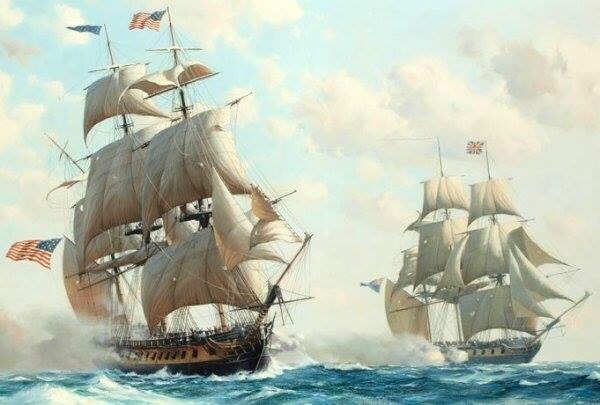
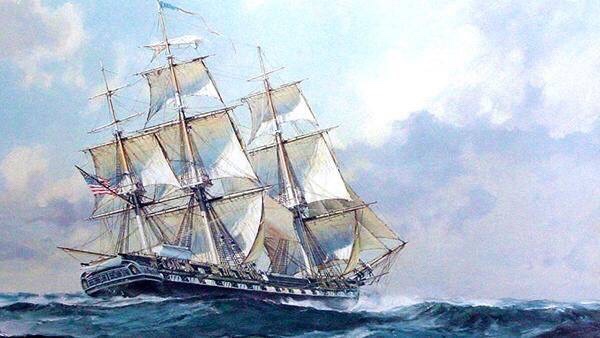
President Washington signs the Naval Act of 1794, ordering the construction of 6 Frigates capable of high speed and of holding their own against “ships of the line.”

After the Revolutionary War, America didn’t feel it needed a navy; after having several ships seized by Barbary pirates, and after abuses by the Royal Navy, the administration and Congress came to the realization that America needed a navy to protect it’s shipping.

Thus the USS Constitution (Old Ironsides, oldest commissioned US Navy vessel), USS Constellation, USS President, USS Congress, USS United States and the USS Chesapeake began their illustrious Naval careers.

Give Me Liberty, or Give Me Death!

Today in History, March 23: 1775 – “Is life so dear, or peace so sweet, as to be purchased at the price of chains and slavery? Forbid it, Almighty God! I know not what course others may take; but as for me, GIVE ME LIBERTY, OR GIVE ME DEATH!” Patrick Henry implores his fellow legislators at the Virginia Convention for separation from England. Henry, the son of Scottish immigrant, had failed at business twice before becoming a successful lawyer. He became part of the Virginia legislature and soon became a talented politician. Considered one of the Founding Fathers, he risked his life to see America free. After freedom was won, he was an ardent opponent to the federalist system, believing any affront to states rights would destroy individual rights.

Revolutionary Irish

Today in History, March 17: 1780 – “The General directs that all fatigue and working parties cease for to-morrow the SEVENTEENTH instant,” read the orders, “a day held in particular regard by the people of [Ireland].”

General George Washington’s Army was bedded down amidst 6 foot snow drifts, suffering through the worst winter on record…even worse than Valley Forge.

Recently the Irish, who were also in rebellion against the Crown, had declared themselves AMERICANS in solidarity with the American colonists that were fighting for their independence.

At least a quarter of Washington’s army was Irish…and a vast majority of his commanders shared that distinction. So GW decided that St. Patrick’s Day…(not Christmas, nor Easter)…would be a day of rest and celebration for his army.

The Boston Massacre

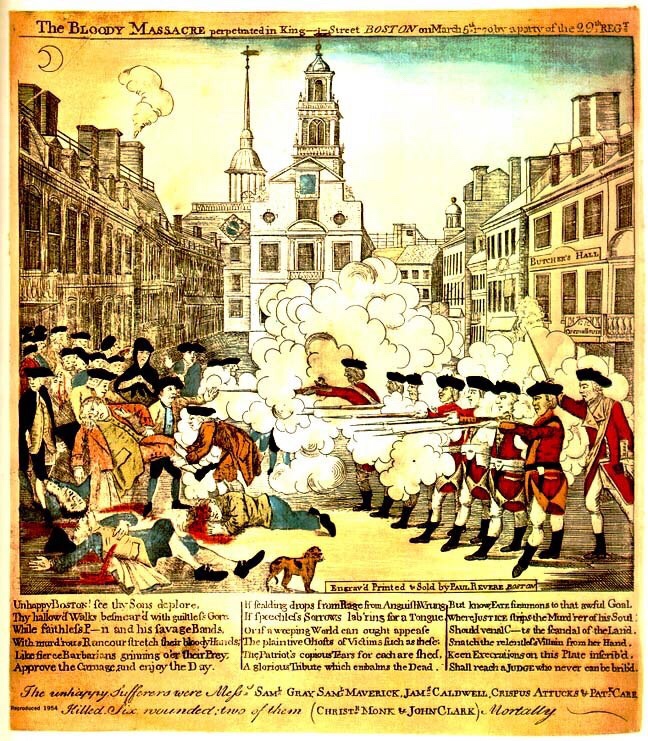
Today in History, March 5: 1770 – The Boston Massacre. American colonists, and Bostonians in particular, had been up in arms over unfair taxation without representation by their British rulers. Britain sent a contingent of soldiers to enforce the taxation and rules in Boston. After brawling with the “continentals” a few days before, they were faced with a crowd of citizens protesting outside of the Customs House. Being pelted with snowballs from the citizenry, they fixed bayonets. Most accounts are that a British soldier either slipped or was pelted with snowballs and his musket fired…then the rest of the soldiers began firing into the crowd. When it was over, five civilians were dead or dieing. Crispus Attucks, Patrick Carr, Samuel Gray, Samuel Maverick and James Caldwell. These are considered the first casualties in the American Revolution. Paul Revere made an engraving of the incident which was widely published (went viral in today’s parlance).

Commander of the Militia

Today in History, February 17: 1621 –

Mayflower passenger and military officer Myles (Miles) Standish is elected by the Plymouth Colony as commander of it’s militia.

He would take on various governmental roles, and represent the colony in England, but the militia would repeatedly re-elect him as it’s commander until is death at 72 in 1656. In his later years he served more of an advisory role, having retired to his farm.

The Real “First” World War?

Today in History, February 10: 1763 –

“The Seven Years War”, or as it was known in the colonies, “The French and Indian War” ends with the Treaty of Paris. Britain and France had been battling for years in America, Europe, India and on the high seas over their competing imperial interests. Spain had taken sides with France. Both Britain and France had their allies in what could be considered a World War.

After several British victories on land and at sea, and after several of France’s allies had signed separate peace treaties, France and Spain finally came to the table. France gave up several of her holdings including in Canada, America and India.

The Spanish received the Louisiana Territory, the British received Spanish Florida.

Probably the most important issues for the American colonies however, are these: Many Americans, such as George Washington, gained extensive military experience fighting the French and their Indian allies during the war. And when Americans decided less than two decades later to fight for their independence from the British Crown, the French had a grudge to settle; it wasn’t that difficult for Ben Franklin to convince France to come in on the side of the Colonials. French Naval might was pivotal to the American victory.

The Great White Fleet

Today in History, December 16: 1907 –

The Great White Fleet, a task group of 16 American battleships and their support ships, sets sail from Hampton Roads, Virginia beginning a world good will tour, circumnavigating the Earth. President Theodore Roosevelt had long been a proponent of sea power in line with the teachings of Admiral Alfred Thayer Mahan, that a strong Navy could project authority world wide. The fleet of white warships were to provide cordial visits to ports in nations that were potential adversaries, most prominently, Japan. There were many other purposes, such as improving morale and patriotism during a depression at home, and research to improve the seagoing capabilities of the US Navy. The Great White Fleet displayed to the world something that still stands today, although greatly enhanced. That the US Navy could project American influence anywhere in the world. The journey would take 14 months until February of 1909, and would take the fleet through the dangerous Straits of Magellan and across the Pacific. The event was a sensation the world over, as moving so many coal powered ships so far was a remarkable achievement.

Evacuation Day

Today in History, November 25: 1783 –

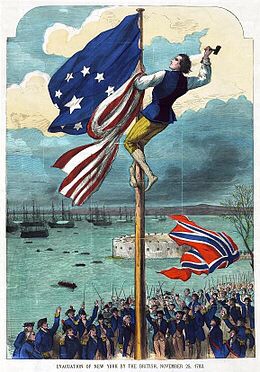
After seven years of occupation, the last British troops depart New York City, three months after the Treaty of Paris was signed ending the American Revolutionary War.

At the outset of the war Gen. George Washington had wanted to fight to keep NYC, but after losing tactically to British forces, had to flee with his army in the dark of night. NY would remain in British hands throughout the war.

After the last British troops left, Gen. Washington entered the city to great fanfare from its citizens.

He would later be inaugurated as the first President in the city that would become the nation’s first capitol.

Today in History, November 13: 1942 –

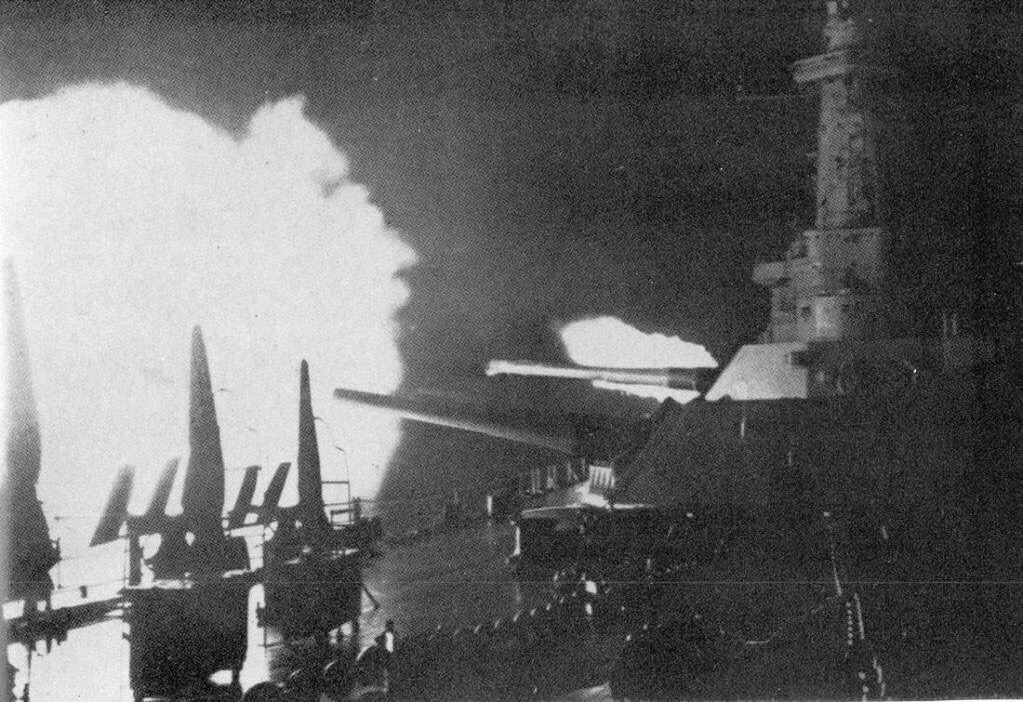
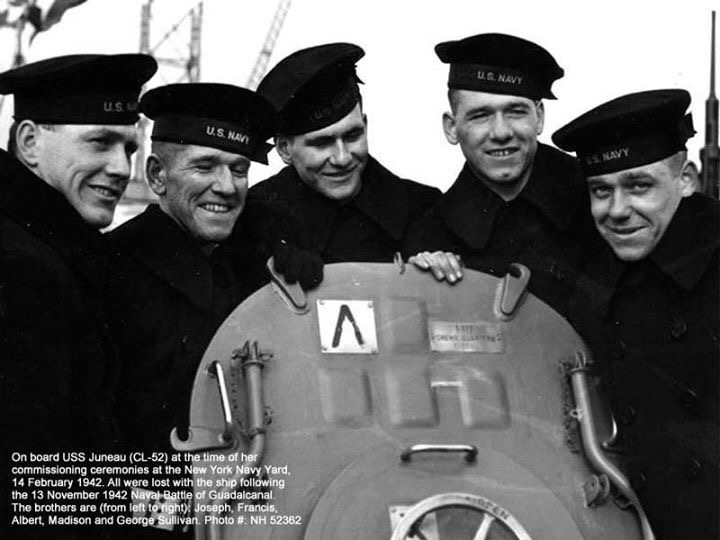
The First Naval Battle of Guadalcanal takes place in what would become known as “Ironbottom Sound” off Guadalcanal. US intelligence had warned US Navy forces that the IJN planned to bombard Henderson Field and land reinforcements on the embattled island. Admirals Callahan and Scott took their forces to interdict IJN Admiral Abe’s forces. In a fierce, confusing, intense night action the Japanese won a tactical victory by sinking more American ships, while the Americans won a strategic victory…Henderson was not bombarded and the American troop ships remained undamaged. But it came at a heavy cost for both sides. Admirals Callahan and Scott would be the only US Admirals to be killed in direct ship to ship combat in the war, and aboard the USS Juneau, the five “Fighting Sullivan” brothers would all be lost.

For the Japanese; surviving battleship Hiei, among others, would fall prey to repeated air attacks from Henderson, Espirito Santo, and the USS Enterprise when the sun came up. And this was only the beginning of the battle.

“Give me your tired, your poor, your huddled masses yearning to breathe free.”

Today in History, November 12: 1954 –

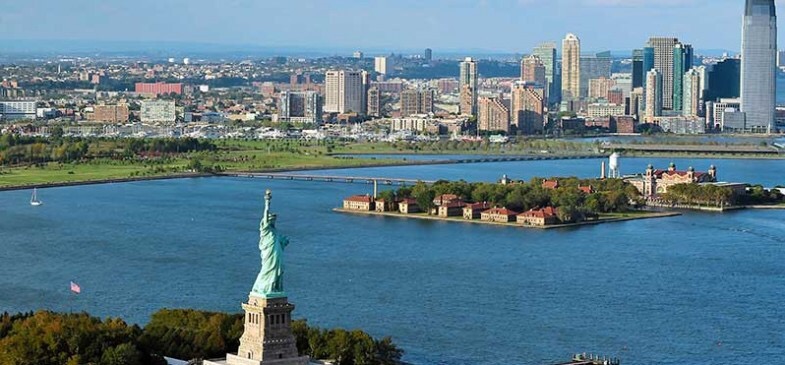
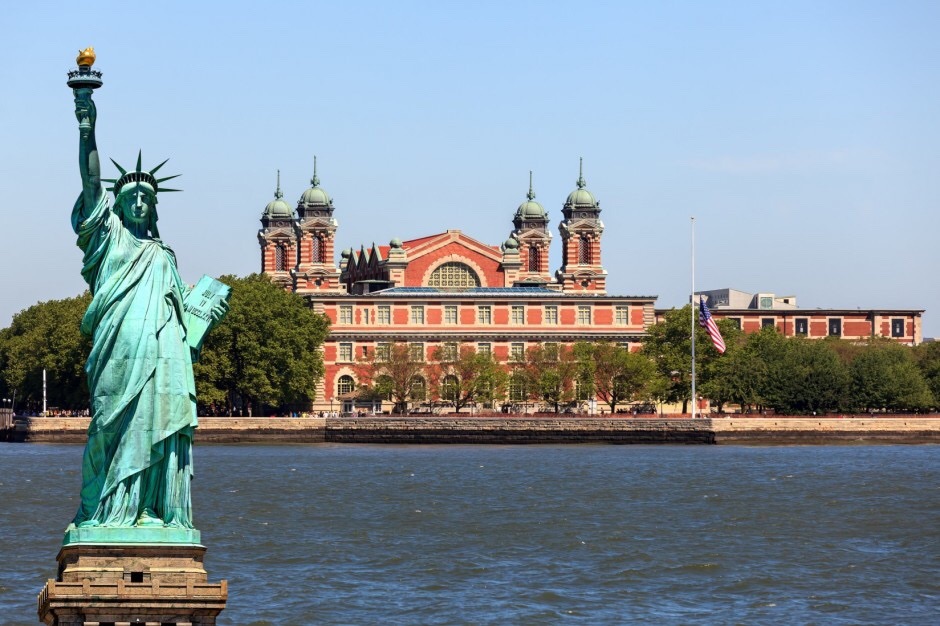
Ellis Island in New York Harbor, which had seen millions of legal immigrants processed through since it’s opening in 1892, closes for good. It had been used continuously to process immigrants, and also as a military hospital and a facility to process illegal immigrants out.

A few of those that claimed America as their home via Ellis that you may know (according to the National Park Service, which now manages the Island)…Isaac Asimov (science fiction author extraordinaire), Charles Atlas (fitness), Irving Berlin (White Christmas and much more), Frank Capra (It’s a Wonderful Life and more), Claudette Colbert (silent film actress), Max Factor (cosmetics magnate), Samuel Goldwyn (Hollywood mogul), Bob Hope (Mr. USO and decades of acting), Al Jolson (actor), Meyer Lansky (gangster), Bela Lugosi (the original scary actor), HYMAN G. RICKOVER (pioneer of our nuclear Navy), Edward G. Robinson (actor), KNUTE ROCKNE (football hero when it meant something), Igor Sikorsky (helicopter pioneer), Lee Strasberg (actor), Baron Von Trapp (The Sound of Music)….so much history. Oh, and of course….Vito Corleone….