A Family of Heroes

Today in History, July 16, 1862:

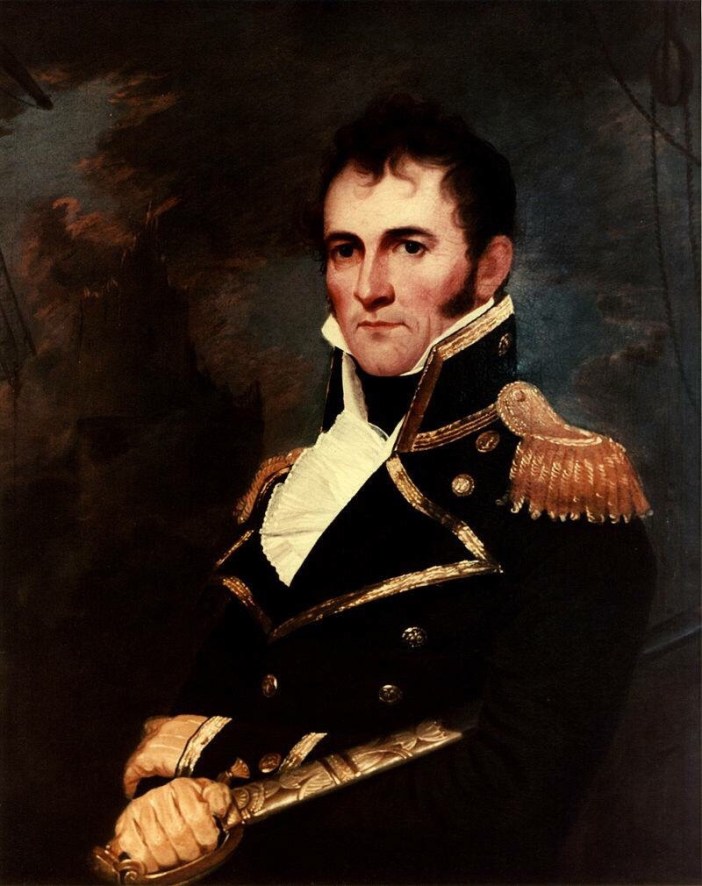
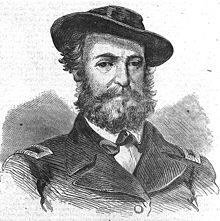
In spite of naval heroes like Capt. John Paul Jones, the first Rear Admiral in the US Navy is commissioned on this date…Rear Admiral David Farragut.

What an amazingly important family! Farragut had been orphaned at the age of nine, when his mother died from yellow fever.

Navy Capt. David Porter took him in, and at the age of 9, Farragut was at sea as a midshipman. He served in the Pacific, commanded a captured ship at the age of 12…wounded at Val Paraiso, Chile in a battle…fought in the War of 1812 as a boy….fought pirates in the West Indies, and was the famous Captain who at Mobile Bay during the Civil War, while standing on the rigging of his ship, shouted, “Damn the Torpedoes, Full Speed Ahead!” His foster father, David Porter, foster brothers David Dixon Porter and William Porter would also be Naval war heroes.

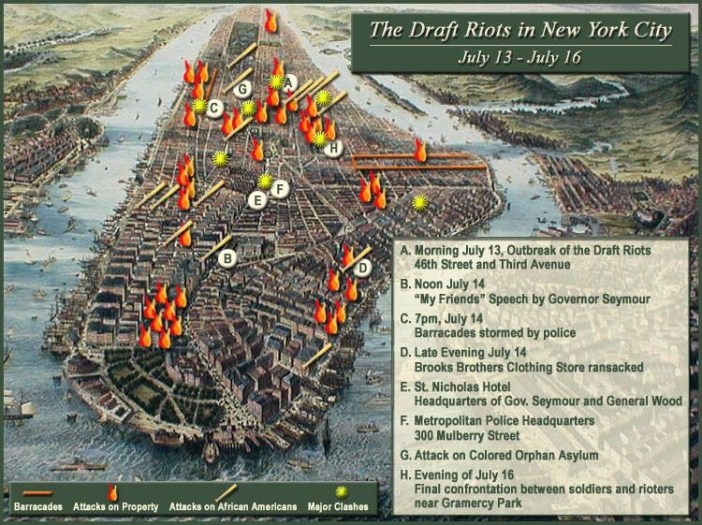
NYC Draft Riots

Today in History, July 13, 1863:

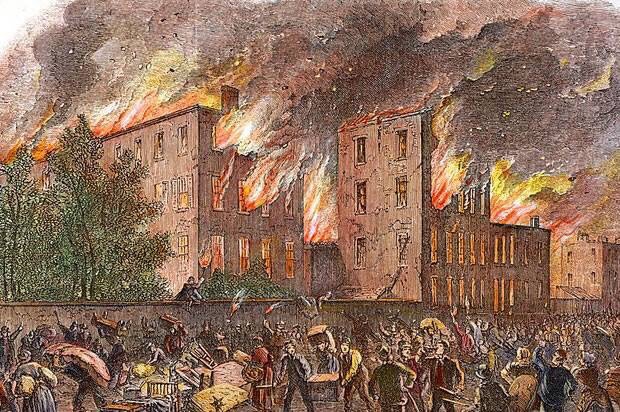
Just days after men had died fighting at Gettysburg, Pennsylvania, Irish immigrants began rioting in New York City against a draft.

The poor immigrants, who had recently come to America to escape the famines in Ireland, and who were living in poverty, were not happy to be drafted into military service when rich men could buy their way out of the draft for $300.

They were also competing directly with black freedmen for jobs, so the riot soon took on a racial component…even a black orphanage was burned.

Those men that had fought at Gettysburg? They had to leave their dead and move quickly to New York City to put down the insurrection. The NYC Draft Riots remain the most damaging in our history.

As an aside, to remain true to history…my favorite President’s father, Theodore Roosevelt, Sr. was one of the wealthy men that bought his way out of service. Making up for that is part of the reason TR gave up a safe position as Under Secretary of the Navy to head up the Rough Riders in Cuba.

The White House Razed

Today in History, June 28, 1862:

Union soldiers inadvertently burn the White House.  No, not that White House.  In fact, the Executive Mansion which housed the President wasn’t known by that name until 1902 when President Theodore Roosevelt renamed it.

Another difference between these “White Houses”, is that George Washington never resided in the Presidential Mansion along the Potomac.  His successor, John Adams was the first President to live there.

But he courted and married the widow Martha Custis at and near the White House on the Pamunkey River.

One of General Washington’s officers was Henry “Light Horse Harry” Lee.  His son, Robert E. Lee, would marry Martha Custis-Washington’s granddaughter, Mary.

Together they would live in Arlington House, overlooking the Potomac…and the Executive Mansion.  When the Civil War began, Robert E. Lee chose to support “his country”, Virginia; which also meant the Confederacy.  As a result he and his family had to leave Arlington House and move to one of their more southern Virginia properties…the White House on the Pamunkey.

As the Union dead mounted, Union Secretary of War Edwin Stanton ordered the area around Arlington House to be used as a cemetery so that Lee could never again live there.  Today it is Arlington National Cemetery.

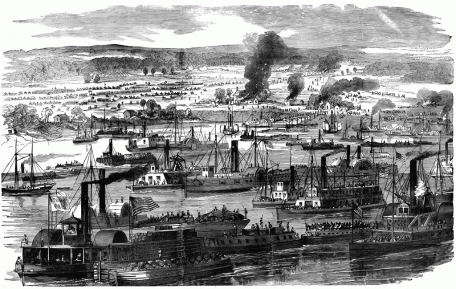
In 1862 during the Seven Day’s Battles, Union forces pushed the Confederates back past the Lee family’s new home at White House Landing, using it as a major supply base.

Before she fled further south from yet another home, Mary Lee left a message on the door of the residence, “Northern soldiers, who profess to reverence Washington, forbear to desecrate the house of his first married life, the property of his wife, now owned by her descendants.”

Union soldiers agreed.  General George McClellan ordered a guard to posted around the house to prevent looting or vandalism.

McClellan took a lot of heat from the press and DC for the protection of General Washington’s one-time home.  It should be used as a hospital for Union soldiers!  Even though it had but six rooms.

As was frequent in the Civil War, the lines moved back north after moving south.  And on this date in 1862 Confederates took White House Landing back.  As the Union Army fled, McClellan ordered all supplies and outbuildings burned to prevent their use by the Confederates…with the exception of the White House, it was to be spared.

As often happens in war, orders from the top rarely get carried out to the letter.  The White House was burned to the ground.
The Great Gettysburg Reunion

Today in History, June 25, 1913:

“We have found one another again as brothers and comrades in arms, enemies no longer, generous friends rather, our battles long past, the quarrel forgotten—except that we shall not forget the splendid valor.” –President Woodrow Wilson.

The Great Civil War Reunion at Gettysburg, Pennsylvania. Nearly half a century after the end of the Civil War, aged men and women who had been sworn enemies, who had lost loved ones on both sides of the great conflict, began to gather at Gettysburg for a reunion to honor those they had lost…and each other.

Men missing limbs commiserated with each other, slapped backs, shared stories, joined together as brothers…Union, Confederate, White, Black, recognized that the War was history and they were comrades again. If men and women that were so committed to killing each other could do this….can’t we?

The Last to Surrender

Today in History, June 23, 1865:

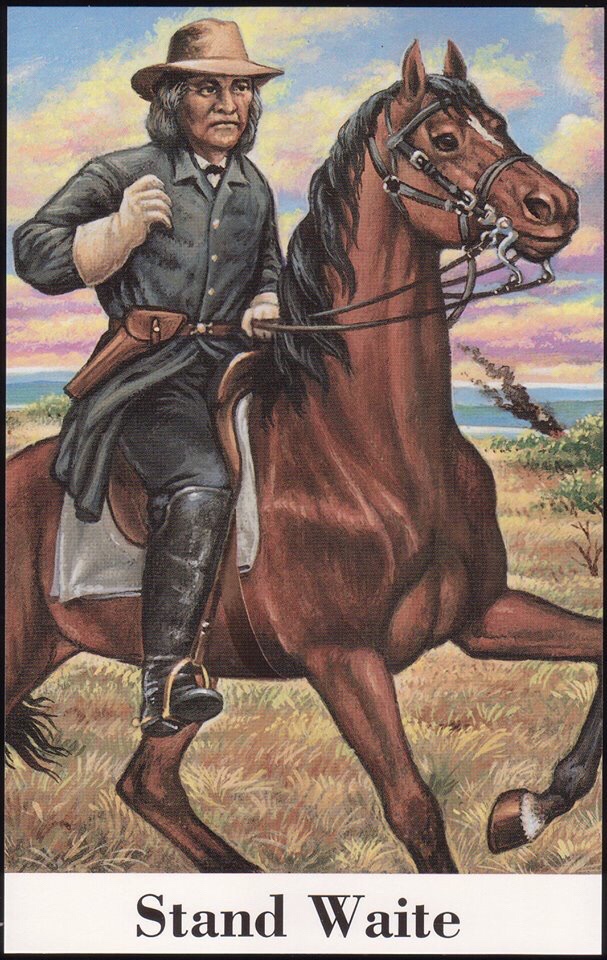
The last Confederate General surrenders to Union authorities. Cherokee Chief and Confederate Brigadier General Stand Watie surrendered his Cherokee Rifles Cavalry Brigade at Ft. Towson in Oklahoma Territory.

Watie had a checkered past…he was one of the Cherokees that voted for the law that moved the tribe to the Oklahoma Territory, and part of his family was assassinated as a result. He competed with Chief John Ross for the leadership of the tribe…Watie was a slave owner, Ross was a Union sympathizer. Watie and his unit were important in the Battle of Pea Ridge, Arkansas also.

The USS Kearsarge Ends CSS Alabama’s Run

Today in History, June 19, 1864:

The Battle off Cherbourg. In 1861 the screw sloop CSS Alabama was launched in England, which was just the beginning of the intrigue involving the Confederate cruiser that wreaked havoc on Union shipping until her demise on this date in 1864.

The British gov’t had ordered no ships be built or sold to the rebels, but the company that built the Alabama did so clandestinely. During the intervening years the Alabama, which had both steam engines and sails, circled the globe sinking Union merchant shipping (60 at least) and a Union warship.

She had put in at Cherbourg, France for much needed repairs, but was rebuffed. Before she could leave, the Union screw sloop USS Kearsarge arrived outside the harbor.

Capt. Charles Pickering and many other Union Captains had been searching for the infamous Alabama and Capt. Raphael Semmes for years. Semmes set out to engage the Kearsarge, firing the first shot. The two ships parried, but the Kearsarge had some advantages; powerful new “Dahlgren” guns and chains draped over her sides for protection. Within an hour the Kearsarge’s crew sent the Alabama to the bottom. Semmes escaped on a passing British ship to England with 41 of his crew.

The Lee Resolution – and You Can’t Pick Your Family

Today in History, June 7, 1776:

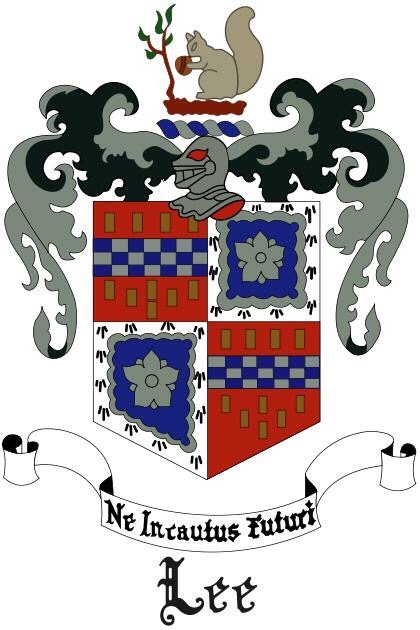
The Lee Resolution.

“Resolved, That these United Colonies are, and of right ought to be, free and independent States, that they are absolved from all allegiance to the British Crown, and that all political connection between them and the State of Great Britain is, and ought to be, totally dissolved. That it is expedient forthwith to take the most effectual measures for forming foreign Alliances. That a plan of confederation be prepared and transmitted to the respective Colonies for their consideration and approbation.”

Continental Congress member Richard Henry Lee, reperesentative from the Virginia Colony, proposes independence from Great Britain after receiving orders to do so from the Virginia Convention. It would take until July, after efforts by John Adams, Sam Adams, and Lee, to gather enough votes to pass the resolution as the Declaration of Independence.

The Lee family would fight in the revolution for Union and Independence. All families are complicated. I would love to know what Richard would have to say about his great-nephew Robert E. Lee fighting so hard to dissolve the Union Richard and his family fought so hard to create.

The US Camel Corps – In New Mexico – The USS Supply – A Bizarre Adventure

Today in History, June 4, 1855:

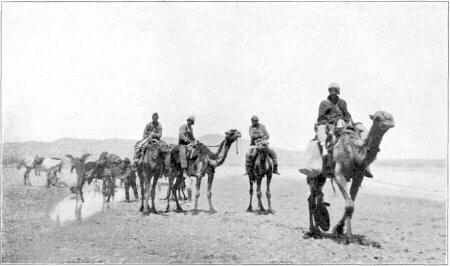
US Army Major Henry C. Wayne sails aboard the USS Supply (commanded by US Navy Lt. David Dixon Porter) for the Middle East to purchase camels that would become part of the US Camel Corps. Either he or Gen. Edward Beale had convinced US Secretary of War Jefferson Davis that the animals would be perfect for transportation in the American Southwest.

70 camels would eventually be part of the Corps, and they WERE perfect for transporting supplies long distances…but they were also cranky and difficult to manage, and scared the Army’s horses. When the US Civil War began, the project was largely forgotten as the new Union Secretary of War, Edwin M. Stanton, didn’t support it. Feral camels were seen roaming the Southwestern United States as late as 1941 as a result.

You may have noticed some other interesting names mentioned. David Dixon Porter was part of an already famous naval family…Farragut. David would serve with distinction in the Civil War.

The USS Supply. If her planks could have talked. The Mexican-American War….she was instrumental. Through her life she make numerous trips to the Levant…served in South Africa, South America, Brazil…she was part of two Expeditions Commodore Mathew C. Perry made to Japan, sailing into Odo Harbor on the Historic dates.

Then Supply returned and became part of the swashbuckling adventures during the Civil War Blockading Squadrons.

“This damn fool Sumner is going to get himself shot by some other damn fool.” – Sen. Stephen Douglas

Today in History, May 22, 1856:

Years before the Civil War. On May 20, 1856 US Senator Charles Sumner, a free soil Democrat and later Republican from Massachussetts, had given a firey speech entitled “Crime Against Kansas” about the violence in that state over slavery.

A devout abolitionist, he excoriated the south, in particular Senator Andrew Butler of South Carolina, who he likened to a pimp abusing a prostitute (slavery).

This enraged Butler’s nephew, Senator Preston Brooks. When Sen. Stephen Douglas heard the speech, he commented, “this damn fool Sumner is going to get himself shot by some other damn fool.”

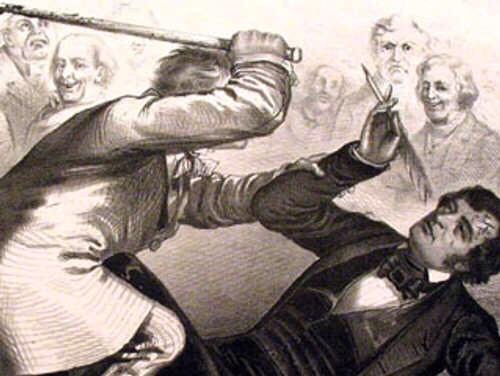
On the 22nd, Brooks entered the Senate chamber with two other Southern Senators, found Sumner at his desk writing and proceeded to bludgeon him nearly to death with his heavy metal tipped cane while Sumner was trapped within his desk, defenseless.

Southerners hailed Brooks a hero.

Northerners called him a coward. One of these, Republican Representative Anson Burlingame called him such on the House floor.

Brooks challenged Burlingame to a duel. When Burlingame actually accepted and showed up, Brooks did not.

Sumner would suffer debilitating pain for the rest of his life from his injuries, but would recover to become a key proponent of abolitionist policies during reconstruction, living until 1872.

Brooks on the other hand died in January 1857, less than a year after the attack, of the croup.

Going West…The Homestead Act

Today in History, May 20, 1862:

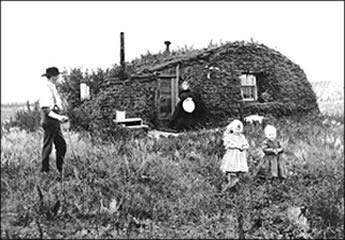
President Lincoln signs the Homestead Act, which would give 160 acres of western lands to anyone that would farm it successfully for 5 years and build a residence upon it (often a sod building).

The Act would encourage vastly expanded settlement of the west; bad news for Native Americans, good news for those newer Americans wanting to improve their lot in life.

Congress had attempted to pass similar acts in 1852, 1854, and 1859, but each time the attempts were shot down by Southern Democrats who were afraid that if the west were populated it would result in more “free” states, which would result in more votes against slavery.

Once the Republican Lincoln was elected, and the Civil War began, the Southern Democrats were no longer part of the equation in Congress. The Republicans soon passed the Homestead Act and the settlement of the west began in earnest. By the end of the war 15,000 settlers (some of which were merely pawns for land speculators) had accepted their lands. Eventually 80 Million acres would be settled.