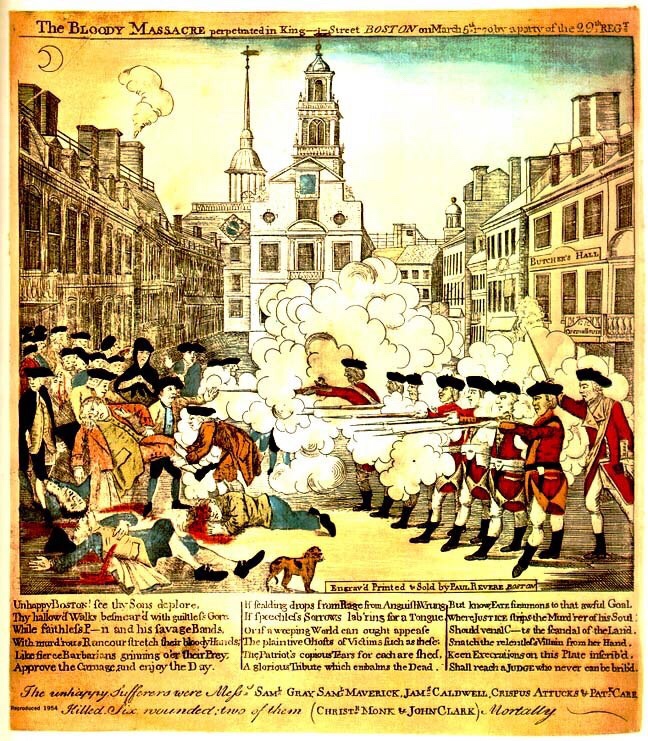
The Boston Massacre

Today in History, March 5: 1770 – The Boston Massacre. American colonists, and Bostonians in particular, had been up in arms over unfair taxation without representation by their British rulers. Britain sent a contingent of soldiers to enforce the taxation and rules in Boston. After brawling with the “continentals” a few days before, they were faced with a crowd of citizens protesting outside of the Customs House. Being pelted with snowballs from the citizenry, they fixed bayonets. Most accounts are that a British soldier either slipped or was pelted with snowballs and his musket fired…then the rest of the soldiers began firing into the crowd. When it was over, five civilians were dead or dieing. Crispus Attucks, Patrick Carr, Samuel Gray, Samuel Maverick and James Caldwell. These are considered the first casualties in the American Revolution. Paul Revere made an engraving of the incident which was widely published (went viral in today’s parlance).

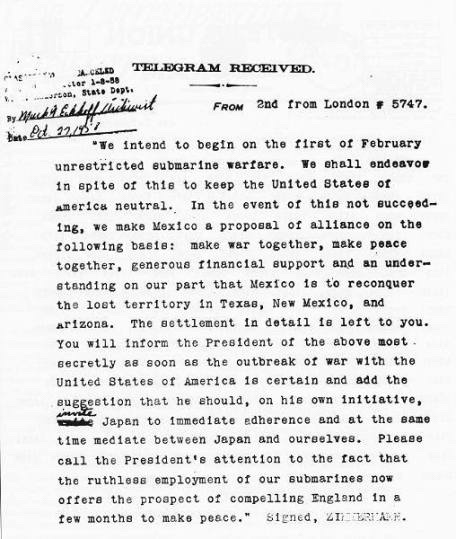
Heck no…They All Have Guns! The Zimmerman Telegram

Today in History, March 1, 1917:

The Zimmermann Telegram is made public by the United States, on the authority of President Woodrow Wilson.

The German government had sent the telegram to their envoy in Mexico City in January, in anticipation of beginning unlimited submarine warfare in the North Atlantic Ocean on February 1st.

Germany wanted the United States, and her supply of men and materiel, to stay out of the war. And, should she enter the war, Germany wanted to limit her ability to assist Great Britain.

And that is what the Zimmermann Note was all about. It was an offer to the Mexican government; if Mexico would open up a “second front” for the United States by siding with Germany, the Germans would provide monetary support and promise to return Texas, New Mexico and Arizona to Mexico.

Germany hoped the second front would distract the Americans from shipping men and equipment to Britain, and that the sinking of what ships did venture forth by U-Boats would strangle the UK, forcing her to sue for peace.

The Mexican government actually established a committee to study the proposal…things had not been good between the US and Mexico, what with Gen. John Joseph “Black Jack” Pershing chasing Poncho Villa around Northern Mexico in recent years.

Mexico decided against the offer…because America was too powerful, because she would anger her neighbors, and (I find this VERY important), because they considered the fact that the citizens in the suggested states WERE ALL ARMED.

British intelligence managed to obtain a copy of the telegram and give it to the Americans. Our ancestors in the beginning of the 20th century shared our isolationist views and were not excited about involvement in a European War.

The release of the Zimmermann Telegram and unrestricted submarine warfare against our shipping helped change public opinion…and we were soon headed “over there”.

Commander of the Militia

Today in History, February 17: 1621 –

Mayflower passenger and military officer Myles (Miles) Standish is elected by the Plymouth Colony as commander of it’s militia.

He would take on various governmental roles, and represent the colony in England, but the militia would repeatedly re-elect him as it’s commander until is death at 72 in 1656. In his later years he served more of an advisory role, having retired to his farm.

Moments Which Changed Naval History

Today in History, November 11: 1940 – A History changing event. The British aircraft carrier HMS Illustrious launches several obsolete aircraft, “Fairey Swordfish” torpedo aircraft…flying kites, really, in an attack on the Italian Naval Base at Taranto, Italy.

The Harbor was shallow, so the Italians thought they were safe. In this, the first attack by aircraft from a carrier, the Italian navy was devastated, by what many naval officers considered a gimmick…the airplane. On the other side of the world, someone took notice of the successful attack. The Imperial Japanese Navy was encouraged in their plans against Pearl Harbor…also a shallow anchorage considered safe. Naval History was changed…tactics forever adapted by those few British pilots.

US Doubled


Today in History, October 20: 1803 – The Louisiana Purchase is ratified by the US Senate. When Spain returned the Louisiana territory to France in 1800, President Jefferson became concerned that France would cut off access to New Orleans and sent emissaries to attempt the purchase. Napoleon Bonaparte was cash strapped in the midst of a war with the English, and didn’t want to deal with the far off territories at that point…so he agreed to sell the territory for $15M, or 4 cents per acre. Some members of the Senate actually criticized Jefferson, saying that he had spent a vast sum on a wasteland. Nonetheless, the treaty was ratified and the territory of the United States more than doubled overnight.

You Only Fail if You Quit


Today in History, October 6: 1723 – A 17-year-old runaway arrives on the streets of Philadelphia, a fugitive for having fled an apprenticeship in Boston. After trying his hand at his apprenticeship vocation of printing, he accepted an offer to travel to London to get the equipment for a new printing shop to open in Philly. This failed, but after 4 years of adventure in England, young Benjamin Franklin returned to Philadelphia and began his career as a printer, statesman, scientist and activist for freedom. Franklin is the epitome of the theory that you only fail if you quit.

England Dominates 

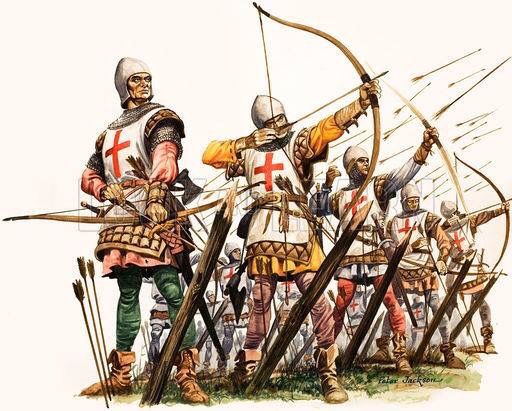
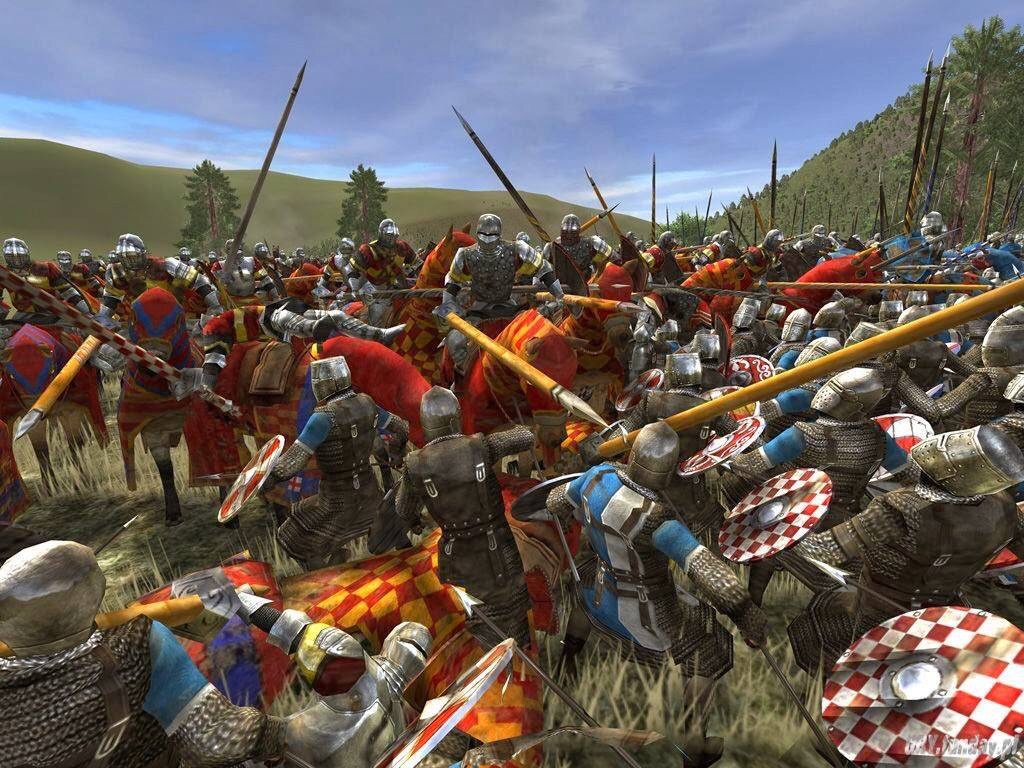
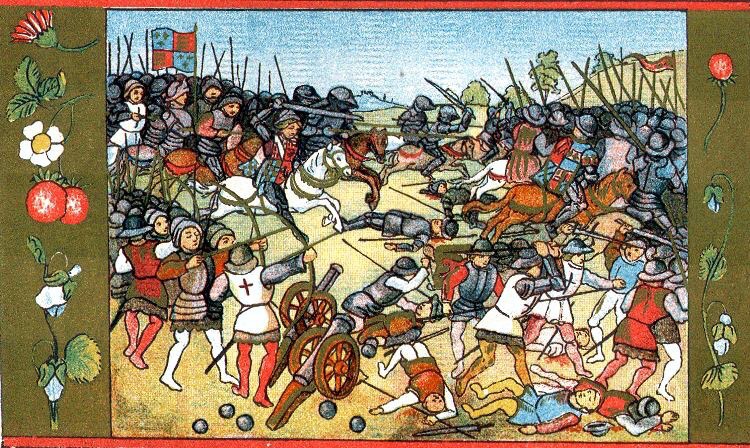
Today in History, August 26: 1346 – The Battle of Crecy. During the 100 Years War, the English and French meet in battle at Crecy. 

 The English were badly outnumbered, by perhaps 10,000 soldiers…the numbers are sketchy. The English Knights, normally on horseback, dismounted to protect their archers…equipped with longbows…6 foot bows capable of firing 300 yards. 

 The French elite positioned themselves on horseback BEHIND their archers…equipped with crossbows…powerful, but with a much shorter range. The result was that the English decimated the French ranks at long range, and won the battle. 

The battle marked English advancement as a world power. 

Birth of an Empire


Today in History, July 12: 927 – King of the Anglo-Saxons Aethelstan, after some combat and some reaching out, receives the submission of Northern English kings at Eamont, becoming the first King of the English, the first to rule all of England at once. Although the peace made would last for only seven years, his accomplishment is considered the closest thing to a “birth” of England, as he brought together a kingdom from Wessex to Scotland to York, which had been under Viking control.

The Treaty of Perpetual Peace of 1503


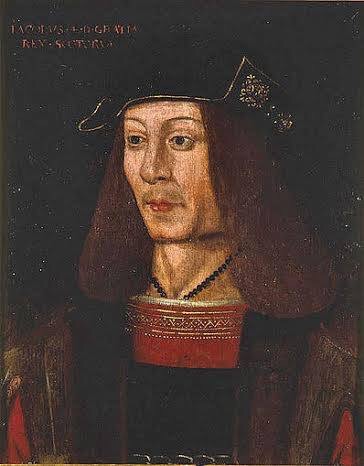
Today in History, May 28: 1503 – King James IV of Scotland and Margaret Tudor of England marry, fulfilling an international agreement which had been sanctioned by the Pope, The Treaty of Perpetual Peace between England and Scotland. As it turns out, “perpetual” peace is good for about 10 years. In 1513 James declares war on England in support of France, who Scotland had a previous treaty with…and England had declared war on France. The Pope would excommunicate James IV for going back on his word, and he would soon die during the Battle of Flodden Field, becoming the very last Monarch of the British Empire to die in battle.

Going Home…


Today in History, May 17: 1943 – The Memphis Belle returns from her 25th mission over Europe. The B-17 Flying Fortress, heavily armed with nearly a dozen .50 caliber machine guns and thousands of pounds of bombs, had survived what by all reckoning, could not be survived. Thousands upon thousands of airmen died over German territory, blown out of the sky or dropping thousands of feet to their deaths.  More airmen died over Europe than Marines fighting across the Pacific.  With ten men in each bomber that went down, casualties were so horrific that crews were only expected to fly 25 missions…if they survived that, they went home.  The crew of the Memphis Belle were some of those survivors.