Assassination Connections

Today in History, February 15: 1933 –

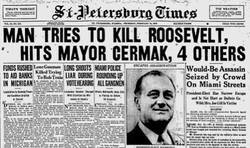
Assassination; Courage; and links between courageous Presidents. President elect Franklin Delano Roosevelt gives a speech, from his car (he is crippled, though few know it), in Bayfront Park in Miami, Florida. Standing on the running board of the car was a political ally, Chicago Mayor Anton Cermak.

Nearby a 5 foot, unemployed Italian immigrant bricklayer stands on a chair so that he can see the soon to be president, and fires his revolver. Instead of FDR he strikes Cermak before a woman standing beside him attacks him…and his next four shots injure standersby instead.

Within weeks Cermak dies…and the assassin will die by execution. Stories will go forward about whether FDR was the intended target, or Cermak, who was at the time fighting the Chicago mob.

What I find most interesting is the extended story. The crowd was about to beat the assassin to death in a bloodlust…Franklin calmed them…the suspect should face a court of law. FDR then directed that the Chicago mayor be loaded into his car, and cradled him in his lap as he was rushed to a nearby hospital. Cermak would die, the assassin would be executed…but FDR’s courage would inspire the nation.

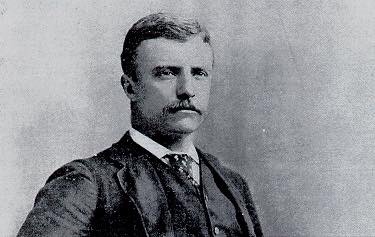
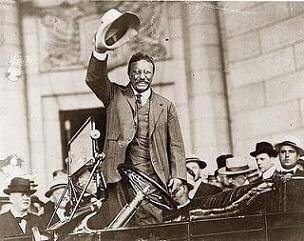
FDR had adored his distant cousin, Theodore Roosevelt. TR had been shot in the chest while campaigning for the Presidency in Milwaukee, Wisconsin (by an insane immigrant)discouraged the crowd from abusing the would-be assassin…and continued on to finish a lengthy speech before seeking medical attention…he was a Bull Moose.

When he was a young boy in 1865 in New York, Teddy Roosevelt had watched from the window of a New York apartment as the body of his idol, President Abraham Lincoln, passed by in a funeral escort after he was assassinated in Washington, D. C. Lincoln had been discouraged from public appearances, including at Ford’s Theater, and responded to the effect that if someone wanted him dead, they would find a way. Our history is not nearly as disconnected as we think, and courage comes from knowledge and perspective.
“The Light Has Gone Out Of My Life”

Today in History, February 14: 1884:

25 year old Theodore Roosevelt was at work in the New York Assembly in Albany fighting for a reform bill when he received an urgent telegram to return to his home in New York.

When he reached his front door his brother Elliott greeted him, “There is a curse on this house”.

Their mother Mittie was suffering from Typhoid fever, and Teddy’s wife Alice, who had given birth to her namesake just two days earlier, was suffering from Bright’s Disease. TR went up and down the stairs to be with both of them.

Mittie died first, followed within hours by Alice. Roosevelt was devastated.

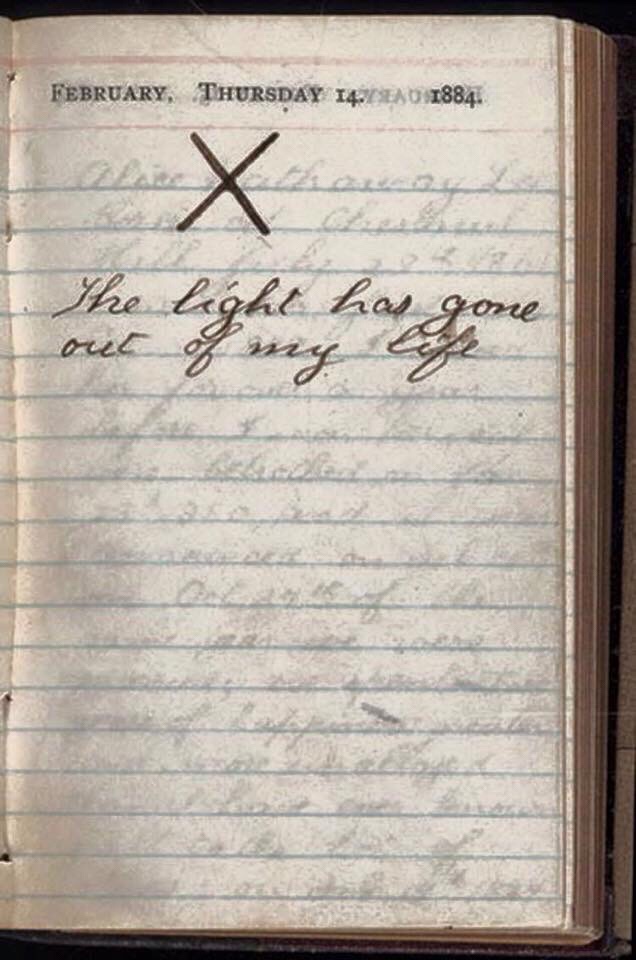
His diary entry for that date was simply a large X and the note, “The light has gone out of my life”.

He could never speak of his first wife again, not even mentioning her in his autobiography. When he returned to the legislature, even his detractors treated him with deference for a time because of the tragedy.

He soon left the Assembly, left the infant Alice with his sister Bamie and struck out west to the Dakotas to escape. He would become a rancher and a sheriff, and make many friends who would later be “Rough Riders” with him. In ’86 he returned east, re-entered politics and re-married. His daughter Alice became famous for outlandish behavior, dealing with her own demons due to the temporary abandonment and a new family.

Adversity affects us all differently. One has to wonder if TR would have accomplished all that he did if this tragedy hadn’t driven him west and altered his life.

Death had to take Roosevelt sleeping, for if he had been awake, there would have been a fight.” -Vice President Thomas Marshall

Today in History, January 6: 1919 –

“Death had to take Roosevelt sleeping, for if he had been awake, there would have been a fight.” -Vice President Thomas Marshall. President Theodore Roosevelt dies at Sagamore Hill, Oyster Bay, New York in his sleep of a heart attack. “Teddy” had taken every last drop of adventure and worthiness that he could squeeze out of life in the preceding 60 years.

Roosevelt had been a sickly child; constantly plagued by breathing problems, he could rarely play with the other children. His father, Theodore Sr., a remarkable man himself, told “Teedie” that if he wanted to have a successful life, he would have to take charge and force his body into the form he needed to match his intellect. Roosevelt did just that. He took exercise as his “raison detre” until he was barrel chested and of vigorous health. Each time he became sick during his life, he would simply work through it.

As a young man, while serving in the New York Assembly, Roosevelt’s wife and mother died on the same day…February 14, 1884. Roosevelt fled into the west, becoming a rancher and for a time a lawman in the Dakota Territory. The experience would strengthen him and give him a background people respected.

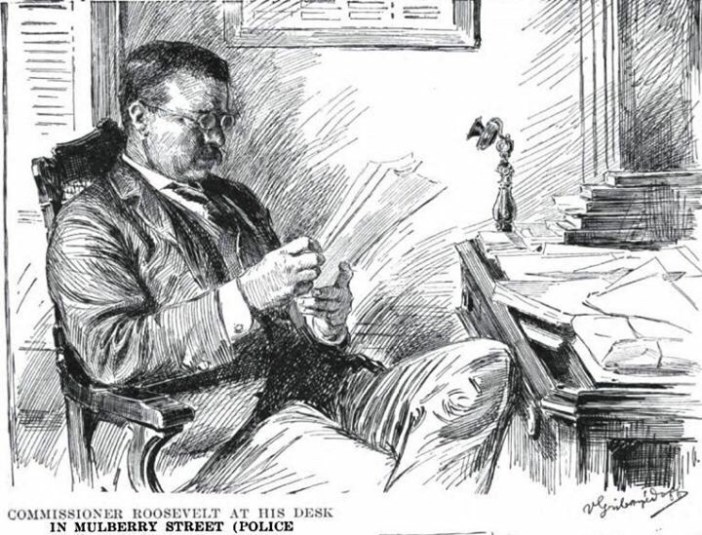
During his life he was a state rep from New York, the Police Commissioner for New York City, Governor of New York, the Assistant Secretary of the Navy (he oversaw the building of a modern US Navy while his boss was not paying attention), he led the “Rough Riders” (1st Volunteer US Cavalry) up San Juan Hill in the Spanish-American War, became Vice President, and the President after President McKinley was assassinated.

As President he defined the modern presidency, breaking up monopolies, seeing that mistreated workers got a fair shake, sent the “Great White Fleet” around the world establishing American as a world influence, saw the Panama Canal built, saw the establishment of the National Parks Service, and countless other accomplishments.

He worked tirelessly for the American people. After the Presidency he traveled extensively, going on an African Safari, and exploring an unknown region of South America, “The River of Doubt”; a region so treacherous that it was considered a no-man’s land. He nearly died in the mapping of the river, now called “Rio Roosevelt” in his honor.

All of his male children fought in WWI, and the only reason Teddy didn’t was because the Democrat President (Wilson) refused to let him, afraid Roosevelt would run against him in the next election and win. One of his sons, Quentin, would be shot down over France and be killed. That was the last straw for the “Old Lion”. He mourned dreadfully until his death.

One of his other children, Theodore Roosevelt, Jr., would be the only General to go ashore with the troops at D-Day in WWII; Teddy Jr would die of a heart attack himself several weeks after the Normandy invasion. The entire world would mourn President Roosevelt’s passing; he had become larger that life, a hero to people the world over. The quintessential American. And in case you couldn’t tell, my favorite Hero.

Mesa Verde Cliff Dwellings – The Antiquities Act


Today in History, December 18: 1888 –

Rancher Richard Wetherill and his brother-in-law Charles Mason, with the help of Ute guide Acowitz “discover” some of the Cliff Dwellings in the canyons of the Mesa Verde area of Southwest Colorado.  The Wetherills were certainly not the first to discover the hundreds of amazing ancient homes built into the protection of the cliffs centuries earlier.  However they did persist in a campaign to institute Federal protection of the sites.  The Wetherills were fearful that tourists and vandals would loot and destroy the sites.

Archaeologists tell us ancient Native Americans made the Cliff Dwellings their home for over seven hundred years before moving away within a two generations in the thirteenth century.  As a reference, elsewhere in the world the Mongols were conquering Asia and the seventh Crusades were occurring.

The Wetherill family spent years exploring the canyon dwellings, collecting hundreds of artifacts which now reside in museums.  Unfortunately much of the vandalism did occur and Swedish scientist  Baron Gustaf E. A. Nordenskiöld mapped and collected many artifacts, taking them back to Sweden before the American government acted to protect the site.

After years of pressure from the Wetherill family and many others, and four unsuccessful attempts, Congress finally passed a bill creating the Mesa Verde National Park, which President Theodore Roosevelt signed into law.

In the same month in 1906, Congress passed and President Roosevelt signed into law “An Act for the Preservation of American Antiquities”, or “The Antiquities Act”, inspired to protect sites such as Mesa Verde and others for generations to come.  TR made great use of the Antiquities Act to set aside Historic sites for preservation.

The law has been in the news lately as President Trump dialed back the extent of land set aside by Presidents Clinton and Obama at Bears Ears and Grand Staircase National Monuments.

According to the National Parks Conservation Association, the have been 157 National Monuments designated by 16 Presidents since President Theodore Roosevelt enthusiastically named 18 sites during his terms as Chief Executive.

The Great White Fleet

Today in History, December 16: 1907 –

The Great White Fleet, a task group of 16 American battleships and their support ships, sets sail from Hampton Roads, Virginia beginning a world good will tour, circumnavigating the Earth. President Theodore Roosevelt had long been a proponent of sea power in line with the teachings of Admiral Alfred Thayer Mahan, that a strong Navy could project authority world wide. The fleet of white warships were to provide cordial visits to ports in nations that were potential adversaries, most prominently, Japan. There were many other purposes, such as improving morale and patriotism during a depression at home, and research to improve the seagoing capabilities of the US Navy. The Great White Fleet displayed to the world something that still stands today, although greatly enhanced. That the US Navy could project American influence anywhere in the world. The journey would take 14 months until February of 1909, and would take the fleet through the dangerous Straits of Magellan and across the Pacific. The event was a sensation the world over, as moving so many coal powered ships so far was a remarkable achievement.

“It Takes More Than That to Kill a Bull Moose”


Today in History, October 14: 1912 –

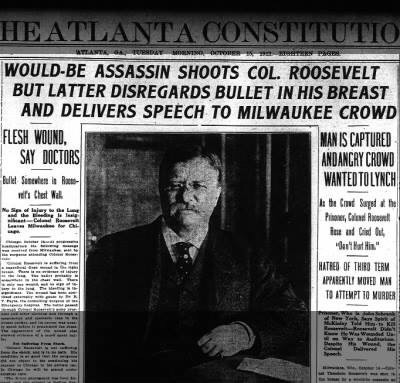
 “Ladies and gentlemen, I don’t know whether you fully understand that I have just been shot; but it takes more than that to kill a Bull Moose.” 

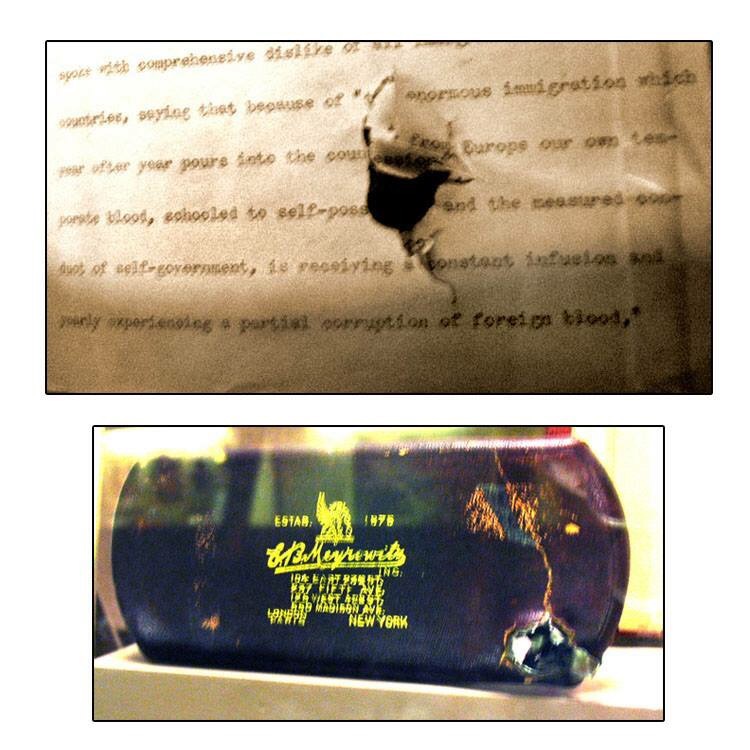
 As he is leaving his hotel in Milwaukee to give a campaign speech, former President Theodore Roosevelt is shot point blank by a would-be assassin. The bullet went through TR’s glasses case, the 50 page speech he had in his jacket, and penetrated his chest. 

 An experienced hunter, Teddy decided that since he wasn’t coughing up blood, he wasn’t in immediate danger, as he reasoned, because the bullet hadn’t penetrated his lungs. 

 He continued on and spoke for over an hour, blood still seeping from his chest wound. Afterwards he finally went to the hospital. The incident not only gave evidence of his strength and resolve, but gave a name to the party he was representing.

“Now look! That damned cowboy is President of the United States!” -Sen. Mark Hanna


Today in History, September 14: 1901 – About a year earlier, Senator Mark Hanna had been discussing with other high-powered Republican leaders whether or not to enlist New York Governor Theodore Roosevelt to be the Vice-Presidential nominee for President William McKinley’s second term. Hanna made no bones about his opposition, “Don’t any of you realize there’s only one life between this madman and the presidency?” But, other political leaders from New York state wanted the head-strong reformer out of their governor’s office, and most felt he would be rendered harmless as VP. However this former NYC Police Commissioner, Under Secretary of the Navy, Colonel of the Rough Riders and yes, Cowboy, was wildly popular and would be a boon for the ticket. When named, TR set records on the campaign trail.

On today’s date in 1901 President McKinley succumbed to infection from his wounds from being shot by an anarchist at the Pan-American Exposition in Buffalo, New York. McKinley had prided himself on shaking as many hands as possible, and was prepared to shake his assassin’s hand when shot by a concealed .32 revolver.
It initially looked as if President McKinley would recover, so Roosevelt left his side in Buffalo and joined his family mountain climbing in the Adirondacks. When the first messenger ran up the mountain to inform TR that the President had taken a turn for the worse, he decided to stay with his family. When the second messenger came up the mountain to say the President was dying, Roosevelt left immediately. He once gain set records in wild wagon rides to make it to the nearest train station and return to McKinley’s side. It was not to be….WM had passed while TR was on his wild ride down the mountain.
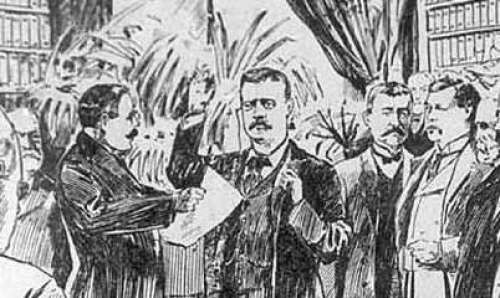
Theodore Roosevelt paid his respects at the residence where McKinley’s body laid, then was sworn in as the youngest President at a friends home in Buffalo in a small ceremony.
When TR asked Mark Hanna for his support, Hanna had two conditions…that Roosevelt would continue McKinley’s policies (sort of did) and…if Roosevelt would stop calling Hanna the “old man”, Hanna would stop referring to TR by the nickname he hated, “Teddy.” Hanna gave his support, but the nicknames continued.

A Snapshot in Time


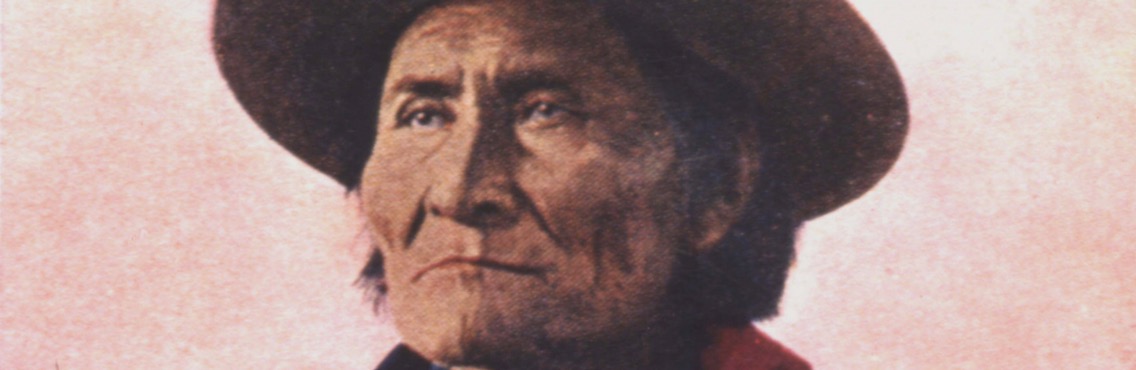
Today in History, September 4: 1886 – Apache Warrior Geronimo surrenders to US Army General Nelson Miles in Skeleton Canyon, Arizona. As a young man living with his family in the Mexican state of Chihuahua, Spaniards brutally murdered his wife and children in a raid.

Geronimo would have a hatred for Mexicans from then forward. Leading raids against non-Indian settlers, he prevented settlement of Apache lands for years. After nearly 30 years of fighting, he came to the conclusion that further fighting was pointless due to the endless numbers of settlers. 

 After his surrender, he ended up in Ft. Sill, Oklahoma Territory where he converted to Christianity and became a successful farmer. He became quite the celebrity, even riding with President Theodore Roosevelt in 1905 inaugural parade.

The Man in the Arena

Today in History, April 23: 1910 – “The Man in the Arena” speech. After his presidency, President Theodore Roosevelt went on safari in Africa, collection countless specimens for the Smithsonian. He then took a tour of Europe and was received with great fanfare and accolades, both from the common man and royalty. On this date he gave a 35 page speech entitled “Citizenship in a Republic” about the responsibilities involved at the Sorbonne in Paris, France. A segment on page 7 became an inspirational and historic passage. “It is not the critic who counts; not the man who points out how the strong man stumbles, or where the doer of deeds could have done them better. The credit belongs to the man who is actually in the arena, whose face is marred by dust and sweat and blood; who strives valiantly; who errs, who comes short again and again, because there is no effort without error and shortcoming; but who does actually strive to do the deeds; who knows great enthusiasms, the great devotions; who spends himself in a worthy cause; who at the best knows in the end the triumph of high achievement, and who at the worst, if he fails, at least fails while daring greatly, so that his place shall never be with those cold and timid souls who neither know victory nor defeat.” I have this passage framed and posted on the wall in my office to remind me to maintain my fortitude on those days when people or events seem determined to break my will to do what is right. Thank you Mr. President. 

The Birth of US Naval Aviation

530155_2490408238323_104830550_n

Today in History, March 25: 1898 – Assistant Secretary of the Navy Theodore Roosevelt proposes that the Navy investigate the use of a flying machine being researched by Samuel Langley. As a result, congress authorized $50,000 to support Langley’s design. The Wright Brothers may have accomplished the first manned, powered flight, but many people had been working on the challenge for years. Langley’s, and Roosevelt’s insight was the beginning of US Naval Aviation. Check out this print by R.G. Smith, which portrays the 1st US aircraft carrier, the USS Langley (CV 1), and the nuclear powered aircraft carrier USS Theodore Roosevelt (CVN 71) cruising together. Of course this is inspired imagination…Langley’s namesake ship was lost in WWII.

The Langley was converted from the Collier USS Jupiter in 1920.  By WWII she had been converted to a seaplane tender, her larger subsequent sisters taking on the aircraft carrier role.  Attempting to deliver p-40 fighter planes to Java, on February 27, 1942 she was attacked by Japanese aircraft and damaged so badly she had to be scuttled.