A Horrible, Life Altering Valentine

Today in History, February 14: 1884:

25 year old Theodore Roosevelt was at work in the New York Assembly in Albany fighting for a reform bill when he received an urgent telegram to return to his home in New York.

When he reached his front door his brother Elliott greeted him, “There is a curse on this house”.

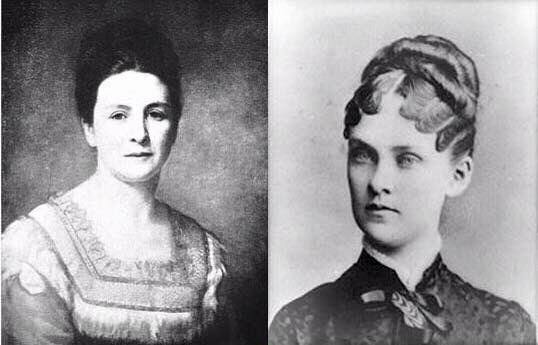
Their mother Mittie was suffering from Typhoid fever, and Teddy’s wife Alice, who had given birth to her namesake just two days earlier, was suffering from Bright’s Disease. TR went up and down the stairs to be with both of them.

Mittie died first, followed within hours by Alice. Roosevelt was devastated.

His diary entry for that date was simply a large X and the note, “The light has gone out of my life”.

He could never speak of his first wife again, not even mentioning her in his autobiography. When he returned to the legislature, even his detractors treated him with deference for a time because of the tragedy.

He soon left the Assembly, left the infant Alice with his sister Bamie and struck out west to the Dakotas to escape. He would become a rancher and a sheriff, and make many friends who would later be “Rough Riders” with him. In ’86 he returned east, re-entered politics and re-married. His daughter Alice became famous for outlandish behavior, dealing with her own demons due to the temporary abandonment and a new family.

Adversity affects us all differently. One has to wonder if TR would have accomplished all that he did if this tragedy hadn’t driven him west and altered his life.

A Dark Side of Valentines Day…

Today in History, February 14, 278 AD:

Valentine is beaten to death, then be-headed in Rome.

Roman Emperor Claudius II (The Cruel) was overseeing several bloody wars at once. He was having trouble keeping soldiers in his armies, and believed that it was because the men were too loyal to wives and families. So, he outlawed marriage.

A priest, Valentine, continued marrying people in secret. When he was found out, Claudius ordered him executed. He was arrested and brought before the Prefect, who ordered him beaten to death and then be-headed.

The Catholic church later declared Valentine to be a Saint for his sacrifice.

The Dawes Severalty Act – Another Indian Land Grab

Today in History, February 8, 1887:

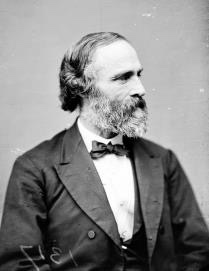
President Grover Cleveland signs the Dawes Severalty Act into law. Massachusetts Senator Henry Laurens Dawes authored the bill with the intent of facilitating the integration of native Americans into the white society.

Dawes and others felt this was the only way to “protect” the Indians, by forcing them to cease their communal way of living.

The law broke up the tribal holdings, giving individuals the land. Married men were given 160 acres of land, single men 80 acres, boys 40 acres and women no land.

The thought was that by forcing the native American families into individual units, as whites lived, they would be assimilated.

As seems to have happened with all acts to benefit the Indians, hidden within the law was a land grab. The law provided that after the lands had been apportioned, any land that was left could be sold to non-Indians. The result was that by the 1930’s, when Congress reversed the act and gave the tribes back their rights as nations, the tribes had lost fully 3/4 of their previous land holdings on the reservations.

Initially the 5 Civilized Tribes in Indian and Oklahoma Territories were exempt, but eventually policies were initiated that effected them also. Much of the land that wasn’t sold outright to non-Indians was eventually sold by the Indian owners when they were down on their luck, reducing tribal holdings even more.

The act also had other negative effects on the Native American community, as it forced changes in the community dynamic; the traditional roles for men and women in the tribal leadership were changed.

The Wheeler-Howard Act of 1934 repealed the Dawes Act, but much of the damage was irreparable.

Tossing Around the…Pluto Platter

Today in History, January 23, 1957:

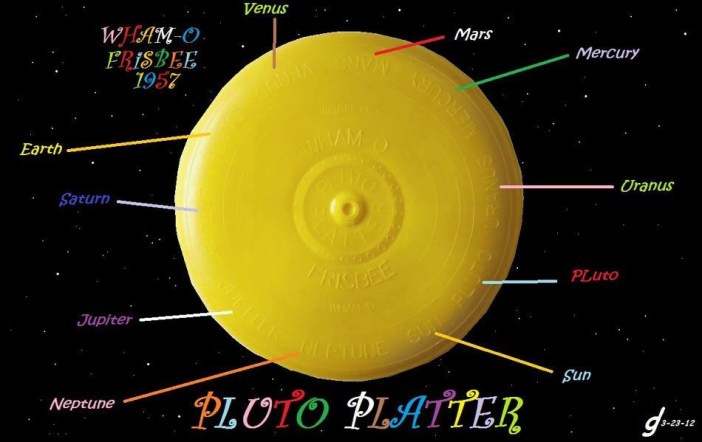
Walter Frederick Morrison sells the rights for an invention to the Wham-O Toy Company.

He and his wife had begun on the invention by selling “Flying Cake Pans” in 1937.

Nearly a decade later, after having learned more about aerodynamics while flying combat missions over Italy in a P-47 Thunderbolt fighter (shot down, spent time as a POW), Morrison began working on the invention again after WWII.

He and an investor began working with plastics, and he eventually came up with what he called the “Pluto Platter”, which is what he sold to Wham-O. Once college students began referring to it as a “Frisbee”, Wham-O changed the name.

First US Marshall Killed in Line of Duty

Today in History , January 11, 1794:

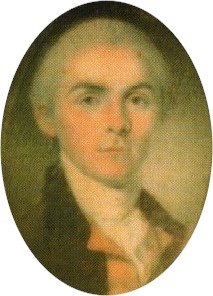
Robert Forsythe, veteran of the Revolutionary War, had been appointed by George Washington as the first US Marshal for the state of Georgia.

On this date in 1794, Forsythe was serving civil papers when he became the first US Marshal to be killed in the line of duty.

The person he was attempting to serve, a former Methodist minister, fired on him through a door when Forsythe knocked, killing him instantly.

Former Major Forsythe, now Marshal Forsythe, was the third law enforcement officer killed in the fledgeling United States.

His son would go on to be Governor of Georgia and then US Minister to Spain, where he would negotiate the ceding of Florida to the US.

Common Sense

Today in History, January 9, 1776:

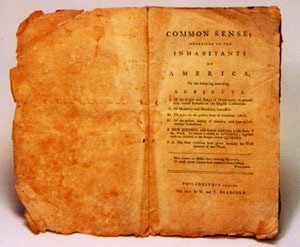
The first copies of Thomas Paine’s pamphlet “Common Sense” are published in Philadelphia. Pamplets were the editorials, or blogs, if we must, of the day in the 18th century.

Paine had only recently immigrated to America from his homeland of England, yet he quickly took up the cause of independence.

Most of the people in America prior to the Revolution saw themselves not as Americans, but as British subjects, and proudly so. Many wanted to remain such, most were uncertain whether independence was a good idea. Most of the colonists were commoners, and it was assumed that only the elite were worthy of governance. Paine turned this theory on it’s head. He wrote to the commoners in plain language the difference between society and government; that gov’t was necessary, but must be limited; that AMERICA should govern herself. He started a firestorm….his pamphlet sold 120,000 copies the first month, 500,000 the first year. Percentages taken into account, Common Sense still counts as the best seller of all time. Paine refused to take any of the profits, donating all of them to Gen. Washington’s Continental Army.

The Electoral College

Today in History, January 7, 1789:

The states first elected their Electoral College electors, who would elect George Washington as the first President.

The Electoral College was established so that less populated states would not be left without a say in the choice of the Chief Executive.

If the President was elected by popular vote, the states with the highest population would always made the decision. This was of great concern to the more rural, less populated states. The same holds true today. During Presidential campaigns, the segments of the country not on a coast truly would be “flyover” country. No candidate would have a need to campaign there, disenfranchising vast segments of our citizens.

The system has been tested several times throughout our history, and surely will be again.

NUTS!! Monty Shows His….Ego

Today in History, January 7, 1945:

The Battle of the Bulge.

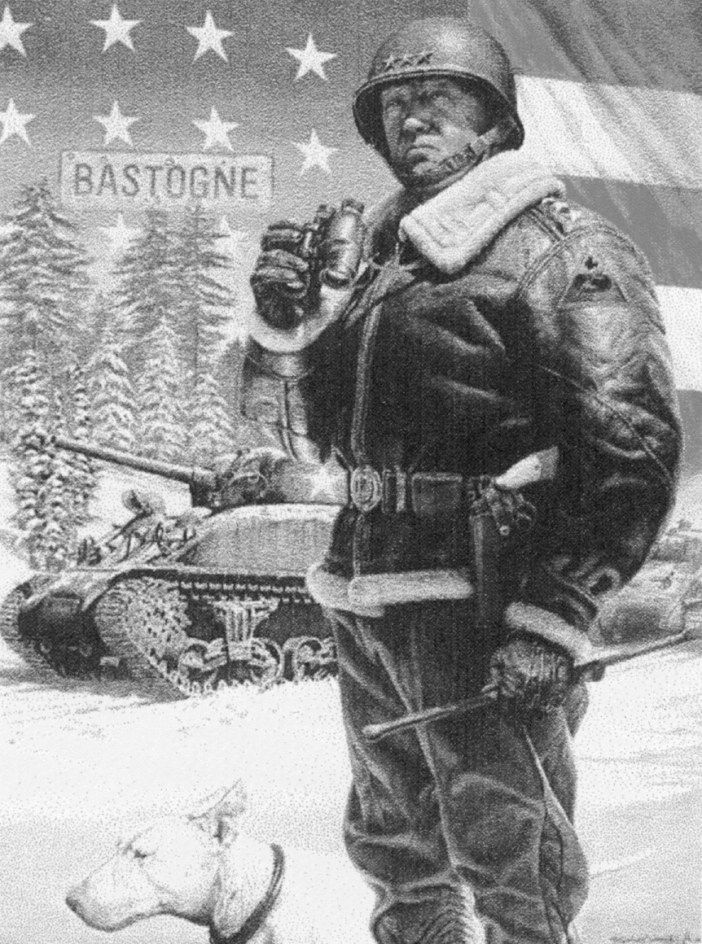
After the American 101st Airborne held out against overwhelming German forces for days, refusing to surrender (Gen. Anthony McAuliffe replied Nuts! to a surrender command, confusing the hell out of the Germans); after American Gen. George S. Patton turned his entire 3rd Army 90 degrees and ran full tilt through winter conditions to reach his comrades; after American air power helped save the day when the weather cleared,

British Gen. Bernard Law Montgomery held a press conference during which he took credit for the hard won victory.

Prime Minister Winston Churchill had to address Parliament to assert the truth that The Battle of the Bulge was solely an American victory after the political fall-out of Montgomery’s typically arrogant statements.

“Oh…Do You Remember the Fun of Him?”

Today in History, January 6, 1919:

“Death had to take Roosevelt sleeping, for if he had been awake, there would have been a fight.”

-Vice President Thomas Marshall.

President Theodore Roosevelt dies at Sagamore Hill, Oyster Bay, New York in his sleep of a heart attack. “Teddy” had taken every last drop of adventure and worthiness that he could squeeze out of life in the preceding 60 years.

Roosevelt had been a sickly child; constantly plagued by breathing problems, he could rarely play with the other children. His father, Theodore Sr., a remarkable man himself, told “Teedie” that if he wanted to have a successful life, he would have to take charge and force his body into the form he needed to match his intellect. Roosevelt did just that. He took exercise as his “raison detre” until he was barrel chested and of vigorous health. Each time he became sick during his life, he would simply work through it.

As a young man, while serving in the New York Assembly, Roosevelt was called home from Albany by an urgent message. After the train ride to NYC, he arrived home to be met at the door by his brother, “There is a curse upon this house.”

Roosevelt’s wife and mother died on the same day…February 14, 1884, within hours of each other. Writing in his diary only a large X and the words “The light has gone out of my life”, Roosevelt fled into the west, becoming a rancher and for a time a lawman in the Dakota Territory. The experience would strengthen him and give him a background people respected.

During his life he was a state rep from New York, the Police Commissioner for New York City, Governor of New York, the Assistant Secretary of the Navy (he oversaw the building of a modern US Navy while his boss was not paying attention), he led the “Rough Riders” (1st Volunteer US Cavalry) up San Juan Hill in the Spanish-American War, became Vice President, and the President after President McKinley was assassinated.

As President he defined the modern presidency, breaking up monopolies, seeing that mistreated workers got a fair shake, sent the “Great White Fleet” around the world establishing American as a world influence, saw the Panama Canal built, saw the establishment of the National Parks Service, and countless other accomplishments.

He worked tirelessly for the American people. After the Presidency he traveled extensively, going on an African Safari, and exploring an unknown region of South America, “The River of Doubt”; a region so treacherous that it was considered a no-man’s land. He nearly died in the mapping of the river, now called “Rio Roosevelt” in his honor.

All of his male children fought in WWI, and the only reason Teddy didn’t was because the Democrat President (Wilson) refused to let him, afraid Roosevelt would run against him in the next election and win. One of his sons, Quentin, would be shot down over France and be killed. That was the last straw for the “Old Lion”. He mourned dreadfully until his death.

One of his other children, Theodore Roosevelt, Jr., would be the only General to go ashore with the troops at D-Day in WWII; Teddy Jr would die of a heart attack himself several weeks after the Normandy invasion. The entire world would mourn President Roosevelt’s passing; he had become larger that life, a hero to people the world over. The quintessential American. And in case you couldn’t tell, my favorite Hero.

At TR’s funeral at Oyster Bay, what I believe is the best, most heartfelt eulogy was spoken in passing. Walking from the church a New York City Police Captain who had served with Roosevelt more than 20 years earlier when he was Police Commissioner, was overcome with emotion. He turned to TR’s sister and asked, “Oh…do you remember the FUN of him?”