The Prolific Life of a Prolific Author Begins…Louis L’Amour

Today in History, March 22, 1908:

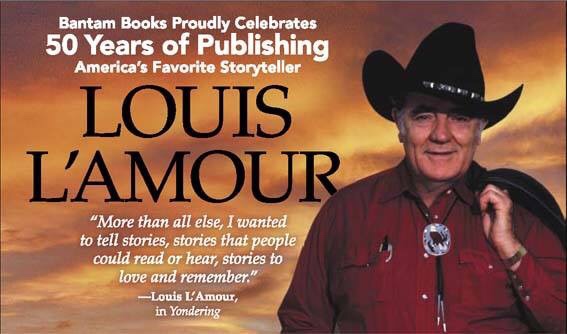
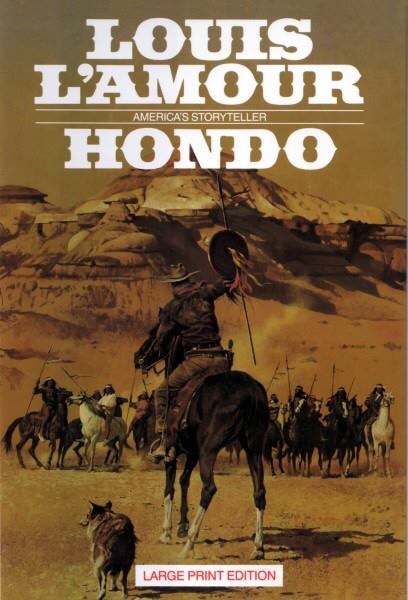
Louis L’Amour is born in Jamestown, North Dakota.

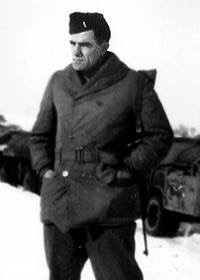
Ditching school at age 15, he spent the next twenty plus years traveling the world, working as a cowboy, a longshoreman, a sailor, prizefighter, miner, and a World War II tank crewman in Europe.

When he came home from the war, he began writing. 108 books and 225 million copies later, he was recognized as the most prolific Western writer in America.

His narrative was gritty and quick…and many of us loved them.

Many in Hollywood would be honored to portray his characters…it made some careers. Tom Selleck, Sam Elliott, John Wayne, George Peppard, James Stewart, Henry Fonda, Debbie Reynolds and so many others.

My second favorite movie, “How the West Was Won” was based on one of his books. What a life!

America’s Dogs Go to War

Today in History, March 13, 1942:

For my K-9 Officer friends and their partners.

The US Army Quarter Master Corps begins training dogs for service in the Army, Navy, Marines and Coast Guard as well.

German Shepherds, Belgian sheep dogs, Doberman Pinschers, Collies, Siberian Huskies, Malumutes and Eskimos were used for Patrol, Scout, Sentry, Messenger and Mine-detection duties.

The dogs were very valuable in alerting servicemen to approaching enemies.

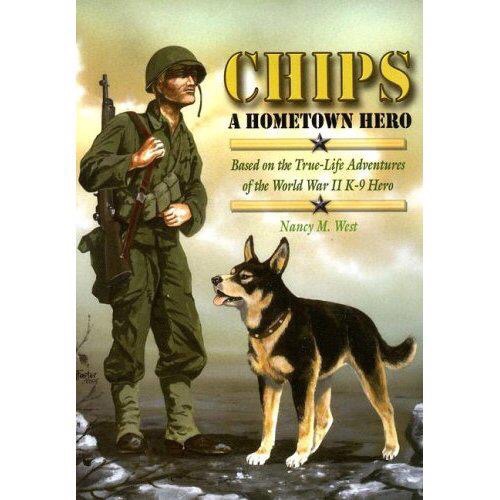
During the Italian campaign a German Shepherd named “Chips”, serving as a Scout with the 3rd Infantry Division, broke away from his handlers and by himself attacked a German machine gun nest, forcing the entire German unit to surrender.

Hoover Saves the World…Again

Today in History, March 11, 1947:

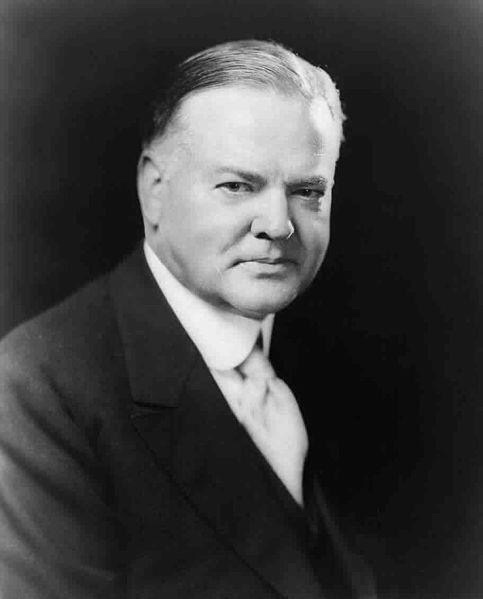
Democrat President Truman writes a letter to former Republican President Herbert Hoover, thanking him for his efforts in helping to save Europe…for the second time.

It is so interesting looking at history absent the biased perspective we’ve grown accustomed to.

Most of us know Hoover…you know, “Hooverville’s” full of starving people, the man who was asleep at the switch and helped caused the great depression.

The story is never as simple as we are told.

Hoover made it to the Presidency because after WWI, he organized the assistance of a starving war-torn Europe, demonstrating his abilities.

As WWII ended, the same disastrous conditions, magnified, existed.

Truman, who had been a young artillery officer as Hoover was doing is good deeds in 1917, called upon his 71-year-old friend to repeat his actions.

Hoover worked tirelessly to create the conditions to feed a starving Europe and end their dependence upon America.

Truman then assigned the former chief executive to head the “Hoover Commission” to organize an objective Truman (D) and Hoover (R) shared…to limit the power of the Executive Branch and streamline the government.

Thus we find that a decent man, Truman, called upon another decent man, Hoover, to aid in helping the world and America.

And Hoover’s legacy should be different than what he has been given. I wonder what GW’s legacy will be in half a century, once the political expedience of demonizing him has passed.

Fire Bombing of Tokyo

Today in History, March 9, 1945:

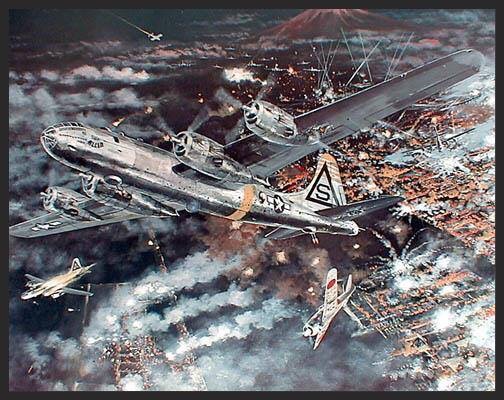
US B-29 Superfortress bombers drop over 200,000 lbs of incendiary bombs on Tokyo, igniting a firestorm much more damaging than the atomic bombs dropped on Hiroshima and Nagasaki, causing as many as 130,000 deaths as the mostly paper houses of Tokyo went up in flames.

Many of the houses had been used as independent manufacturing facilities to support the Japanese war effort.

16 square miles went up in flames (about the size of Tulsa now). In retrospect we could deem this as a war crime; however, if we look at it in the perspective of the times involved, as horrific as it was, it likely saved lives. Without the graphic wake-up call, the Japanese would have fought on…and millions would have perished.

The Last Bridge

Today in History, March 7, 1945:

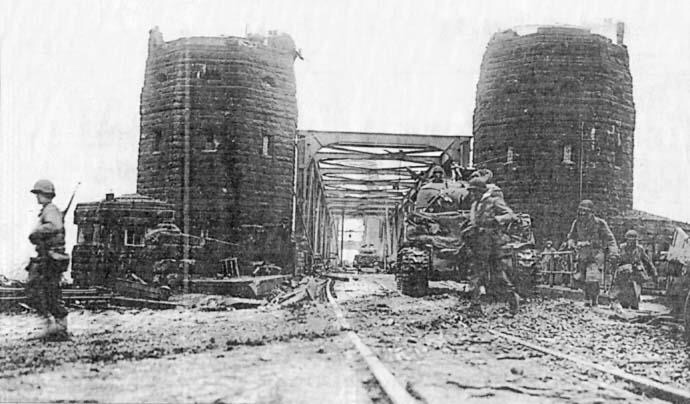
The Bridge at Remagen, or the Ludendorff Bridge Battle.

The American 1st Army arrived in Remagen to a surprise…that the last remaining bridge leading into Germany stood undamaged.

They quickly took the railroad bridge, which was strong enough for American tanks, trucks and artillery to move quickly into the German heartland. Once the bridge was taken, as always, it had to be kept.

And this bridgehead was important…and that is an understatement. The American forces had to fight against air attack, artillery, and sabotage. They moved quickly to take enough territory so that German artillery was out of range, set up sentries with powerful searchlights to catch enemy commandos, set up anti-aircraft batteries, and the bridge had it’s own Combat Air Patrol from the Army Air Corps. Engineers worked around the clock to repair any damage done to the bridge.

The Reichstag Fire Decree and the Surrender of Freedom

Today in History, February 28, 1933:

The Reichstag Fire Decree. On the night of February 27, 1933, the German Parliament, or Reichstag, was burned by arsonists.

The very next day (strike while the iron is hot) German President Paul Von Hindenburg, on the “advice” of Chancellor Adolph Hitler, issues the Reichstag Fire Decree “for the protection of the people and the state.”

The order suspended basic civil liberties guaranteed by the German Constitution.

The fire was blamed on the Nazi’s enemies, Communists. However it is likely the fire was contrived to justify the order, which began Hitler’s dictatorship.

The same type of maneuver would be used by the Nazis in September, 1939, to justify the invasion of Poland.

“Those who would give up essential liberty, to purchase a little temporary safety, deserve neither liberty nor safety.” – Benjamin Franklin

“Uncommon Valor was a Common Virtue”

Today in History, February 23, 1945:

After a hard fought battle, the US Marines reach the top of Mount Suribachi on Iwo Jima.

5 Marines and 1 US Navy Corpsman raised the US flag at the peak, and photographer Joe Rosenthal caught it on camera.

3 of the flag raisers would be dead before the Battle for Iwo Jima was won. After many deaths and the earning of 27 Medals of Honor (half posthumous), the tiny island was deemed “secure” on March 16. Then B29 Superfortress bombers and long range fighters could use the airstrip in the bombing of Japan.

The photo became famous, and inspired the US Marine Memorial at Arlington National Cemetery.

The first flag was considered too small, and a second larger flag, scrounged up from one of the landing ships, was raised to replace it.

Admiral Chester Nimitz described the battle as one “where uncommon valor was a common virtue.”

The USS Lexington is Saved

Today in History, February 20, 1942:

Lt. Edward “Butch” O’Hare saves his ship. The USS Lexington was initiating a raid on Rabaul, a Japanese stronghold. However the Task Force was spotted, and many Japanese aircraft were sent to destroy the valuable aircraft carrier.

Lt. O’Hare was part of the “CAP”, or Combat Air Patrol for the Lexington (CV-2).

O’Hare singe-handedly shot down five of the attacking “Betty” bombers, effectively saving his ship, one of the few aircraft carriers the United States had available at the time.

This also made him the US Navy’s first ace of WWII.

About a year later, O’Hare, ever the hero, would be lost in unknown circumstances in one of the first night time fighter operations.

O’Hare Airport in Chicago is named for Butch.

What many people don’t know is that this American hero, who gave the “last full measure of devotion” for his country, was the son of a gangster. His father had been Al Capone’s lawyer.

The senior O’Hare (Easy Eddie), according to the story, had exchanged his testimony against Capone for a chance for his son to enter the Naval Academy. He paid with his life, gunned down by Capone’s thugs. As a result, thousands of American sailors aboard the Lexington were saved due to Butch’s heroism.

Brotherhood

Today in History, February 18, 1862:

“I know you are separated from your people, and perhaps you need funds.  My purse is at your disposal.”  Union General Ulysses Grant to Confederate General Simon Bolivar Buckner as Buckner prepared to board a river boat taking him north to a Yankee prison.

On February 16, 1862 after a hard-fought battle and investment, Confederate Fort Donelson in Tennessee had surrendered to Union forces.

Tennessee was a strategic area in the Civil War, providing resources, people and a launching point to move against the rest of the South.

General U.S. Grant had been little known to the public before this battle, but the victory would change all that.  He coordinated with the US Navy to bombard Ft. Donelson and surround the 12,000 men there.  After assaults and counter assaults, the Confederate commanders came to the realization loss of the fort was a foregone conclusion, a tragedy for the South.

Gen. Simon Bolivar Buckner was actually third in command.  His superiors resigned their positions so they could sneak out and escape.  Col. Nathan Bedford Forrest took some of his Cavalry and fled also, leaving Buckner to stay with his men and surrender.

Buckner sent a note through the lines asking Grant for terms.  And here is where Grant became famous.  He wrote out his response for delivery to Buckner,

No terms except unconditional and imme­diate surrender can be accepted. I propose to move immediately upon your works.

In a time when furloughs and prisoner exchanges were common in battle, Buckner found the response to be “ungenerous and unchivalrous.”  Yet he had no choice, his only option was surrender.  Having had little but bad news for some time, the Northern papers seized upon the victory.

They used Grant’s initials to rename him “Unconditional Surrender Grant.”  Turns out it wasn’t the first time others had changed his name for him, but that’s another story.

The public was finding out something those serving with Grant had learned…he was unpretentious, unceremonious and tenacious.  He got results.  President Lincoln would eventually say of him, “I can’t spare this man; he fights” in defense of Grant’s reported drinking problem.

If you want History to be more than dates on a page, watch out for the back stories…the facts that bring out the humanity in what you’re reading.

The story reads good already.  But lets dig further.

When Grant was younger, he wanted an education.  His father worked hard and secured him an appointment to West Point.  Initially, Grant didn’t want to go.  But once in, he liked it.  His uncanny horsemanship impressed fellow cadets and instructors.  And he made friends among the other cadets, including Simon Bolivar Buckner, who was attending at the same time.

Grant and Buckner, among many other officers in the US Army, served together and performed heroics in the Mexican-American War of 1846-1848.

After that conflict Grant found himself assigned to the frontier in California, where he missed his family grievously and took to drink.  In July of 1854 he suddenly resigned his commission from the Army and sought transport home.

Grant found himself in New York without even enough money to get a meal or pay for a room.  And then he happened upon an old classmate and friend, Simon Bolivar Buckner.

The two enjoyed a visit, talked old times and Buckner, who was doing much better financially, paid for his friend’s room and board.

In the intervening years until 1861 and the beginning of the Civil War, Grant was somewhat of a hard luck case.  He tried farming, he tried real estate, nothing worked.  When the war began he was working for his brothers and his father in a store as a clerk.

When Southern states began seceding many in the US Army that were from those states, resigned their commissions and joined the Confederate Army, including Buckner.  Thus the old friends found themselves on opposite sides.

Thus, after the Battle at Fort Dolelson, Grant sought out Buckner before Buckner boarded the boat taking him off to prison in an attempt to return an old favor. Buckner, ever the gentleman, politely refused the return of the kindness.

Grant, of course, would become commander of all Union Armies and eventually President.

Buckner would eventually be exchanged for a Union general officer and continue to serve in the Confederate Army.

He surrendered in New Orleans in 1865 for a second time.  He would become Governor of Kentucky among other political successes.

In 1904 he visited the White House and asked President Theodore Roosevelt to appoint his son to West Point.  TR quickly agreed.

His son, Gen. Simon Bolivar Buckner Jr would be killed at Okinawa in WWII, the highest ranking officer killed by enemy fire in WWII.