
Today in History, August 13: 1931 – The first Community Hospital in the United States is dedicated in Elk City, Oklahoma. Dr. Michael Shadid noticed that the farmers and their families in the region were not getting sufficient medical care. He worked with the farmers and the Oklahoma Farmer’s Union to begin a non-profit clinic and hospital owned by the farmers. For his trouble the Medical Examiners Board tried to revoke his medical license, the State Medical Association tried to pass a bill outlawing non-profit hospitals, and the Beckham County Medical Association expelled him.
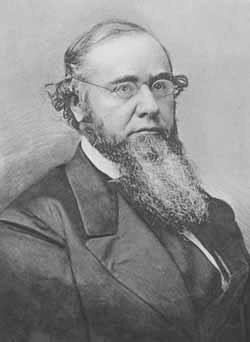

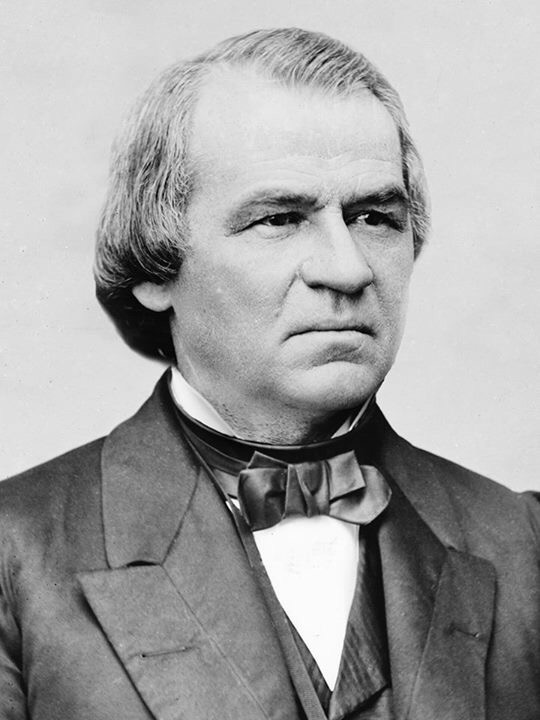
Today in History, August 12: 1867 – “Hon. EDWIN M. STANTON, Secretary of War.
Sir: By virtue of the power and authority vested in me as President by the Constitution and laws of the United States, you are hereby suspended from office as Secretary of War, and will cease to exercise any and all functions pertaining to the same.
You will at once transfer to General Ulysses S. Grant, who has this day been authorized and empowered to act as Secretary of War ad interim, all records, books, and other property now in your custody and charge.
ANDREW JOHNSON”
Volatile politics is nothing new in America. For his second term, President Lincoln had chosen Democrat Andrew Johnson as his vice President because he was from a border state, loyal to the Union, but a Southerner.
When Johnson assumed office after Lincoln’s assassination, he did not enforce reconstruction in the South as strongly as Lincoln’s contemporaries in the cabinet and the Congress wanted. The battle was ongoing, with Congress passing the Tenure of Office Act to prevent Johnson from firing cabinet members that did not agree with him.
Most prominent was Secretary of War Edwin M. Stanton. On this date Johnson suspended Stanton and replaced him with the popular Gen. Ulysses S. Grant, who resigned the position once Congress reconvened and voted not to remove Stanton. Stanton refused to leave, to the point that in February of 1868 when Johnson formally fired him, Stanton barricaded himself in his office in the War Department.
The “radical” Republicans in the House voted to impeach Johnson over the ordeal, but the Senate, after a lengthy trial, kept him in office.
Birth of the 500 Club
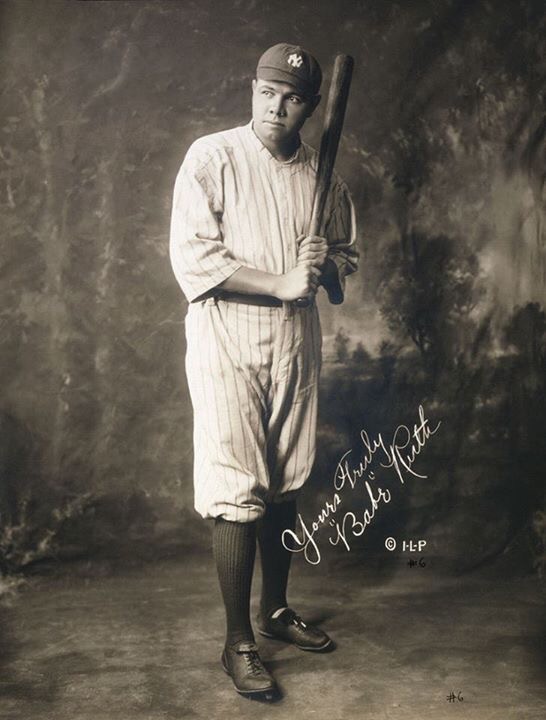
Today in History, August 11: 1929 – Babe Ruth becomes the first member of the “500 club”, when he becomes the first to hit 500 home runs in American baseball. His record would be broken several times in the future, but “The Babe”, part of “Murderer’s Row”, set the standard in ’29.
Acadian Migration
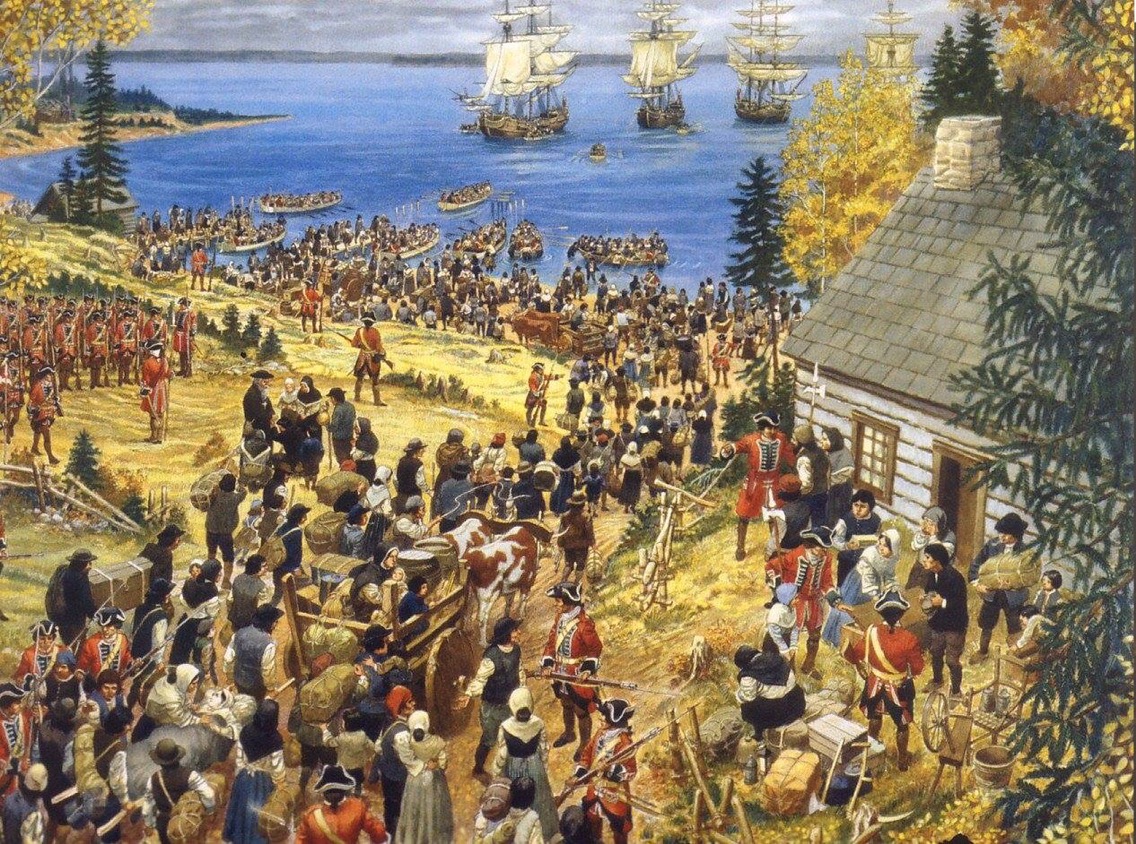

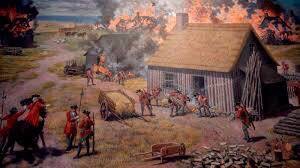
Today in History, August 10: 1755 – Upon the orders of Nova Scotia Governor Charles Lawrence, British soldiers begin the process of forcibly expelling French Acadians, French settlers that refused to submit to British rule in Canada, into the 13 Colonies of the Americas. Many of them would settle in what is now Louisiana. Some would attempt to return to Canada eventually, but their lands had been given to British Tories that had been relocated after the Revolutionary War, so they had to settle elsewhere. Nonetheless…We now have CAJUNS thanks to the British actions of the 18th century.
The Marines Begin the Legend of Guadalcanal


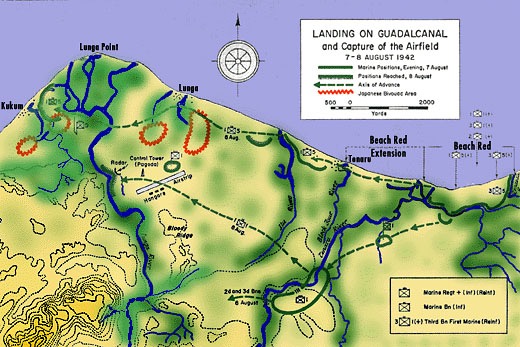


Today in History, August 7: 1942 – The US Marines had fought since the Revolution, incuding WWI (Belleau Wood) but it was THIS day in 1942 that began the legend of the US Marines for many.
The Gyrenes went ashore on a humid, muddy, malaria infested jungle island named Guadalcanal; initially to little resistance. Soon they were fighting for every inch of ground against an enemy that was more than willing to die. The battle would last for over six months, during which the Marines lived in muddy ditches, lived on what rations they could find and suffered nightly bombardment by the Imperial Japanese Navy…but they persevered, conquered and then, after buying the island with their blood, handed it over to the Army. Why was Guadalcanal so important?
The Japanese occupied Guadalcanal to build an airfield there. At the eastern most extremity of the Solomon Islands, the airfield would allow the Japanese to use long range aircraft to cut off supply lines to Australia.
The Marines quickly took the airfield, and named it Henderson Field, after a Marine Captain that gave his life at another pivotal battle, Midway. The Marines struggled back and forth over Henderson for months, but held it…which meant that the Marine air and Navy air forces called The Cactus Airforce could defend the island from nightly bombardment and constant attempts at reinforcement by Japanese forces.
Both Navies lost 24 ships…most of which carpet “Iron bottom sound” off the coast of Guadalcanal and Savo Island. The months ahead would bring many important battles for the Navy and the Marines…but on this date in history, the United States Marines began the battle that proved their place in history.
Damn the Torpedoes!


Today in History, August 5: 1864 – “Damn the Torpedoes! Full Speed Ahead!” New Orleans had been captured from the Confederacy in 1862, leaving Mobile Bay as the only source of foreign supplies for the South, via blockade runners (like the fictional Rhett Butler). On this date the Union Navy sent a fleet of ships led by ironclads into Mobile Bay, fighting a squadron of Confederate Ships and two “batteries” or forts with cannon, and a withering fire that almost immediately sank the USS Tecumseh, an ironclad. The Union fleet began to scatter, until the US Navy’s first Rear Admiral, David Glasgow Farragut inspired them on to victory with his now historic courageous command. By the way, “torpedoes” in 1864 were not propelled explosives as we know of them today, but what we know as mines. This would not be the only battle that would lead to Farragut’s lasting legacy with the US Navy.
George Washington Setting the Standard
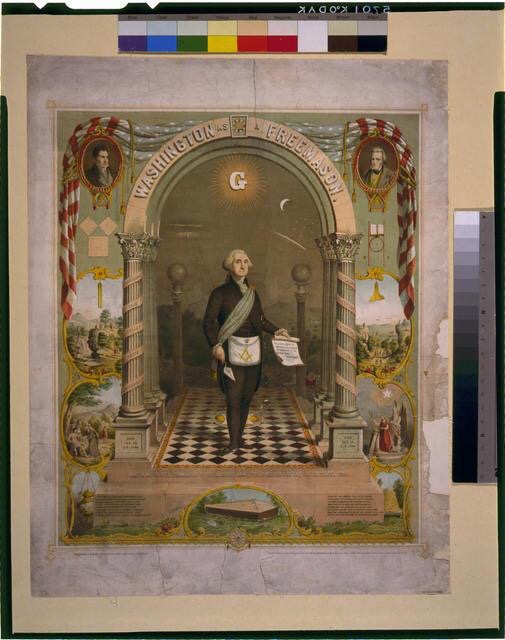
Today in History, August 4: 1753 – 21-year-old George Washington becomes a Master Mason, the highest rank of Freemason in Fredericksburg, Virginia. Rather than an evil conspiracy, the Freemasons were (are) a fraternity based on the medieval guild system, thus “masons”. Their requirements were (are) public service and high moral standards. 14 US Presidents were Freemasons.
Operation Northwest Passage


Today in History, August 3, 1958 – For centuries European nations had sent forth explorers with one goal in mind…to find the Northwest Passage to the Orient to enhance trade. Many failed, many never returned and their fate is unknown.
In 1947 a Russian born U. S. Navy Captain named Hyman Rickover was placed in charge of a program to build the first “Atomic” powered submarine in the world. By 1954 his team had done so, and the USS Nautilus came to be.
On this date in 1958 the world’s first Nuclear powered submarine sailed beneath the Geographic North Pole, going on to traverse the Polar Ice Cap for the first time, creating the long searched for “Northwest Passage.” Of course the submerged ship carrying 116 men 500 feet beneath the surface of the ocean did not create the path of commerce nations long dreamed of, but it was a technological marvel.
PT 109

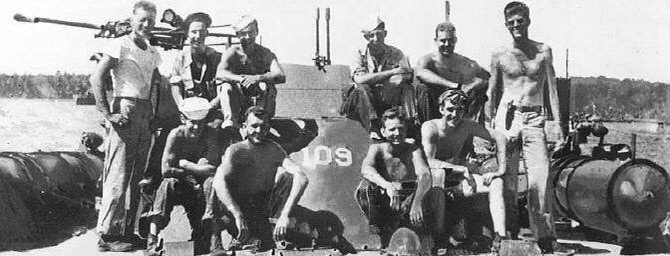

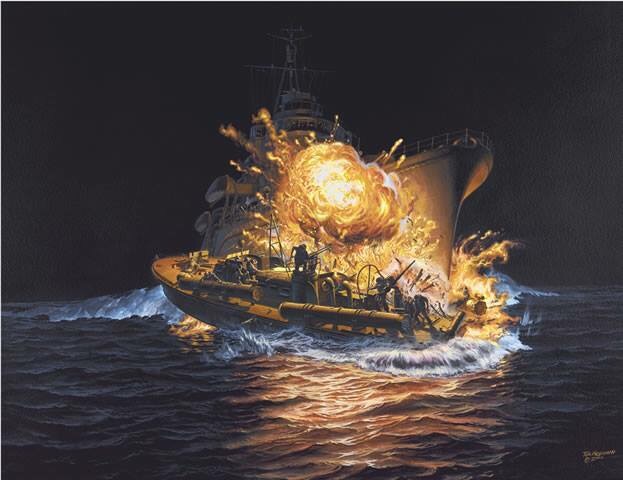
Today in History, August 2: 1943 – Lt (jg) John Fitzgerald Kennedy and the crew of torpedo boat PT-109 are on patrol in Blackett Strait of the Solomon Islands when they are rammed by a Japanese destroyer, IJN Amagiri. The destroyer continued on her way; the crew of the plywood patrol boat began a days long ordeal of survival at sea. Kennedy, in spite of a bad back, towed a wounded crewman by a strap for two miles to a nearby island. He and another officer took turns swimming out into the strait attempting to flag down help. Eventually they encountered natives who were working with an Australian Coast Watcher, who arranged rescue. There was no doubt JFK’s actions were heroic, but heroes were everywhere during those years. His exploits were used during his presidential campaign to great success. He kept the coconut upon which he had written a message to the coast watcher.
Dead Man’s Hand

Today in History, August 2: 1876 – Deadwood, South Dakota. Gunfighter, sometimes lawman, showman, gambler, vagrant Wild Bill Hickok is sitting with his back to the door in a saloon playing poker, holding a pair of black aces and black eights. A coward steps behind him and shoots him in the back of the head, killing him instantly, Hickok’s pistol still in it’s holster. The coward attempted to shoot others in the saloon, but the first round was the only one that wasn’t a dud. He would be tried and hanged. Hickok’s last hand is now known as the “Deadman’s Hand”.
 Mark Loves History!