I Yam What I Yam

what-is-spinach

Today in History, January 17, 1929 – Popeye the Sailor Man debuts in King Features.

Oh, I’m Popeye the Sailor Man,
I’m Popeye the Sailor Man.
I’m strong to the finich
Cause I eats me spinach.
I’m Popeye the Sailor Man.

I’m one tough Gazookus
Which hates all Palookas
Wot ain’t on the up and square.
I biffs ’em and buffs ’em
And always out roughs ’em
But none of ’em gets nowhere.

If anyone dares to risk my “Fisk”,
It’s “Boff” an’ it’s “Wham” un’erstan’?
So keep “Good Be-hav-or”
That’s your one life saver
With Popeye the Sailor Man.

I’m Popeye the Sailor Man,
I’m Popeye the Sailor Man.
I’m strong to the finich
Cause I eats me spinach.
I’m Popeye the Sailor Man.

source: http://www.lyricsondemand.com/tvthemes/popeyelyrics.html

I Have a Dream

Today in History, January 15:  1929 – Martin Luther King, Jr is born in Atlanta, Georgia.  MLK was a Baptist minister who championed Civil Rights in the most desperate of times.  He was arrested multiple times for his peaceful protests, was the subject of investigation by the FBI, and eventually welcomed to the White House for discussions related to equality. 

MLK would be assassinated in 1968, in addition to Civil Rights leaders JFK and RFK.  In 1983 President Ronald Reagan would sign a bill proclaiming Martin Luther King, Jr Day.  In 1992, President George HW Bush would proclaim the third Monday of each January as MLK Day. 

Standing at the Lincoln Memorial, Martin Luther King, Jr spoke saying his dream was that he hoped white and black children would one day hold hands.  We’ve come far beyond those hopes.  My hope is that some day people of all races will take yes for an answer.

Heroes and Parallels

Today in History, January 16:  2001 – Colonel Theodore Roosevelt is awarded the Medal of Honor, posthumously.  I know I write a lot about TR, but this post is more about parallels and over-lapping history, a subject that makes me enjoy history the most.

After Theodore Roosevelt charged up San Juan Hill during the Spanish-American War, his friend and comrade Gen. Leonard Wood nominated him for the MoH.  Due to politics, his request was denied.  In 1996 legislation was enacted to allow retroactive awards due to the mistreatment of black combat veterans in WWII.  As a result, requests were made to award TR with his MoH; the Army demurred, but Congress insisted in the end.  On this date in 2001, President Bill Clinton presented the MoH to TR’s grandson, Tweed.  Today in is displayed in the Roosevelt Room of the White House, along with TR’s Nobel Peace Prize, earned for negotiating peace between Russia and Japan in 1905.

While reading about this, I also read there are two sets of father and son recipients of the Medal of Honor.  Both sets happen to be from US Army service…2nd Lt. Arthur MacArthur and his son General of the Army Douglas MacArthur; and Colonel Theodore Roosevelt and his son Brigadier General Theodore Roosevelt, Jr.

I began to see the parallels from history books I’ve read and listened to over the years.  It is fascinating.

During the Civil War Theodore Roosevelt, Sr. (TR’s father) was already a wealthy New Yorker.  His wife Mittie, struggled through the war; she was a Southerner and her brothers fought for the Confederacy.  Thee was a loyal Unionist, but due to his wife’s struggle and his own mother’s pleas, he took advantage of the practice of the day…being wealthy he hired two men to serve in his place in the army.  He also served by aiding the men of the military, torn by guilt; a guilt shared by his son.  TR Jr adored his father, but his concerns about his father’s actions drove him to abandon his post as Assistant Secretary of the Navy in 1898 to volunteer for the Spanish-American War.

While TR Sr was working behind the scenes during the Civil War, 2nd Lt. Arthur MacArthur was charging up Missionary Ridge in Tennessee, carrying his Brigade’s colors with him, for which he was presented the Medal of Honor.  His wife’s brothers also fought for the Confederacy.  Brother against brother, as the story goes.

Arthur MacArthur’s son, Douglas, would grow up in military posts of the west where Arthur served.  As TR was charging up San Juan Hill in Cuba, Douglas was making his third attempt to enter the US Military Academy at West Point.  When he graduated in 1903, Theodore Roosevelt was President of the United States.

In 1918, as Douglas MacArthur was making a name for himself as a brilliant staff officer in France, former President Roosevelt was desperately mourning the loss of his son Quentin, who had been shot down over France as a pioneering American fighter pilot.  TR would be dead by the next year, heartbroken.

In 1942 Douglas MacArthur would be awarded the MoH for his actions in defending the Philippines from Japanese invasion…ordered home on a PT boat by Franklin Delano Roosevelt…cousin of TR, whose wife Eleanor was TR’s much favored niece.

On June 6, 1944, TR’s son and namesake, was the only general officer to land in the first wave in Normandy on Utah Beach.  He would be awarded the MoH for his actions…and like his father, the designation was posthumous; he would die within two weeks of D-Day of a heart attack in France.

History is not so complex.  You just have to look.

A Live Jack-ass Kicking a Dead Lion

nast-stanton

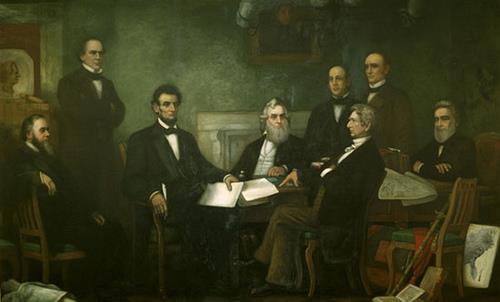
Today in History, January 15: 1870 – “A Live Jackass Kicking a Dead Lion” “And Such a Lion! and Such a Jackass!” Harper’s Weekly cartoonist Thomas Nast publishes a cartoon which popularizes the Jackass as the symbol for the Democrat party. I enjoyed researching this topic; there are several interesting details. Where to start? Perhaps with Nast himself. A German immigrant, Nast is considered by many to be the father of the modern political cartoon. In addition to the Democrat Jackass, he popularized the Republican Elephant and our conception of Santa Claus. I use the term popularize because he wasn’t the first to use any of these symbols, but he made them known to everyone.  The Jack-ass originally became known as a Democrat symbol when someone called President Andrew Jackson a jack-ass, and he decided to “own it.” Among other things he was an abolitionist and a patriot. Which is why Northern Copperheads angered him so. Copperheads were Northern Democrats that were sympathetic to the Confederate (Southern Democrats) cause. Nast considered them racists and traitors. Edwin M. Stanton had been part of President Lincoln’s “Team of Rivals”, the Secretary of War who prosecuted the Civil War from Washington and had become respectful and loyal to Lincoln. When Stanton died suddenly on Christmas Eve 1869, the Copperhead Papers in the North continued their criticism of him, speaking ill of the dead. This was the inspiration for Nast’s cartoon.

This isn’t to say Stanton was a lovable character.  He angered many in D.C. and in the Army.  General William T. Sherman refused to shake his hand at a military review at the close of the war due to Stanton’s treatment of him.  Stanton was an opportunist, but he worked hard at his job.  I recently listened to a biography of him that was so negative as to lose credibility with me.  It was a reminder to check multiple sources, and to attempt objectivity in viewing historical subjects.

Surgeon General’s Warning:

camelpack1971-2

Today in History, January 11:  1964 – US Surgeon General Luther Terry publishes Smoking and Health: Report of the Advisory Committee to the Surgeon General of the United States.  The information was not new to the medical community, but it put an official stamp on it.  It led to the warning on cigarette packages and a war upon the tobacco industry.

Smoking tobacco was made popular in England when Sir Walter Raleigh brought tobacco and potatoes back from his adventures in the New World during the sixteenth century.  Tobacco was a key portion of America’s agriculture for years.

Individual rights, obviously, make smoking an individual right.  Millions have died due to its use, however, including both of my parents, victims of the pictured “Camel” and “Pall Mall.”  So personally, I’ll be quite happy when all of my loved ones make the choice to quit.

Lincoln and Seward

37108_3542262734028_817160831_n

Today in History, January 10: 1861 – New York Senator William Seward accepts President Lincoln’s offer to assume the duties of Secretary of State. Seward had been a very successful politician, serving as NY Governor in addition to the Senate. He was the front runner Republican nominee for President in 1860, but late in the game the party decided that Lincoln was a safer candidate due to Seward’s outspoken anti-slavery views. Although he accepted the offer for Secretary of State, the experienced, well-educated Seward was initially condescending towards the country lawyer from Illinois. In fact, one of his first acts as a Cabinet member was to suggest, in a manner that he thought Lincoln would not understand, a co-Presidency with him calling the shots. Lincoln, of course, declined. In the coming months of working together, Seward’s opinion of his boss changed and the two became close friends. Seward could walk into the White House any time, and Lincoln often strode to Seward’s home. In “Team of Rivals”, Doris Kearns Goodwin described how Lincoln chose his former rivals as Cabinet members and won their respect, utilizing their skills for the nation.
Seward’s closeness to the President won him many enemies jealous of his power in the government, and when Republican Senators tried to depose him, Lincoln showed his political mastery in retaining him. On the night Lincoln was assassinated, one of Booth’s co-conspirators attempted to assassinate Seward, who was bed-ridden recovering from a carriage accident. Several people in Seward’s house were injured in the brutal attack, and Seward was stabbed. Secretary of War Stanton and others were hesitant to tell Seward of Lincoln’s death, fearing it would impact him and prevent his recovery. He did recover, and resumed his post. In 1867 he pushed through the purchase of Alaska from Russia. His detractors labeled the purchase “Seward’s Folly”. History, of course, would prove William Seward’s wisdom in that and many other respects.

The Great Die-up

gritty-blizzard-rider_web_800_527

Today in History, January 9:  1887 – The Great Blizzard of ’87.  Those of us that love old westerns are familiar with the scene of cattle drives and of huge herds of cattle grazing on the open range.  That all ended on this date in 1887.

Beginning in the 1860’s ranchers in Wyoming, Montana and the Dakotas kept larger and larger herds of cattle, setting them free to graze on the open range, then bringing them in for “Round-ups” to ship them east (one of these ranchers was a young Theodore Roosevelt, who nearly lost everything in the venture). 

The summer of ’86 was hotter than most, leaving very little for the cattle to graze on to begin with.  When an unusually harsh winter began, they were already famished.  The ranchers had put little aside to feed the cattle.  And as Roosevelt writes in “Hunting Trips of a Ranchman, Sketches of Sport on the Northern Cattle Plains”, not enough feed could be stored for the large herds anyway, and they were too scattered to get the feed to them in any event.  The ranchers focused on driving the segments of the herds they found towards grassy, more sheltered areas when they roamed into sparse areas.

The winter of ’86-’87 was harsh already, then on the 9th of January a blizzard struck which dropped 16 inches of snow across the northern plains within 16 hours.  As if that wasn’t bad enough, a Chinook (warm weather) blew through, melting the top layers of snow.  When it inevitably re-froze, it formed a thick layer of ice on top of the snow which the cattle could not break through.  What little grass was left could not be reached.

The cattle roamed into the local towns, bawling for food which none of the settlers had to give.  When the thaw happened in the Spring, there were millions of rotting carcasses across the plains, tainting water sources.  Many of the ranchers went bankrupt. 

The event changed forever the agriculture on the northern plains.  Ranchers ran much smaller herds, grew their own sources of food for the cattle they had, and began fencing off the open plains so they could keep their herds close. 

Life had changed forever…because nature said so.


Swashbuckling Was Real

1560490_10200342992376196_1011282728_n

Today in History, January 8: 1815 – The Battle of New Orleans. American Major General Andrew Jackson’s forces (approximately 4,700) defeat British Major General Edward Pakenham’s forces (8,000). The British were attempting to fight their way into New Orleans but first had to defeat the “Jackson Line” of defensive works lined with artillery, US Army regulars, Kentucky and Tennessee Militia, Freedmen, Native Americans and even the pirate Jean Lafitte and his men. The British were confident of a quick victory, attacking in the morning under the cover of fog. But the fog cleared and Pakenham’s men were cut to pieces by grapeshot (anti-personnel artillery) and the marksmanship of the Americans. Pakenham, a veteran of numerous campaigns worldwide (Brother-in-law to the Duke of Wellington), was knocked from his horse by grapeshot which struck him in the leg, then hit in the arm, and finally, as he climbed on his aide-de-camp’s horse was struck in the spine, wounding him mortally. Most of the British officers were killed and their troops, not knowing whether to charge or retreat, were being decimated in the open field until another general arrived and ordered a retreat. If you have time to read more, the story is fascinating on both sides. The battle was fought approximately 2 weeks after the Treaty of Ghent was signed, initiating the end of the War of 1812, but of course none of the parties in Louisiana knew that. Jackson would ride the fame of the victory into the Executive Mansion.

Jackson had plenty of reason to hate the British.  During the Revolutionary War, when he was 13 and 14, he and his brother were captured by the British, tortured and scarred.  Young Andrew was beaten because he obstinately refused to shine a British Officer’s boots.  Jackson’s brother Robert would die soon after release, his mother would die of Cholera while treating American soldiers injured during the war; he was orphaned as a result. I’m sure his hatred of the Crown contributed to the crushing defeat at New Orleans.

When Jackson was elected President, his supporters literally climbed through the windows and trashed the White House.  He fought continuously with the Washington elite over several issues, most notably the banking system. 

Chrysler the Mogul is Man of the Year

1101290107_400

Today in History, January 7:  1929 – Walter Chrysler is named Time Magazine’s Man of the Year for 1929 amid the success of the company named for him.  Chrysler had been born the son of a railroad engineer, had worked for the railroad and then for the auto industry, rising to be the head of General Motors’ Buick Division.  In the 1920’s he saved the Willys-Overland Company (which later would design and produce the WWII Jeep) and the Maxwell-Chalmers Company, which would become Chrysler.  Also in the twenties Chrysler bought out the Dodge Brothers Company and built the Chrysler Building, which would, for a time, be the world’s tallest building.  Also, this would not be the last time Walter Chrysler would be featured on Time’s cover before his death in 194o.

Sadly, this date would again be important for the Chrysler Corporation.  On this date in 1980 President Jimmy Carter would sign the “Loan Guarantee Act”, a 1.5 Billion dollar bail out of Chrysler asked for by the company’s new leader, Lee Iacocca, in a desperate effort to save the auto maker and its many jobs.  The company had struggled to make the change to smaller, more efficient cars in the seventies.  The company has since been bought by Daimler-Benz, and then Fiat.