Desist from Treasonable Acts and Doings…

Today in History, November 30, 1776:

The Howe Brothers, Admiral Richard and General William, in command of the Engliah Army and Navy in the Americas issue a proclamation that American colonists who will “desist from treasonable acts and doings” would receive a pardon.

Of course, most of the colonists were determined. After the British signed the Treaty of Paris in 1783, those “Tories” that had accepted the offer, mostly New Yorkers, were evacuated by the British to Canada.

Making Sure the Trains Run on Time

Today in History, November 18, 1883:

The origin of time zones.

American railroads were hardly ever on time. Each depot was on a different time, since they used the path of the sun to determine what time it was. As a result, American railroads established a system of “time zones”, so that more of the country would be on the same time.

East, Central, Mountain and Pacific. Eventually cities and then the entire country would adopt the system.

The Heidi Game

Today in History, November 17, 1968:

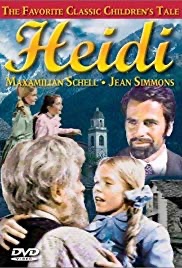
The Heidi Game.

The game had gone long and the New York Jets were defeating the Oakland Raiders 32-29.

It had been a hard fought contest with lots of injuries and delays. NBC executives tried to call their studios to delay the 7 PM airing of “Heidi”, but the phone lines were jammed by viewers afraid they would miss part of the game. As a result the game dropped in the Eastern time zone and Heidi began.

With only a minute left in the game (who knew), The Raiders scored twice, winning a surprise victory 43-32.

Broadcasters now have dedicated phone lines known as “Heidi phones” to ensure communication with their studios.

“Now You’re the Biggest Asshole I Know…”

Today in History, November 5, 1960:

Here’s one for my fellow old movie buffs.

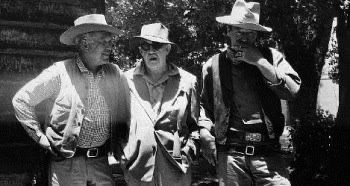
Ward Bond, John Wayne and director John Ford had made dozens of movies together over the years.

Ward Bond was a prolific actor, making as many as 30 movies in a single year. Of the AMA’s 100 top movies, he appeared in 7…more than any other actor, to include Gone With the Wind, The Grapes of Wrath, The Maltese Falcon, It’s a Wonderful Life and The Searchers.

While staring in “Wagon Train” he went to Dallas, Texas to see a ball game and died of a massive heart attack on this date.

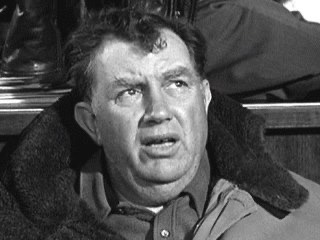
He, Wayne and Ford were all best friends and prolific drinking buddies, in addition to Andy Devine.

Like any good friend, and likely heartbroken, at Bond’s funeral, John Ford walked up to Devine and said, “Now YOU’RE the biggest asshole I know.”

Guy Fawkes Day

Today in History, November 5, 1605:

The Gunpowder Plot.

Several Catholic conspirators had hatched a plan to blow up the Parliament building in London while the king and parliament met.

One of the conspirators told a relative not to attend, and that relative told authorities. On the night of November 5th, conspirator Guy Fawkes was caught lurking in the basement of the building, and subsequently 20 barrels of gunpowder he had hidden there were located.

Fawkes named his conspirators under torture. Several, including Fawkes, were sentenced to be drawn and quartered. As Fawkes climbed a ladder to the gallows, he jumped to his death.

Today is Guy Fawkes day in England, celebrating the failure of the plot.

Killed in the Line of Duty at 71…

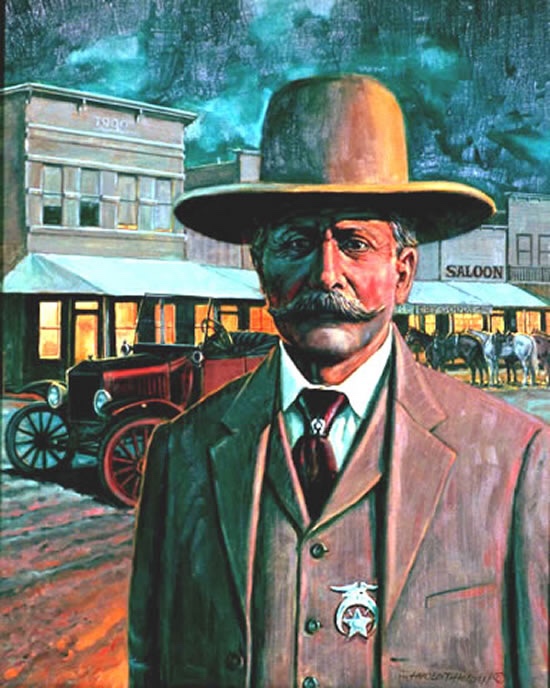
1924 – This should make you Oklahoma proud. Law enforcement proud. THIS is what its all about: On this day, William Tilghman is murdered by a corrupt prohibition agent who resented Tilghman’s refusal to ignore local bootlegging operations. Tilghman, one of the famous marshals who brought law and order to the Wild West, was 71 years old.

Known to both friends and enemies as “Uncle Billy,” Tilghman was one of the most honest and effective lawmen of his day. Born in Fort Dodge, Iowa, in 1854, Tilghman moved west when he was only 16 years old. Once there, he flirted with a life of crime after falling in with a crowd of disreputable young men who stole horses from Indians. After several narrow escapes with angry Indians, Tilghman decided that rustling was too dangerous and settled in Dodge City, Kansas, where he briefly served as a deputy marshal before opening a saloon. He was arrested twice for alleged train robbery and rustling, but the charges did not stick.

Despite this shaky start, Tilghman gradually built a reputation as an honest and respectable young man in Dodge City. He became the deputy sheriff of Ford County, Kansas, and later, the marshal of Dodge City. Tilghman was one of the first men into the territory when Oklahoma opened to settlement in 1889, and he became a deputy U.S. marshal for the region in 1891. In the late 19th century, lawlessness still plagued Oklahoma, and Tilghman helped restore order by capturing some of the most notorious bandits of the day.

Over the years, Tilghman earned a well-deserved reputation for treating even the worst criminals fairly and protecting the rights of the unjustly accused. Any man in Tilghman’s custody knew he was safe from angry vigilante mobs, because Tilghman had little tolerance for those who took the law into their own hands. In 1898, a wild mob lynched two young Indians who were falsely accused of raping and murdering a white woman. Tilghman arrested and secured prison terms for eight of the mob leaders and captured the real rapist-murderer.

In 1924, after serving a term as an Oklahoma state legislator, making a movie about his frontier days, and serving as the police chief of Oklahoma City, Tilghman might well have been expected to quietly retire. However, the old lawman was unable to hang up his gun, and he accepted a job as city marshal in Cromwell, Oklahoma. Tilghman was shot and killed while trying to arrest a drunken Prohibition agent.

The Federalist Papers

Today in History, October 27, 1787:

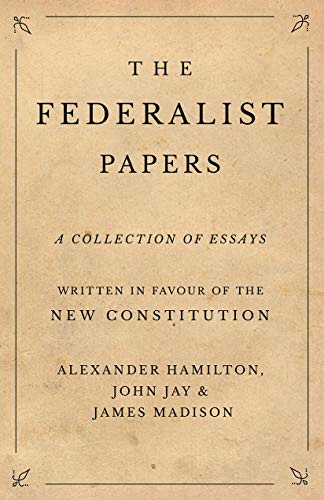
The first of 85 Federalist Papers are published in New York’s Independent Journal.

A collaboration between Alexander Hamilton, James Madison and John Jay, published under the name “Publius”, the Papers used eloquence and remarkable examples from the history of governments, ancient and modern at that point to advocate the ratification of the new Constitution recently approved by a constitutional convention.

They were selling an idea abhorrent to most Americans who had just won a hard fought battle for independence – a strong central government.

If you are into that sort of thing, they are worth reading. You will find examples of the genius of our government and of how our government has been changed from the vision of our founding fathers.

But for the most part, the well thought out form of government they designed has survived the ravages of time and the attempts of less ethical men to corrupt it.

An Oklahoma Sheepdog Fights to the Death in Defense of his Flock

Today in History, October 26, 1944:

OKLAHOMA PROUD.

Did you know that we Okies make up only a little over 1% of the US population? And we’ve been around as a territory or state for less than half our nation’s history. Yet I keep finding that we’ve given a much larger accounting of ourselves in courage, commitment and love of our neighbors than that…much more than our 1% share.

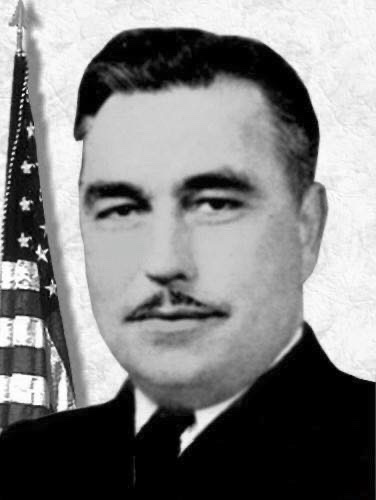
Whether its the Sooners in the Great Land Rush, US Marshal Bill Tilgman, Will Rogers, the survivors of the Dust Bowl, OKC in ’95, our many astronauts, or the man in the photo, Ernest E. Evans, we are everywhere.

During the Battle Off Samar, in the Battle of Leyte Gulf (Oct. 24-26, 1944), Commander Evans (Oklahoma Cherokee) found his tiny destroyer and a couple of others, the only defense for the light carriers of “Taffy 3” from a massive Japanese force that included battleships, cruisers and destroyers.

For 3 hours he and his crew fought so hard that the enemy thought they were fighting a much larger combatant. In the end, the enemy retreated from the fierce American defense. Evans and his crew continued until they were sunk, and Evans went down with his ship. He was awarded the Medal of Honor.

Commander Evans knew his tiny ship did not stand a chance against the larger ships, but he placed himself and his crew between the enemy and his helpless charges…a true Sheepdog.

The United Nations Initiated

Today in History, October 24, 1945 & 1949:

Since 1941 FDR and Winston Churchill had been referring to the Allies as the “United Nations.”

on this date in 1945 the 5 permanent members of the Security Council and other signatories signed the UN Charter, beginning the organization two months after the end of WWII.

Exactly 4 years later in 1949 the cornerstone to the United Nations building in New York City was laid down.

A Horrific Day over Schweinfurt

Today in History, October 14, 1943:

During it’s Second Raid on Schweinfurt, Germany’s ball bearing plants, the Mighty US Eighth Air Force loses SIXTY B-17 Flying Fortress bombers to German fighters and anti-aircraft fire.

That number becomes more ominous when you know that each aircraft had at least a 10 man crew, meaning that 600 airmen either lost their lives or were captured that day.

The casualties in the Eighth Air Force over Europe accounted for more than half of the losses for the entire US Army Air Corps.

With over 26,000 dead, it surpassed the horrific losses of the US Marine Corps during the war by far…the USMC having lost almost 18,000 dead in the bitter battles in Pacific Islands.