WAVES…Born at OSU


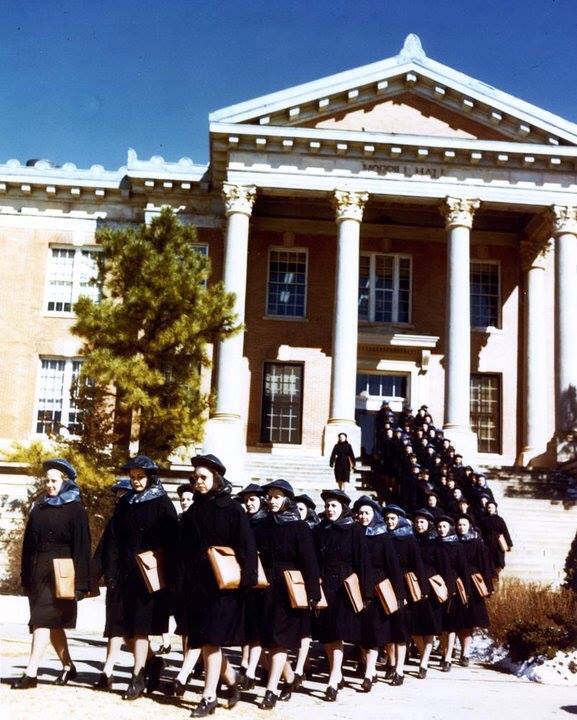
Today in History, October 9: 1942 – The Navy’s first WAVES (Women Accepted for Volunteer Emergency Service) begin school in Stillwater, Oklahoma. That should make us proud.

Morrill Hall at Oklahoma State University was the birthplace of the WAVES program. It may seem trite today, but in it’s time it was a leap forward for women’s placement in the workplace. 

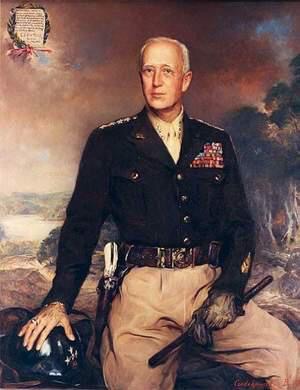
Patton Gets Himself Fired


Today in History, September 22: 1945 – 

Gen. George S. Patton gets himself fired. The war in Europe was over, and establishment of civil policies underway. 

While talking to reporters, Patton comments that he doesn’t see the need for “this denazification thing”. Then he went on to relate the “Nazi thing” to Republicans and Democrats. 

 This was the final straw in regards to Patton saying what he thought in public. He had frequently gotten himself in hot water. His gaffs had been overlooked due to his talents on the battlefield. With the war over he no longer had this cover. 

Had he articulated his views better he could have proven he was correct. Most of the “Nazis” that he wanted to leave in administrative positions were only German civilians who were Nazis because they didn’t want to cross the SS or Hitler. They kept the trains running on time, etc. They were not leaders. Patton had just spent years encouraging his soldiers to kill nazis. It is not reasonable to believe he was defending nazis. 

Patton would never make it home, being killed in an automobile collision. But that is another story. 

 Years later, long after his death, of course, Patton would be proven correct during the Iraqi war. All of the “Bathists” were removed from their administrative positions and from the Iraqi army. And many of them had been part of the Bath party to survive. The move created many problems in the Iraq War.

“These Proceedings…Are Closed.”  Historic Connections 


Today in History, September 2: 1945 – A Japanese delegation signs surrender documents aboard the Battleship USS Missouri in Tokyo Bay, bringing WWII to an end. Even after atomic bombs had been dropped on Hiroshima and Nagasaki (more people were killed in bombings by B-29’s in other bombings, ironically) killing tens of thousands, the Japanese military only came to terms with defeat after much gnashing of teeth, threats of assassinating each other and finally a direct order from the Emperor himself, who was mortified by the suffering of his people. 

 A couple of interesting asides to the story. In the first photo you will notice an American flag, framed “backwards” as to appear to be flying, mounted on the bulkhead of the Missouri. The flag had flown at the mast of Commodore Matthew C. Perry’s flagship in 1853 as he made his second visit to Tokyo, which resulted in the closed nation of Japan trading with westerners for the first time in 200 years. The flag had been flown by special courier from the States especially for the surrender ceremony. 

 This detail seemed so fantastic to me that I had to research it until I found confirmation from the Naval History and Heritage Command’s website. Perry was the younger brother of Oliver Hazard Perry, helped advance the steam powered US Navy, and fought in the War of 1812 and the Mexican-American War in addition to his Japanese exploits. A replica of the Perry flag is positioned in the same location aboard the Missouri, which is now docked in Pearl Harbor near the USS Arizona. 

 Another sad point I found was that on September 2, 1945, as Gen. MacArthur concluded the surrender with the words, “Let us pray that peace be now restored to the world and that God will preserve it always. These proceedings are closed”, Ho Chi Minh, who had cooperated with the Japanese occupation of “Vietnam” during the war, was participating in declaring the independence of the “Democratic Republic of Vietnam” in North Vietnam. This would lead to the Indochina Wars and eventually to American involvement in the Vietnam War. It seems it never ended.

“The Victor Will Not Be Asked Whether He Told The Truth”


Today in History, August 31: 1939 – “I will provide a propagandistic casus belli. Its credibility doesn’t matter. The victor will not be asked whether he told the truth.” –Adolph Hitler.

 The Gleiwitz incident, an assault on a German radio station, as part of Operation Himmler, takes place. The assault was conducted by GERMAN SS troops, posing as Polish troops, upon a German radio station. The ruse went so far as to leave Polish prisoners, captured previously, dead at the station as “proof” of the assault. 

 The next day, already prepared, German troops invaded Poland in “response” to the atrocity. 

Project Habakkuk


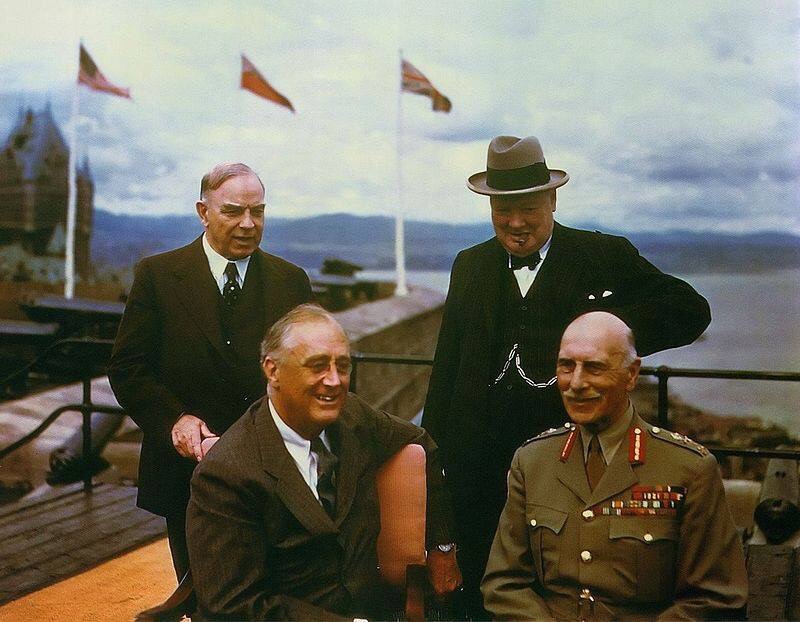
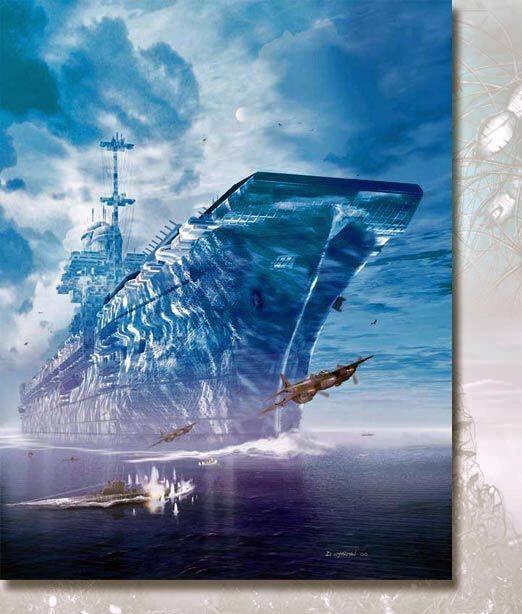
Today in History, August 17: 1943 – Project Habakkuk, The First Quebec Conference and Pykrete. During WWII Geoffrey Pyke presented an idea to his superiors in the British military of building an enormous aircraft carrier out of a material he called pykrete, ice mixed with wood pulp, which turned out to be very strong. The ship, had it been built, would weigh in at 2.2 million tons and have space for 150 twin engine aircraft, and would be practically impervious to bombs and torpedoes. Experiments were underway in Canada. On today’s date, the First Quebec Conference (Codename Quadrant) began, involving FDR, Churchill and their military staff. Reportedly, during the conference, Lord Louis Mountbatten brought an ordinary block of ice and a block of pykrete into a meeting room filled with generals and admirals. Without warning he drew his pistol, aimed at the block of ice, and fired. The block shattered. He then aimed at the block of pykrete and fired at it. The bullet did not penetrate, but rather ricocheted, zinging around the room and going through the leg of Admiral Ernest J. King’s trousers. The ships, of course, were never built; not due to the shooting incident, but because other alternatives were more easily available.

Strategy and Commerce…The Panama Canal


Today in History, August 15: 1914 – The Panama Canal opens for business as the cargo ship Ancon becomes the first ship to transit the series of locks. A long and complex history led to the canal’s opening. The French tried first, but failed after malaria and the huge cost ended their venture. The Canal was important to the US. After the Spanish-American War, the US had interests in both the Atlantic and Pacific Oceans, and they had always needed a faster, less dangerous route to the nation’s coasts for shipping than the Strait of Magellan at South America’s Southern tip. President Theodore Roosevelt ramrodded the building of the canal. When a treaty with Columbia fell through, the Panamanians, who wanted the canal, declared their independence from Columbia and TR sent the US Navy to support their efforts. After they won their independence they signed the Hay-Bunua-Varilla Treaty, giving American ownership of the canal in exchange for rent.  John Hay was the Secretary of State for the US, who had been a secretary to President Lincoln many years before.  Was their some skullduggery involved in these dealings? Of course. For years after it’s opening, the Canal served it’s purpose…commerce between the Atlantic and the Pacific, and a quick route for American warships (in the photo, the USS Missouri transits the Canal in 1945) to defend the country in both oceans (WWII was known as the Two Ocean War). In 1977, President Jimmy Carter signed a treaty giving away the Canal to the Panamanian dictator Omar Torrijos. Today, the Chinese are bankrolling the expansion of the Canal. Which means the nation that we are likely to have conflict with in the next century has control of the route our Navy would need to defend our country. So. Who do you favor? President Theodore Roosevelt? Or President Jimmy Carter? I vote for Teddy. Would love to see them in a debate, or in a ring together.


Today in History, August 14: 1945 – How long did WWII last? The August Revolution. On the day that the Japanese formally surrendered to the Allies aboard the USS Missouri in Tokyo Bay, Japanese officials in Vietnam turned over government buildings to Ho Chi Minh and the Communist Viet Minh, in defiance of the peace terms. There would be a temporary peace as the Viet Minh “attempted” to work with the British and French occupation forces of “French Indo-China”. There were Chinese occupation forces also. None of this would last, and the Japanese actions contributed to the eventual First Indo-China War. Thirty years later, after much blood and sacrifice by both French and American soldiers, sailors and airmen, the Vietnam War would finally end. 

The Marines Begin the Legend of Guadalcanal


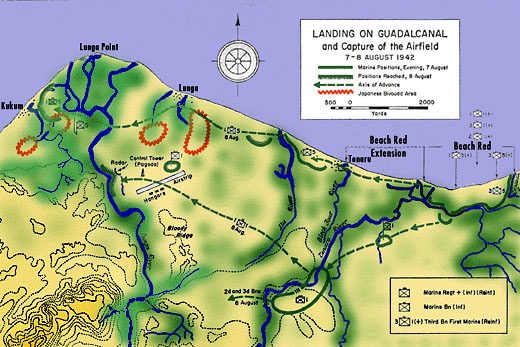
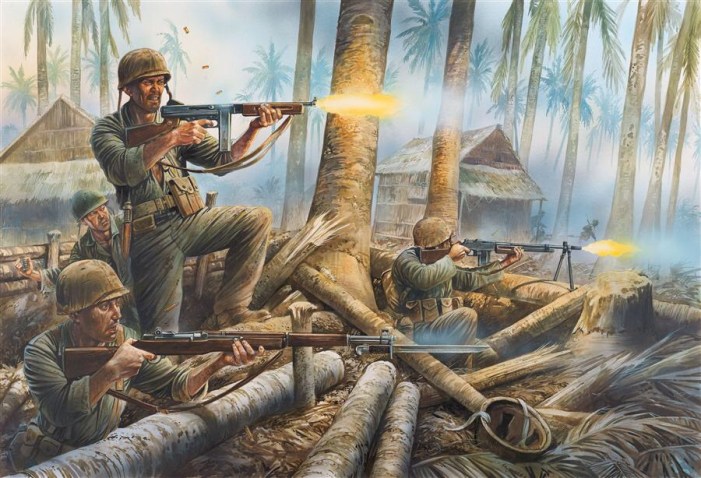
Today in History, August 7: 1942 – The US Marines had fought since the Revolution, incuding WWI (Belleau Wood) but it was THIS day in 1942 that began the legend of the US Marines for many. 

 The Gyrenes went ashore on a humid, muddy, malaria infested jungle island named Guadalcanal; initially to little resistance. Soon they were fighting for every inch of ground against an enemy that was more than willing to die. The battle would last for over six months, during which the Marines lived in muddy ditches, lived on what rations they could find and suffered nightly bombardment by the Imperial Japanese Navy…but they persevered, conquered and then, after buying the island with their blood, handed it over to the Army. Why was Guadalcanal so important?

The Japanese occupied Guadalcanal to build an airfield there. At the eastern most extremity of the Solomon Islands, the airfield would allow the Japanese to use long range aircraft to cut off supply lines to Australia. 

 The Marines quickly took the airfield, and named it Henderson Field, after a Marine Captain that gave his life at another pivotal battle, Midway. The Marines struggled back and forth over Henderson for months, but held it…which meant that the Marine air and Navy air forces called The Cactus Airforce could defend the island from nightly bombardment and constant attempts at reinforcement by Japanese forces.

 Both Navies lost 24 ships…most of which carpet “Iron bottom sound” off the coast of Guadalcanal and Savo Island.  The months ahead would bring many important battles for the Navy and the Marines…but on this date in history, the United States Marines began the battle that proved their place in history.
PT 109


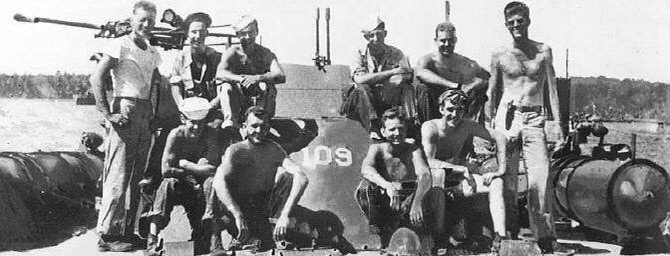
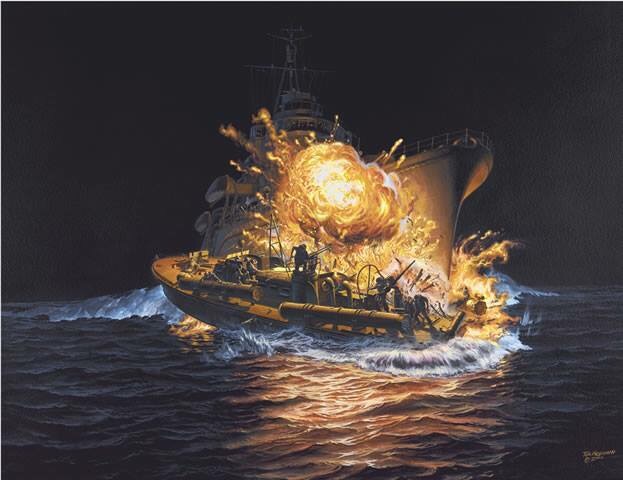
Today in History, August 2: 1943 – Lt (jg) John Fitzgerald Kennedy and the crew of torpedo boat PT-109 are on patrol in Blackett Strait of the Solomon Islands when they are rammed by a Japanese destroyer, IJN Amagiri. The destroyer continued on her way; the crew of the plywood patrol boat began a days long ordeal of survival at sea. Kennedy, in spite of a bad back, towed a wounded crewman by a strap for two miles to a nearby island. He and another officer took turns swimming out into the strait attempting to flag down help. Eventually they encountered natives who were working with an Australian Coast Watcher, who arranged rescue. There was no doubt JFK’s actions were heroic, but heroes were everywhere during those years. His exploits were used during his presidential campaign to great success. He kept the coconut upon which he had written a message to the coast watcher.

Tragedy on the 79th Floor 


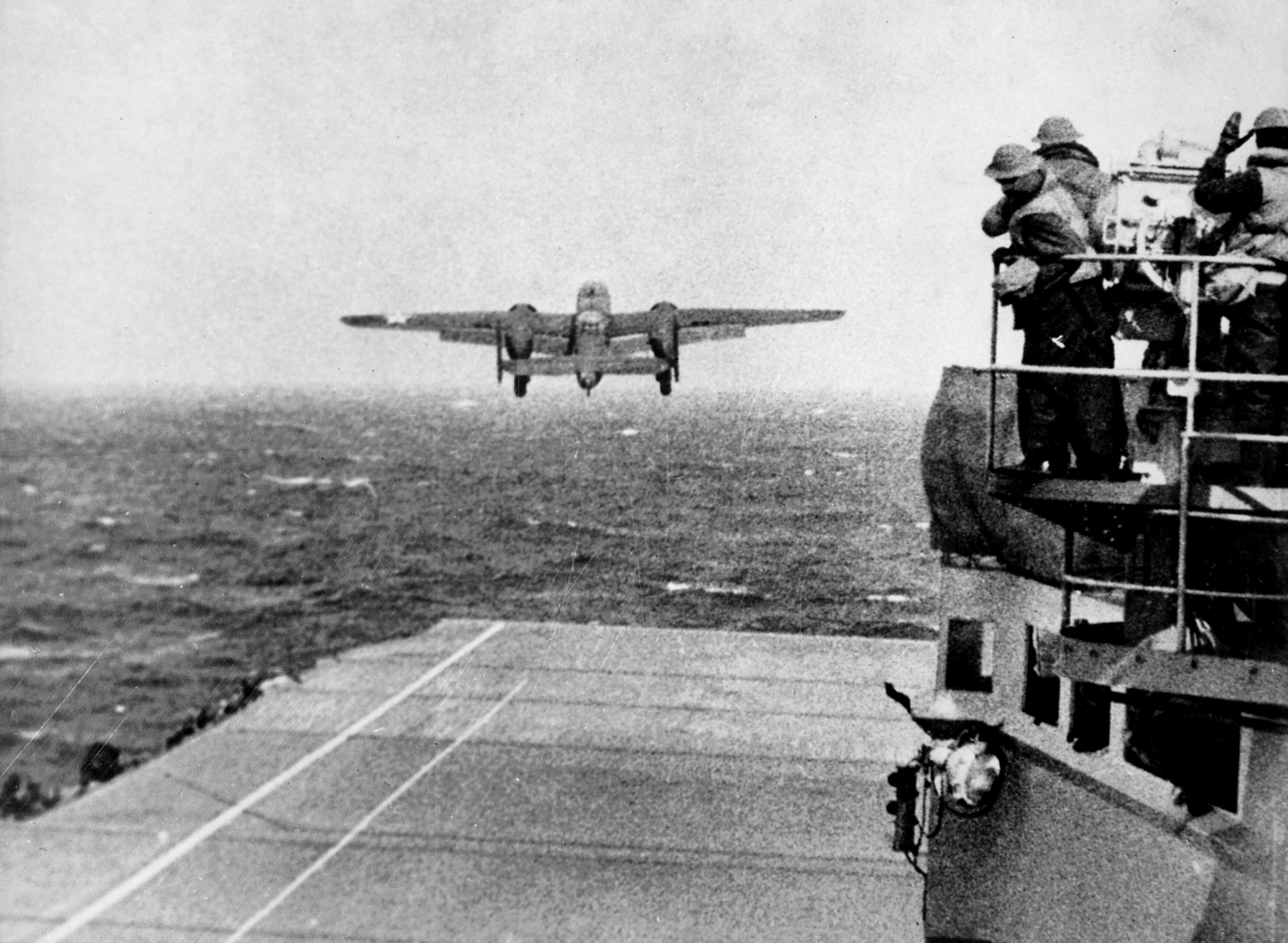
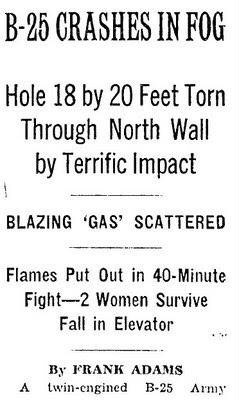
Today in History, July 28: 1945 – A US Army Air Corps B-25 “Mitchell” bomber, lost in the fog over Manhattan, crashes into the Empire State Building. The same type aircraft had been utilized in the Doolittle Raid over Tokyo in 1942. The airplane had missed the Chrysler Building, but in diverting from impact with that skyscraper, turned into the Empire State Building, then the tallest building in the country. The aircraft’s high octane fuel severely damaged the structure, several of her parts landed on or in nearby buildings, and one of her engines caused an elevator to fall. the safety features in the elevator stopped it’s free-fall, and the woman occupying it was saved just before the engine landed upon it. All three crew members and 11 workers in the building were killed.