Brotherhood

Today in History, February 18, 1862:

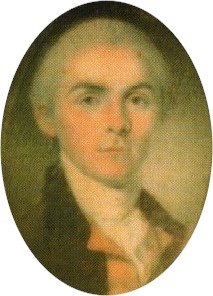
“I know you are separated from your people, and perhaps you need funds.  My purse is at your disposal.”  Union General Ulysses Grant to Confederate General Simon Bolivar Buckner as Buckner prepared to board a river boat taking him north to a Yankee prison.

On February 16, 1862 after a hard-fought battle and investment, Confederate Fort Donelson in Tennessee had surrendered to Union forces.

Tennessee was a strategic area in the Civil War, providing resources, people and a launching point to move against the rest of the South.

General U.S. Grant had been little known to the public before this battle, but the victory would change all that.  He coordinated with the US Navy to bombard Ft. Donelson and surround the 12,000 men there.  After assaults and counter assaults, the Confederate commanders came to the realization loss of the fort was a foregone conclusion, a tragedy for the South.

Gen. Simon Bolivar Buckner was actually third in command.  His superiors resigned their positions so they could sneak out and escape.  Col. Nathan Bedford Forrest took some of his Cavalry and fled also, leaving Buckner to stay with his men and surrender.

Buckner sent a note through the lines asking Grant for terms.  And here is where Grant became famous.  He wrote out his response for delivery to Buckner,

No terms except unconditional and imme­diate surrender can be accepted. I propose to move immediately upon your works.

In a time when furloughs and prisoner exchanges were common in battle, Buckner found the response to be “ungenerous and unchivalrous.”  Yet he had no choice, his only option was surrender.  Having had little but bad news for some time, the Northern papers seized upon the victory.

They used Grant’s initials to rename him “Unconditional Surrender Grant.”  Turns out it wasn’t the first time others had changed his name for him, but that’s another story.

The public was finding out something those serving with Grant had learned…he was unpretentious, unceremonious and tenacious.  He got results.  President Lincoln would eventually say of him, “I can’t spare this man; he fights” in defense of Grant’s reported drinking problem.

If you want History to be more than dates on a page, watch out for the back stories…the facts that bring out the humanity in what you’re reading.

The story reads good already.  But lets dig further.

When Grant was younger, he wanted an education.  His father worked hard and secured him an appointment to West Point.  Initially, Grant didn’t want to go.  But once in, he liked it.  His uncanny horsemanship impressed fellow cadets and instructors.  And he made friends among the other cadets, including Simon Bolivar Buckner, who was attending at the same time.

Grant and Buckner, among many other officers in the US Army, served together and performed heroics in the Mexican-American War of 1846-1848.

After that conflict Grant found himself assigned to the frontier in California, where he missed his family grievously and took to drink.  In July of 1854 he suddenly resigned his commission from the Army and sought transport home.

Grant found himself in New York without even enough money to get a meal or pay for a room.  And then he happened upon an old classmate and friend, Simon Bolivar Buckner.

The two enjoyed a visit, talked old times and Buckner, who was doing much better financially, paid for his friend’s room and board.

In the intervening years until 1861 and the beginning of the Civil War, Grant was somewhat of a hard luck case.  He tried farming, he tried real estate, nothing worked.  When the war began he was working for his brothers and his father in a store as a clerk.

When Southern states began seceding many in the US Army that were from those states, resigned their commissions and joined the Confederate Army, including Buckner.  Thus the old friends found themselves on opposite sides.

Thus, after the Battle at Fort Dolelson, Grant sought out Buckner before Buckner boarded the boat taking him off to prison in an attempt to return an old favor. Buckner, ever the gentleman, politely refused the return of the kindness.

Grant, of course, would become commander of all Union Armies and eventually President.

Buckner would eventually be exchanged for a Union general officer and continue to serve in the Confederate Army.

He surrendered in New Orleans in 1865 for a second time.  He would become Governor of Kentucky among other political successes.

In 1904 he visited the White House and asked President Theodore Roosevelt to appoint his son to West Point.  TR quickly agreed.

His son, Gen. Simon Bolivar Buckner Jr would be killed at Okinawa in WWII, the highest ranking officer killed by enemy fire in WWII.
Studebaker…An American Success Story

Today in History, February 16, 1852:

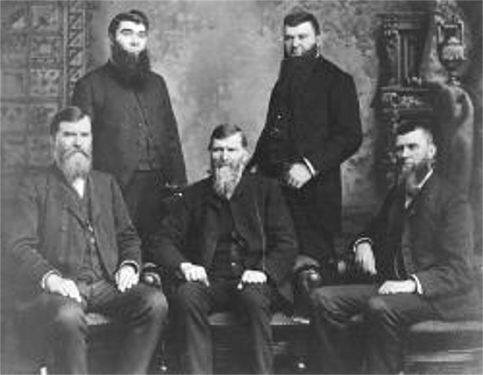
The five brothers, Henry, Clement, John Mohler, Peter Everst and Jacob Franklin, had been taught the skill of wagon making by their parents, who had been taught by their parents, who had arrived in America in 1736.

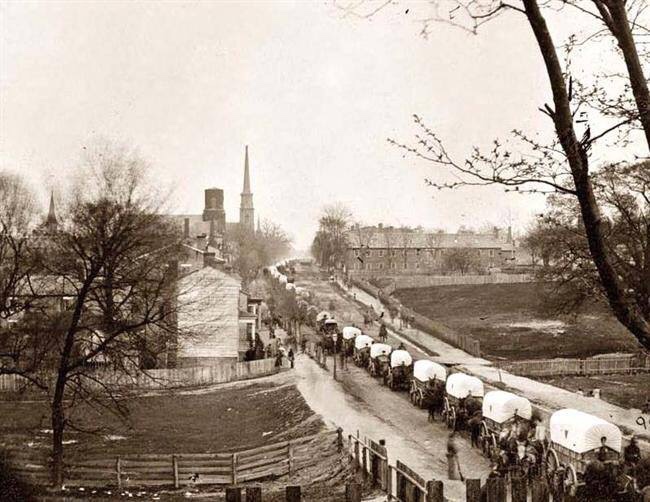
They began their combined business on this date in 1852, and soon they were providing fully half of the wagons used for the migration west, and a quarter of those in the nation.

They made bank during the Civil War, selling wagons to the Union Army.

Their business continued to thrive…those beautiful red 1900 model wagons pulled by the Budweiser Clydesdales…are Studebakers.

When motorized vehicles came to be, the Studebaker Company began making first electric and then gasoline cars. The company would last until 1957, having a reputation for quality and class in their cars.

Belva Lockwood v US Supreme Court

Today in History, February 15, 1879:

President Rutherford B. Hayes signs legislation allowing women attorneys that are qualified to argue cases before the Supreme Court and other Federal Courts.

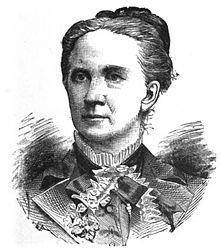
3 years earlier attorney Belva Lockwood had sought permission to argue cases before the Supreme Court, and the Justices voted to refuse her permission to do so.

She lobbied the Congress, who passed legislation reversing the Court’s decision. Lockwood would then become the first woman to argue a case before the court. It would be nearly a half century before women would be given the vote nationally in America.

Decisions like this and the Dredd Scott decision are glaring examples of how we cannot assume that the courts are infallible.

A Horrible, Life Altering Valentine

Today in History, February 14: 1884:

25 year old Theodore Roosevelt was at work in the New York Assembly in Albany fighting for a reform bill when he received an urgent telegram to return to his home in New York.

When he reached his front door his brother Elliott greeted him, “There is a curse on this house”.

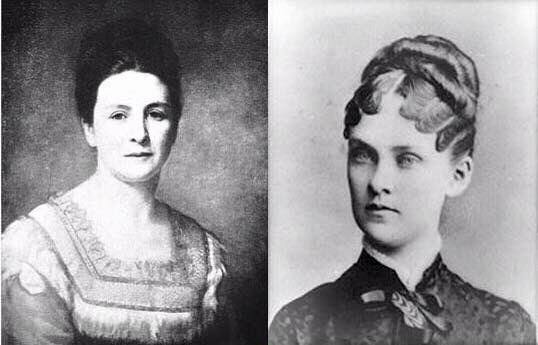
Their mother Mittie was suffering from Typhoid fever, and Teddy’s wife Alice, who had given birth to her namesake just two days earlier, was suffering from Bright’s Disease. TR went up and down the stairs to be with both of them.

Mittie died first, followed within hours by Alice. Roosevelt was devastated.

His diary entry for that date was simply a large X and the note, “The light has gone out of my life”.

He could never speak of his first wife again, not even mentioning her in his autobiography. When he returned to the legislature, even his detractors treated him with deference for a time because of the tragedy.

He soon left the Assembly, left the infant Alice with his sister Bamie and struck out west to the Dakotas to escape. He would become a rancher and a sheriff, and make many friends who would later be “Rough Riders” with him. In ’86 he returned east, re-entered politics and re-married. His daughter Alice became famous for outlandish behavior, dealing with her own demons due to the temporary abandonment and a new family.

Adversity affects us all differently. One has to wonder if TR would have accomplished all that he did if this tragedy hadn’t driven him west and altered his life.

A Dark Side of Valentines Day…

Today in History, February 14, 278 AD:

Valentine is beaten to death, then be-headed in Rome.

Roman Emperor Claudius II (The Cruel) was overseeing several bloody wars at once. He was having trouble keeping soldiers in his armies, and believed that it was because the men were too loyal to wives and families. So, he outlawed marriage.

A priest, Valentine, continued marrying people in secret. When he was found out, Claudius ordered him executed. He was arrested and brought before the Prefect, who ordered him beaten to death and then be-headed.

The Catholic church later declared Valentine to be a Saint for his sacrifice.

The Dawes Severalty Act – Another Indian Land Grab

Today in History, February 8, 1887:

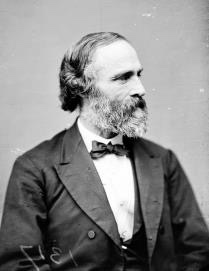
President Grover Cleveland signs the Dawes Severalty Act into law. Massachusetts Senator Henry Laurens Dawes authored the bill with the intent of facilitating the integration of native Americans into the white society.

Dawes and others felt this was the only way to “protect” the Indians, by forcing them to cease their communal way of living.

The law broke up the tribal holdings, giving individuals the land. Married men were given 160 acres of land, single men 80 acres, boys 40 acres and women no land.

The thought was that by forcing the native American families into individual units, as whites lived, they would be assimilated.

As seems to have happened with all acts to benefit the Indians, hidden within the law was a land grab. The law provided that after the lands had been apportioned, any land that was left could be sold to non-Indians. The result was that by the 1930’s, when Congress reversed the act and gave the tribes back their rights as nations, the tribes had lost fully 3/4 of their previous land holdings on the reservations.

Initially the 5 Civilized Tribes in Indian and Oklahoma Territories were exempt, but eventually policies were initiated that effected them also. Much of the land that wasn’t sold outright to non-Indians was eventually sold by the Indian owners when they were down on their luck, reducing tribal holdings even more.

The act also had other negative effects on the Native American community, as it forced changes in the community dynamic; the traditional roles for men and women in the tribal leadership were changed.

The Wheeler-Howard Act of 1934 repealed the Dawes Act, but much of the damage was irreparable.

Tossing Around the…Pluto Platter

Today in History, January 23, 1957:

Walter Frederick Morrison sells the rights for an invention to the Wham-O Toy Company.

He and his wife had begun on the invention by selling “Flying Cake Pans” in 1937.

Nearly a decade later, after having learned more about aerodynamics while flying combat missions over Italy in a P-47 Thunderbolt fighter (shot down, spent time as a POW), Morrison began working on the invention again after WWII.

He and an investor began working with plastics, and he eventually came up with what he called the “Pluto Platter”, which is what he sold to Wham-O. Once college students began referring to it as a “Frisbee”, Wham-O changed the name.

First US Marshall Killed in Line of Duty

Today in History , January 11, 1794:

Robert Forsythe, veteran of the Revolutionary War, had been appointed by George Washington as the first US Marshal for the state of Georgia.

On this date in 1794, Forsythe was serving civil papers when he became the first US Marshal to be killed in the line of duty.

The person he was attempting to serve, a former Methodist minister, fired on him through a door when Forsythe knocked, killing him instantly.

Former Major Forsythe, now Marshal Forsythe, was the third law enforcement officer killed in the fledgeling United States.

His son would go on to be Governor of Georgia and then US Minister to Spain, where he would negotiate the ceding of Florida to the US.

Common Sense

Today in History, January 9, 1776:

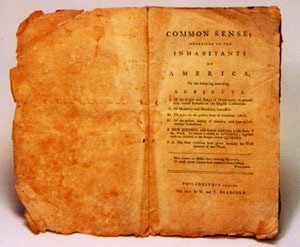
The first copies of Thomas Paine’s pamphlet “Common Sense” are published in Philadelphia. Pamplets were the editorials, or blogs, if we must, of the day in the 18th century.

Paine had only recently immigrated to America from his homeland of England, yet he quickly took up the cause of independence.

Most of the people in America prior to the Revolution saw themselves not as Americans, but as British subjects, and proudly so. Many wanted to remain such, most were uncertain whether independence was a good idea. Most of the colonists were commoners, and it was assumed that only the elite were worthy of governance. Paine turned this theory on it’s head. He wrote to the commoners in plain language the difference between society and government; that gov’t was necessary, but must be limited; that AMERICA should govern herself. He started a firestorm….his pamphlet sold 120,000 copies the first month, 500,000 the first year. Percentages taken into account, Common Sense still counts as the best seller of all time. Paine refused to take any of the profits, donating all of them to Gen. Washington’s Continental Army.