Naval Satellite Communication

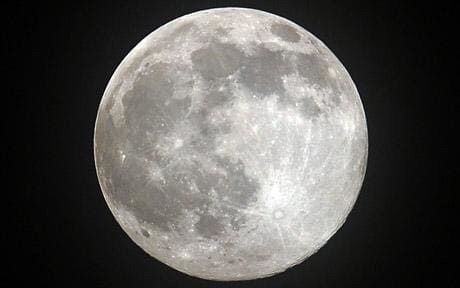
Today in History, January 28: 1960 – US Navy Chief of Naval Operations Arleigh Burke uses the first satellite communications system, developed by the Naval Research Laboratory, to send a secure radio message from Washington DC the Commander of the Pacific Fleet in Hawaii. The satellite? The moon.

A system had been developed to bounce high frequency radio waves off of the moon, creating a stable world wide communications system for the Navy. It would be used until the late sixties when man made satellites were in place.

Death had to take Roosevelt sleeping, for if he had been awake, there would have been a fight.” -Vice President Thomas Marshall

Today in History, January 6: 1919 –

“Death had to take Roosevelt sleeping, for if he had been awake, there would have been a fight.” -Vice President Thomas Marshall. President Theodore Roosevelt dies at Sagamore Hill, Oyster Bay, New York in his sleep of a heart attack. “Teddy” had taken every last drop of adventure and worthiness that he could squeeze out of life in the preceding 60 years.

Roosevelt had been a sickly child; constantly plagued by breathing problems, he could rarely play with the other children. His father, Theodore Sr., a remarkable man himself, told “Teedie” that if he wanted to have a successful life, he would have to take charge and force his body into the form he needed to match his intellect. Roosevelt did just that. He took exercise as his “raison detre” until he was barrel chested and of vigorous health. Each time he became sick during his life, he would simply work through it.

As a young man, while serving in the New York Assembly, Roosevelt’s wife and mother died on the same day…February 14, 1884. Roosevelt fled into the west, becoming a rancher and for a time a lawman in the Dakota Territory. The experience would strengthen him and give him a background people respected.

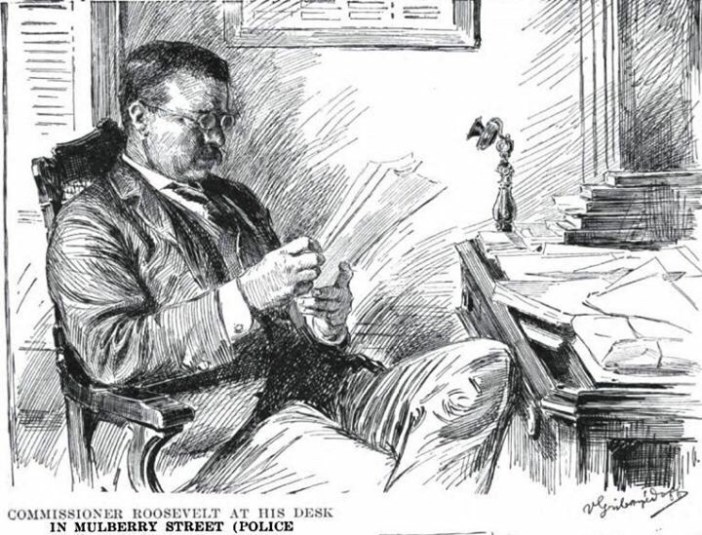
During his life he was a state rep from New York, the Police Commissioner for New York City, Governor of New York, the Assistant Secretary of the Navy (he oversaw the building of a modern US Navy while his boss was not paying attention), he led the “Rough Riders” (1st Volunteer US Cavalry) up San Juan Hill in the Spanish-American War, became Vice President, and the President after President McKinley was assassinated.

As President he defined the modern presidency, breaking up monopolies, seeing that mistreated workers got a fair shake, sent the “Great White Fleet” around the world establishing American as a world influence, saw the Panama Canal built, saw the establishment of the National Parks Service, and countless other accomplishments.

He worked tirelessly for the American people. After the Presidency he traveled extensively, going on an African Safari, and exploring an unknown region of South America, “The River of Doubt”; a region so treacherous that it was considered a no-man’s land. He nearly died in the mapping of the river, now called “Rio Roosevelt” in his honor.

All of his male children fought in WWI, and the only reason Teddy didn’t was because the Democrat President (Wilson) refused to let him, afraid Roosevelt would run against him in the next election and win. One of his sons, Quentin, would be shot down over France and be killed. That was the last straw for the “Old Lion”. He mourned dreadfully until his death.

One of his other children, Theodore Roosevelt, Jr., would be the only General to go ashore with the troops at D-Day in WWII; Teddy Jr would die of a heart attack himself several weeks after the Normandy invasion. The entire world would mourn President Roosevelt’s passing; he had become larger that life, a hero to people the world over. The quintessential American. And in case you couldn’t tell, my favorite Hero.
The Great White Fleet

Today in History, December 16: 1907 –

The Great White Fleet, a task group of 16 American battleships and their support ships, sets sail from Hampton Roads, Virginia beginning a world good will tour, circumnavigating the Earth. President Theodore Roosevelt had long been a proponent of sea power in line with the teachings of Admiral Alfred Thayer Mahan, that a strong Navy could project authority world wide. The fleet of white warships were to provide cordial visits to ports in nations that were potential adversaries, most prominently, Japan. There were many other purposes, such as improving morale and patriotism during a depression at home, and research to improve the seagoing capabilities of the US Navy. The Great White Fleet displayed to the world something that still stands today, although greatly enhanced. That the US Navy could project American influence anywhere in the world. The journey would take 14 months until February of 1909, and would take the fleet through the dangerous Straits of Magellan and across the Pacific. The event was a sensation the world over, as moving so many coal powered ships so far was a remarkable achievement.

Flight 19

Today in History, December 5: 1945 –

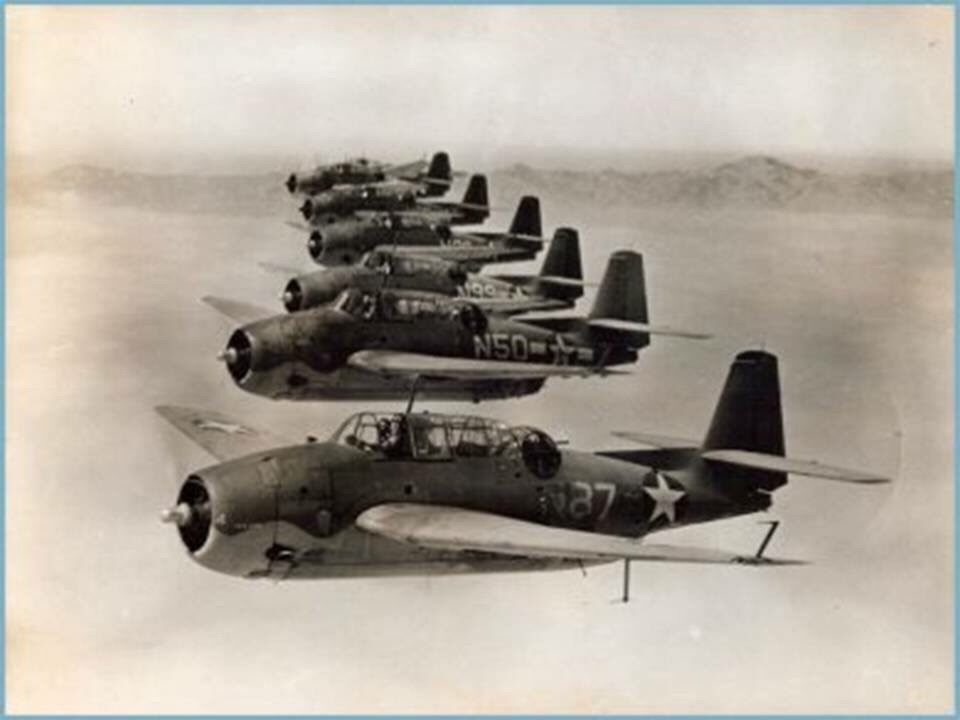
Flight 19, a squadron of 5 TBM Avenger Torpedo planes on a navigational training flight out of Ft. Lauderdale, Florida, disappears without a trace within the “Bermuda Triangle”. Land based personnel could hear them by radio trying to find their way before apparently ditching at sea. 14 crewmen were lost.

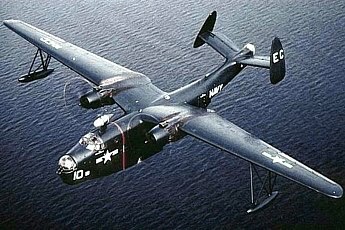
In the efforts to find the lost men, a flying boat, a PBM Mariner, was also lost without a trace…almost doubling the loss of life with her 13 man crew. Hundreds of aircraft and ships searched for the lost crews without success.

Many ships and aircraft have been lost in this area…leading to speculation about aliens, magnetic anomalies, the lost civilization of Atlantis, etc. The Navy is likely correct about disorientation, but there have been an unusual amount of losses within the “Triangle.”

Battle Order #1

Today in History, November 28: 1941 –

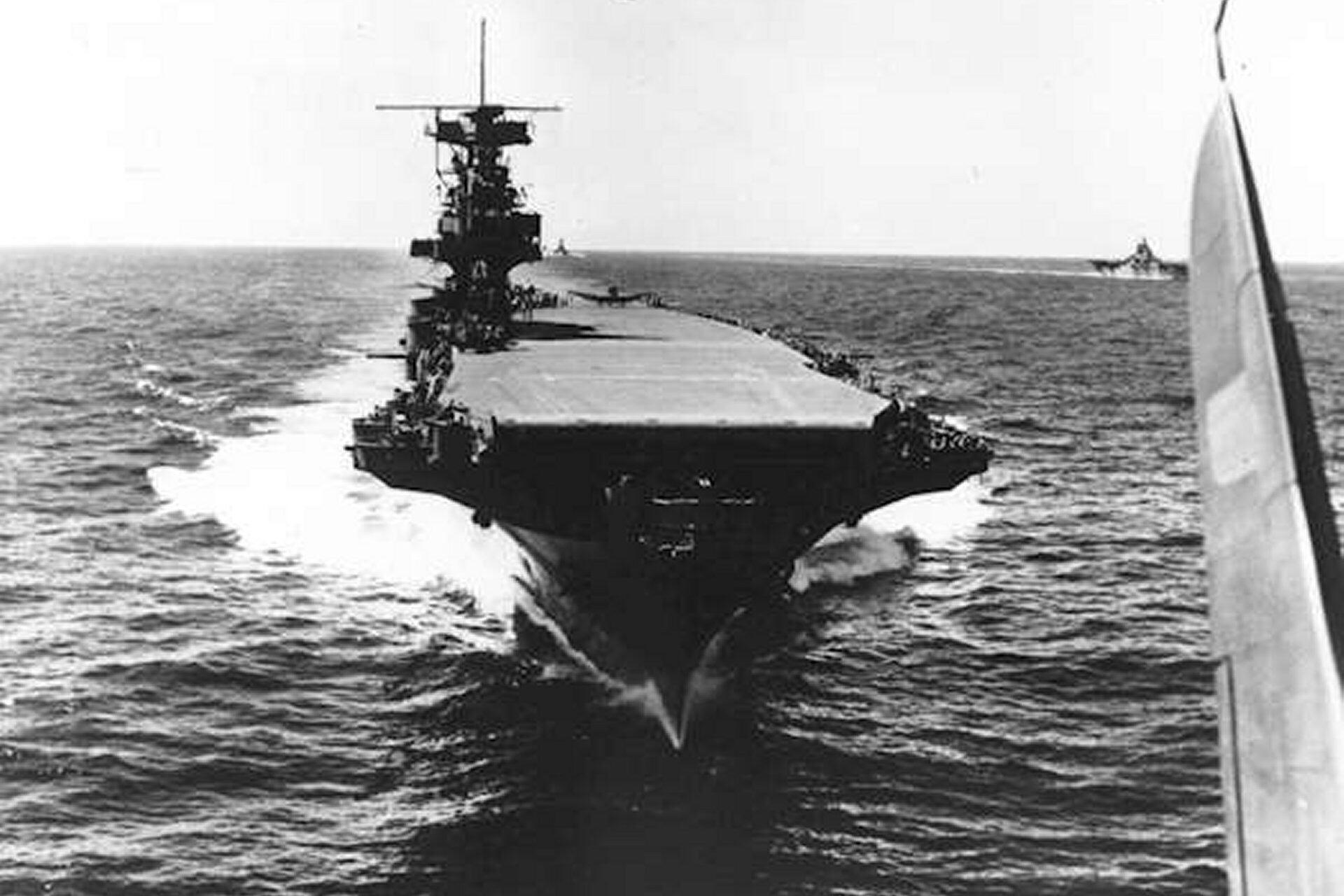
Ten days before the Japanese attack on Pearl Harbor, a Task Force built around the aircraft carrier USS Enterprise (CV-6) sailed from Pearl Harbor bound for Wake Island.

In response to a “war warning” the Enterprise had taken aboard a squadron of US Marine F4F Wildcat fighter planes and their pilots, with orders to deliver them to Wake to bolster the island’s defenses.

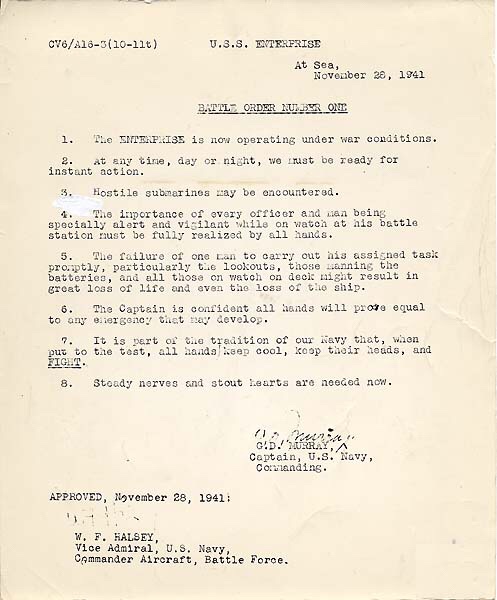
Once they were at sea, the TF commander, Admiral William F. (Bull) Halsey signed off on Battle Order #1, which put the Enterprise and her supporting Cruisers and Destroyers on a war footing.

The crew began adding armor behind the pilot’s position’s in the ship’s fighters, painting them in combat colors, and arming them for combat.

More than a week before the Japanese attacked, the Enterprise TF had orders to shoot first and ask questions later should they encounter any foreign ships or planes. The CAP (Combat Air Patrol) kept watch overhead.

The Big E would deliver the Marines and return to Pearl on Sunday, December 7. Her scout plane pilots would fly ahead, ending up right in the middle of the air raid. But that’s another story.

But on this date, Admiral Halsey and Captain Murray closed by telling their sailors “Steady nerves and stout hearts are needed now.”

Today in History, November 13: 1942 –

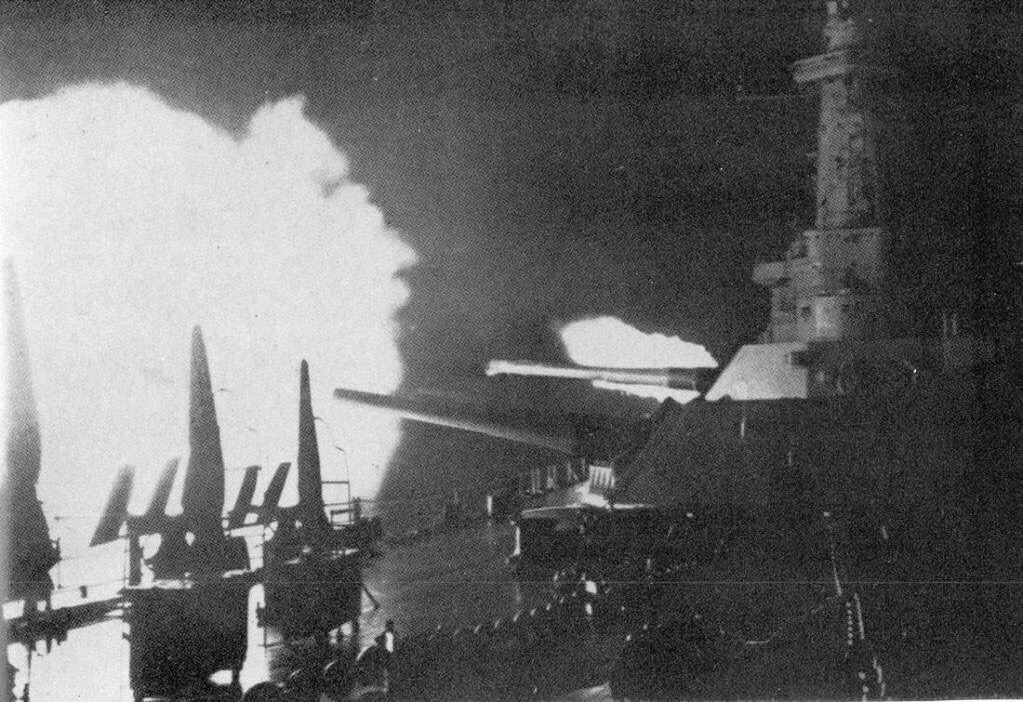
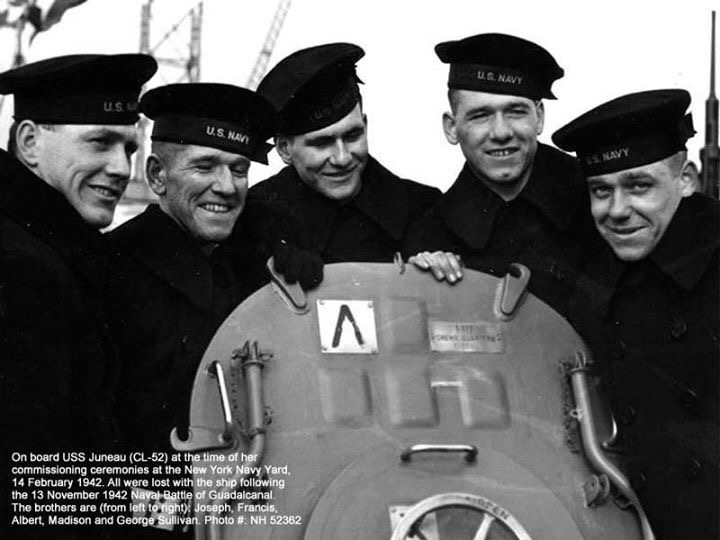
The First Naval Battle of Guadalcanal takes place in what would become known as “Ironbottom Sound” off Guadalcanal. US intelligence had warned US Navy forces that the IJN planned to bombard Henderson Field and land reinforcements on the embattled island. Admirals Callahan and Scott took their forces to interdict IJN Admiral Abe’s forces. In a fierce, confusing, intense night action the Japanese won a tactical victory by sinking more American ships, while the Americans won a strategic victory…Henderson was not bombarded and the American troop ships remained undamaged. But it came at a heavy cost for both sides. Admirals Callahan and Scott would be the only US Admirals to be killed in direct ship to ship combat in the war, and aboard the USS Juneau, the five “Fighting Sullivan” brothers would all be lost.

For the Japanese; surviving battleship Hiei, among others, would fall prey to repeated air attacks from Henderson, Espirito Santo, and the USS Enterprise when the sun came up. And this was only the beginning of the battle.

Moments Which Changed Naval History

Today in History, November 11: 1940 – A History changing event. The British aircraft carrier HMS Illustrious launches several obsolete aircraft, “Fairey Swordfish” torpedo aircraft…flying kites, really, in an attack on the Italian Naval Base at Taranto, Italy.

The Harbor was shallow, so the Italians thought they were safe. In this, the first attack by aircraft from a carrier, the Italian navy was devastated, by what many naval officers considered a gimmick…the airplane. On the other side of the world, someone took notice of the successful attack. The Imperial Japanese Navy was encouraged in their plans against Pearl Harbor…also a shallow anchorage considered safe. Naval History was changed…tactics forever adapted by those few British pilots.

On the Brink of Armageddon

Today in History, October 22, 1962:  President Kennedy announces in a speech from the Oval Office that the Soviet Union has placed nuclear missiles in Cuba, only 90 miles from Florida.  Any city within the United States could be destroyed within moments.

President Kennedy announced the US Navy was conducting a “Quarantine” of Cuba, another name for a Blockade, which “could” be considered an act of war.  He also made clear that any missile launched from Cuba upon any nation in the Western Hemisphere would result in an attack on the Soviet Union.  Could this be interpreted as enforcement of the Monroe Doctrine?

Today we are experiencing stressful times, a showdown with North Korea.  We’ve been here before, even worse.  We are made nervous by the rhetoric voiced by our government.  President Kennedy kept us safe by letting the Soviets and Cuba know the consequences would be dire if they acted in bad faith.  At that time Castro and the Soviet government were viewed as “madmen” much as Kim is today.

https://youtu.be/W50RNAbmy3M

The Marines Begin the Legend of Guadalcanal


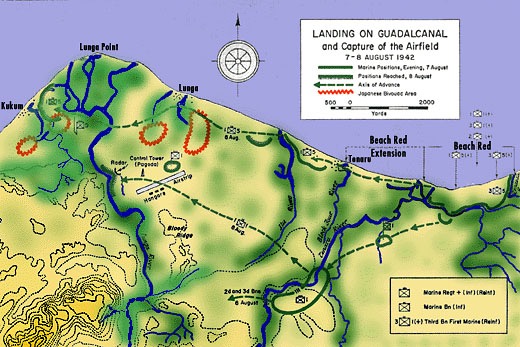
Today in History, August 7: 1942 – The US Marines had fought since the Revolution, incuding WWI (Belleau Wood) but it was THIS day in 1942 that began the legend of the US Marines for many. 

 The Gyrenes went ashore on a humid, muddy, malaria infested jungle island named Guadalcanal; initially to little resistance. Soon they were fighting for every inch of ground against an enemy that was more than willing to die. The battle would last for over six months, during which the Marines lived in muddy ditches, lived on what rations they could find and suffered nightly bombardment by the Imperial Japanese Navy…but they persevered, conquered and then, after buying the island with their blood, handed it over to the Army. Why was Guadalcanal so important?

The Japanese occupied Guadalcanal to build an airfield there. At the eastern most extremity of the Solomon Islands, the airfield would allow the Japanese to use long range aircraft to cut off supply lines to Australia. 

 The Marines quickly took the airfield, and named it Henderson Field, after a Marine Captain that gave his life at another pivotal battle, Midway. The Marines struggled back and forth over Henderson for months, but held it…which meant that the Marine air and Navy air forces called The Cactus Airforce could defend the island from nightly bombardment and constant attempts at reinforcement by Japanese forces.

 Both Navies lost 24 ships…most of which carpet “Iron bottom sound” off the coast of Guadalcanal and Savo Island.  The months ahead would bring many important battles for the Navy and the Marines…but on this date in history, the United States Marines began the battle that proved their place in history.

Damn the Torpedoes!


Today in History, August 5: 1864 – “Damn the Torpedoes! Full Speed Ahead!” New Orleans had been captured from the Confederacy in 1862, leaving Mobile Bay as the only source of foreign supplies for the South, via blockade runners (like the fictional Rhett Butler). On this date the Union Navy sent a fleet of ships led by ironclads into Mobile Bay, fighting a squadron of Confederate Ships and two “batteries” or forts with cannon, and a withering fire that almost immediately sank the USS Tecumseh, an ironclad. The Union fleet began to scatter, until the US Navy’s first Rear Admiral, David Glasgow Farragut inspired them on to victory with his now historic courageous command. By the way, “torpedoes” in 1864 were not propelled explosives as we know of them today, but what we know as mines. This would not be the only battle that would lead to Farragut’s lasting legacy with the US Navy.